
In the News


We’re devoted to revolutionizing the way our clients do business. Sometimes that gets us noticed.

No big deal.

Posts by Nicole Temple:

The 41st Annual A&E Deltek Clarity Report: Financial Statements

Posted by Nicole Temple on Nov 11, 2020

Deltek Clarity 41st

Financial statement data is vital for leadership teams. This data is the basis for measuring firm performance and influencing decisions regarding the firm’s future. There are several financial metrics that businesses track and rely on. Based on the findings of the 41st Annual Deltek Clarity A&E Report, operating profit on net revenue has increased for ten years consecutively to 15.8%. This is a 1.4-point jump year-over-year. A variety of other important metrics were addressed in this year’s Clarity report as well. The Clarity report reveals where things measured up for 2019.

Top Financial Challenges

The financial challenges have remained similar year-over-year. This year the trend is towards challenges with increasing profitability, finding and retaining qualified staff, and managing firm growth. Although, finding qualified personnel and keeping turnover low is second to increasing profitability. It is also noteworthy that qualified staff is at the top of the list for greater than half of the respondents. Cash flow is floating in the ranks, but it seems that firms are managing it better than in years past. The unpredictable spending environment was only at 11% for 2019, though that is likely to change given the challenges many firms faced in 2020.

Building on Success

While there is economic uncertainty in the year 2020, the results show that firms strengthened their operations in 2019. Operating profit continues to rise steadily, as it has over the last decade. Of note, small businesses saw a strong increase, rising to 15.9% operating profit, up 3.5% from the prior year. The net labor multiplier has seen a minor increase as well, reaching 3.03 last year. That’s the highest multiplier measured for the industry in ten years.

Another significant metric tracked by firms is the utilization rate. It is calculated as cost of labor charged divided by total labor cost. This metric remained steady with the prior two years, except for Architecture firms that showed an increase of 2.3% points year-over-year. Employee retention is a factor within this metric. Firms with higher utilization also tend to show lower turnover rates as well as higher net revenue by employee. Does this show us that working employees are happy employees? Findings will show that investments in technology and training can keep employees engaged and productive in producing revenue.

Net revenue per employee is yet another metric to see a positive increase. This could be attributed again to the investment in technology and training, an already high productivity amongst employees, increased rates, or possibly better efficiency driving projects to completion. Since obtaining qualified staff remains difficult, firms are working with existing teams to accomplish more. Burn-out should be a consideration and cutting associated costs or wages could be disadvantageous.

With employee cost being a possible factor in retention it is important to track trends and analyze total employee cost as a metric. This is calculated as the sum of total labor and other labor related costs, (such as fringe benefits and taxes but excluding bonuses) divided by the average number of employees during a year. This returned data shows that there was not an overall noticeable change. Payroll expenses and employee numbers increased at higher percentages which in turn drove the decrease in overall cost. Where the year prior it had showed a small decline, we may see a more drastic change in 2020.

The average collection period calculation divides accounts receivable by annual total revenue, multiplied by 365. This is an important metric for cash flow stability and deserves a great deal of attention. There has been small improvement or decline in average days amongst all firms. In comparison, small businesses and high performers stand out as having notably improved. It is important to stay on top of the outstanding accounts receivable to maintain cash flow performance stability.

Preparing for the Future 

A&E firms have largely agreed that business process improvements and project management training have a strong impact on a firm’s financial health. In addition to those areas, better forecasting should continue to be a top focus area. Addressing and improving these key components can be the key to continued success, even in difficult and uncertain economic times. To read more about financial statement findings, visit the full Clarity report. 
Inventory Management and Fixed Asset Management – One and the Same?

Posted by Nicole Temple on Jan 6, 2016

Asset ManagementProfessional service firms don’t traditionally sell products; rather they sell their time and expertise. Increasingly, they ARE selling products and time, and are spending a great deal of capital on tools to deliver both.

A common problem is that many firms can easily see the profits generated from their services, but overlook the contribution (or lack thereof) of the inventory AND fixed assets used to deliver the service by not managing both.  Even worse, they frequently manage and track them in the same manner.

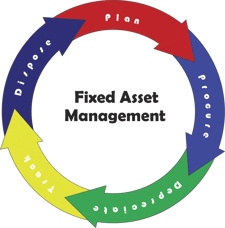
Inventory management and fixed asset management are not one and the same. Read on to learn the difference between the two and understand the importance of utilizing proper accounting for fixed asset management.

Inventory Management

In the professional services world, inventory management is only slightly different from the retail and the production world. Inventory assets represent the items sold or the materials used to create a final product that will be sold. Inventory assets in professional services firms represent the intangible or intangible assets sold along with the service. This could include software or equipment. This is not to be confused with immaterial items, which are usually expensed as overhead. For most professional service firms, the inventory asset is a relatively small percentage of total firm assets.

Most importantly, unsold inventory appears on the balance sheet as an inventory asset and sold inventory appears in the Cost of Goods Sold on the income statement. This is an important standard of Generally Accepted Accounting Practices (GAAP).

Chances are, if you are selling goods as a part of your service offering, you are likely following the standards and hopefully using the Vision Purchasing module for tracking and control. But what about Fixed Assets?

Fixed Asset Management

Like Inventory, fixed assets exist and have specific accounting treatments for professional services firms, retailers, and other types of businesses.

Fixed assets are purchased assets of the firm for long-term use to support ongoing business operations. For example, fixed assets are laptops, desks, software, and vehicles, just to name a few. Since fixed assets are transferable within the company and will be used for multiple projects and multiple accounting periods, GAAP dictates a different accounting treatment than would be used for inventory management. More importantly, fixed assets in professional services firms are typically a large percentage of the total firm assets. In today’s world, the computer, machine, and installed software are the main tools used in delivering the services and often are given the least attention in the firm.

Why Is This Important?

Inventory management is a relatively simple task, but fixed asset management presents several challenges such as:

  • Knowing the location of an asset to ensure you can deliver your projects on time
  • Maximizing the usage of an asset to ensure the maximum ROI is gained from the asset
  • Knowing the history of similar assets to make informed about purchases of new assets
  • Tracking the depreciated value of an asset for tax and insurance purposes
  • Keeping the Balance Sheet clean and free of historical errors to provide accurate ROI and other metrics

Overcoming these challenges doesn’t have to be difficult and can be easily accomplished by deploying an asset management tracking system. When choosing to implement an asset tracking system, it’s important that the system is integrated with your project management, purchasing, and accounting systems to ensure information about the asset is accurately maintained and easily accessible. 

Eleven Reasons Deltek Vision’s Project Accounting Software is Right for Your SMB Firm

Posted by Nicole Temple on Jun 11, 2014

Project accounting softwareHow do you know when to move to a Project Accounting Software? There are many factors to consider in your decision. Although you may have looked at Deltek Vision in the past, you might be surprised at all of its new capabilities. Not to mention Deltek Vision's cloud pricing and out of box options can't be beat by any of its competitors. Outlined below are eleven important items to think about when looking at new project accounting software for your business. 

1) Work Breakdown Structure

Project accounting software becomes a must have for firms that want to track detailed information around deliverables. How do you know if it is right for your firm? Your firm may need the ability to: 

  • Break down a project into manageable work elements by separating out the deliverables for the project
  • Identify start and end time of each deliverable
  • Define the overall budget for the deliverables as well as the entire project
  • Attach key persons to the project for reporting
  • Set-up work breakdown structures to show effort required to achieve an objective

By having the right software for your firm, you gain the ability to track detailed cost estimating and provide guidance for future development and controls. The ability to break a project into manageable work elements, and track the elements, allows firms to better estimate future projects while maintaining the projects that exist today. 

2) Accrual and Cash Capabilities

Many firms want the ability to run cash books alongside the accrual books to get the most accurate view of where the business stands with income and debts. Income and expense tracking is integral to a project accounting software. While cash basis may give you a better idea of where the firm stands with actual cash, the accrual method can show the ebb and flow of the overall business income and debts for the most accurate view of the overall organization and long term profitability. 

3) Robust Reporting

To get the most out of your software,  you need the ability to report on the data for your firm. Your software should be able to pull the data you have entered to allow you to analyze the overall business performance, and plan for future engagements (with data to back your decisions). Reporting should have the capability and flexibility of pulling the data you need without requiring customization from a programmer, and should be visible to key players in the firm. 

4) Mobile Access

If you have employees that work in the field, and have little access to computers, you may want to be able to give them access through non-traditional means. Mobile access becomes valuable, and keeps data flowing in the system to quickly and accurately maintain the data in the system on a real-time basis. Access via Touch Time, Touch Expense, Touch CRM, and Navigator are available with Vision and they allow remote employees to enter their time and expense data right from their phone or tablet rather than having to get on a computer and access the system directly. 

5) Flexibility

What core modules are available to you when you purchase? Do you have the flexibility to configure the software for your needs? Do you need User Defined fields for tracking? Are you currently tracking outside information in excel? Vision allows the flexibility to add new fields for tracking and to create fields directly in the software to pull data in from outside sources such as Excel. 

The advantage of Vision as a high end solution is the flexibility to configure for company specific processes and exact business processes, pulling all data into the system without the need for multiple solutions. 

6) Automation

Workflows, streamline processes…A good project accounting software will give you the ability to automate many of the processes and functions on a daily, weekly, monthly, or as needed basis. Vision has the ability to create workflows directly through the front end to send emails, alerts, update fields, and run processes or reports automatically. In addition, stored procedures can be customized to automate non-standard processes on the back-end. 

7) Real-Time Data

Project Managers need to plan, manage, and monitor their projects. Without real time data Project Managers are not getting the data they need to manage their projects.  Real-time data allows your marketing team to accurately evaluate business development efforts to ensure the firm is pursuing the right kind of work by measuring marketing effectiveness.   

8) Audit Trail

Many firms require modifications that fit their project-based firm. In QuickBooks and other software, excel workarounds with manual manipulation are required outside of the software. This can impact the firm’s audit trail. Vision has the capability of running reports for changes made in key records as well as the ability to see the financial audit trail, which is important for the firm to be compliant for GAAP, IFRS/FASB, or any other requirements. 

9) Security

Security is one of the most important features of a program because it either allows, or restricts, employees from seeing sensitive information such as costs or other employee sensitive information. Your firm will need to be able to provide access to the system for many roles in the company to work holistically with the organization’s needs. Without this ability there is no visibility, and management of the system and processes becomes very difficult. It is important for all players to have access to the information they require to manage their duties and keep the business running smoothly. 

10) Low IT Maintenance

Cloud based software is a new industry buzzword. The reason for this is that by having your software on the cloud it is maintained by the hosting agency and updated following the testing of new versions and updates. Without requiring an internal IT team to manage Vision, your team is freed up to do more important business tasks. 

11) Integration

Many firms have data silos with disparate systems. This separation between team members can increase inefficiencies and keep the firm from reporting on one truth for the company. Since Deltek Vision’s cloud software comes bundled with 5 Customer Relationship Management, Custom Proposals, SF330 License and Resource Planning license, firms can work as a team and build upon each other's data to gain a holistic view of the company and processes. 

Best Project-based ERP Software for SMBs

If it's been a year or two or even more since you've looked at Deltek Vision. It's time to talk to a partner like Full Sail Partners to see why SMBs are turning to Deltek Vision's cloud option. Even if you’re a 10-person firm, Deltek Vision is the best project accounting software for project-based firms because of its flexibility and economical price. 

Most Recent News Mentions

We’re changing the way project-based firms operate.

People can’t help but notice.
Who will be next?

Check out our latest newsworthy work: