In the News


We’re devoted to revolutionizing the way our clients do business. Sometimes that gets us noticed.

No big deal.

Lisa Ahearn Earns Promotion to Principal Consultant at Full Sail Partners

Posted by Jennifer Renfroe on Jul 23, 2026
Lisa brings deep consulting expertise and a proven record of leadership to her new role

 LisaAhearn_Promo_Social Feature 

Lisa Ahearn has earned a promotion to Principal Consultant at Full Sail Partners, a Deltek Platinum Partner.

Lisa has grown steadily since joining the crew, sharpening her consulting skills, stepping into mentoring roles, and contributing directly to Full Sail Partners' own Vantagepoint transition — a hands-on experience that deepened her product knowledge and validated her ability to lead clients through complex implementations.

In her new role, Lisa will continue delivering consulting services at a more advanced level, with a specialized focus on Accounting and Finance and Deltek Vantagepoint.

"Lisa has worked very hard honing her consulting and finance expertise since joining the crew," noted Scott Gailhouse, Director of Consulting Services. "She already brings a wealth of knowledge to our consulting practice so the logical next step was a promotion to Principal Consultant, and we couldn't be more excited for her."

Lisa's promotion adds an experienced resource to Full Sail Partners' consulting bench — one well-equipped to support Vantagepoint clients with more complex, technical needs.

For more information, contact Full Sail Partners' Marketing Communications Department at info@fullsailpartners.com.


Management of Change Series – Finance

Posted by Rana Blair on Jul 24, 2025

2025-07-24 Management of Change Finance_banner

You’re the numbers person. The ROI rockstar. The keeper of KPIs, margins, and forecasts. And when it comes to change management, your superpower isn’t rah-rah motivation or lofty vision—it’s proof. Cold, hard, data-backed proof.

In this updated installment of our Management of Change series, we’re looking at what change really means through a finance lens. Spoiler alert: it’s not just about tracking revenue. It’s about aligning financial metrics with strategic goals—and making sure the dollars actually make sense.

So how do you measure success during change?

Great question. Executives may define the “what” and “why” of a change initiative, but you, finance friend, bring the “how do we know it’s working?” That starts with a clear measurement framework.

Here’s a modern 3-step playbook to measure the financial impact of change:

Step 1: Start with a Real Baseline

This isn’t just pulling numbers from last quarter’s P&L. Your baseline should be intentional and aligned to your firm’s specific goals. Want to shorten your billing cycle? Improve backlog reporting? Increase win rate on proposals? Get clear on what you’re measuring—then gather the numbers that show where you are today.

Think: “What’s the story our current data tells—and what plot twist are we hoping this change will deliver?”

Step 2: Set Checkpoints, Not Just Finish Lines

Change isn’t a one-and-done event. It’s a project in and of itself—one that deserves (and demands) ongoing financial monitoring. Regular check-ins on key indicators will help you manage scope creep, track adoption, and avoid unwelcome surprises at go-live.

Pro tip: Treat your change initiative like any major project. Build out milestone reviews with accompanying financial check-ins, and use Vantagepoint tools (like dashboards, custom hubs, or budget trackers) to make sure everyone’s aligned and in the loop.

Step 3: Define What Success Really Looks Like

We all love a good ROI percentage. But success isn’t always about hitting an exact number—it’s about hitting a range that proves the effort was worth it. (Because let’s face it, humans are involved, and that means change is never 100% predictable.)

Set a tolerance range. Define what “good enough” looks like in terms of improved efficiency, savings, or output. And yes, make room for measuring user adoption—because even the best system changes will fall flat without employee buy-in.

According to “The ‘harder’ side of change. The What, Why and How of change management’” The consequence of not managing the people side of change, i.e. employees and customers, has “tangible and real financial impact on the health of the organization and the project.” Therefore, set an acceptable level of success and celebrate when you’re within a good range of your numbers.

Bonus: Build in time to reflect on the financial impact of not making the change. That opportunity cost is real—and it deserves just as much attention. 

Tools That Help You Track It All

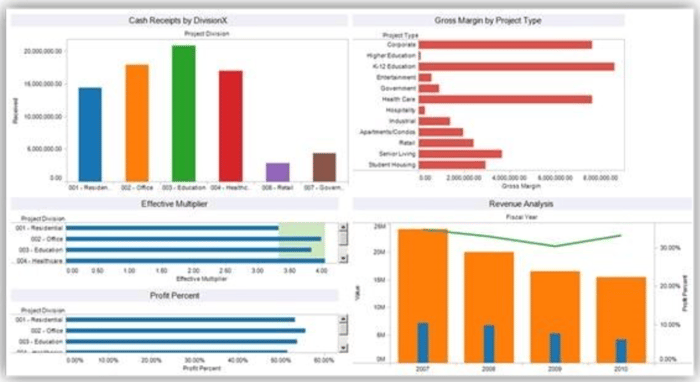
You don’t have to do this alone. Leverage your ERP (hello, Deltek Vantagepoint 👋), real-time dashboards, and reporting automations to keep data flowing and decisions grounded. Pair that with strategic support—whether it’s from your internal team or a partner like us—and you’ll move from reactive to proactive change management.

DVP_Dashboard_7-24-25

Even More Than Numbers

Management of change for “finance types” is unquestionably about the numbers. But all good number crunchers know that numbers reflect all sorts of things: More than just bottom line profit/loss, percentage increase, or improved customer satisfaction numbers.

Financial repercussions also must be measured for change that doesn’t occur to account for potential adverse effect of not making a necessary change.  Therefore, numbers have to be analyzed reflecting the “opportunity and efficiency costs of NOT making the change both of which also directly impact ROI” as we discussed in our introductory piece to this series.   

Bottom line

Bottom Line?

Financial oversight isn’t just about crunching numbers after the fact. It’s about steering the ship during change and helping the organization make smarter, data-backed decisions along the way.

So go ahead, own the role of financial change champion. Just remember: the goal isn’t perfection—it’s progress, backed by proof.

Up next in our series? Project managers, it’s your turn to shine. 🎬

2024 Deltek Reseller Partner of the Year Award Bestowed Upon Full Sail Partners

Posted by Jennifer Renfroe on Jul 21, 2025
2024 Award horizontal rev
Deltek award given to Full Sail Partners confirms status as a leading Deltek Partner  

Full Sail Partners is excited to announce that it has yet again received the Reseller Partner of the Year award from Deltek for 2024. Receiving this year’s award just further recognizes our focus on being a leading Deltek Partner providing software and solutions for project-based and professional services firms. We value our clients and truly partner with them to listen to their needs, always exemplifying professionalism with the utmost level of integrity. 

“Full Sail Partners has a proven track record of successfully partnering with over 1000 clients nationwide, we're thrilled to honor them with the Resell Partner of the Year to celebrate their tenacity and dedication to win business," noted Elise Carbone, Sr. Director of Partner Sales at Deltek.  

Moreover, the Full Sail Partners’ crew continuously goes above and beyond to ensure clients get the most out of their Deltek solutions. We are consistently looking for opportunities to collaborate with Deltek in our efforts to give clients access to the best resources available. As many firms are making the transition to Vantagepoint, we endeavor for excellence and innovation in our services, delivering first-rate solutions to our clients.   

“Our achievement as Deltek Reseller Partner of the Year reflects our fierce commitment to our clients, employees, and the entire Deltek ecosystem,” declared Sarah Gonnella, Partner and VP of Marketing & Sales. “By prioritizing authentic relationships and fostering a team culture, we not only enhance client success but also see our sales soar.” She added, “Our success is fueled by our exceptional team. We carefully select our members and focus on building strong connections with clients to enhance their efficiency and profitability. This recognition is a testament to our collaborative spirit and our philosophy of delivering long-term results as trusted advisors to our clients.” 

For more information, please contact Full Sail Partners’ Marketing and Communications Department.    


Topics:  

11 P’s for Peak Performance of a 'Perfect Employee' (Clone)

Posted by Sarah Gonnella on Jun 26, 2025

PERFECTIONOur modern day culture is often obsessed with perfection. Magazine covers are graced by photoshopped professional models and our TV screens are filled with successful eclectics whose wealth is their biggest problem.

Fortunately, perfection is not an attainable goal; the real goal is the path we follow as we strive for peak performance which is the essence of a 'perfect employee'.

It was Vince Lombardi that said, “Perfection is not attainable, but if we chase perfection we can catch excellence.” Considering that the NFL Super Bowl trophy is named after Vince Lombardi, you could say he knew a thing or two about peak performance…

So, what qualities help us along this path to being the ‘perfect employee’? 

What are the 11 P's of Peak Performance?

If obtaining peak performance is our professional goal, then, what exactly are the attributes that we need to be the 'perfect employee'?  Following is the list of benchmark qualities you should strive for on your path:

1. Proficient. Sure, you can’t have all the answers but you know how to dive in or connect with the right people to figure them out. You come to the table with suggestions - not more problems. You are constantly looking at how to improve the process.

2. Proud. You are proud of your work because your efforts are always well thought out, tested and reviewed. You don't rely on others to finish your assignments but ask others to quality check your work to make sure it is always correct.

3. Persistent. We all know to learn from mistakes, but the 'perfect employee' personifies this concept. You admit when you are wrong sooner than later. If you don't know how to do something, you find out how … with no excuses.

4. Passionate. You LOVE what you do and radiate emotion when you talk about your work!  You learn on your own, offer improvements, and share with others what you know.

5. Productive. Your willingness to push up your sleeves and work overtime while not jeopardizing other commitments is renowned. While we all have parts of our jobs that are not favorable, 'perfect employees' realize the goal of those less desirable tasks and get them done.

6. Positive. You exemplify “Can Do!” by accepting that you can always improve, you see challenges as opportunities, and you think about how things can be done instead of complaining about what you can't change (including the past).

7. Professional. You understand that while comradery is important with co-workers and clients, there is a fine line between “fun” and unprofessional “fooling around.” You make sure your work is top notch and your comments will not ever be construed as childish or offensive.

8. Able to keep Promises. You are always thinking about priorities and when the job will be completed in order to deliver in order to keep your promise. You communicate when a conflict arises but still look to deliver on time. You are faithful about deadlines and rarely provide excuses.

9. Punctual. You understand the value of time, yours as well as others. People think “punctual” is your middle name.

10. Able to Promote … others and yourself. You promote great deeds and great work regardless of who completed it. You are always thinking and talking about ways to make the workplace a better environment for your colleagues and services better for clients.

11. Purposeful. Each day has a purpose. You take each day and every action seriously; constantly thinking about what needs to be accomplished and how to generate purposeful results.

HOW to be “perfect” (or close)?

Providing professional services, by nature, means that we are tasked to serve our clients. We often measure billings, schedule delivery and quality of deliverables, yet fail to objectively measure the real goal - driving client delight. Strive to be the 'perfect employee' to your clients by evaluating how to obtain your peak performance and implementing continuous improvement with feedback!


8 Reasons an ERP System Implementation Succeeds

Posted by Rana Blair on Feb 20, 2025

02-19 8 Reasons an ERP System Implementation Succeeds - Banner

Implementing an ERP system is no small feat. It takes strategic planning, collaboration, and a commitment to long-term success. But here’s the good news: firms that get it right share several common traits. These winning strategies focus on gathering and sharing information, keeping users engaged, and continuously improving the system post-go-live.

So, what sets successful ERP implementations apart from the rest? Let’s dive in!

1. Define Objectives and Prioritize Requirements

The foundation of a successful ERP implementation starts with a crystal-clear understanding of your firm’s objectives. Companies that take the time to define their goals and align them with business needs are more likely to see success down the road. Think of it like building a house—if the blueprint isn’t solid, you’re going to run into major issues later. Prioritize your requirements early and use them as your guiding light through system selection, implementation, and beyond.

Without clear objectives, firms risk implementing a system that doesn't align with their business needs, leading to wasted resources and frustration. Unclear priorities can result in feature overload or neglecting critical functionalities.

Pro tip: Share these goals with stakeholders at all levels to ensure buy-in and alignment throughout the organization.

2. Conduct Thorough Research

Knowledge is power, and when it comes to ERP systems, firms that do their homework make better choices. Beyond evaluating core features and pricing, successful firms dig deeper into long-term scalability, vendor support, and user community strength. Choosing an ERP based on current needs alone can be a costly mistake. The best implementations come from firms that look ahead and ensure the system can grow with them. Firms that skip comprehensive research often find themselves stuck with an ERP that lacks flexibility, resulting in additional costs for upgrades or workarounds later.

What to do: Explore case studies, attend demos, and talk to other firms about their experiences to get a well-rounded view of potential ERP solutions.

3. Manage Change Effectively

Let’s face it—change can be tough. But firms that put people first during an ERP implementation are the ones that thrive. Addressing the human factor with a strong change management strategy is key. This includes training, support, and listening to feedback from users at all stages of adoption. When employees feel supported, they’re more likely to embrace the system rather than resist it.

Ignoring change management can lead to user resistance, low adoption rates, and inefficient workarounds that bypass the system entirely.

Remember: Change management isn’t just a one-time effort; it’s an ongoing process that evolves with your business.

4. Communicate Clearly and Consistently

Nobody likes being left in the dark, especially during a major technology change. Effective communication can make or break your ERP rollout. Successful firms create a structured communication plan that considers different learning styles and provides clear, timely updates. The goal? Keep everyone informed and engaged without overwhelming them.

Poor communication can result in confusion, fear of the new system, and decreased productivity during transition periods.

Insider tip: Leverage a mix of channels such as email updates, training videos, and town hall meetings to reach your audience effectively.

5. Protect and Retain Knowledge

ERP knowledge isn’t something you want walking out the door when employees leave. Firms that succeed in the long run invest in cross-training, documentation, and super-user programs to safeguard their knowledge base. Think of it as an insurance policy against turnover and skill gaps.

Without a knowledge retention strategy, firms risk costly mistakes and inefficiencies due to a lack of system understanding.

Proactive approach: Regularly update your ERP documentation and encourage knowledge sharing across departments to ensure continuity.

6. Encourage Continuous Learning and Innovation

Your ERP system is more than just a tool—it’s an opportunity to innovate. The most successful firms foster a culture of continuous learning, encouraging users to explore new features and processes. Regular engagement with vendor updates, training sessions, and ERP user groups keeps the system fresh and exciting.

Firms that become complacent with their ERP usage often miss opportunities to improve processes and stay competitive.

Keep it fresh: Schedule quarterly lunch-and-learns to explore underutilized features and brainstorm new ways to leverage the ERP.

7. Stay Up-to-Date with System Enhancements

ERP software isn’t static; it evolves just like your business. Firms that stay on top of system updates and enhancements enjoy greater efficiency and fewer frustrations. New features can streamline workflows, boost productivity, and keep your ERP aligned with your business needs.

Neglecting updates can lead to outdated processes and increased security vulnerabilities.

Quick win: Designate an ERP champion to monitor updates and evaluate their impact on your operations.

8. Re-Evaluate and Adapt Business Processes

An ERP system should work for your business, not the other way around. As your firm grows and changes, it’s crucial to periodically review your processes to ensure they still align with the system. Failing to do so can lead to inefficiencies, manual workarounds, and frustration.

If your ERP isn’t keeping up with evolving needs, employees may revert to spreadsheets and other external tools, ultimately defeating the purpose of the system.

Pro tip: Conduct annual ERP health checks with key stakeholders to identify process improvements and areas for optimization.

Get Your ERP Implementation Right the First Time

By following these proven strategies, your firm can ensure that your ERP system continues to deliver value long after the initial implementation. Success isn’t just about hitting the go-live date; it’s about continuously adapting, communicating, and innovating to make the system an integral part of your business operations.

Need a little extra help? Our team at Full Sail Partners specializes in guiding firms through every step of their ERP journey—from planning to optimization. Let’s talk about how we can help your firm sail smoothly through your ERP implementation and beyond!

Exceptional Consulting Prowess Leads Way for Promotion of Amanda Roussel to Principal CRM Consultant at Full Sail Partners

Posted by Jennifer Renfroe on Jan 21, 2025
Amanda Roussel's unwavering commitment to ensuring clients receive the highest value from CRM consulting services has led to this promotion 
AmandaRoussel_Social Feature

Full Sail Partners, a Deltek Premier Partner, is pleased to announce the promotion of Amanda Roussel to Principal CRM Consultant. Over the last five years, Amanda has earned a reputation as a rock star Senior CRM Consultant. Now, as Principal CRM Consultant, she will oversee all efforts related to CRM and client marketing needs. This includes Full Sail Partners’ marketing related Blackbox Connectors and custom CRM solutions. Moreover, she will mentor, train and lead the other Full Sail Partners’ CRM consultants.    

“Amanda is highly regarded both within and outside the organization due to her extensive CRM expertise, exceptional networking abilities, innovative thinking and strong communication skills,” stated Partner, VP of Marketing & Sales, Sarah Gonnella. “Promoting Amanda is a vital step in expanding our CRM consulting team and supporting these crew members. As we assess the best ways to meet our internal requirements as well as our clients’ requests, we believe this promotion will provide the support needed to ensure our continued success as a company.” 

Amanda’s promotion to Principal CRM Consultant is the next logical move in her well-established CRM and marketing career path.  With Amanda’s expert level of CRM knowledge, deep understanding of marketing needs and her proficiency in effectively guiding clients, Amanda is the epitome of a standard of excellence. As such, she is the perfect choice as mentor for both current and future CRM consultants as they continue to grow in their roles with Full Sail Partners. Furthermore, clients will benefit as the CRM consulting team’s capabilities are bolstered under Amanda’s leadership. 

  “I look forward to leading the CRM consulting crew and incorporating ways to make our team even stronger,” stated Amanda Roussel. “Full Sail Partners offers a variety of solutions to meet clients’ marketing needs, including our Blackbox Connectors, and I am excited for our CRM consultants to dig deeper with clients to provide next level solutions.” 

For more information, please contact Full Sail Partners’ Marketing and Communications Department.    


Topics:  

Value of the Deltek Vantagepoint Readiness Report

Posted by Amanda McClain on Jan 16, 2025

01-016-25 Readiness Report - Banner rev

The Full Sail Partners’ Vantagepoint Readiness Report remains the essential launchpad for any firm transitioning to Deltek Vantagepoint. This comprehensive tool is your guide to cleanup efforts and strategic planning as you consider the upgrade from Deltek Vision to Vantagepoint. It’s the perfect starting point for firms aiming to navigate the complexities of this process with confidence and clarity. 

Where to Begin 

Architecture, Engineering, and Construction (AEC) and professional services firms increasingly focus on Deltek Vantagepoint. The mix of excitement and hesitation surrounding the upgrade is palpable. At Full Sail Partners, we’ve developed solutions to help ease the transition. Our clients frequently address questions like: 

  • “What do I need to do before the upgrade?”
  • “When should we plan the upgrade?” 
  • “How will the upgrade impact our business operations?” 

The answers vary based on your Deltek environment and the state of your data. That’s where the Vantagepoint Readiness Report comes in. 

Start with a High-Impact Tool 

As a Deltek Partner with over two decades of experience, Full Sail Partners has guided countless firms through upgrades, implementations, conversions, and migrations. Many firms begin their journey by exploring resources like our Preparing for Deltek Vantagepoint webinar series, the Deltek Readiness Portal, or the Client Assistance Program (CAP). While these are helpful, the Vantagepoint Readiness Report offers unique insights into your specific database. The report provides clear insights, identifies potential issues, and offers a detailed plan to address data cleanup and strategic planning before the upgrade. Here’s why this tool is invaluable: 

  • Alleviate anxiety: Gain a clear plan for areas that need cleanup and attention, allowing you to start with confidence while managing other responsibilities.  
  • Quick and easy database inventory: In just 30 minutes, the report highlights potential duplicates and irrelevant records, saving countless hours of manual effort.  
  • Consulting time included: A Full Sail Partners’ consultant will spend an hour reviewing the report with your upgrade team, helping you digest findings and plan the next steps. 
  • Eliminate manual steps: Save time with an automated inventory script, allowing your team to focus on preparing data and preview environments.   
  • Tailored insights: Get a detailed view of your specific Deltek environment, going beyond generic resources. Your Full Sail Partners’ consultant will develop a customized plan based on your goals.  We will discuss what items are crucial to address before the upgrade, while other topics can be completed at any time, and sometimes helpful to revisit after the upgrade. We will also discuss opportunities to save the work created in your test environment and apply it to your live database. 
  • Uncover hidden data: Identify data from unused modules that may require cleanup before upgrading.  
  • Customized next steps: Every firm’s use of Deltek is unique; our consultants help prioritize actions specific to your needs. Learn what modules are included and those that are no longer available in Vantagepoint, and how to best move forward. Discuss the merging of several Vision info centers into Vantagepoint Hubs. For example, the merging of Vision clients and vendors into Vantagepoint firms. We provide best practices combining these info centers.  
  • Trusted expertise: Count on Full Sail Partners to guide you through your Deltek journey with proven strategies and support. 

Maximize the Results 

The Vantagepoint Readiness Report identifies key areas that need attention or discussion before upgrading, ideally before obtaining a preview environment. The simple process involves running a script to generate a detailed Excel report. Here are some of the insights it provides: 

  • Identifies potential duplicate vendors and clients
  • Produces a list of workflows
  • Compiles user-defined fields and grids
  • Highlights custom report files in use 
  • Flags duplicate columns across vendors, clients, leads, and contacts 
  • Displays key formats for various info centers 
  • Details labor cross charge, overhead allocation, and revenue generation settings 
  • Shows database table sizes 
  • Identifies unposted transactions, including timesheets and expense reports 
  • Highlights plans non-compliant with Vantagepoint (iAccess) requirements 
  • Flags info center numbering inconsistencies

Leverage Your Resources 

Investing in the right resources can transform a daunting project into a manageable task. The Vantagepoint Readiness Report is a prime example. With a typical turnaround time of about two weeks, depending on schedules, this tool provides clarity and direction. By rolling up your sleeves and letting the report do its magic, you can confidently identify and prioritize the next steps for your Vantagepoint upgrade. 

Let’s Get Started 

The Vantagepoint Readiness Report is just the beginning. Full Sail Partners offers a suite of additional resources to assist with your transition to Vantagepoint. Ready to take the next step? Let us know how we can help you make this year one of seamless upgrades and enhanced efficiency! 


Should I Migrate? 6 ERP Data Migration Considerations

Posted by Sparsha Muppidi on Nov 25, 2024

11-14-24 Should You Migrate_Banner rev

When evaluating a CRM or ERP system, a critical component of the decision-making process is assessing the data migration effort. Beyond the software and consulting costs, data migration presents its own set of challenges and expenses. As organizations move to the latest ERP systems, such as Deltek or similar ones, understanding the migration process becomes key to ensuring a smooth transition.

So, when you're asking yourself, "Should I migrate my existing data to a new ERP system?", here are the 6 essential questions you should ask:

#1 How Valuable is the Data?

One of the first steps in the data migration process is to understand how valuable the data is to your current and future business operations. In today’s world of data-driven decision-making, your data is likely more valuable than ever.

With the rise of the latest software development, high-quality, accurate data has become a business asset. Data that isn’t frequently updated or no longer relevant might not be worth migrating. However, real-time data on sales, finance, and customer interactions should be prioritized. In some cases, you may need to archive historical data rather than fully migrate it.

When considering whether to bring data to the new system, consider these four questions:

  1. Is the data frequently updated and is it accurate? 
  2. How often is the data accessed/needed? 
  3. Do you use the data in reports? 
  4. Do you need the data to make business decisions?
  5. If your answer to these questions is rare or never, then the data is probably not worth migrating to the new system.

#2 How Organized is the Data? 

Organized data is essential for smooth ERP migration. Data that isn’t structured properly or with inaccuracies will cause significant roadblocks during migration. ERP migrations should be focused on data cleanliness and consistency.

Some existing data that is being considered for migration may not be consistent across a given data field in a database record. For instance, inconsistencies in key fields (e.g., a phone number field containing text instead of numbers) will need to be corrected before data is moved. Migrating to any latest ERP system requires standardizing data fields to ensure compatibility.

So, evaluating the amount of manual clean-up required can help determine if the information is worth migrating. 

#3 How Long Would It Take Someone to Manually Enter the Data? 

One of the main concerns in an ERP migration is the sheer volume of data that needs to be transferred. As mentioned earlier, certain data is more efficiently entered manually into the new system. It is crucial to evaluate the effort versus the cost. Small data sets or data fields with only a few records may be better handled manually, but large-scale migrations benefit significantly from automation.

If a particular field contains only 50 data records, is it worth the cost of migrating it programmatically to the new system? On the flip side, underestimating the time and effort required for manual data entry can significantly extend the implementation timeline. Our experience has shown that when a firm opts out of a recommended data migration based on analysis, the success rate of the overall implementation tends to decrease substantially.

#4 Is A Conversion Utility Available for my Data?

In today’s ERP landscape, conversion utilities are often available to help automate and simplify the data migration process. These tools can significantly reduce costs and time, especially when migrating to popular ERP systems like Deltek. If a conversion utility is not available, working with a data migration expert who can create custom scripts may be necessary. Be sure you evaluate the cost of these custom tools before starting your migration process. 

#5 What is the Data Migration Vendor’s Migration Process? 

Selecting a vendor with a well-defined and proven migration methodology that addresses the preservation, security, and speed of migrating your business data is key to a successful ERP migration. As an example, below is Full Sail Partners’ migration methodology: 

  1. Data Mapping/Assessment – This step involves defining the scope, outlining the migration strategy and approach, and establishing the desired timeline. A proposal will be provided, detailing the costs involved.
  2. Data Cleansing – During the mapping phase, data that needs cleansing will be identified. The necessary data will be cleaned and organized in the current system to prepare it for migration. The data migration expert will also analyze the existing data and ask relevant questions to assess its quality. Improving the quality of source data in the current system enhances the success of automated data conversion.
  3. Test Migration – Once the migration scripts are created and the data is verified with the client, a test database will be set up for review.
  4. Migration Validation – After receiving the test database, the client will examine the data in the new system to confirm it has migrated as expected.
  5. Final Migration – After the data is validated, a final migration date is scheduled. Typically, all data is backed up based on the timing of a firm's billing cycle or payroll cycle. The final migration is performed over a couple-day period. Once the final migration is complete and reconciled the system is ready for use, minimizing downtime between the old and new systems.
  6. Post Migration – If any issues with the data are discovered after the final migration, occasional post-migration updates may be required to address those issues.

#6 How Experienced is the Migration Expert? 

ERP migrations are complex projects, and the expertise of the migration team can make or break the process. Experienced ERP consultants and migration specialists focus on data strategy and digital transformation.

Most data migrations require a mapping document. This defines the scope and ensures that the data will be imported correctly. An experienced data migration consultant provides this mapping document as well as valuable insight on potential issues that might occur during the data migration process. Before proceeding with data migration, it's important to understand the role and expertise of the data migration specialist within the firm.

Is their primary responsibility focused on data migration, or are they handling multiple tasks? Do they have experience migrating data like yours? A seasoned migration expert typically specializes in this area, dedicating most of their time to migration. Selecting the right expert is crucial, as it can minimize post-migration cleanup and ensure the data is accurately and efficiently transferred to the new system. be necessary. Be sure you evaluate the cost of these custom tools before starting your migration process. 

Data Migration Success Involves a Well-Thought-Out Plan

In many cases, migrating data is a must when implementing a new ERP system. However, by considering these 6 critical factors—data value, organization, manual entry requirements, available conversion utilities, vendor process, and expert experience—you can ensure a smoother transition and get the most out of your new system.

Data migration has evolved significantly over the years. Still, the key to success lies in a well-thought-out plan, comprehensive data assessments, and collaboration with experienced vendors and experts. If you're still unsure about your data migration process, then see how Full Sail Partners can help you with personalized migration strategies tailored to your specific needs by clicking the image below.

What You Need to Know About OCR and ICR Technologies

Posted by Evan Creech-Pritchett on Apr 25, 2024

04-25-24 OCR and ICR Technologies - Banner

Without efficient document management, project-based firms would fall to pieces. The advent of advanced technologies, particularly in scanning and document processing, helped firms streamline this crucial aspect of their operations. Traditional scanning methods often fall short, only capturing document images without extracting crucial metadata such as client names, dates, or invoice amounts, unless manually inputted by associates.

What is OCR?

Optical Character Recognition (OCR) technology, also referred to as optical character reader, plays a pivotal role in modern document management systems. It involves the conversion of images containing typed, handwritten, or printed text into machine-encoded text. Various sources can be converted such as scanned documents, photographs of documents, scene photos capturing text on signs or billboards, or even subtitled text overlaid on images from television broadcasts.

OCR technology was developed by Emanuel Goldberg, making its debut in 1914. Initially, it was developed to aid the visually impaired in reading characters. Over time, OCR capabilities have evolved significantly, becoming useful in various everyday applications such as airport processes, mail handling, and banking.

Early iterations of OCR systems required training with images of individual characters and were limited to working with one font at a time. However, advancements in technology, and most notably in AI, have led to the development of sophisticated systems capable of achieving high accuracy across a wide range of fonts. Modern OCR systems can support various image file formats as inputs, enhancing their versatility and applicability.

Some OCR systems can even reproduce formatted output closely resembling the original document layout, including images, columns, and other non-textual components. This capability ensures that the digitized documents retain their visual integrity and readability, further enhancing the utility of OCR in document management and data processing tasks.

OCR engines have evolved into specialized software applications tailored to specific subjects such as receipts, invoices, checks, and legal billing documents. These applications offer a multitude of functionalities, including:

  • Entering data for business documents like checks, invoices, and receipts
  • Extracting business card information and integrating it into contact lists
  • Creating digital versions of printed documents
  • Enhancing document searchability by converting scanned documents into searchable PDFs

These applications show off the versatility and significance of OCR technology in modern-day document management. The adoption of OCR solutions is poised to become increasingly integral to firms’ operational workflows, driving efficiency, accuracy, and overall productivity.

What is ICR?

Intelligent Character Recognition (ICR) software goes a step further than OCR, recognizing various fonts and handwriting styles. This distinction is crucial for grasping the nuances of modern document processing. ICR swiftly extracts information from scanned paper documents, digitally storing it for analytical reporting and seamless integration into business processes. Its self-learning systems continuously update recognition databases, achieving accuracy rates exceeding 97% for structured forms.

An important application is Automated Forms Processing, pioneered in 1993, streamlining data extraction from real-world forms. While OCR focuses on machine-printed text, ICR excels in deciphering hand-printed characters, though it faces some challenges with cursive handwriting. As businesses embrace digital transformation, ICR's adoption promises enhanced efficiency and accuracy in document management, revolutionizing data processing workflows.

Benefits of ICR

While OCR remains a cost-effective solution for basic document management needs, ICR offers advanced features tailored to the requirements of project-based firms. Not only does the ability to decipher handwritten notes and diverse fonts expand its utility beyond OCR, but the automatic retrieval of relevant data mitigates the risk of human input errors, a common challenge with manual data entry processes.

ICR in Accounting

In the realm of accounting, ICR proves particularly invaluable, streamlining the processing of various financial documents such as accounts payable, invoices, purchase orders, and payroll forms. For larger firms handling a high volume of documents monthly, ICR significantly reduces the time and effort expended on manual data entry tasks, thereby enhancing operational efficiency.

Mobile Expense Retrieval with Deltek Vantagepoint

Leading ERP systems provider Deltek has embraced ICR technology within its flagship solution, Deltek Vantagepoint. Leveraging ICR capabilities, Vantagepoint's mobile expense feature enables users to capture receipts via photographs, with the software automatically extracting relevant text and populating fields. This eliminates the need for manual data entry, empowering accounting teams to track project budgets seamlessly throughout the project lifecycle.

Looking Ahead

As technology continues to evolve, Deltek remains at the forefront of innovation, exploring additional applications of ICR to further streamline business operations. Stay updated as Deltek continues to test and integrate ICR capabilities into various facets of its ERP system, promising even greater efficiency gains for project-based firms.


5 Mistakes Made During an ERP Search

Posted by Bryce Crosby on Apr 4, 2024

04-04-24 ERP Search - Banner

Selecting and implementing an Enterprise Resource Planning (ERP) system is a complex and critical process for any size professional services firm. Those investing in an ERP need to understand it can take significant time and is a decision that will impact your firm for many years if not decades. Here are five common mistakes made during an ERP search and our advice on avoiding them.

#1 Insufficient Needs Assessment

Mistake: Failing to thoroughly understand and document the professional services firm's specific business requirements and needs. It’s important to keep the “end in mind.” What are your long-term goals? How will you know if this project is successful or not? “Easier” isn’t a real goal. Easy is subjective. Business requirements should be Specific, Measurable, Achievable, Relevant, and Time-Bound (SMART GOALS AND OBJECTIVE SETTING).

Consequence: Choosing an ERP system that doesn't align with the organization's unique processes both current and future needs, leading to inefficiencies and potential failed implementations. It is very important to be on the same page across the entire firm. The firm needs to come together as one, and not have fragmented processes for an ERP implementation to be successful.

Our Advice: Make sure that every department (from business development to project tracking to forecasting to billing) has their needs documented. Understand where there are inefficiencies and where you need improvement. What measurable results are you looking for from those improvements?

#2 Lack of Executive Involvement

Mistake: Not having strong executive sponsorship and involvement throughout the entire ERP process. This includes the evaluation process, selection, kick-off, key milestones, and ongoing commitment to improvement. Change Management really starts with the leaders of the company. As we all know, change is not always easy. Having leadership be an advocate and having strong communication downstream will ensure you reach the “end in mind.”

Consequence: Lack of commitment from top management may result in inadequate resources, funding, and overall support for the ERP project, increasing the risk of failure. Executive involvement can ensure that all departments are aligned and that everyone can see the bigger picture.

Our Advice: Ensure C-Suite is involved throughout the evaluation process, so they can be an advocate during the implementation, and they share the strategic vision and benefits this will bring to your professional services firm.

#3 Inadequate Vendor Evaluation

Mistake: Rushing the vendor selection process or not thoroughly evaluating potential ERP vendors. Many vendors can seem similar on the surface. Taking the time to dive into specific differentiators and finding the vendor that is best suited for your needs is important.

Consequence: Choosing a vendor without considering factors such as financial stability, support capabilities, industry expertise, and long-term viability, can lead to problems during implementation and ongoing use.

Our Advice: Make sure to consider your ERP vendor as a long-term partner. Make sure the ERP can grow with your professional services firm and that you have established strong relationships with the organization and consultants that will implement your software. Some questions to ask yourself:

  • Do the vendor and the consultants understand your business?
  • How long has this ERP provider been in business? Is ERP their primary focus?
  • Are there user groups and other references of similar companies?

#4 Overlooking Change Management

Mistake: Underestimating the importance of change management and employee training. This can mean different things to different departments. Some employees or departments may be affected more than others, and it is important to understand the micro level of the impact that any change may have.

Consequence: Resistance from employees, lack of user adoption, and increased likelihood of project delays or failure due to insufficient preparation for the organizational changes associated with ERP implementation. If users do not see the benefits of change, they might look at it as additional or unnecessary work.

Our Advice: Making sure to have executive involvement throughout the evaluation and implementation will help with change management a ton. Consistent reminders of the benefits this will bring both to your professional services firm and to each specific role are critical for the full adoption of a new ERP.

#5 Not Understanding the Time and Resource Commitment

Mistake: Focusing solely on upfront costs and not considering the long-term expenses associated with ERP implementation and maintenance. ERP is not a “one-and-done” investment. Consistent monitoring and evaluation of your internal processes is critical to stay on track with your long-term goals.

Consequence: Unexpected costs, and challenges in maintaining the ERP system over time, impacting the overall return on investment. Depending on how the software is deployed (SaaS vs. On-Premise), there are different ongoing costs to consider.

Our Advice: Have in mind who will be the champions of the implementation. Having a strong Project Coordinator will ensure things go smoothly. Training doesn’t end when you go live. You need to anticipate some ongoing training, periodic refreshing, and of course, new hire training. Think about questions like will there be an internal “power user” to conduct these, or will you be looking to hire consulting for this?

Carefully Tread When Doing the ERP Search

The choice you make for an ERP for your professional services firm is a decision that will greatly affect your firm down the road and must be done thoughtfully. To avoid these common mistakes when searching, organizations should invest time in comprehensive planning, involve key stakeholders, conduct thorough vendor evaluations, prioritize change management, and carefully assess the total cost of ownership throughout the ERP search and implementation process. Need help figuring out which ERP you should use? Let us give you a hand!

Most Recent News Mentions

We’re changing the way project-based firms operate.

People can’t help but notice.
Who will be next?

Check out our latest newsworthy work:

Recent Posts