In the News


We’re devoted to revolutionizing the way our clients do business. Sometimes that gets us noticed.

No big deal.

Posts by Sarah Gonnella:

Full Sail Partners Introduces New Corporate Dress Code for Team Unification

Posted by Sarah Gonnella on Apr 1, 2019

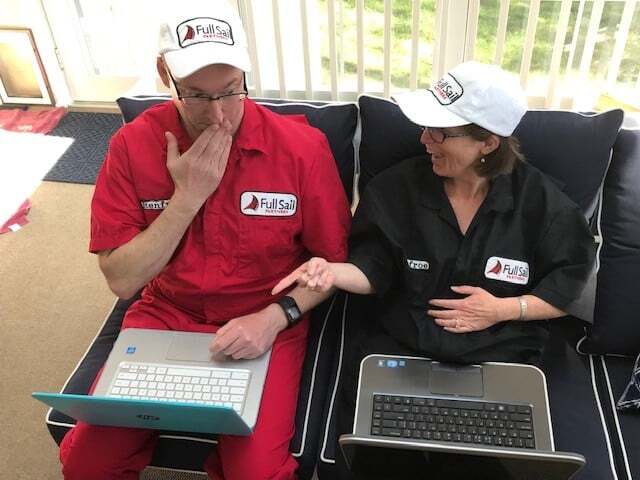
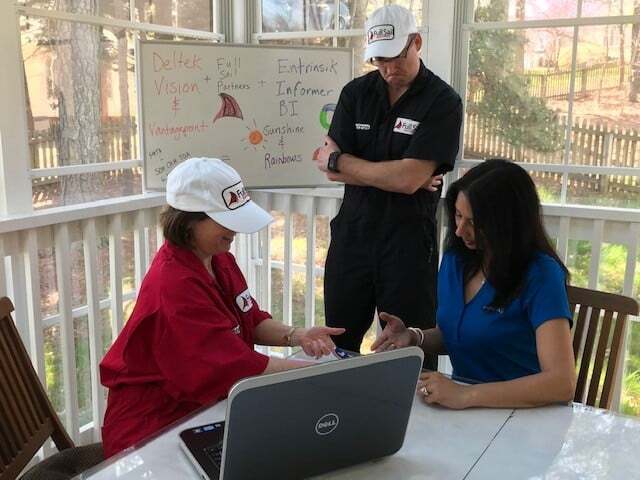
We get it! Working remotely, far from coworkers and isolated, can make for tough work attire choices. Well you spoke, and we listened! In our ongoing attempts to unify, team build and reduce decision fatigue, we are proud to announce our new corporate dress code. Introducing the universal, one-size-fits-all-in-wonderful, versatile, and fashionable Full Sail Partners' Speedsuit!

introducing

Perfect for:

Working from home!

workfromhome

Working with clients!

Presenting1


Success

And leisure.

Seeyoursupervisor

The Full Sail Partners’ Speedsuit is machine washable, wrinkle, stain, and odor resistant to accommodate any lifestyle. The official Full Sail Partners cap is the perfect accessory for bad hair days whether you’ve just gotten up or not slept for 3 days. We’ve got you covered! Together, the Full Sail Partners uniform will be a key lynchpin to success.

But wait, there is more! Clients can get their own Full Sail Partners speedsuit to show your support. Contact us now for more details.

HAPPY APRIL FOOLS’ DAY!

Topics:  

Always Be Recruiting – Ways to Find and Nurture Candidates

Posted by Sarah Gonnella on Nov 21, 2018

Candidates

Firms complain that there aren’t enough candidates when a job opening needs to be filled yet many firms aren’t taking the necessary steps to ensure they have candidates in the hopper when a position opens. Do projects just fall out of the sky? Ok, maybe on a rare occasion, but most of the time you must nurture relationships in order to be considered for a project pursuit. Recruiting should be looked at in the same way. A great way to find the best fit for your firm is to identify potential candidates before a position opens and develop these relationships.

Finding Potential Candidates

Recruiting should involve more than just your HR department and executives. Just like marketing and business development, recruiting should be something all staff members do. Some firms have found that having a referral process can be a great way to encourage employees to share the news, but even more important is letting your employees know to keep their eyes out for anyone that might fit the firm’s corporate culture and have skills needed within the company. The best recruiters leverage their staff within the company to help them do their jobs. Here are places employees can find potential new recruits: 

  • Social and informal connections happen all the time and staff can use these interactions as informal recruiting sessions. Potential recruits can come from current projects, partners, vendors, neighbors, and social events. Asking the right questions can provide you with a plethora of information regarding whether any of the people you deal with would be good matches for your firm.
  • Conferences and networking events are also convenient places to meet potential candidates. Conferences and association networking events are specifically geared for your industry. Sometimes individuals you meet might be great teaming partners or they might be just what you are looking for if a position comes available. Collect those business cards and ask some deeper questions about their jobs and you have a talent pool without having to officially recruit.
  • Social media is another easy way to recruit for candidates. Whether you tweet or connect with others via LinkedIn, there are a variety of ways to find qualified people that fit with your company culture. Just keep in mind what skills you are looking for on a consistent basis, and you will have plenty of options in the world of social media.
  • Job fairs, of course, are also appropriate places to find potential candidates. Even without an open position available at your firm, people at job fairs are looking to find where they fit in so when something does come up with your firm you have options. Simply gather names and resumes and you will get an immediate talent pool, or better yet, send them to your website to upload their information into your Talent system. 

Nurture Those Potential Candidates

In the Deltek Clarity report, project-based firms stated that their top challenge was finding qualified talent. I would beg to differ since talent is always around you and most likely available if you nurture the relationships. I suspect your challenge is just not identifying the talent when you come across it. 

Once you find potential candidates, it’s important to capture their information so you can pull from a talent pool. Using the Deltek Talent Acquisition system, recruiters and managers can quickly add resumes to talent pools allowing you to access your potential candidates by categories when a position opens. These talent pools allow you to keep lists of candidates with specific requirements or needs. 

We know great Project Managers or Marketing Coordinators are hard to find so you could tag potential candidates as you come across them. Instead of waiting until the position needs to be filled to start your search, with talent pools you can quickly send a templated email asking candidates you have met in the past, that have been pre-qualified, to submit for an opening. Imagine how much easier and quicker recruiting can be by taking a more proactive versus reactive approach.

Improve Hiring Efficiency

For project centric businesses, people are your competitive advantage. Ensuring solid talent management best practices within the business means assuring you can find the talent quicker than your competition. See how Deltek Talent can improve your employee hiring process.


The Importance of Being Efficient: Using an Automated Talent Acquisition System

Posted by Sarah Gonnella on Nov 29, 2017

Talent Acquisition Automation Gone are the days where human resources (HR) professionals simply focused on just filling staff requisitions. Today’s HR professionals are looking to build relationships which will impact their organization’s bottom line. With this in mind, they must successfully compete for and win the best talent which fits the needs of their firms. The talent acquisition team can boost the efficiency of both the recruitment and on-boarding of this talent using an automated system.

9 Talent Acquisition Processes that are Improved Using an Automated System 

  1. Standardized Job Descriptions | Having standardized job descriptions that can be automatically pulled into a requisition allows HR professionals to immediately begin finding qualified candidates. Establishing standardized job descriptions also sets skills requirements, job expectations, and success measurement. 
  2. Requisition Request and Approval | Automating the requisition and approval process ensures the team knows about a new hire request. This process also gives team members one last opportunity to evaluate the job description and provides tracking for the position moving forward.
  3. Write Once, Share Often | One of the biggest benefits of an automated talent system is the ability to share the job request in multiple locations without duplicating efforts. HR professionals can now streamline the publishing process by posting the position on the firm website, job boards, and social media, while enabling employees to share via their social networks. 
  4. One Place for Qualified Candidate Pool | A talent acquisition system ensures candidate submissions go into one centralized location. When candidates submit their resumes online, their information is associated to the requisition and can also be assigned to future pools for searching. No more excel spreadsheets needed nor keeping up with random emails and submissions from various locations. 
  5. Quick Candidate Notifications | Letting a candidate know his application was received and is being reviewed can make a positive impression. Even if a candidate doesn’t fit this position, he may fit a future position. The ability to send quick notifications to multiple candidates streamlines the recruitment process because candidate contact is automatically maintained. 
  6. Standardized Letters | Standardized letters (offer, decline, interview, etc.) allow HR to respond automatically to all candidates. These letters are significant to the candidate experience, and the automatic response reduces the work it would take to individually contact each candidate.
  7. Electronic Forms and Checklists | Reducing the amount of physical paperwork needed throughout the application and onboarding process is necessary for efficiency. Electronic forms and checklists make sure all necessary information is gathered, and that the process is seamless. 
  8. Internal Notifications | The first week of a new hire is the most important time to make a good impression. Automated internal notifications keep everyone involved with the new hire in the loop, so no one drops the ball.
  9. Let It Flow | The beauty of an automated talent acquisition process is that the flow of information eliminates duplicate entry. Once the candidate enters his information on the job application, it continues to flow through to the on-boarding process thus reducing manual entry. 

Automate Your Talent Acquisition Process 

Every HR professional wants to find and match the right candidates to open positions as quickly as possible. However, they also want the candidate experience to be a positive one for lasting relationships. Having an efficient talent acquisition process can improve new hire readiness and decrease time to revenue, while keeping the candidate experience in mind. Is your firm ready for an automated system?


6 Key Statistics that Fuel the Competition for Talent Management

Posted by Sarah Gonnella on Mar 15, 2017

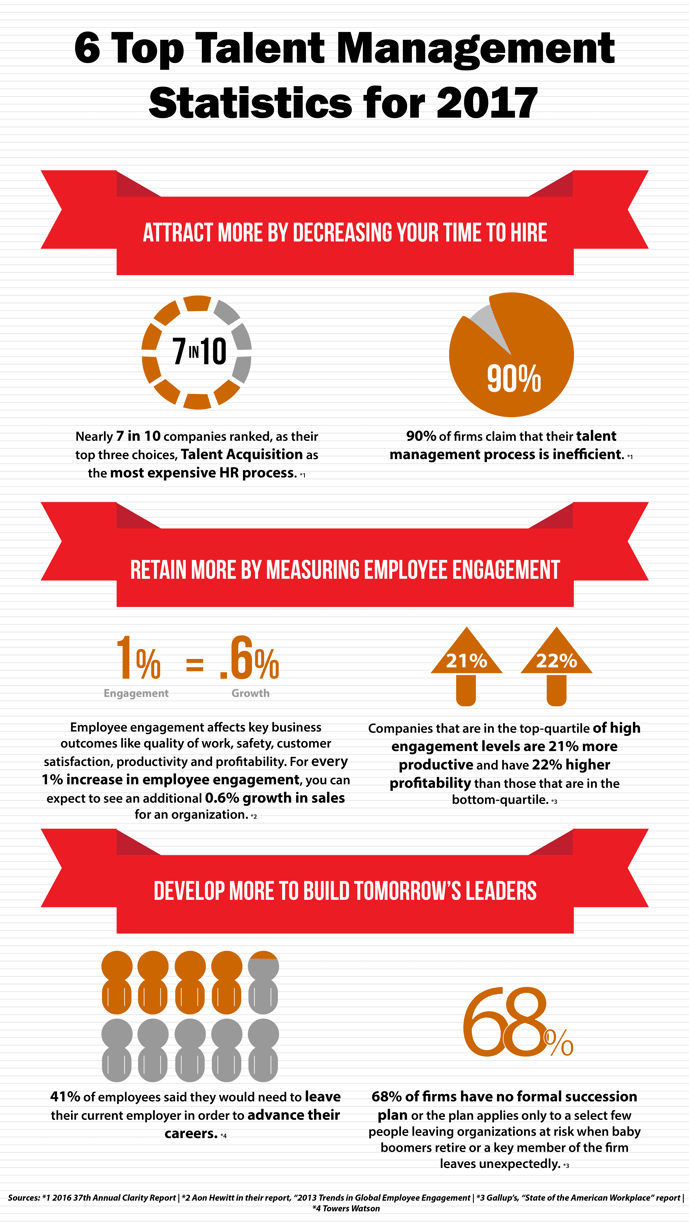
Organizations with antiquated talent management philosophies will struggle to attract, nurture and retain top talent in 2017. Many HR teams make the common mistake of having decentralized or ineffective systems and processes. This infographic illustrates six key statistics that demonstrate why HR teams can no longer be reactionary and should evaluate their talent management processes and systems.

Deltek-Talent-Infographic-Final.png

Learn More about the Challenges of Talent Management

Interested in learning more about how to overcome the increased competition for talent in 2017? Join our webinar where we will discuss how HR can overcome the top five challenges with talent acquisition.

Topics:  
HR

Ten Traits of a Great Seller

Posted by Sarah Gonnella on Sep 21, 2016


Traits_of_a_Good_Seller_2.pngSales is a tough industry where success is measured by attaining goals and quotas. So why are some sales people more successful than others? The reality is, selling and buying are not completely an intellectual process and actually requires building an emotional relationship. In order for you to be a great seller, several of these personality traits should characterize you.

  1. Visionary – Seeing the future and the big picture is a key to being successful in sales. More importantly, they do not allow where they are today to determine where they are going in the future.
  2. Ambitious – Top sellers have personal drive and don’t wait for someone else to tell them to do something. They know there is no time to wait for the next opportunity to come along, but that they need to be actively seeking more opportunities.
  3. Enthusiastic – It’s hard to sell anything if you’re not excited about the product. In fact, there might be some situations where your product is inferior to the competition. But if you’re more passionate about your product it’s more likely the buyer is going to be convinced to purchase from you.
  4. Persistence – The length of a sales cycle is different for every product and other outside factors such as under-motivated decision makers. Top sellers are tenacious. They know how to stay top-of-mind with decision makers so that when they finally decide to move forward, they’re there to close the deal.
  5. Conscientious – This is a personality trait used to describe a person that is efficient and well organized. Conscientious sales people are also motivated and able to keep moving forward after facing rejection.
  6. Active Listener – It’s hard to know the challenges a client faces without them explaining them. An active listener helps drive the conversation so everyone involved is able to come to a mutual understanding about the challenge at hand. Therefore, great salespeople take the time to understand the challenge from the client’s perspective. They stay focused on the conversation and make notes  
  7. Ask the Right Questions – There’s always multiple ways to ask a question, but choosing the right wording is critical to getting the right answer. “How’s business going?” will get a simple answer. Whereas, “What’s your biggest challenge this year?” can create a conversation.
  8. Problem Solvers – Sales people are often called solution engineers and for good purpose. Sellers need to know how their product solves the problem or problems the client is facing. Additionally, they need to be able to demonstrate how the solution can solve a problem.
  9. Assertive – When going through the sales process, sales people can become passive or overly aggressive. This is a huge mistake and can quickly dissuade a prospect. Assertive sales people use conversation to understand what’s going on so they know how to properly approach the situation to keep the sale process moving forward.
  10. Create Value – There’s common saying about gifted sales peoples, “he/she could sell ice to an Eskimo.” In most terms, this means they are smooth talkers. However, what if the ice they are selling is perfectly shaped to build an igloo? Now the ice has more value to an Eskimo.

Which Traits of a Seller Do You Have?

It’s time to take your sales to the next level! Start selling more by first identifying the personality traits you already possess. Next, identify ways to improve on the traits you lack or need to hone. 


3 Critical Connections for Project-Based Firms

Posted by Sarah Gonnella on Jun 6, 2016

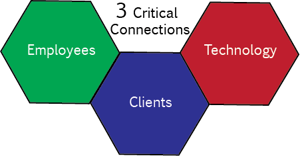
Three Critical Connections Let’s admit it, running a business has plenty of challenges. Why create more by overlooking the critical connections that support your business? Throughout my tenure as a business owner and entrepreneur, I have found three connections a business must have to reduce the challenges. These are connections with employees, clients, and technology. Let’s take a look at the importance of these three connections.

Connections with Employees

For starters, firms need to create a workforce that are driven to work hard and are enthusiastic about their jobs. To achieve this, employers must find ways to create connections with employees that shows them you see them as people, not just employees.

The easiest way to show an employees you see them as people is to engage them. For example, use meetings as a time to let everyone express their ideas. Ask for their opinions, and ask them to think critically about things. At the end of the meeting, people walk away feeling as if they contributed to the better good of the organization. For more about connecting employees, check out the “9 Ways to Connect with Employees” blog.       

Connections with Clients

For project-based firms, it’s important to connect with clients throughout the entire project lifecycle. Ponder this question. Have you ever completed a project for a client and you believe they are completely satisfied with your services, but find out later that they were not happy? Sometimes even a client you know may feel uncomfortable telling you something is bothering them. So how do you identify there is an issue?  

First, work with the client to setup expectations before a project starts. Secondly, continuously check-in with a client on a regular basis during the project lifecycle to manage expectations of the entire team. One of the best ways to do this is through an automated feedback process. Watch this vlog, “Client Connections – Create Unique Client Experiences” for more ideas about connecting with clients. 

Connections with Technology

Most if not all businesses use technology to support their operations. The question here is, how many different systems does a business use and how do they connect? In reality, they usually don’t seamlessly connect and share information. As a result, critical business data is stored in multiple systems, making it difficult for business leaders to make informed decisions.

For businesses to be successful, systems and applications must be in place to support all departments. Although each application is designed to support a specific function of the business, the data for these systems should start with a core ERP system and have the ability to connect to other critical systems. This allows for clear visibility throughout the entire organization. Interested to learn how you can connect to other external systems? Watch this vlog, “Systems Connections – Is Your Critical Technology Connected?” to learn more.    

Connecting It All Together

A project-based firm is so much more than the service they provide; rather, it is a network of connections that require special attention. It is important to connect and communicate with employees and clients in order to build a sturdy foundation for your business to grow from. Connecting with technology is equally as important, as doing so can maximize efficiency in operations while also providing an edge against competitors. Ensuring that these three critical connections are a priority is simultaneously ensuring your business will be successful.   

 

9 Ways to Connect with Employees

Posted by Sarah Gonnella on May 17, 2016

Connect with EmployeesWhat is the lifeblood of your business? Some might say clients and others might say employees. I tend to agree with the latter. Every company needs employees that are enthusiastic about their job and care about the company. Additionally, employees need to bring excitement and drive every day they show up to work in order for companies to be competitive. But how can a boss or employer create driven workforce? Simply by connecting with their employees. Let’s take a look at ways to connect with employees so your company can thrive.
Nine Ways to Connect with Employees

  1. Create Dialogue – The act of conversation in itself is a way to stay connected with employees. Far too often though, bosses find themselves leading conversations and doing most of the talking. As a result, employees are not engaged and the conversation is one-way. This doesn’t have to be the case. Whenever you are engaged in conversation with employees, it’s important to ask open ended questions to encourage employees to express their ideas and opinions.
  2. Keep Your Ears Open – You have two ears and one mouth for a reason. This might sound cliché, but it’s still a good thought to keep in mind. In reality, many people don’t understand how to listen. A good listener remains patient, absorbs what other people are saying, and ask engaging questions for clarity. More importantly, some people express ideas better than others, but that doesn’t diminish the value of their ideas.
  3. Give Ownership to Employees – I’m not saying give them actual ownership, although that could be appropriate at times. What I mean is to allow employees to own responsibilities and tasks within the organization. Give them the power to make decisions that truly affect their job and performance.  
  4. Provide a Career Path – Words and actions are two different things. Telling an employee they are doing well and they have a promising career with the company sounds nice, but it lacks an actual roadmap or path to where they are going and how to get there. Instead, find out what the employee’s career goals are and figure out a way to get them there. Put this in writing, and include challenging responsibilities to drive their personal growth. Additionally, include clear milestones that allow the employee to see they are achieving their goals.
  5. Educate Employees – Education doesn’t stop when you leave school and start a career. Even more, the skills we learned in school might not be exactly applicable to where your career path is going. Any company can train their employees, but how many of you educate your employee beyond their job responsibilities? Spend time educating about soft skills and even topics that help employees grow as a person. Investing in employee education provides a path to connect with your workforce. It also shows you care.
  6. Provide Guidance to Employees – One of the best learning opportunities for employees come from their boss. Furthermore, bosses provide more than explicit knowledge; they also provide a great deal of tacit knowledge. Here’s the difference. Explicit knowledge is formalized and documented. Whereas, tacit knowledge is more situational based knowledge. This experienced based knowledge is hard to teach, but as a boss, you’re in the perfect place to teach this based on your past experiences by applying this knowledge to current situations. For more about knowledge sharing, check out this whitepaper.
  7. Be Flexible with Employees – Technology has changed the way we work. The good thing about this is that many professional jobs can be accomplished from nearly anywhere with an internet connection. Additionally, these roles are no longer working from to 8:00 to 5:00, Monday through Friday and some days are longer than others are. Value your employee’s time and recognize the need for positive work to personal life balance. This allows you to connect with employees through trust, and that you know they will manage their responsibilities.
  8. Honesty is the Best Policy – Honesty is a powerful personal characteristic to exemplify. In fact, honesty is a characteristic that most, if not all leadership guides list as a key characteristic of a good leader. The reason for this is employers that are honest build confidence and trust with employees.   
  9. Always Remain Calm – Keep calm and connect with your employees. In other words, overreacting to stressful situations builds a wall between bosses and employees. By remaining calm and not screaming, employees find bosses more approachable and open minded.

Make It about the Employee

What this all boils down to is that employees want to be seen as people and to know that the company is invested into them. So in order to connect with employees, your goal should be to create a culture that empowers employees and shows you value them. After all, you want them to value the company as well.  

Deltek Vision How-To Series: Search and Replace Utility

Posted by Sarah Gonnella on Feb 24, 2016

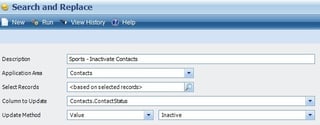
Deltek Vision Search and ReplaceDid you know you can quickly update data in seconds with Deltek Vision’s Search & Replace feature? The search and replace utility makes it possible for you to update fields globally for multiple records. Some examples of using the search and replace utility might be:
  • Making project records dormant on all levels
  • Inactivating contacts that have bounced emails 
  • Moving data from one field to another

The possibilities are endless and great for data clean-up. Be sure to check out our video demonstrating an example of using the Search and Replace Utility in Deltek Vision.

Deltek Vision How-To Series: List View

Posted by Sarah Gonnella on Dec 9, 2015

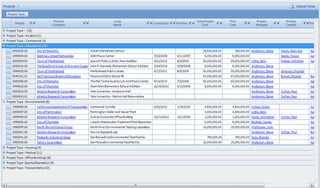
03_List_View.jpgDid you know in Deltek Vision you can view multiple records at one time through a list view? The list view was a featured added in version 7 allowing you the ability to group, filter, organize and quickly export a list. The List View is listed at the top of any Info Center’s top navigation allowing you to view multiple records.

Be sure to check out our video demonstrating all of the features of Deltek Vision's List View.


Most Recent News Mentions

We’re changing the way project-based firms operate.

People can’t help but notice.
Who will be next?

Check out our latest newsworthy work: