

4 Ways to Improve Employee Utilization
In the most recent AE Clarity Report issued by Deltek, the average employee utilization rate was reported as 58.5%. Firms are often confronted with how they can improve employee utilization to create a positive impact on the firm’s bottom line, all while keeping employee morale in mind. To improve employee utilization in both the short term and long term, focus on these four key areas:
1. Set Realistic Utilization Target sOne of the key factors that affect employee utilization is the target utilization rate. While it's essential to aim for high utilization rates, it's equally important to set realistic targets that employees can achieve without feeling overburdened.
These realistic targets allow for staff to focus on other, non-production (yet still important) initiatives for the firm, such as business development, staff development, and team building. Firms that allow employees time to focus on these areas will greatly increase employee productivity in the long run through increased employee and team efficiencies, as well as reduced staff turnover.
Unrealistic targets can lead to burnout, poor performance, and low morale. On the other hand, achievable targets can motivate employees to perform their best, leading to increased productivity and job satisfaction. For more information on setting realistic targets for employees, read our blog here!
2. Align Resources Effectively
Proper resource allocation is crucial for improving employee utilization. Before starting a project, it's essential to align resources based on their expertise, level, and availability. This ensures that tasks are performed efficiently and effectively, and labor costs are kept within budget. Proper resource allocation also helps to keep employee realization aligned with employee utilization, resulting in accurate billing and better profitability.
3. Manage Client Expectations
Effective client management is a key factor in improving employee utilization. By managing client expectations and delivering quality work on time, firms can build trust and long-term relationships with their clients. It's also important to identify tasks that are not part of the original scope of work and notify clients promptly. By doing so, firms can avoid scope creep and allocate resources efficiently, improving employee utilization and profitability. Need some help with managing client expectations? Find out exactly what they’re thinking with our presentation on Understanding the Client's Mind Using Feedback!
4. Leverage Technology
Technology can be a game-changer when it comes to improving employee utilization. By using tools like Deltek Vantagepoint, firms can track employee utilization in real-time and make data-driven decisions.
This real-time visibility gives your firm insight and the opportunity to influence the final results to ensure resources are properly aligned, client expectations are managed, and employee utilization is maintained.
Technology can also automate mundane tasks, freeing up employees' time to focus on value-adding activities.
Other Ways to Improve Employee Utilization
In addition to the four ways mentioned above, here are a few bonus tips that your project-based firm can use to improve its employee utilization.
- Foster a Positive Work Culture: A positive work culture is essential for improving employee utilization and retention. By creating a supportive and collaborative work environment, firms can boost employee morale, motivation, and engagement. This leads to higher productivity, better quality work, and lower staff turnover. Some effective strategies for fostering a positive work culture include employee recognition programs, open communication, and flexible work arrangements.
- Offer Professional Development Opportunities: Providing professional development opportunities to employees is another effective way to improve employee utilization. By investing in their employees' skills and knowledge, firms can improve their performance and productivity, leading to higher utilization rates. Some effective ways to offer professional development include mentoring programs, training sessions, and educational courses.
- Monitor and Measure Results: Finally, it's essential to monitor and measure employee utilization regularly to identify areas for improvement. By tracking key metrics like billable hours, utilization rates, and staff turnover, firms can identify trends and patterns, and make data-driven decisions. This helps to optimize resource allocation, manage client expectations, and boost employee utilization and profitability.
In conclusion, improving employee utilization requires a combination of effective strategies, tools, and a positive work culture. By setting realistic targets, aligning resources effectively, managing client expectations, fostering a positive work culture, offering professional development, leveraging technology, and monitoring and measuring results, firms can improve their employee utilization and enhance their profitability and growth.
With the right approach, firms can achieve high levels of employee utilization, leading to better outcomes for both the firm and its employees. View our free webinar on optimizing project management processes to learn how you can improve employee utilization and take your professional services firm to the next level.
 Congratulations! Your firm just won the largest project in its history and it’s time to celebrate, or is it? Unfortunately, winning the big project doesn’t guarantee success and big profits. For project-based firms, project management is synonymous with profit management, but many projects start in the red making it nearly impossible to make a profit. Here’s a look at some common pitfalls project-based firms face before they ever start a project.
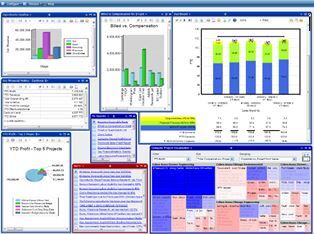 So what are the tools to allow you to be an effective, involved leader of the management of change process? Quite simply, an executive dashboard in a technology solution from a company like Full Sail Partners who can customize software for your change management project. Dashboards, like the one pictured here, can
  In soccer, while the right players, good equipment, and positive fan support are unquestionably important parts of the team’s success, the keystone to an effective soccer team is, in fact, the coach. The coach’s job is to balance each player’s strengths against the combined team’s goal of winning.
 Choosing the wrong ERP consultant or software solution can lead to significant issues penalizing you in dollars, time and public relations. Following are only two examples of many instances of what happens when ERP implementations fail:
 The weather this winter has played havoc with the daily lives of millions of individuals, as well as countless businesses.
  Project Backlog and Project Forecasting are two of the major components that predict current and future profitability of a firm. As firms begin to put together financial budgets for future years they are often looking at these two in conjunction between project backlog and project forecasting. Typically there are two different processes for forecasting future revenue:
 For most professional services firms, planning for growth is a natural part of business. There are different strategies for doing so, and choosing the best one depends on your ultimate growth objectives. But whatever your goals, understanding how your growth plan affects your cash flow plan is essential to achieving the results you seek.
 Of all the metrics that professional services firms can track, two of the most important are utilization and realization. These are different, but related ways of measuring employee productivity and profitability. Both can be measured with a high degree of accuracy — and made visible to management — using software.
 In my day-to-day conversations with companies I am often discussing IT support issues surrounding their firms’ backup plan for their firms’ key financial and marketing data. As I speak to these firms I inquire about steps they are taking to protect this critical data. I often pose this simple question “How long could your firm survive without access to this critical data?” Most firms indicate that they could not afford to be without access to this data for more than a day or two. Yet most have not taken precautions to have a 1-2 day restoration plan/ disaster recovery plan. In many cases these IT support issues seem to be a direct correlation to the firms’ reduction in IT support staff (internal & external) over the last several years. In many of these discussions it is often discovered that there is no backup plan for the firm’s critical data, no testing of backups to verify the integrity of the backups and no off-site backup storage. Two fairly typical conversations have occurred over the last couple months (names omitted to protect the guilty).