
In the News


We’re devoted to revolutionizing the way our clients do business. Sometimes that gets us noticed.

No big deal.

Posts about Building Business (2):

How to Know if Your Email Marketing is Successful

Posted by Ryan Felkel on Feb 27, 2018

Email Marketing Image.png

You’ve just spent hours creating a clever email with an enticing subject line to send your clients and prospects. As you prepare to push the button to send this email, you hope for a positive outcome of your campaign. Over the next 24 to 72 hours, you will log into your email marketing platform, such as Constant Contact or MailChimp, to check the performance of this email. But, which numbers really determine the success of an email marketing campaign? Let’s take a look.

Open Rate

The open rate is simple to understand but quite important. This is the percentage of the recipients that opened the email. Knowing how many people opened your email is significant because it will show you if your subject line drew enough attention to make opening it worth their time. Of course, the higher the open rate, the better.

Click-through Rate

Here’s probably the most important metric that allows you to know how successful your email marketing campaign has been. The click-through rate lets you know who actually read your email and took action by clicking on the included link. Seeing who clicked on the email allows you to know who’s interested in your content. This tells you who to target in the next stage of your marketing campaign. In other words, the more click- throughs, the more potential leads that have moved further into your marketing funnel.  

Bounce Rate

The bounce rate tells you how many of the intended recipients did not receive the email at all. There are two types of bounces, a soft bounce and a hard bounce. A soft bounce happens when the recipient’s mailbox is full, the server is down, or the email is too large for the inbox. On the other hand, a hard bounce means the message is permanently rejected because the email address is invalid or doesn’t exist. Obviously, the more bounces, the less potential for exposure to the email content.    

Unsubscribes

Like click-through rates, unsubscribes allow you to assess the quality of your content. If a person signs up to receive your emails and newsletters but unsubscribes, it is usually because the content is not what they expected. So, unsubscribes can show you how many recipients have determined that the content is not valuable or interesting.

Spam Reports

While unsubscribes are bad, being reported as spam is worse. This usually happens for one of two reasons. Either you send emails to people that never signed up to receive them or you send emails to people with irrelevant content. Email marketing platforms can and will suspend accounts that have a high spam rate. Therefore, not spamming is a priority in your email marketing campaign.

Refining Your Email Marketing Campaigns

Using A/B testing is a great way to improve your email marketing campaigns. This is a controlled experiment that compares two versions of the same content to determine which messaging improves your email marketing success rates. There can be a variation of the subject lines, the messaging in the email and the verbiage used in the call-to-action. Remember, in the end, the main goal is to get your email marketing campaign through to its intended audience and have it be well received. How you accomplish this is up to you.

  

Using Proper Data Analysis to Drive Business Development Decisions

Posted by Ryan Felkel on Jan 31, 2018

Analyze Data Many firms have a plethora of data regarding existing clients, prospects, and wins and losses just sitting around being underutilized or possibly not being used at all.  So, what should these firms be doing with all this data? Well, this significant information needs to be analyzed to create actionable insights which will help drive business development decisions. Here are some thoughts to ensure a proper data analysis.

Reports Don’t Equal Analysis

Reports are pretty and give you an easy view of your data. The line goes up and you smile, the line goes down and you frown. However, quickly glancing over these reports doesn’t actually answer why these are the results you see?

Analyzing means taking those results to the next level and learning why these are the trends your firm is experiencing. You must ask the right questions to find answers in your data and then form a hypothesis to test your data against. This will allow you to find the reason behind your numbers.  

Using Analysis to Achieve the Real Goals

As simple as this sounds, getting the right information from your data analysis can affect achieving your firm’s goals. To make actionable decisions, the goals of the business must be what drives your measurement strategy. Using the correct data analysis technique requires that you know what questions you’re trying to answer.

Think about it, generic questions tend to lead to generic answers. To determine what you’re trying to figure out from your data analysis, you’ll need to have clear objectives provided by the firm’s stakeholders. Without having a specific question to answer, you won’t get a clear answer.     

Creating Metrics That Promote Action

Communicating the results of your analysis in a way to create actionable insights can often be difficult. It doesn’t have to be when the results of your analysis answer the questions that have been established by the business objectives. Therefore, communicating actionable insights requires being able to quantitatively measure the success of the plan you recommend.

The findings of the analysis should drive the development of key performance indicators (KPIs). With these KPIs, the company knows what quantifiable objectives determine the success of the business. Keep in mind, your KPIs need to be realistic based on your data. 

Good Data in Equals Good Data out

Collecting the right data and maintaining it is the most important part of data analysis. For project-based firms, projects are the lifeblood of the business. Winning more projects is essential to generating more revenue. As a result, discovering key project related data from your analysis is integral to creating compelling proposals that win new business. 

Making Data Work for Your Firm

To learn more about project data collection and maintenance best practices, make sure to attend this year’s SMPS Pacific Regional Conference and the Southeast Regional Conference. Lindsay Diven, Full Sail Partners’ Senior Consultant, will be presenting a session titled, “Develop Your Data Collection & Maintenance Program – No CRM Needed” to address this specific topic. Let your data work for you.


Winning on All Fronts –Successful Team Management with Deltek

Posted by Amy Balassone on Sep 20, 2017

Team of Professionals The long-term success of a sports team cannot be determined by looking at just one factor. For a sports team to truly excel, it must triumph on many fronts. From scouting the best talent to strategizing offensive and defensive plays for cohesive team execution, the team manager must create a winning formula that, when utilized, brings continuous success for the team. This is also true for professional services firms, and finding the right formula for your team can become less of a guessing game with the tools available from Deltek. Let’s see how Deltek can help your firm knock it out of the park.

Winning the War for Talent

We all know that finding and attracting the best players for your team is a time-consuming process. Even more, tracking their training and development can be laborious. With Deltek Talent, however, professional services firms can easily overcome these challenges.

Deltek Talent provides a complete view of the entire human capital management process. From recruiting new talent to career development and employee performance management, Deltek Talent is a unified talent management solution designed to help your firm recruit and retain top talent. Using this Deltek tool, your team will be a group of all-stars.

Winning Repeat and New Business

Taking advantage of every opportunity and identifying every weakness in your opponent is how to win a game, and the same can be said for acquiring business in the professional services industry. Using Deltek CRM, your firm will gain visibility into the entire business development process, from prospect to opportunity to gaining the new business. Most importantly, presenting your winning solution in a compelling way to your key contacts is vital to setting your firm apart from the competition.

With Deltek CRM, you can access the actual past performance of similar projects you’re bidding on with the data stored within Deltek Vision and Deltek for Professional Services. This feature easily allows you to create proposals based on actual firm performance, and they are quick to produce with the proposal automation capabilities of Deltek CRM. Now, that’s a game changer.

Winning with Project Delivery

To build your game plan, you must first know who is available to play or whose injury would prevent the best performance. The same goes for project management in a professional services firm. Using Deltek Vision and Deltek for Professional Services, your firm will have the resource planning capabilities needed to ensure staff utilization is being maximized so that you are never blindsided in your projects. Even more, instant access to project metrics and performance data helps guarantee projects will stay on track.

Win with Deltek

In Moneyball: The Art of Winning an Unfair Game, by Michael Lewis, there is a Pete Palmer quote, “Managers tend to pick a strategy that is the least likely to fail, rather than to pick a strategy that is most efficient. The pain of looking bad is worse than the gain of making the best move.” Fortunately, professional services firms don’t need to play this guessing game when using Deltek tools. Let Deltek help your team find the right formula to win on all fronts. Wouldn’t you like to have the upper hand?


A Walkthrough of the Stages of the Client Engagement Lifecycle

Posted by Ryan Felkel on Jul 6, 2017

Client Engagement LifecycleHere you are, sitting at your computer, reviewing a list of leads and opportunities stored within your client relationship management (CRM) system. As you scroll through the list, you might begin to wonder how these became leads and opportunities. This is an important thing to know. When thinking about the client engagement lifecycle, it’s easiest to mentally picture a series of funnels. New prospects fall into the funnel and trickle down into opportunities.
Here’s a look at how this happens:

Attract

The client engagement lifecycle begins when you bring in new prospects. You can think of this as the top of the funnel. During this stage, it’s important to identify your target markets and personas such as project managers, accountants, and executives that will be interested in your services and/or products. Content can then be created that resonates with these key people to attract them into the funnel.

The content can be varied. It could range from written blogs to videos, webinars and podcasts. Just make sure the content is relevant to your target markets and personas and helps them solve common obstacles within their industry.

Nurture

Now that the funnel is open, it’s important to maintain prospect interest so they stay in the funnel. Knowing what content has sparked and sustained this interest is important so you can produce new content to continue to drive awareness. Additionally, the original content that brought them into the funnel should leave them with unanswered questions.

During this stage, familiarity with the content which first attracted the prospects will help you determine questions they might now have. Your new content should be more specific to answer these questions with fact-based information that also communicates your expertise. Email campaigns provide a great avenue to share this fresh content.

Convert

Awesome, your funnel still has prospects. Now it’s time to get them to make a conscious decision to move further. This is not to say they were not interested in your products or services before, but rather the content that you have been sharing has made them recognize you are a trusted authority and a subject matter expert.

This stage is when specific conversations need to begin, and you should convert these prospects into advocates. As a result, these advocates can arrange for meetings with other decision-makers. You can then start to create clients from prospects. 

Grow

Congratulations, you now have new clients in your funnel. This is the stage where you will foster the ability to provide additional products and services to your clients.

The tricky thing here is creating content that will be important to your clients in the future. For some businesses, this is a few months down the road, and for others, a year or more. A great tool to use is a monthly or quarterly newsletter for sharing your newly created content to create new opportunities.

Sustaining the Client Engagement Lifecycle

Remember that the client engagement lifecycle is a never-ending loop. The funnel should never close, but rather redirect to other products and services you can provide. If your clients are happy with your products and services, they are more likely to make future purchases.

Why Your Firm Needs Proposal Automation

Posted by Ryan Felkel on Mar 29, 2017

Proposal AutomationMany professional services organizations are under the false impression that proposal automation is not worth the investment. While copying and pasting previous Request for Proposal (RFP) submissions may seem expedient, it is not really the case as firms must tailor them to the unique needs of each new proposal. Let’s review a few reasons why proposal automation will benefit your firm if it is incorporated into the bidding process.

Firms Shouldn’t Depend on Previous RFP Content

Relying on past proposals as your content library is a bad move. Far too often, though, professional services firms fall into the trap of utilizing past RFPs in this way. There are a litany of reasons to avoid copying and pasting past proposal content:

  • A higher rate of human error
  • Past content typically contains other companies branding and imagery
  • A generic approach leads to a generic response
  • Lack of focus on the needs of the individual client

Proposal automation will eliminate human error. It will also create a consistent proposal format that contains details suited for each individual client and ensures proper branding.

Accurate Technical and Background Answers Are Necessary

Proposal teams can expect a list of common questions during the RFP process. RFP questionnaires typically contain background questions (founding date, partnerships, administrative information) and technical questions (performance KPIs, background details, etc.) As a result, copying previous proposals can lead to submitting inaccurate information.

With proposal automation, your firm can make sure that these frequently used answers are accurately reflected and are available for quick reference in your proposal content library.

Review Your Content!

Content reviews are an essential element in differentiating winners from losers. Your firm’s content library needs to be continually refined. Each piece of content should be relevant and error free. Additionally, your proposal team must be notified of pertinent changes so outdated content doesn’t spread into future proposals.

Using proposal automation, common content can be managed in a central location. Whoever is managing the content can ensure that the proposal team has only the most up to date information.

It should be evident now why proposal automation is worth the investment. Check out how Deltek Vision firms are implementing proposal automation to win more projects! 


Ten Traits of a Great Seller

Posted by Sarah Gonnella on Sep 21, 2016


Traits_of_a_Good_Seller_2.pngSales is a tough industry where success is measured by attaining goals and quotas. So why are some sales people more successful than others? The reality is, selling and buying are not completely an intellectual process and actually requires building an emotional relationship. In order for you to be a great seller, several of these personality traits should characterize you.
  1. Visionary – Seeing the future and the big picture is a key to being successful in sales. More importantly, they do not allow where they are today to determine where they are going in the future.
  2. Ambitious – Top sellers have personal drive and don’t wait for someone else to tell them to do something. They know there is no time to wait for the next opportunity to come along, but that they need to be actively seeking more opportunities.
  3. Enthusiastic – It’s hard to sell anything if you’re not excited about the product. In fact, there might be some situations where your product is inferior to the competition. But if you’re more passionate about your product it’s more likely the buyer is going to be convinced to purchase from you.
  4. Persistence – The length of a sales cycle is different for every product and other outside factors such as under-motivated decision makers. Top sellers are tenacious. They know how to stay top-of-mind with decision makers so that when they finally decide to move forward, they’re there to close the deal.
  5. Conscientious – This is a personality trait used to describe a person that is efficient and well organized. Conscientious sales people are also motivated and able to keep moving forward after facing rejection.
  6. Active Listener – It’s hard to know the challenges a client faces without them explaining them. An active listener helps drive the conversation so everyone involved is able to come to a mutual understanding about the challenge at hand. Therefore, great salespeople take the time to understand the challenge from the client’s perspective. They stay focused on the conversation and make notes  
  7. Ask the Right Questions – There’s always multiple ways to ask a question, but choosing the right wording is critical to getting the right answer. “How’s business going?” will get a simple answer. Whereas, “What’s your biggest challenge this year?” can create a conversation.
  8. Problem Solvers – Sales people are often called solution engineers and for good purpose. Sellers need to know how their product solves the problem or problems the client is facing. Additionally, they need to be able to demonstrate how the solution can solve a problem.
  9. Assertive – When going through the sales process, sales people can become passive or overly aggressive. This is a huge mistake and can quickly dissuade a prospect. Assertive sales people use conversation to understand what’s going on so they know how to properly approach the situation to keep the sale process moving forward.
  10. Create Value – There’s common saying about gifted sales peoples, “he/she could sell ice to an Eskimo.” In most terms, this means they are smooth talkers. However, what if the ice they are selling is perfectly shaped to build an igloo? Now the ice has more value to an Eskimo.

Which Traits of a Seller Do You Have?

It’s time to take your sales to the next level! Start selling more by first identifying the personality traits you already possess. Next, identify ways to improve on the traits you lack or need to hone. 


Facts about Client Data Integrity

Posted by Ryan Felkel on Jul 6, 2016

Garbage in, garbage out! Believe it or not, this is a real term in the field of computer science and it has an acronym, GIGO. More importantly, this theory can be applied to the data integrity in a client relationship management (CRM) software. Marketing decisions are only as good as the data used to make them. If the data in a CRM are incomplete and erroneous, developing strategic decisions becomes nearly impossible. In other words, it’s like throwing ideas at a wall and waiting to see what sticks. According to data experts, many businesses are struggling to maintain a CRM database with consistent and usable information about their clients. Look below to see what these experts have to say about client data integrity.

3 Critical Connections for Project-Based Firms

Posted by Sarah Gonnella on Jun 6, 2016

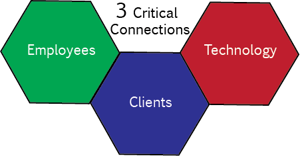
Three Critical Connections Let’s admit it, running a business has plenty of challenges. Why create more by overlooking the critical connections that support your business? Throughout my tenure as a business owner and entrepreneur, I have found three connections a business must have to reduce the challenges. These are connections with employees, clients, and technology. Let’s take a look at the importance of these three connections.

Connections with Employees

For starters, firms need to create a workforce that are driven to work hard and are enthusiastic about their jobs. To achieve this, employers must find ways to create connections with employees that shows them you see them as people, not just employees.

The easiest way to show an employees you see them as people is to engage them. For example, use meetings as a time to let everyone express their ideas. Ask for their opinions, and ask them to think critically about things. At the end of the meeting, people walk away feeling as if they contributed to the better good of the organization. For more about connecting employees, check out the “9 Ways to Connect with Employees” blog.       

Connections with Clients

For project-based firms, it’s important to connect with clients throughout the entire project lifecycle. Ponder this question. Have you ever completed a project for a client and you believe they are completely satisfied with your services, but find out later that they were not happy? Sometimes even a client you know may feel uncomfortable telling you something is bothering them. So how do you identify there is an issue?  

First, work with the client to setup expectations before a project starts. Secondly, continuously check-in with a client on a regular basis during the project lifecycle to manage expectations of the entire team. One of the best ways to do this is through an automated feedback process. Watch this vlog, “Client Connections – Create Unique Client Experiences” for more ideas about connecting with clients. 

Connections with Technology

Most if not all businesses use technology to support their operations. The question here is, how many different systems does a business use and how do they connect? In reality, they usually don’t seamlessly connect and share information. As a result, critical business data is stored in multiple systems, making it difficult for business leaders to make informed decisions.

For businesses to be successful, systems and applications must be in place to support all departments. Although each application is designed to support a specific function of the business, the data for these systems should start with a core ERP system and have the ability to connect to other critical systems. This allows for clear visibility throughout the entire organization. Interested to learn how you can connect to other external systems? Watch this vlog, “Systems Connections – Is Your Critical Technology Connected?” to learn more.    

Connecting It All Together

A project-based firm is so much more than the service they provide; rather, it is a network of connections that require special attention. It is important to connect and communicate with employees and clients in order to build a sturdy foundation for your business to grow from. Connecting with technology is equally as important, as doing so can maximize efficiency in operations while also providing an edge against competitors. Ensuring that these three critical connections are a priority is simultaneously ensuring your business will be successful.   


9 Ways to Connect with Employees

Posted by Sarah Gonnella on May 17, 2016

Connect with EmployeesWhat is the lifeblood of your business? Some might say clients and others might say employees. I tend to agree with the latter. Every company needs employees that are enthusiastic about their job and care about the company. Additionally, employees need to bring excitement and drive every day they show up to work in order for companies to be competitive. But how can a boss or employer create driven workforce? Simply by connecting with their employees. Let’s take a look at ways to connect with employees so your company can thrive.

Nine Ways to Connect with Employees

  1. Create Dialogue – The act of conversation in itself is a way to stay connected with employees. Far too often though, bosses find themselves leading conversations and doing most of the talking. As a result, employees are not engaged and the conversation is one-way. This doesn’t have to be the case. Whenever you are engaged in conversation with employees, it’s important to ask open ended questions to encourage employees to express their ideas and opinions.
  2. Keep Your Ears Open – You have two ears and one mouth for a reason. This might sound cliché, but it’s still a good thought to keep in mind. In reality, many people don’t understand how to listen. A good listener remains patient, absorbs what other people are saying, and ask engaging questions for clarity. More importantly, some people express ideas better than others, but that doesn’t diminish the value of their ideas.
  3. Give Ownership to Employees – I’m not saying give them actual ownership, although that could be appropriate at times. What I mean is to allow employees to own responsibilities and tasks within the organization. Give them the power to make decisions that truly affect their job and performance.  
  4. Provide a Career Path – Words and actions are two different things. Telling an employee they are doing well and they have a promising career with the company sounds nice, but it lacks an actual roadmap or path to where they are going and how to get there. Instead, find out what the employee’s career goals are and figure out a way to get them there. Put this in writing, and include challenging responsibilities to drive their personal growth. Additionally, include clear milestones that allow the employee to see they are achieving their goals.
  5. Educate Employees – Education doesn’t stop when you leave school and start a career. Even more, the skills we learned in school might not be exactly applicable to where your career path is going. Any company can train their employees, but how many of you educate your employee beyond their job responsibilities? Spend time educating about soft skills and even topics that help employees grow as a person. Investing in employee education provides a path to connect with your workforce. It also shows you care.
  6. Provide Guidance to Employees – One of the best learning opportunities for employees come from their boss. Furthermore, bosses provide more than explicit knowledge; they also provide a great deal of tacit knowledge. Here’s the difference. Explicit knowledge is formalized and documented. Whereas, tacit knowledge is more situational based knowledge. This experienced based knowledge is hard to teach, but as a boss, you’re in the perfect place to teach this based on your past experiences by applying this knowledge to current situations. For more about knowledge sharing, check out this whitepaper.
  7. Be Flexible with Employees – Technology has changed the way we work. The good thing about this is that many professional jobs can be accomplished from nearly anywhere with an internet connection. Additionally, these roles are no longer working from to 8:00 to 5:00, Monday through Friday and some days are longer than others are. Value your employee’s time and recognize the need for positive work to personal life balance. This allows you to connect with employees through trust, and that you know they will manage their responsibilities.
  8. Honesty is the Best Policy – Honesty is a powerful personal characteristic to exemplify. In fact, honesty is a characteristic that most, if not all leadership guides list as a key characteristic of a good leader. The reason for this is employers that are honest build confidence and trust with employees.   
  9. Always Remain Calm – Keep calm and connect with your employees. In other words, overreacting to stressful situations builds a wall between bosses and employees. By remaining calm and not screaming, employees find bosses more approachable and open minded.

Make It about the Employee

What this all boils down to is that employees want to be seen as people and to know that the company is invested into them. So in order to connect with employees, your goal should be to create a culture that empowers employees and shows you value them. After all, you want them to value the company as well.  

Bid/No Bid – When to Decide During the Proposal Process

Posted by Ryan Felkel on Apr 20, 2016

Bid_No_Bid_Proposal_Process.pngOften times, upper management views the proposal process as a “cost of business” and don’t put forth a concerted effort to control proposal related costs. There are several ways to increase the cost-effectiveness of your proposal process, and starting with a bid/no bid process is the first step.

Did you know that 40% of AE firms have no formal bid/no bid process? This is according to the 36th Annual Deltek Clarity AE Report. For that reason, I’m going to focus on the importance of the bid/no bid process. More specifically, why the decision can be made during any phase of the proposal process. 

Notification of New Opportunity

Let’s start by saying that if you’re receiving notification of a new opportunity within your industry when the request for proposal (RFP) is issued, your business development team is already crippling your chances of winning that opportunity. This is a huge red flag to include in your bid/no bid process. On the other hand, if they have a great relationship with the prospective client, they probably have a decent understanding of the scope of work and the project requirements. Either way, this is the first opportunity your company has to decide whether to bid or not to bid.

Honesty is the best policy, so be honest with yourself! If you specialize in building parking garages and the RFP is for a bridge, your chances of winning are already slim. Sure, you want to branch out and do more than build parking garages, but is this client the one that’s likely to give you that chance? Odds are, probably not.

Release of the RFP

Now you have the RFP that in a perfect world has a detailed scope of work and all the requirements. This is when the page turning begins with a detailed review of every word. Does your proposed solution work within the stated budget? Have you revealed any obscure requirements that are red flags? When evaluating your solution and the requirement, create a risk management plan and think about how your company has managed similar risks in the past. 

There’s the old adage, you can’t fit a round peg in a square hole. In other words, if you can’t provide a solution within the requirements of the RFP, your chances of winning are already greatly diminished. Instead proposing on this opportunity, utilize your resources on an opportunity within your company’s skill set.

During the Proposal Preparation Process  

As you begin to develop your solution, keep in mind that it’s still not too late to abandon the RFP. In some cases, the client may issue amendments or provide clarity that changes the scope of work. Other times, the proposal preparation team may find that the proposed solution has become more complex than originally thought or certain costs were overlooked. 

Usually people say “better late than never” as an excuse. However, in this case, it’s absolutely honorable to walk away from an opportunity before committing your company to something it might have difficulty delivering. In the end, winning the work doesn’t guarantee a profit or a happy client. 

Winning with a Bid/No Bid Decision

In the proposal world, there are always two winners for each RFP. Obviously, the company that wins the bid, but the less obvious is the first company to decide to focus their resources on other business opportunities. As a proposal manager, you want to increase your win rate, and at the same time, upper management has the need to win more revenue. While this puts the two sides at odds, agreeing to an effective bid/no bid process can significantly increase your proposal cost-effectiveness and possibly increase revenue for the company.   


Most Recent News Mentions

We’re changing the way project-based firms operate.

People can’t help but notice.
Who will be next?

Check out our latest newsworthy work: