
In the News


We’re devoted to revolutionizing the way our clients do business. Sometimes that gets us noticed.

No big deal.

Posts about Client Relationships:

11 P’s for Peak Performance of a 'Perfect Employee' (Clone)
Posted by Sarah Gonnella on Jun 26, 2025

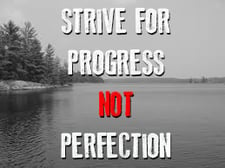
PERFECTIONOur modern day culture is often obsessed with perfection. Magazine covers are graced by photoshopped professional models and our TV screens are filled with successful eclectics whose wealth is their biggest problem.

Fortunately, perfection is not an attainable goal; the real goal is the path we follow as we strive for peak performance which is the essence of a 'perfect employee'.

It was Vince Lombardi that said, “Perfection is not attainable, but if we chase perfection we can catch excellence.” Considering that the NFL Super Bowl trophy is named after Vince Lombardi, you could say he knew a thing or two about peak performance…

So, what qualities help us along this path to being the ‘perfect employee’? 

What are the 11 P's of Peak Performance?

If obtaining peak performance is our professional goal, then, what exactly are the attributes that we need to be the 'perfect employee'?  Following is the list of benchmark qualities you should strive for on your path:

1. Proficient. Sure, you can’t have all the answers but you know how to dive in or connect with the right people to figure them out. You come to the table with suggestions - not more problems. You are constantly looking at how to improve the process.

2. Proud. You are proud of your work because your efforts are always well thought out, tested and reviewed. You don't rely on others to finish your assignments but ask others to quality check your work to make sure it is always correct.

3. Persistent. We all know to learn from mistakes, but the 'perfect employee' personifies this concept. You admit when you are wrong sooner than later. If you don't know how to do something, you find out how … with no excuses.

4. Passionate. You LOVE what you do and radiate emotion when you talk about your work!  You learn on your own, offer improvements, and share with others what you know.

5. Productive. Your willingness to push up your sleeves and work overtime while not jeopardizing other commitments is renowned. While we all have parts of our jobs that are not favorable, 'perfect employees' realize the goal of those less desirable tasks and get them done.

6. Positive. You exemplify “Can Do!” by accepting that you can always improve, you see challenges as opportunities, and you think about how things can be done instead of complaining about what you can't change (including the past).

7. Professional. You understand that while comradery is important with co-workers and clients, there is a fine line between “fun” and unprofessional “fooling around.” You make sure your work is top notch and your comments will not ever be construed as childish or offensive.

8. Able to keep Promises. You are always thinking about priorities and when the job will be completed in order to deliver in order to keep your promise. You communicate when a conflict arises but still look to deliver on time. You are faithful about deadlines and rarely provide excuses.

9. Punctual. You understand the value of time, yours as well as others. People think “punctual” is your middle name.

10. Able to Promote … others and yourself. You promote great deeds and great work regardless of who completed it. You are always thinking and talking about ways to make the workplace a better environment for your colleagues and services better for clients.

11. Purposeful. Each day has a purpose. You take each day and every action seriously; constantly thinking about what needs to be accomplished and how to generate purposeful results.

HOW to be “perfect” (or close)?

Providing professional services, by nature, means that we are tasked to serve our clients. We often measure billings, schedule delivery and quality of deliverables, yet fail to objectively measure the real goal - driving client delight. Strive to be the 'perfect employee' to your clients by evaluating how to obtain your peak performance and implementing continuous improvement with feedback!

 

Key Findings from the 41st Annual Deltek AE Clarity Report

Posted by Rick Childs on Jul 15, 2020

Deltek Clarity

Every year, Deltek collaborates with ACEC, ACEC Canada, AIA and SMPS to conduct a study to measure the health of the AE industry. The 41st Deltek AE Clarity Report provides a comprehensive assessment of the 2019 performance of AE firms. Furthermore, the study collected responses from more than 415 firms of all sizes within the AE industry. While many of you will eventually read over the findings, here is a summary of what you will discover in detail.

Clarity on AE Technology Trends

With no surprise, technology is a leading focus for AE firms. It seems like this is a trend every year, and it is now becoming even more important for AE firms to invest in technology to be competitive. Surprisingly, augmented and virtual reality is driving a deeper interest into technology investments for AE firms. Even more, firms that have been challenged by the costs of emerging technologies are finding them more affordable as they become more mainstream. According to responses from the Deltek Clarity survey, firms have accepted that the cost of investing in technology has a significant and beneficial impact on the efficiency of their operations.

Clarity on Financial Statements

2019 proved to be another great year for the AE industry in regard to financial performance. The report explains that over the past 10 years, the financial stability of the AE industry has remained strong and has shown growth. While many of the core metrics measuring financial strength demonstrate small changes from year to year, the changes are continuously positive. A significant finding is that operating profit on net revenue and net fixed assets per employee did rise in 2019. Furthermore, the benchmarks for operating profit on net revenue and net labor both surpassed the high performer thresholds which backs the findings of financial stability in the AE industry.

Clarity on Business Development

This section has some interesting findings. Win rates were down and so was revenue from the firm’s top three clients. However, there may be some factors that can explain these results. Is it because firms are lacking a formal go/no go process to improve new business pursuits, or are firms pursuing business in new markets? Are your firm’s top three clients doing less work? Perhaps it is a combination of all these things. But one thing remains certain, that business development continues to be a challenge for AE firms.

Clarity on Project Management

What, what, what? The 41st Deltek Clarity Report found that AE firms, which are project-based businesses, have recognized they need to improve their project management capabilities. Yes, you read that right. Many AE firms are reporting they need to better define responsibilities and processes, develop better practices, and invest in project management training. How fantastic that AE firms are recognizing that project management and delivery is hindering the overall performance of their firm and acknowledging there is a need for change.

Clarity on Human Capital Management

Human Capital Management is a not a problem unique to the AE industry, and it affects nearly every profession. For AE firms, talent acquisition is the top challenge leaders face each year. Since a firm is only as good as the people it employs, acquiring and retaining top talent is essential to staying competitive. Unfortunately, talent acquisition is going to continue to be a challenge for AE firms since the number of available experts is limited. Also, AE firms continue to fall short due to lack of succession planning. This is something AE firms should evaluate as we approach a generational change and baby boomer retirements.

Learn More with the 41st Deltek Clarity Report

For many, the Annual Deltek AE Clarity Report is a valuable tool used to benchmark the performance of your firm. It’s important to keep in mind that using this report from 2019 to compare to your current fiscal year of 2020 may give you skewed results as the global pandemic’s effects are still unseen and predicting the impact is nearly impossible. Good news though, you can still compare your 2019 results against the report findings, and Deltek plans on releasing the 42nd Annual Clarity Report in 2021, which will most certainly shine light on the impact of the global pandemic.

An Effective and Successful CRM is a Lifestyle Change

Posted by Amanda Roussel on Jun 10, 2020

CRM lifestyle

There have likely been times where you desired to get healthier and stronger. You cannot just wake up one day, eat well, exercise, and see the results of your efforts instantaneously. You must have the desire to change, recognize the benefits of doing so, keep your WHY at the top of your mind, and identify long-term goals. Just like in your personal life, lifestyle changes are necessary on the business front to see real success, and client relationship management (CRM) is a large part of making that happen.

Professional services firms offer services, and it is all about the knowledge and expertise of a firm’s professionals and trust in the brand. The art of building relationships and earning trust takes time, thought, and coordination within your team. CRM tools keep track of these communications, and consistency is what builds the data. With this data, you can establish long-term goals that you strive to meet. The positive results from choosing to use an effective CRM make it worth your while to change your work lifestyle.  

Accomplish More

The benefits of a personal healthier lifestyle may be having more energy, feeling more confident, and accomplishing goals that have felt distant. Likewise, for businesses, process and habit improvements offer benefits such as boosting productivity, increasing communication with clients, and crushing sales goals. Implementing a CRM helps you work more effectively as a team while adding productivity time back to your schedule. If CRM data is captured timely and correctly, it takes significantly less time to “research” what the latest communications and outcomes were with clients.

Think of employee-client interactions and the information that is gathered as a firm resource. Business resources are meant to be shared efficiently, and that information should be available when others need it. Furthermore, new information is constantly coming in and a CRM tool provides your teams a platform to document and share this information, keeping everyone informed.

Use the Technology at your Fingertips

As new information comes in from various sources, real-time data is crucial. This is achievable with the mobile capabilities of a strong CRM. Therefore, documenting information after each engagement brings consistency and a positive habit. With a firm-wide CRM, you can stay on top of your communications and proactively reach out to clients.

Additionally, as there are web-based apps to track exercise stats, sleep habits, and food intake, there are also apps that streamline business matters. All data from these apps, such as email, can be incorporated and captured into your firm CRM. While technology can help guide us, we are ultimately responsible for holding ourselves accountable for the improvements. 

Use Accountability to Create Consistency 

Just like having an accountability partner in an exercise or health program, employees should be accountable for keeping their colleagues informed. When we have dated action items as a CRM may show, the transparency should drive employees to stay on top of their tasks. However, there needs to be support and enforcement from all levels of leadership to make sure this happens. Consistency is crucial to success.

Get Over the Hurdle

According to the 40th Annual Deltek Clarity Architecture Engineering Industry Study, only 14% of firms planned to invest in marketing intel and CRM systems. Is your firm part of that 14%? CRMs have advanced greatly, and the capabilities of an effective CRM support and encourage accountability, teamwork, outreach, and relationships. After some time, your firm will not remember business without an efficient tool like a CRM. These positive habits will stick with the firm for years to come, just like a lifestyle change for a healthier you.

Creating the Intentional Client Experience

Posted by Full Sail Partners on Feb 5, 2020

Intentional Experience

When it comes to your clients, building strong long-term relationships is priority. The quality of these relationships can make or break your business. Most importantly, clients desire an overall exceptional client experience. Two main factors should be considered when creating the optimal intentional experience for your clients. First, culture is a huge part of how a client feels when interacting with your company. Employees that are motivated and in good spirits provide great client service. Second, having an established process in place for your employees can lead to improved organization and consistency. Let’s take a deeper look at the intentional client experience and see how it benefits your company.

Intentional Client Experience Begins With a Plan

Some of the best client experiences simply begin with a good plan. One that is authentic and meaningful in your communication with your client is important. You can simply magnify the client experience through touchpoints that each add up to an overall exceptional client experience. Many clients these days expect more than the basic customer support. They want to feel significant and satisfied when they deal with your company. The intentional client experience has a clear mission with defined steps leading clients to have a great experience.

Intentional Client Experience Takes Being Client Centric

You want your clients to have a positive experience pre- and post-sale in order to drive repeat business. So not just offering great customer service but nurturing lasting relationships is tantamount to success. By understanding your clients and their needs, you can predict how they are going to react to certain things. This knowledge will help you figure out key touchpoints to keep those clients on track. You can look at client data to understand buying behaviors and to see their areas of interest and engagements. Intimately knowing your clients, you can also track places of opportunities to enhance client service and experience.

Intentional Client Experience Leads to Efficiency

The intentional experience leads to efficiency while prioritizing client experience. It reduces face-to-face interactions without compromising how the client is feeling. Using digital touchpoints, your company can skillfully keep clients happy. You can anticipate client needs and establish protocols. For example, if specific clients want to stay up to date on your company’s activities, then you can make sure they are signed up for notifications. In knowing exactly what your clients want, you save a lot of time.

Intentional Client Experience Ensures Positive Client Feedback

By creating a client tailored service, clients are getting what they want more quickly. Intentionally staying on top of client needs will lower the amount of negative comments and complaints a company may get. If your company receives complaints, taking these and tweaking your intentional pathway can certainly help your firm improve client satisfaction and promote positive feedback.

Maximize Revenue With Intentional Client Experience

The intentional client experience is an efficient, needs oriented and positive scenario for your clients which reduces frustrations among your employees. By eliminating opportunities for failure and reason for complaints, employees are more driven to create that amazing relationship with their clients. Satisfied employees that continue to offer fantastic customer service with an overall exceptional experience helps ensure clients continue to conduct business with your firm thus maximizing revenue. With constant advancements in determining client satisfaction such as the Client Feedback Tool, every company should be able to create the intentional client experience.

What is a CRM System and Why Your Firm Needs one?

Posted by Full Sail Partners on Dec 18, 2019

CRM Solutions

A CRM system, or Customer Relationship Management system, is a technology tool that allows you to track important details about your customers. Firms need to know which product or service the customer currently has and want the ability to monitor the customer’s buying journey and needs. A CRM system also helps support the firm’s overall goals and strategies within each department. Let’s take a better look at what a CRM system can do for your firm.

Create More Revenue with a CRM

Sales teams use a CRM to conduct research as well as find new leads for future opportunities. A CRM system offers an abundance of information that can increase productivity when it comes to generating new sales. The CRM system can be used to track client communications which enables sales representatives to build stronger relationships with their customers and create new streams of revenue that grow firm profits. Furthermore, a CRM system can provide interactive analytical tools that give the sales force an accurate insight into a customer’s interests and needs. Sales representatives can then have more productive conversations with their leads and continue to develop personal relationships.

Along with building stronger relationships, a CRM solution can help a firm figure out the most effective sales practices and use that information to better their sales team. Staying abreast of proven processes will keep your sales team up to date on the fastest and most effective way to move a lead to a sale. 

Work More Efficiently

Similar to sales, marketing can benefit tremendously from the use of a CRM system. First off, the relationship between the marketing team and sales team is crucial to ensure customer needs are being met. With everyone actively using a CRM system for customer information, sales and marketing results can be seen across the board. Communication between sales and marketing will improve since both teams will have access to the most relevant data.

A CRM system can also be used to track marketing campaign success. The marketing team can evaluate how effective different marketing campaigns were including the costs which can help determine the best use of marketing department funds. With this available data, the marketing team can additionally change certain parts of the campaigns and maybe personalize some better for certain customers.

Improve the Customer Experience

Making sure customers are satisfied with their experience with your firm is very important. The customer service team relies on being able to measure things such as customer retention, satisfaction, and what is and is not working. This data can be tracked using a CRM system. If a customer did not have a good experience, the cause of the problem can be determined, and customer service can figure out what needs to be done in the future to prevent that situation from happening again. This information can then be relayed back to the sales and marketing teams so they can fix the issue on their side.

Why a CRM System is Right for Your Firm!

To be successful in any business, working smarter and most efficiently is very important. A CRM system can provide your firm with the metrics and relevant data to see how well your firm is meeting customer needs. Additionally, a CRM system offers the most accurate and up to date information allowing all department teams to work together seamlessly and effectively. Are you ready to take advantage of a CRM system? 

Benefits of Having Clean Company Data

Posted by Ryan Felkel on Sep 26, 2018


Clean Company DataYou’ve probably heard the saying, “bad data in – bad data out.” Well, bad data is outdated, incorrect, incomplete or duplicated information, and according to the Harvard Business Review, workers waste 50% of their time dealing with it. Now ask yourself, when was the last time someone at your firm took a deep dive into the data in your enterprise resource planning (ERP) system?  While the process of cleaning company data is time consuming, it is something all firms should do on regular basis. Businesses can achieve numerous benefits by fixing bad data. Here’s a look at some of the top benefits.

Improves Employee Productivity

Spending the day combing through a bunch of bad data is tedious work and a major time waster. Furthermore, the result of this extensive effort might be little to no actionable information. Also, with finding inaccurate information, employees may be led down the wrong path and not towards the goal. However, with clean company data, businesses can be sure employees are making the best use of their work hours and accomplishing goals.

Improves Marketing Efficiency

Building a pipeline of new revenue requires having accurate data about customers you want to target for your marketing efforts. Having the correct email address, mailing address and phone number is critical to ensure the highest rate of return for your marketing efforts. Regularly cleaning customer data ensures information is up-to-date and marketers can realize a higher return on investment and a larger pipeline of new opportunities.

Improves Decision-Making

Effective decision-making is critical to the success of a firm and requires having accurate data. Business intelligence (BI) is a hot topic in all industries right now. For your firm to be able to jump on the BI bandwagon, the data you are using to make decisions must be accurate. Having clean data can support better analytics and improve your firm’s decision-making process.

Prevents Fraud and Billing Mistakes

Having clean company data can also reduce fraud and billing mistakes. In many cases, vendors may send multiple invoices for the same service to encourage firms to pay them faster and more often. They are not trying to be malicious. Accurately tracking invoices to see which ones have been paid will reduce double paying vendors.

Get Your Firm’s Data Clean

The task of going through your firm’s data can be daunting, but the benefits of clean company data are worth it. To begin the cleaning process, you’ll want to define goals and assign ownership to the different steps required to obtain your goals. You can also automate several of these steps using the different software solutions, or you can seek help from a trusted outside company that is familiar with the ERP system your firm uses.


Enhancing the Client Experience - Tough Questions You May Want to Ask Sooner than Later

Posted by Kevin Hebblethwaite on May 2, 2018

Ask the Tough Questions Your clients need you to be successful. Think about it – would the alternative be a great experience for them? Relationships in the professional services industry are interesting animals that need specific care and feeding to fully develop. It’s not easy, and I certainly don’t claim to have it all figured out. However, you can be certain that your client relationships are getting stronger when asking hard questions doesn’t seem so nerve-racking. So, when the relationship IS there, you can ask almost anything. Here are a few questions that come to mind – and please paraphrase if using them in client discussions.


Are you REALLY ready to commit funding for professional help?

Mama always said, “Don’t talk about your money,” and per Kenny Rogers, “You never count your money while you’re sittin’ at the table.” While money is a very sensitive topic, we know from economics class, that business transactions involve the exchange of goods or services for compensation. Without the compensation part, it’s no longer a business transaction. In that context, we must recognize both the sensitivity AND the importance of money in our client relationships. We can treat it carefully, but we certainly can’t shove it under a mattress. Sorry, Mama.

Some potential clients truly aren’t ready to pay for your help. And that’s OK! Regardless of the reason, you can still give those prospects a wonderful experience. Getting to know your firm and helping them understand the value you bring with your paid expertise offers the chance to keep in touch for future initiatives/challenges/projects.

When the timing and value equation IS a match, keeping your client projects and relationships in good financial health is imperative for all parties involved. The client has expectations about your service delivery and outcomes, and your firm has expectations about meeting its cost obligations and returns on the owners’ equity. Getting that value equation right will reward your clients AND your firm.

How can we best serve you in conjunction with your internal resources?

Part of the mystique of developing business in professional services is finding the right match between the client’s ongoing business challenges and “how much” of your expertise to throw at them. We’ve all been in those situations where the outcome felt like we did too little/too much. Most professionals in their area of practice, of course, are pretty good at assessing whether clients have [no/some/significant] internal expertise of their own. Whatever the case, we can’t just assume no expertise, or worse, stop the pursuit because they seem to have more experts than we do.

Figuring out where and how your firm’s knowledge and capabilities fit in is crucial! You’ll find the need to address this balance in all kinds of professional disciplines – the built environment, accounting, legal, information technology, and many more. One example might be when your client must manage the replacement of a key employee whose role is involved in your area of expertise.

Your engagement with this client might be more focused and short-term, but if you are able to strategically line up a handful of clients who consider you “first call” for that situation, the experience can be very rewarding. Some clients choose to not maintain a certain expertise on payroll. The outside professional may desire an expanding scope, but he or she should still proceed cautiously to make sure there is clarity with the client’s reasoning and expectations of our delivery. As you’ve heard many times, seek to understand before needing to be understood.

What outcomes from our work would cause you to laud us among your closest peers?

This question is more common, and maybe even more uncomfortable, but very important. The professional’s best client development tools are the references, referrals, and introductions from other extremely satisfied clients. While it’s helpful to promote the “50 times we’ve done that before on other projects,” it’s preferable to have a solid group of existing clients who will happily describe HOW you did it for them.

Having cheerleaders for your awesomeness are indispensable. Yet, professionals often struggle with the challenging work of developing a process to nurture, catalogue and leverage them. Starting with the important questions will help. Remember, your clients are also motivated to see successful outcomes from your work together.

Ask, Ask Away

You can probably come up with other important questions that you wish had been asked earlier in certain client relationships. Like with most skills, practice makes perfect. Think of several of your best existing clients and seek their input on how to address the tough topics in new relationships. They’ll likely be honored to help, and you’ll be making that relationship even stronger.

How to Know if Your Email Marketing is Successful

Posted by Ryan Felkel on Feb 27, 2018

Email Marketing Image.png

You’ve just spent hours creating a clever email with an enticing subject line to send your clients and prospects. As you prepare to push the button to send this email, you hope for a positive outcome of your campaign. Over the next 24 to 72 hours, you will log into your email marketing platform, such as Constant Contact or MailChimp, to check the performance of this email. But, which numbers really determine the success of an email marketing campaign? Let’s take a look.

Open Rate

The open rate is simple to understand but quite important. This is the percentage of the recipients that opened the email. Knowing how many people opened your email is significant because it will show you if your subject line drew enough attention to make opening it worth their time. Of course, the higher the open rate, the better.

Click-through Rate

Here’s probably the most important metric that allows you to know how successful your email marketing campaign has been. The click-through rate lets you know who actually read your email and took action by clicking on the included link. Seeing who clicked on the email allows you to know who’s interested in your content. This tells you who to target in the next stage of your marketing campaign. In other words, the more click- throughs, the more potential leads that have moved further into your marketing funnel.  

Bounce Rate

The bounce rate tells you how many of the intended recipients did not receive the email at all. There are two types of bounces, a soft bounce and a hard bounce. A soft bounce happens when the recipient’s mailbox is full, the server is down, or the email is too large for the inbox. On the other hand, a hard bounce means the message is permanently rejected because the email address is invalid or doesn’t exist. Obviously, the more bounces, the less potential for exposure to the email content.    

Unsubscribes

Like click-through rates, unsubscribes allow you to assess the quality of your content. If a person signs up to receive your emails and newsletters but unsubscribes, it is usually because the content is not what they expected. So, unsubscribes can show you how many recipients have determined that the content is not valuable or interesting.

Spam Reports

While unsubscribes are bad, being reported as spam is worse. This usually happens for one of two reasons. Either you send emails to people that never signed up to receive them or you send emails to people with irrelevant content. Email marketing platforms can and will suspend accounts that have a high spam rate. Therefore, not spamming is a priority in your email marketing campaign.

Refining Your Email Marketing Campaigns

Using A/B testing is a great way to improve your email marketing campaigns. This is a controlled experiment that compares two versions of the same content to determine which messaging improves your email marketing success rates. There can be a variation of the subject lines, the messaging in the email and the verbiage used in the call-to-action. Remember, in the end, the main goal is to get your email marketing campaign through to its intended audience and have it be well received. How you accomplish this is up to you.


Winning on All Fronts –Successful Team Management with Deltek

Posted by Amy Balassone on Sep 20, 2017

Team of Professionals The long-term success of a sports team cannot be determined by looking at just one factor. For a sports team to truly excel, it must triumph on many fronts. From scouting the best talent to strategizing offensive and defensive plays for cohesive team execution, the team manager must create a winning formula that, when utilized, brings continuous success for the team. This is also true for professional services firms, and finding the right formula for your team can become less of a guessing game with the tools available from Deltek. Let’s see how Deltek can help your firm knock it out of the park.

Winning the War for Talent

We all know that finding and attracting the best players for your team is a time-consuming process. Even more, tracking their training and development can be laborious. With Deltek Talent, however, professional services firms can easily overcome these challenges.

Deltek Talent provides a complete view of the entire human capital management process. From recruiting new talent to career development and employee performance management, Deltek Talent is a unified talent management solution designed to help your firm recruit and retain top talent. Using this Deltek tool, your team will be a group of all-stars.

Winning Repeat and New Business

Taking advantage of every opportunity and identifying every weakness in your opponent is how to win a game, and the same can be said for acquiring business in the professional services industry. Using Deltek CRM, your firm will gain visibility into the entire business development process, from prospect to opportunity to gaining the new business. Most importantly, presenting your winning solution in a compelling way to your key contacts is vital to setting your firm apart from the competition.

With Deltek CRM, you can access the actual past performance of similar projects you’re bidding on with the data stored within Deltek Vision and Deltek for Professional Services. This feature easily allows you to create proposals based on actual firm performance, and they are quick to produce with the proposal automation capabilities of Deltek CRM. Now, that’s a game changer.

Winning with Project Delivery

To build your game plan, you must first know who is available to play or whose injury would prevent the best performance. The same goes for project management in a professional services firm. Using Deltek Vision and Deltek for Professional Services, your firm will have the resource planning capabilities needed to ensure staff utilization is being maximized so that you are never blindsided in your projects. Even more, instant access to project metrics and performance data helps guarantee projects will stay on track.

Win with Deltek

In Moneyball: The Art of Winning an Unfair Game, by Michael Lewis, there is a Pete Palmer quote, “Managers tend to pick a strategy that is the least likely to fail, rather than to pick a strategy that is most efficient. The pain of looking bad is worse than the gain of making the best move.” Fortunately, professional services firms don’t need to play this guessing game when using Deltek tools. Let Deltek help your team find the right formula to win on all fronts. Wouldn’t you like to have the upper hand?


We Love Client Feedback!

Posted by Kevin Hebblethwaite on May 31, 2017

VC4CFT There is no shortage of ways for professional services firms to solicit and capture client feedback. Some firms structure their initiative as a once-a-year check-in with repeat clients while others hire outside consultants to conduct third-party client satisfaction interviews. In a previous posting, we reviewed why you might want to start a feedback program. Now let’s discuss specific tools that will help with starting one.

The feedback approach we like to use at Full Sail Partners includes:

  • Several “milestone events” throughout the course of complex projects
  • Billing thresholds for clients using a la carte services

By identifying this schedule of feedback events in advance, our clients know what to expect of the process and can effectively participate. We manage our program with The Client Feedback Tool from Client Savvy (CFT).

Surely our Existing Data is Worth Something 

When we first started our program, we strategically knew that:

  • We would need to scale the volume of feedback without a proportional increase in the program’s administration time
  • In Deltek Vision, we already had a system housing key data needed for the program – contact and company names, email addresses, project records, and various other meta data
  • Both Deltek Vision and Client Feedback Tool were designed with available API interfaces 

Enter the Blackbox Vision Connector for Client Feedback Tool (VC4CFT) – a pre-built integration between Deltek Vision and CFT. This solution allows us to leverage the existing information in our database, improve consistency across the two platforms and decrease the amount of time needed to manage our routine client feedback program. 

How Does it Work? 

If you’re familiar with how Vision functions, you already know that all operational activity in the system is oriented around projects. Whether you’re completing a schematic design or purchasing paperclips, your work will eventually hit a project in Vision. Managing feedback is setup the same way and all information needed for the process of requesting client feedback is gathered in a project record. While this is typically a “Regular” project, if we’re seeking general feedback from a cross-section of our client base, we just gather those contacts together in an appropriate general project in Vision, either by creating it for that purpose or using one that already exists. 

VC4CFT allows our project managers to send feedback requests in one of two ways:

  1. Anytime desired directly from the Project record in Vision
  2. As part of the batching function that seeks out eligible projects based on pre-determined rules

For example, during our implementation projects, we first like asking for feedback after we’re about 30% complete. The Connector’s workflows know to look for projects that have recently crossed that milestone based on financial records. Usually about once per month, we have the Connector lookup all the projects that apply under all the rules we’ve put in place. With quick input from the project managers, we’re able to assemble a list of surveys that can all go out at once, driven from a single point of administration. 

Hmm…How Interesting! 

As our clients provide feedback (and we thank you for it!), general information about the feedback history is returned to Vision through the Blackbox Connector. Whether looking at aggregate response rates or figuring out why that one person always opens our requests but doesn’t complete the survey (you know who you are), the most important objective is to enhance the client experience. The combination of Deltek Vision, the Client Feedback Tool and the Blackbox Connector allows us to further leverage our core client information, turn feedback strategies into scalable routine processes, and most importantly, improve the experiences our clients have while working with us.

Most Recent News Mentions

We’re changing the way project-based firms operate.

People can’t help but notice.
Who will be next?

Check out our latest newsworthy work: