

Is Forecasting Software Magic Voodoo or Tool for Planning the Future?
 How many times has it happened, you are cruising along thinking all is going well. All of a sudden wham, utilization is dropping like a stone. How did it happen? You were doing all the right things -- meeting with your clients, looking at Work In Progress, and asking staff all the right questions. Executives and accounting are looking at you to explain what is going on, but outside of saying “well things will get better” – can you provide an answer?
The Magic of Forecasting
One thing you probably weren’t doing was forecasting for the future. What? That sounds like accounting voodoo – right? Well kind of, but it isn’t magical and it isn’t just accounting folks who need to do it.
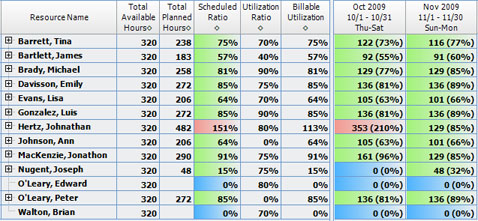
Anyone who is responsible for production staff needs to understand what their staff is working on currently, AND what they have coming up for work. When there is excessive “downtime” we need to fill that time for staff. When there is excessive “overtime” we might need to look at how the workload is allocated. A good system of project budget and forecasting is necessary to have that visibility.
These steps can be used with forecasting software to help plan for the future:
- Create a process. The process of creating an initial budget, even for time & material projects, when the project is signed (you DO get signed contracts – right) is just the first step. You must also have a mechanism of reporting actual results against the budget on a regular schedule.
- Update the budget for changes. These changes usually come in the form of scope change orders and additional services. These changes will add increases to your budget and you will have to report actual against them. If you are not diligent about getting authorizations for scope changes or add services, then you run the risk of running out of budget by the end of the project. Your client is quite often experiencing temporary memory loss at this point about what they asked you that was outside of contract.
Bring it all together
So you and your managers have all initial pieces of the puzzle - Initial Budget, Scope Changes, and Actual Results. Why do you still feel out of control and have surprises?
You need to pull all this information into one centralized location, have the ability to update “on the fly”, and have actual results map to your budget. A forecasting software, like Deltek Vision can help you to pull all this information together into something than can be easily updated and allow visibility into the upcoming workload and expectations for the future. You can then use the “remaining budget” to forecast out for the next month, 3 months, or even year to avoid those nasty unexpected drops in your staff’s utilization.
However maybe your initial budget assumptions were incorrect and you need to change the expectation of the end of the project. A forecasting software will allow you to update the ETC (estimate to complete – this is what you EXPECT it to take to complete the project – not what you have remaining in the budget). This provides a better picture of what you need to forecast over the timeframe you are forecasting.
Once you have the above process in place, it is easy to review what you expected vs what you actually performed and what you have left to do. This provides you the ability to plan for the slow times and the busy times. It also provides you credibility when reporting to executive management or accounting what is going on in utilization or over the next few months.
What else does all this tracking get you?
It helps you to establish how long it REALLY takes to complete a project – which is vital information for the future. It also helps you understand what should be included in your scope vs. what is an additional service. Many clients would prefer to know the costs up front and if you can include these items in your scope and present a “total package”, your firm just went to the front of the pack. If you can get to the point that you budget and forecast (and yes people do this) beyond the project and down to the employee level, you can easily identify what employees are efficient and what employees may need further training. All this information combines to make you a more knowledgeable and successful project manager.
 You might be tempted to think that the hardest part of using business performance metrics to guide your business is gathering and analyzing the metrics.
 You may find it helpful to know that there is no ”right” way to go about evaluating your business growth plan (or knowing that might actually make you even more anxious!). There are however, several reliable tips for getting the most out of the effort.
 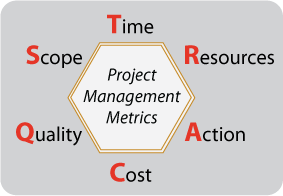 For firms in the project-driven Professional Services industry, managing a defined set of tactical project management metrics is key to meeting strategic objectives.
 Here we are ½ way through the year, and yet my ‘to-do’ list has kept growing. In today’s economy we have all been asked to do more with less help. This often requires us to take on more responsibility and daily tasks - which causes us more stress, longer hours and greater chances to ‘mess up’ - so to speak.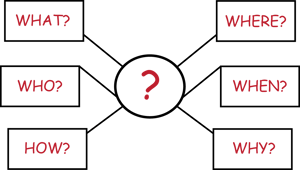
 Do you lose sleep at night wondering if you have the capacity to handle work coming in or even worse if you have too many people? As a manager of a professional service firm, managing your human capital is a daily necessity to achieve firm growth and the anticipated performance expected from your employees. As the market changes, your firm needs information readily available to make quick decisions about acquiring, training, and scheduling your talent. Many firms rely on resource forecasting tools to handle the management of their employees. Let’s take a further look at some of the challenges firms have with managing their resources:
  I was talking recently with a prospective client who observed that his firm had outgrown QuickBooks (QB). The conversation eventually led to a discussion of the advantages of ERP systems over back office accounting systems — which include not only efficiency gains, but strategic improvements as well.
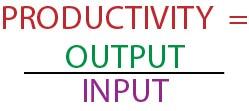 Of all the metrics that professional services firms can track, two of the most important are utilization and realization. These are different, but related ways of measuring employee productivity and profitability. Both can be measured with a high degree of accuracy — and made visible to management — using software.