
In the News


We’re devoted to revolutionizing the way our clients do business. Sometimes that gets us noticed.

No big deal.

Posts by Full Sail Partners:

Four Best Practices for Team Communication
Posted by Full Sail Partners on Feb 21, 2014


Team CommunicationHave you ever tried to communicate a thought or idea to a group or team, and yet no matter how hard you try, you cannot get your point across? Like it or not, we have all been there. The cause for this breakdown in communication could be many different factors, but many times this breakdown is caused by a failure of fundamental best practices for team communication.

Let’s review four of the best practices for team communication that will get your team operating at full sail:

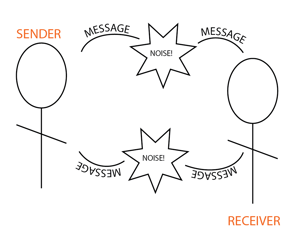
  1. Responsibility is on the sender of the message, not the receiver! We live in a complex world, and most of us are juggling what feels like a hundred different things. This can often lead to us jumping from task to task, often leaving a tornado-like path in our wake. Next time, before you start forming the message for your co-worker or teammate, stop for a minute and organize your thoughts. If you are having a hard time keeping up with your train of thought, how do you expect someone else to follow it? As the communicator, it is incumbent on you to develop a coherent, easy to decipher message that has been received the way you intended.

    Think > Organize > Disseminate > Confirm

  2. Cut out the noise. You may be sitting there saying “DUH!”, but honestly ask yourself, have you done this lately?

    Communication noise refers to influences (outside and internal) on communication that effect the interpretation of the conversation. Often over looked, communication noise can have a profound impact on both perception of interactions, and analysis of our own communication proficiency.

    Noise can be many factors ranging from psychological (stereotypes, biases), Physical (loud music, incessant background noise), physiological (preoccupied during conversation), or semantic (sender mumbles or uses jargon). In order to follow our best practices for team communication, we recommend identifying any potential noise before, during, and after a conversation, and addressing it immediately!
     
  3. Haste makes waste. Rarely are our first ideas, our best ideas. Often times in the business world we will spend hours upon hours forming our thoughts and opinions about a subject, and then turn around and expect our peers to provide the same insight, only on the spot.

    In all fairness to your project team, you must provide your team with an environment that fosters thinking, collaboration, and open ideas. Failure to do so will cause even the most extroverted of individuals to crawl in to a shell, making their ability to interpret your message more difficult. Lack of creating an environment that fosters collaboration will lead to team members more worried about why you are asking a question, rather than what you are asking.
     
  4. Listen, listen, listen! Did you know that we listen at a rate of 12-250 words per minute, but think at a rate of 1,000-3,000 words per minute? While impressive, this statistic is very scary! One of the biggest breakdowns in communication comes from lack of listening, both from the side of the sender, and the side of the receiver. If you, or your team, are too busy forming your opinion about what is being said, rather than listening to what is being said, you are doing your entire team a disservice. We have two ears and one mouth for a reason!

    Tip for better listening: If you are working behind a computer while having a conversation, do not ever open up your emails mid meeting. We all want to check that fresh email that just popped up in the corner of our screen, however by doing so you have effectively checked out of the conversation at hand.

We hope that you can apply these best practices for team communication, and improve the effectiveness of your team’s communication efforts. Agree or disagree with anything in this blog? Make sure to comment below and let us know your thoughts! 

Interested in improving team communication? Check out Deltek Kona, a new social collaboration tool. Deltek Kona is revolutionizing the way teams communicate!



Improving Collaboration in the Workplace Starts by Avoiding These Common Mistakes

Posted by Full Sail Partners on Jan 29, 2014

Almost everyone has heard Thomas Edison’s famous quotation about genius being “one percent inspiration and ninety-nine percent perspiration.” Far fewer people stop to wonder exactly what Edison was sweating about. 

Improving Collaboration in the WorkplaceThe answer is, Edison was not only working on the various inventions for which he’s well-known, but also on the emerging discipline of R&D itself. Even as he and his team were cranking out one technological marvel after another, one of Edison’s ongoing areas of interest was in improving collaboration in the workplace. 

According to Sarah Miller Caldicott (who happens to be Edison’s great grandniece), the world’s most prolific inventor developed a methodical approach to nurturing teamwork and innovation among his workers. In her book on the subject, Midnight Lunch: The Four Phases of Team Collaboration Success From Thomas Edison’s Lab, she describes the little-known, behind-the-scenes processes that Edison pioneered to create and sustain high-performing teams. 

Caldicott does a great job of finding insights into Edison’s approach that have relevance for businesses today, so I highly recommend checking out her book. In case you don’t have time to read it yourself, I’ve synthesized some of Caldicott’s key observations with current best practices in collaboration. For starters, I’ve identified three major areas where organizations often make mistakes that prevent them from improving collaboration in the workplace. 

Mistake # 1: Keep doing business the old way.

It’s natural to keep using the same tools and processes that have worked for you in the past. However, your competition is probably hard at work trying to figure out a faster, cheaper way to put you out of business. So “sticking to what works” may put your organization in an increasingly vulnerable position. Fortunately, there’s a constantly expanding variety of tools that can help you maximize your ability to collaborate. 

One of Edison’s interesting approaches to fostering collaboration was the “midnight lunch.” These were regularly scheduled but informal get-togethers where his engineers got to know and trust one another better, increasing their ability to communicate and work as a team. In today’s business environment, technologies like Kona and Skype may make it easier for teams to exchange ideas, but many people who write about collaboration still point to the effectiveness of starting with face-to-face meetings and then evolving to virtual collaboration as time progresses. 

In Edison’s day, the products of collaboration were obviously analog — although many of their ideas existed only in their heads, a great deal existed on paper as well. If a team member left, much of their work and insights could literally be passed out among team members. In today’s world, we are meeting the need by creating central repositories of files and communication — so if a team member leaves, all their intellectual property doesn’t leave with them. 

Mistake # 2: Assemble the wrong type of team.

The ideal size team for collaboration depends on a variety of factors — including the complexity of the work, the products the group is expected to generate (and the timeframe for doing so), and how often, if ever, the team needs to convene in person. 

For what it’s worth, Edison preferred smaller, more cohesive teams of between two and eight members, according to Caldicott. In addition to hosting the “midnight lunches” mentioned above, Edison also tried to ensure a mix of disciplines and areas of expertise on each of his teams; Edison’s light bulb team, for example, included chemists, mathematicians, and glassblowers. To put it another way, Edison and his colleagues were focusing on diversity decades before the term was ever used in a business management context! 

Mistake # 3: Take your eye off the ball.

One other lesson to be learned from Edison is to take the long view on collaboration. Real impact is not a short-term gain or achievement, but rather an investment of energy and resources that will eventually bear fruit. 

Taking this perspective, it’s easier to realize that mistakes can be just as instructive as successes. When Edison was only 22, he had his first flop:  An electronic vote recorder that legislators declined to adopt. Following that experience, Edison changed his focus to the consumer instead, and never regretted the decision. 

Another lesson Edison teaches us is to keep an eye on the market, and be ready to make adjustments as necessary. For example, he and his team ushered in the era of electricity, and then continued to invent new applications that used the increasingly available power source; other inventors ignored electricity at their peril. (For a more recent example of how not to do things, look no further than Kodak, which failed to adapt to market changes and is playing catch-up with hundreds of more innovative, nimbler companies.) 

Has the light bulb over your head turned on yet?

Most companies would consider themselves to be phenomenally successful to have even one innovation on the level of the light bulb, the motion picture, the phonograph, or any of the hundreds of other inventions and patents credited to the Wizard of Menlo Park. But by making the most of the collaborative tools and strategies for improving collaboration in the workplace mentioned above, your company can at least maximize the chance that your teams will do their very best work. 


Working Together as a TEAM: Together Everyone Accomplishes More

Posted by Full Sail Partners on Jan 22, 2014

working together as a teamIt is a new year; everyone is feeling pumped and ready to tackle their goals! As a professional services manager nothing makes you more excited than seeing your team excited. Enthusiasm is not something we can reproduce, nor is it something we can bottle up. What we can do however is help sustain this enthusiasm and better help our staff in continuing working together as a team in 2014! 

So what exactly can we do to help sustain this new found enthusiasm? Ultimately it boils down to transitioning your staff from ‘coworkers’ to ‘teammates’. I like to refer back to the common TEAM acronym, Together Everyone Accomplishes More. By breaking down each part of the acronym, we can brainstorm on ways to improve your staff cohesion, and get them working together as a team in no time! 

Together:  One of the most important things you can do to get your staff working together as a team is to get everyone working on the same system. Often, individual departments are working on their own specialty software, which in the grand scheme of things keeps everyone stuck in their own box. This lack of overall perspective does not bode well for fostering a team atmosphere. 

However, some firms are in situations where it is not feasible to migrate the entire firm in to a singular system. In this case, I would recommend looking at other ways to collaborate and share data, such as setting up a Kona space or DropBox folder for projects. For more information regarding collaboration tools, read our recent blog on the 5 best collaboration tools. 

For professional services firms that are in a situation to leverage a fully integrated system, I encourage you to check out Deltek Vision, the leading ERP software providing professional services firms with a fully integrated system. We have countless resources explaining the benefits of Deltek Vision on our website – if your professional services firm is not currently leveraging the power of Vision, we encourage you to spend a few minutes learning more. 

Everyone:  In order to be successful as an organization, and as a team, you will need to have buy-in on everyone’s part. Your firm can invest in the world’s best software, and top of the line infrastructure, and none of it will mean anything if your staff does not buy-in. Every effort you lead should have a champion. Think of this person as a team captain for the project. This person will act as a resource, and will help keep assigned efforts on task. Without a champion, your effort is sure to lack overall direction and decrease in effectiveness. 

Accomplishes:  We have all heard the saying ‘keep your eye on the prize.’ So ask yourself, are you giving your team the ability to keep their eye on the prize? An important aspect of being a member of a team, is the ability to know that you are doing your part. To accomplish this, team members need goals, and they need ways of tracking these goals. By developing a set of core growth strategies and metrics your firm will be able to position itself to consistently surpass your competition. Additionally, you cannot understate the value of the sense of accomplishment your team gains from attaining small ‘wins’ along the way to the main goal. 

More:  To keep your staff enthusiastic, you need to be willing to challenge them. By expecting a level of professional growth out of each team member, you create an environment of development. Human beings by nature want to be challenged and engaged. 

We have all heard the saying ‘there is no me’ in team. This saying could not be any more true in the business place. While at times it may feel easier to do things in a vacuum, often times this is not the best strategy for the overall company.  You will often find that this team environment will foster new creative ideas, an increased industry perspective, and most importantly a continuing enthusiasm that can quickly spread to the rest of your staff. 

Pave the way to future growth and higher profitability by encouraging your co-workers to work together as a team. To encourage this behavior, consider how your firm can leverage integrating critical business processes. You will find that by doing so your firm can increase productivity, help control costs, and enable firm success. 

Hopefully by following the above advice your firm will operate more efficiently as a TEAM, and continue that new found enthusiasm. Respond in the comments section and let us know how your firm as transitioned from ‘coworkers’ to ‘teammates’ – we would love to hear your story!


Topics:  

Measuring Marketing ROI: Building a Better Relationship with Accounting

Posted by Full Sail Partners on Dec 11, 2013

When it comes to proving the value of marketing efforts, often professional services marketers have to prove their worth to the financial department through a language that they understand – Marketing Metrics! This often means a series of pre-determined metrics for measuring marketing ROI (return on investment). 

describe the imageMarketers are often challenged with measuring marketing ROI. Many times it’s because we are don’t have access to the right type of data or in some cases it’s because we don’t know what to measure. This is where having a good relationship with finance can help you be a better marketer. To better develop the relationship and expectations between marketing and finance, we suggest fostering a relationship of understanding and sharing. 

Having the financial department on your side is one of the greatest feats any marketer can accomplish – If finance buys in, you can be assured that it is only a matter of time until everyone else falls in place! 

No matter how copasetic our relationship is with our financial department, we have to be ready to report on marketing ROI at a moment’s notice so here are some steps to take to gain a better relationship. 

Talking the Talk 

If you are looking at building a better relationship with accounting, in my experience the first bridge to cross is to put yourself in their shoes. When you think about what functions accounting is responsible for, you can easily understand their hesitancy to buy in to the marketing plan without cold hard data to evaluate. Instead of running from this hurdle, attack it straight on! Schedule a kick-off meeting with finance to address the plan, and allow them to voice any concerns. 

The goal during the kick-off session is to ease accounting’s anxiety.  Allow the finance department a chance to express their suggestions and concerns. Continue to reassure the finance team that through the marketing metrics established by your firm, you will be consistently measuring marketing ROI throughout the year to ensure that the marketing team’s plans and efforts stay on track.

Walking the Walk 

The quickest way to gain buy in is to lead by example. You know your job better than finance knows your job. Identify areas that your marketing efforts affect that might not be easily identified.  One way a Marketer can begin to do this on their own is to think about the data that you need to do their job better. Come to the kick off meeting ready to show your finance team that you understand their concerns, by identifying previously overlooked metrics for measuring marketing ROI. This will demonstrate to finance that you are looking at metrics that can help impact the growth of the company and further prove your value to the firm. 

If you are interested in learning more, review this blog article that discusses evaluating your business growth plan with metrics. This introduction can be applied to developing marketing metrics that help identify how your efforts are helping the firm grow. 

Here are important questions marketers can ask accounting to start the conversation on how the firm can start measuring marketing ROI:

  1. Retaining & Gaining Clients: I’m looking to understand our total customer growth. Do we have a way to determine by percentage and revenue the amount of our work we’ve received is new vs. existing clients throughout the year?
  2. Pursuing the Right Client: I’m been looking at how we can be more strategic in our pursuit of clients. Would it be beneficial to advise you when I see we are pursuing more work with clients that we are having AR issues with?
  3. Forecasting and Backlog: Can you help me understand what our break-even is and do we have a way to see what our current backlog is? I’d like to help make sure we have enough business coming in the pipeline for each market or division.
  4. Effectiveness: Can you help me better understand how I affect the bottom line? Developing metrics that help you understand the financials behind your results can help you fine tune your approach. 

Often times your finance team is not questioning the value of the marketing team -- they are however questioning the tactics (and results!) being used. Often times as marketers we can get lost down in the weeds and lose sight of the overall firm goals. By proving efforts through metrics and marketing ROI, we start speaking a language that our financial team can understand. 

As professional services marketers, start showing your finance team that you care by measuring marketing ROI, and building better relationships between marketing and finance to demonstrate the value of promotional efforts.

For more information, view the below webinar: 

What is Forecasting and How Can it Benefit Professional Services Firms

Posted by Full Sail Partners on Oct 9, 2013

forecastingWhat is forecasting? Forecasting is a tool that many professional services firms use to help management make decisions based on past and current data trends. 
There are two types of forecasting we will focus on in this article: 

  1. Utilization forecasting
  2. Cash flow forecasting

For professional services firms, forecasting starts with the analysis of the work that is yet to be performed and equating that to overall firm revenue. The revenue then becomes the basis for the accountant to project cash flows coming in, considering average day’s receivables, to drive what cash is available versus the cash required to cover current expenses.

Without these forecasts, it makes it much more difficult for management to schedule, staff, plan or perform the work in production that is necessary without them sitting up in bed at night on a regular basis. 

So let’s break the process down into steps and then focus on the key benefits of what is forecasting. 

  1. To properly track utilizations, it is important to establish two budgeted figures, target utilization and available utilization. Both should be established for every staff person and documented by employee in your system.
    Definitions:
  • Target Utilization is a function of the targeted billable hours over the standard hours in the work week.
  • Available Utilization is a function of all available hours minus just the benefit hours.
  • Next establish tracking of scheduled hours by employee, by week or whatever reporting interval provides management enough lead time to make good decisions about staffing and scheduling – this usually being about six to eight weeks out from the current date.
  • Consider hours that are in your current proposals to clients.  This is another reason to do pro-forma timelines with estimated start dates for the project pre-award.  In addition, you will want to weight these proposals for likelihood of award.  This will allow you a weighting of the hours to the overall scheduled time.
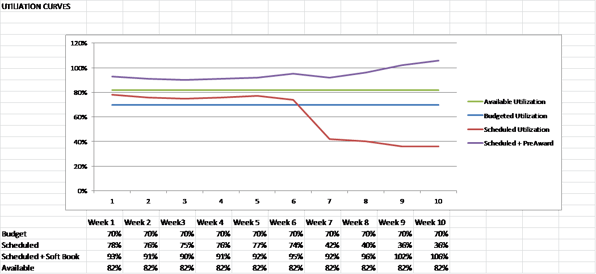
  • On a weekly basis look at utilizations against the target, available, and awarded plus some weighted factor of pre-awarded after say 70% probability.  
  • One engineering firm we are working with used to post the labor utilization “curves” on their message board in their lunch room and it was measured against budgeted utilization for the year as a constant.  This singular graph showed what the firm was projecting for scheduled utilization against target and available which kept staff cognizant of both the need to schedule fully.  The graph also served as a tool for staff to promote billable hours against project deadlines.


    kpo 

    From this data, management was able to see the most important single factor for the firm, how far out they were scheduled, and if they needed to adjust staff or move project timelines to increase project throughput.  Since labor costs against labor revenue is the single most influential impact on a firm’s bottom line, forecasting in this way had this firm’s management sleeping better, while it also empowered the firm’s staff to keep an eye on utilization. 

    Since this level of tracking was in place at this particular firm, it also allowed their senior financial person to produce informative forecasts of revenue, which in turn, promoted the morale of everyone in the firm. 

    To note, when the firm had many proposals out with the results tracking per the graph above, and the firm had the ability to look at un-scheduled but awarded professional service hours as well, they knew when staffing could not meet the demand of the impending work and were able to stage clients expectation with delivery dates or let HR know that hiring was needed on the horizon. 

    So, is your firm enabling forecasting to better win work and deploy resources? If not, after reading this blog do you recognize the importance of implementing forecasting at your firm? I would forecast that the answer is “yes”!  


    Is Your Budgeting and Forecasting Process Doomed?

    Posted by Full Sail Partners on Oct 2, 2013

    budgetingandforecastingBudgeting and forecasting is part art, part science. For too many firms, however, it is also a frustrating process that takes a lot of effort to produce less than optimal results.


    All too often, the budgeting and forecasting process breaks down because the two parties involved — the executive management team and the operations side — see the challenge from opposite ends of the same telescope. It may be a gross generalization, but from what I’ve seen, management often tends to be more aggressive and optimistic about goals and forecasts. On the other hand, the operational side sees the nuts-and-bolts challenges and logistics required to meet management’s goals, and tends to be more conservative in terms of what they think can be achieved with a given budget. 

    In addition to this fundamental dynamic, another challenge related to budgeting and forecasting is that unless it’s handled well, it can lead to a lack of buy-in on the part of various parties. Even worse, it can result in a budget that ends up sitting on a shelf for the rest of the year, which is not in anyone’s best interest. 

    Key strategies for success

    Fortunately, there are several strategies that can help an organization improve its chances of a successful budgeting and forecasting process. 

    1. Start early. Think about the budget process as one of dialogue and compromise — so allow time for both management and operations to develop their budgets and plans, and then to negotiate an acceptable compromise. If you’re aiming to complete your budget by December 31, for example, consider asking management to commit to establishing and publishing their corporate goals no later than October 31. 

    2. Be transparent and clear about the process. If you let everyone know up front that the budgeting process is a dialogue and compromise, there may be more chance that all parties will embrace it and comply with expectations. 

    3. Have the management team kick off the process. After all, their vision for the corporate goals and general forecasts should be what drives the organization. In general, it’s a good strategy to use previous years’ results as a baseline, incorporating any relevant data about changing market and economic conditions, new products in development, and so on. Once the management team has published its goals, the operational managers develop budgets for reaching those goals. This is not the order in which it’s always done, but in my experience, it’s a more effective approach and leads to better results. 

    4. Have a meeting of the minds. Last but not least, block off some time to bring the two sides together around the budget documents and negotiate a compromise. As in any compromise, it’s critical that both sides understand that they are not going to get everything they want. But by finding an agreeable compromise, the organization can develop a budget and forecast that’s both aspirational and achievable. 

    Budgeting and forecasting succeeds when it brings together two very different perspectives of the organization and finds an effective meeting point. Obviously, it needs to help the organization move forward in a strategic direction; but to become a plan that staff can buy into and implement; it also needs to be realistic and achievable. Above all, don’t forget that a realistic, well-thought-out budget is essential to the firm’s financial success. 

    CTA Webinar GrowingStronger

    Stacey Ho Joins Full Sail Partners as Deltek Vision CRM Consultant

    Posted by Full Sail Partners on Sep 6, 2013

    describe the imageFull Sail Partners, a Deltek Premier Partner, is pleased to announce its recent hire of Stacey Ho, CPSM who will join the Full Sail team as a CRM Consultant. Within this role, Stacey will provide CRM consulting to Deltek Vision users. Her proven background supporting firms through CRM implementations and understanding of firm-wide marketing processes and procedures will ensure Full Sail Partners continues to provide clients with the most knowledgeable professionals the industry offers.

    "I am excited to join the team and further support services marketers looking to connect and grow their firms,” said Stacey Ho, CPSM. “I love seeing my peers grow with firms by working smarter and loving their jobs more because they finally have more time to truly strategize and win good work. With Full Sail Partners well-rounded team it will allow me to take my knowledge and capabilities even further.”

    Stacey Ho comes to Full Sail Partners with more than 15 years of experience in the A/E/C industry. Most recently, as the owner of Stacey Ho Marketing, LLC, she worked with clients as their Marketing Information Systems Strategist. In this role, Stacey was able to assist project-based firms elevate the role of the marketing team by helping them with processes and procedures to help achieve the firm-wide marketing plan. Further, she helped marketers to develop and implement internal systems and tools that can capture, store, and retrieve information useful in preparing sales proposals. Stacey has worked in various marketing positions in firms including Kennedy/Jenks Consultants, David Evans and Associates, and Century West Engineering.

    Stacey Ho’s appointment comes shortly after the one year anniversary of Full Sail Partners. "As the economy rebounds, Full Sail Partners looks to assist our clients in the process of efficiently expanding their businesses," said Sarah Gonnella, Vice President at Full Sail Partners. "Stacey's depth of experience, leadership acumen, and track record of success are exactly what the company needs for its next major phase of growth."

    For more information, please contact Full Sail Partners’ Marketing Communications Department at or leave a comment below.


    Evaluating Your Business Growth Plan With Metrics: An Introduction

    Posted by Full Sail Partners on Aug 28, 2013

    business growth planYou may find it helpful to know that there is no ”right” way to go about evaluating your business growth plan (or knowing that might actually make you even more anxious!). There are however, several reliable tips for getting the most out of the effort. 
    Tip # 1. Choose the right metrics

    Using metrics to evaluate your business growth plan is a powerful strategy that can bring you greater focus. The key is knowing which key performance indicators (KPIs) to measure — and to do so, you need to really understand your business and what your version of success looks like. Start by considering such basic questions as:

    • What are the three or four market forces or trends that will have the largest impact on your organization in over the coming year?
    • What are your specific revenue objectives for the year, and for each quarter?
    • What are the “soft” (that is, non-financial) criteria for success over the coming year?

    Your answers to such questions will provide insights into what matters the most to your business. They’re also a springboard for choosing the metrics that will be most effective at measuring success. 

    Small wonder that the use of metrics differs from firm to firm. For example, Full Sail Partners recently conducted a survey of client organizations and asked about which specific metrics they considered to be reliable growth indicators. Almost 9 in 10 (88%) identified revenue, while slightly less (70%) identified profit margin; a much smaller portion pointed to headcount or retention as indicators of growth. 

    Tip # 2. Establish yearly and quarterly goals, and measure accordingly.

    Create a business growth plan with goals not only for the company, but for each department as well. Ideally, you should measure every component of your business in terms of its performance against goals — your marketing staff, your project managers and teams, support and operations, sales, finance, and so on. 

    Tip # 3. Keep your data fresh and reliable.

    To be most effective, you need data in as close to real-time as possible. QuickBooks, Excel and other office applications can help in collecting and analyzing current data. Even more effective is a purpose built ERP, like Deltek Vision, that allows front and back office functions to share and collaborate on relevant data. Whatever tools you use to gather your metrics, be sure to automate the process as much as possible — that way, you and your people won’t spend all your time on number-gathering. 

    Tip # 4. Get people involved and interested.

    In our survey, we also asked firms which functional areas within their organizations took part in the development of KPIs to measure. More than half (58%) said that their finance and operations functions contributed to the establishment of KPIs, while another 17% said that HR also played a role. Don't forget to include marketing so they have visibility on how they can impact KPIs. It’s also a good policy to share metrics and results as you receive them — not only with management, but with all employees. Doing so helps to maintain transparency and leads to a culture where everyone is on the same page and motivated toward unified goals. 

    Tip # 5. Keep tweaking.

    For best results, you should plan on reevaluating and adjusting your metrics as your business priorities change. Every month, quarter, and fiscal year offers a new chance to refine your metrics and your business growth plan in order to drive growth. 

    The power of metrics is within your reach!

    When you invest time and thought into establishing, measuring, sharing, and refining your metrics, incredible things can happen. You’ll be pleased at how much more in sync you are with the state of your business, and how much more confident you’ll feel in making the critical decisions that can help you take your business to the next level.


    Using Project Management Metrics to Drive Firm Growth

    Posted by Full Sail Partners on Aug 21, 2013

    Project Management Metrics - TRACQSFor firms in the project-driven Professional Services industry, managing a defined set of tactical project management metrics is key to meeting strategic objectives.

    Although it might seem efficient to have a single indicator of project success that measures the firm’s profit growth — for example, project profitability — there are pitfalls with such an approach. A better solution is to measure across a finite and efficient set of indicators that together track whether the firm is meeting its objectives, whether the specific goal relates to market penetration, service offering penetration or key account growth.

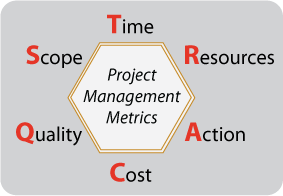
    Project Management Metrics — collectively known as the Project Management KPI — fall into six major categories. One way to remember these categories is to use the acronym TRACQS. 

    Is your project on TRACQS?

    Time - How is the project tracking against schedule plans?

    Keeping projects on schedule increases profit growth by lowering overhead and increasing labor margins. For example, when a project is off schedule and staff is reallocated it increases overhead to readjust the schedule may reduce realized utilization.

    Metric calculation: Schedule Performance Index (SPI) = Earned Value of the work performed ÷ Planned Value of the work performed (to date).

    Resources – Are we within anticipated limits of staff-hours spent?

    Using staff and labor multipliers as budgeted is essential to maintaining project margins. When evaluating which resources to use, it is sometimes argued to use a more skilled person that will use fewer hours than a less experienced person. The thought is the margin will ended up the same. However, when this decision is made business development and client relations to do the production work can result in the firm’s backlog and pipeline suffering.

    Metric calculation: Total Hours variance for budget vs. spent AND Labor Multiplier
    Budgeted versus Labor Multiplier Attained.

    Actions – Do we have action items outstanding or past due?

    It may seem obvious, but without a metric tracking action items (completed, missed, and planned), project performance cannot be corrected. Maintaining visibility and monitoring deliverables can increase client satisfaction and reduce inefficient cycles of “catching the project up”.

    Metric calculation: Number of project collaboration tasks that are past due.

    Cost – How are we doing against the budget?

    Monitoring this project performance metric provides direct insight into a firm’s profit growth.

    Metric calculation: Cost Performance Index (CPI) = Budgeted Cost of the work performed ÷ Actual Cost of the work performed.  

    Quality – Does client feedback indicate project success, or the need for correction?

    On a regular basis, survey clients about results and milestones, based on meeting the client’s expectations to the deliverables.  There is little to no change that can affect the project, if you wait until the end of the project to conduct a survey, there is little to no change that can affect the project. A satisfied client results in more work (client retention), reference-ability (more clients) which are essential to firm growth.  

    Metric calculation: A rating greater than X means quality, and anything less requires attention.

    Scope – Is the scope staying within budget? If not, do we have authorization for variances
    of planned from baseline?

    Clearly define an agreed upon scope, the client’s role or responsibilities, and qualifying what constitutes a change in scope is an essential first step. When the scope has changed, documenting “why” will allow for margins to remain intact for
    client requested change orders and allow management to take corrective action when the scope creep is due to the firm’s lack of performance to the initial scope.

    Metric calculation: Comparing where planned exceeds baseline, and ensuring that original scope plus authorizations equal or exceed the estimate at completion.

    Clearly, a firm needs to have mechanisms in place to measure these project management metrics. Almost as important, however, is finding a way to indicate variance from expected (budgeted) results in an easy-to-reference graphical format — e.g., blue for good, red for bad. Doing so will ensure that staff, project managers, and executives are all on the same page for tracking firm growth and responding to any obstacles or problems that may appear.


    What Casablanca Can Teach About Measuring Growth In Business

    Posted by Full Sail Partners on Aug 14, 2013

    Measuring GrowthIn the movie Casablanca, Humphrey Bogart’s character tells his café’s piano player, Sam, that a competing bar has offered to pay him double what Rick is paying him. Sam says he’s not interested, explaining, “I ain’t got time to spend the money I make here.” 

    When professional services firms are swamped with work, they can be a bit like Sam the piano player. You might say, "I have too much on my plate, I don't have time to track the results." If you aren't tracking your performance then how do you know it's paying off? To make the most effective decisions, financial and otherwise, it's important to allow time to step back to see the bigger picture. Tracking your firm's performance results provides a number of bottom-line benefits to the firm. Here are our top five: 

    1. See around corners.. First and most importantly, it allows you to spot emerging issues before they become major problems. For example, if you’re tracking employee utilization and the numbers start heading south, management can take steps to diagnose and fix the underlying problem, such as setting more realistic targets. Depending on the metric that is underperforming, your management can take other steps to nip problems in the bud.
    2. Know who to hire, and when. A related benefit to measuring growth is that it can be crucial to effective resource planning. You can track the status of projects and determine whether you have sufficient staff on board to get the work done, and if not, how many and what type of new employees you need to hire in order to keep the work flowing and deadlines being met. A featured firm, SAGE Engineering, is an example of how this exact topic helped their firm grow.
    3. Get more context. Monitoring relevant Key Performance Indicators (KPIs) can also provide you with useful data in benchmarking your firm, giving you a context against which to compare your own firm’s performance. Where is your firm in comparison to other firms in your industry allows you to understand what metrics growing firms are doing. Set your sights high! If you want to compete, do you really want to compare yourself to the 'average'?  See what high performing firms are accomplishing and understand what is impacting that growth.
    4. Motivate! Don’t forget about the impact of metrics on employee motivation. Many of the top performing firms not only track a specialized set of KPIs, but also make them constantly available to employees. For firms that tie employee bonuses to certain KPIs, this can be a powerful motivator. In addition, the same tools and processes used to measure growth can be used to answer other questions that can affect employee motivation, such as: Are we remaining competitive?; Are we engaging our people?; Do we have loyal clients?; and others.
    5. Build your value story. Last but hardly least, measuring growth can be highly beneficial to project based firms that are considering or may be the targets of a merger or acquisition. Deltek Vision provides an excellent solution to this need, by creating comprehensive, auditable paper trails that help a potential buyer or partner see exactly what the financial state of the organization is. 

    When things are busy, it may be tempting to keep your head down and pound away at the keyboard (whether at a piano or a computer), with the hope that the financial picture will work itself out. However, you should be measuring growth continually, tracking your performance against your own past history, as well as against relevant competitors and other firms, and using the insights to inform your management decisions. 

    Be sure to check out how SAGE Engineers, Inc. (SAGE) used a purpose-built ERP to bring rapid improvements to an organization and track their firm metrics against industry standards:


    Most Recent News Mentions

    We’re changing the way project-based firms operate.

    People can’t help but notice.
    Who will be next?

    Check out our latest newsworthy work:

    Recent Posts