

"I just love working with you.." Client Evaluation Fallacies.
 Your firm is committed to using client evaluation surveys to ensure project success. So what do you do when your client gives you all high marks and you just know it isn’t true?
Recently one of our clients shared a story with me in which she was faced with this situation. Megan had been working on a project for Dee for several months. During this time there were a lot of times – certainly more than typical – when Dee came back with comments like, ‘well, that is fine but…’ Megan continued to feel that as hard as she tried to meet Dee’s expectations, there was something that was just not adding up.
For a number of years, Megan’s firm had elected to use client evaluation surveys. As a result, and because Megan really wanted to create a successful project for Dee, she decided to send her a survey. The survey asked Dee to consider specific points in the project process. It gave her a chance to share her thoughts on how things were going. The goal of the survey was to hear what Dee felt was important and to allow Megan to uncover what processes Dee felt were working well and which ones might be adjusted to work a little more smoothly.
Much to her surprise, the survey came back with all top scores and the comment, “I just love working with Megan!”
Since her purpose was not to receive accolades but to serve her client more successfully, Megan gave Dee a call. She told her she really appreciated her taking the time to complete the client evaluation survey but she was a little concerned with the high scores. She told Dee, “I really enjoy working with you as well but I just feel that there is some way in which I could be serving you better.” Dee told her that she gave her the high marks because she knew other people would be looking at the scores. She said she really did like working with Megan and didn’t want her to get into any trouble.
Megan thanked Dee and told her she really appreciated her thinking of her. She was quick to add, however, that she (and her firm) actually appreciate knowing what their clients are thinking even if the survey comes back saying that the client is not completely happy with something. She pointed out that the reason her firm uses client evaluation surveys is because they are committed to providing their clients with the best possible experience.
So how does the story end? Megan and Dee had an excellent conversation. They talked about the processes Megan was using on the project and agreed on a few minor adjustments that Dee felt would really work a little better for her. In the end, the client evaluation survey actually worked just as intended. Even though the high scores did not accurately reflect what was going on in the project at that time, it opened the door to an excellent conversation.
 Each of your clients, like you, are individuals that have a unique definition for what a positive client service experience means to them. We can no longer treat everyone the same way – it just doesn’t work! Sending client surveys gives your firm the opportunity to ask clients what that terrific experience looks like to them – each of them. It also gives you the chance to show that your firm is serious about their satisfaction and to build stronger relationships. As a result of the thousands of survey results and comments we’ve seen, we wanted to share with you the top 3 reasons clients want you to send them a client survey.
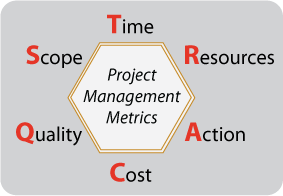 For firms in the project-driven Professional Services industry, managing a defined set of tactical project management metrics is key to meeting strategic objectives.
 In order to truly gain a holistic view of the organization, there are key financial ratios and indicators that project-based firms should focus upon at regular intervals. Some key project performance metrics need to be monitored on a real-time basis, or at least weekly, while others are more relevant on a monthly basis. Also, because firms must first win projects and engage in other activities that do not directly produce revenue, project-based firms should also regularly monitor firm-wide metrics.

 At its most basic level, the practice of benchmarking provides perspective into why some companies perform better than others. As a result, it helps business leaders find and exploit opportunities for improving operations and results.
 At the core of a project-based firm’s business is the need to monitor the progress of your projects. As Project Manager’s we are busy and we need quick, real-time information to help us steer our projects. Just as a dashboard in a boat identifies and provides feedback regarding the status of our voyage – the speed, the wind angle, the wind force, and the navigational direction – a
  But it’s not just the act of measuring – it’s measuring the RIGHT things and then utilizing what was learned from the results. When trying to improve the performance and evaluation of your team or team members, what should be measured (and how) become critical questions.

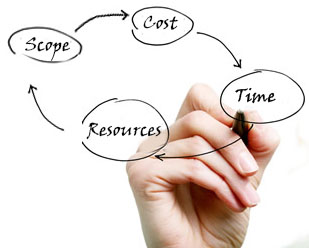 1. Resources –