In the News


We’re devoted to revolutionizing the way our clients do business. Sometimes that gets us noticed.

No big deal.

Posts about Technology Solutions (3):

Top Reasons Professional Services Firms Should Leverage Deltek Talent’s Learning Management System (LMS)

Posted by Sarah Gonnella on Jun 17, 2020

Learning Management System

As a professional services firm, your business exists because of the knowledge and expertise of your employees. Staying competitive requires these employees to keep up with the changing times and current industry practices. A learning management system (LMS) can set your professional services firm up for success by providing your employees training content related to their positions. However, one of the challenges with an LMS is finding or creating the relevant content. With Deltek Talent and RedVector joining forces, your firm can now leverage pre-built ample content. Let’s see the reasons why your firm should consider utilizing Deltek Talent’s Learning Management System.

Comprehensive Training Library

To start off with, Deltek Talent teamed up with RedVector which provides a comprehensive training library including courses in project management, safety, industry codes and standards, leadership development and much more. The online library contains approximately 4,000 courses authored by more than 200 subject matter experts and accredited by 100 national and state bodies. This extensive offering eliminates the need for your firm to have to create content on the fly. Here is a complete list in the AEC course catalog

Access Training Anywhere

Another key issue impacting employee learning is the time commitment. Many professional services firms require their employees to be flexible with their time and those employees often have to be other places during the workday besides at their desks. Conveniently, Deltek Talent is a cloud solution accessible from anywhere with internet access. Users can access content on-the-go from any device allowing employees to learn when it’s convenient for them.

Training Content in One Location

One of the main advantages of having RedVector aligned with Deltek Talent is that professional services firms have content from day one. Furthermore, firms can add additional instructor-led, online, and external courses allowing users to access courses in one location. It is easy for users to document what courses they have completed so managers have visibility into their employees’ development progress. With Deltek Talent’s LMS, there won’t be any problems with finding the appropriate content for employee enrichment.

Improve Performance & Retention

Professional services firms save a lot of time and money when their employees grow with the company and stay long term. Within Deltek Talent Learning, RedVector provides an assessment tool that helps determine the competency level of employees, new hires, or students and generates an individual training curriculum based on deficiencies in the assessment results. Thus, providing impactful learning opportunities that improves employee performance, reduces turnover and puts employees in the driver’s seat of their own careers. 

Reduce Risk

Finally, for highly regulated industries, managers need to track required training and certifications which can be done with Deltek Learning Management. Additionally, RedVector provides more than 500+ courses that address the most hazardous situations professional services firms face. Employees will learn how to recognize and prevent at-risk conditions or behavior before they lead to an incident. Having the correct employee certifications and providing safety awareness helps reduce employee and company risk. Here is a list of RedVector’s health, safety and environment library collection.

Fuel Prosperity

Deltek Talent and RedVector combined focus on providing professional services firms with skills training, continuing education, and performance support to reduce risk and promote employee success. When firms help their employees perform better and grow in their careers, they not only retain the best employees but make certain they are engaged which leads to a prosperous outcome for all.

An Effective and Successful CRM is a Lifestyle Change

Posted by Amanda Roussel on Jun 10, 2020

CRM lifestyle

There have likely been times where you desired to get healthier and stronger. You cannot just wake up one day, eat well, exercise, and see the results of your efforts instantaneously. You must have the desire to change, recognize the benefits of doing so, keep your WHY at the top of your mind, and identify long-term goals. Just like in your personal life, lifestyle changes are necessary on the business front to see real success, and client relationship management (CRM) is a large part of making that happen.

Professional services firms offer services, and it is all about the knowledge and expertise of a firm’s professionals and trust in the brand. The art of building relationships and earning trust takes time, thought, and coordination within your team. CRM tools keep track of these communications, and consistency is what builds the data. With this data, you can establish long-term goals that you strive to meet. The positive results from choosing to use an effective CRM make it worth your while to change your work lifestyle.  

Accomplish More

The benefits of a personal healthier lifestyle may be having more energy, feeling more confident, and accomplishing goals that have felt distant. Likewise, for businesses, process and habit improvements offer benefits such as boosting productivity, increasing communication with clients, and crushing sales goals. Implementing a CRM helps you work more effectively as a team while adding productivity time back to your schedule. If CRM data is captured timely and correctly, it takes significantly less time to “research” what the latest communications and outcomes were with clients.

Think of employee-client interactions and the information that is gathered as a firm resource. Business resources are meant to be shared efficiently, and that information should be available when others need it. Furthermore, new information is constantly coming in and a CRM tool provides your teams a platform to document and share this information, keeping everyone informed.

Use the Technology at your Fingertips

As new information comes in from various sources, real-time data is crucial. This is achievable with the mobile capabilities of a strong CRM. Therefore, documenting information after each engagement brings consistency and a positive habit. With a firm-wide CRM, you can stay on top of your communications and proactively reach out to clients.

Additionally, as there are web-based apps to track exercise stats, sleep habits, and food intake, there are also apps that streamline business matters. All data from these apps, such as email, can be incorporated and captured into your firm CRM. While technology can help guide us, we are ultimately responsible for holding ourselves accountable for the improvements. 

Use Accountability to Create Consistency 

Just like having an accountability partner in an exercise or health program, employees should be accountable for keeping their colleagues informed. When we have dated action items as a CRM may show, the transparency should drive employees to stay on top of their tasks. However, there needs to be support and enforcement from all levels of leadership to make sure this happens. Consistency is crucial to success.

Get Over the Hurdle

According to the 40th Annual Deltek Clarity Architecture Engineering Industry Study, only 14% of firms planned to invest in marketing intel and CRM systems. Is your firm part of that 14%? CRMs have advanced greatly, and the capabilities of an effective CRM support and encourage accountability, teamwork, outreach, and relationships. After some time, your firm will not remember business without an efficient tool like a CRM. These positive habits will stick with the firm for years to come, just like a lifestyle change for a healthier you.

Manage Your Employee Expenses Like A Pro

Posted by Theresa Depew on Jun 3, 2020

Expense management

When employees seek reimbursement for employee-paid expenses, chances are good that far too much time is spent looking for receipts. Often, there is also the question of limits, processes, and details around submitting an expense report. Wouldn’t it be great if there was a software that could manage employee expenses with a seamless process, helping you navigate expenses like a pro? Fear not, as such automation is possible with SAP Concur. Even more, SAP Concur integrates with Deltek Vision and Vantagepoint through the Blackbox Connector to simplify your expense reporting processes.

With SAP Concur, you can see all expense data in one place, offering the big financial picture while making the process easier for your employees. Yes, it can be a win-win for all. Let us look at some of the advantages an automated and integrated expense management tool can offer.  

Makes the Process Easier for Users

While submitting an expense report can be a very frustrating task, it is a necessary business process that cannot be overlooked or eliminated. Usually, it does take administrative or overhead time for some often-extensive searching. Fortunately, SAP Concur can give employees an easier method of submitting expenses on a routine basis with the following features: 

  • Mobile Tools – Users have full access to expense report functions via a mobile device, allowing employees to submit, review, and approve on the go. Having full expense functions on a mobile device makes submitting expenses quick and easy. There is no more waiting until you are back at your desk to complete expense tasks.
  • Receipt Capture – SAP Concur removes the need for a scanner, and never having to use a scanner to upload receipts one by one is priceless. Simply snap a picture of a receipt using your mobile phone camera and start a report from your mobile device, saving processing time.
  • E-Receipts – Transaction data from airlines, hotels, restaurants, and car companies can be automatically captured to create accurate, detailed expense reports. Receipts can be sent directly to your SAP Concur profile, allowing you to quickly add the expense details without having to organize receipts. As soon as the receipt is emailed, it appears on the home expense screen.
  • Credit Card Feeds – Your corporate or travel card transactions are directly fed into SAP Concur for expense processing. This functionality is marvelous; firms no longer need to manually import charges into an ERP or expense program for users to expense or for reconciliation. When a charge is made, the bank sends the transaction to SAP Concur. From there, users will see it on their home expense screen, and it is ready for expensing.

As you can see, the expense management process can be more efficient for employees, allowing them to focus their efforts on earning new business, serving the client, or working on current business. With an easier process, employees can submit their information timelier, and accounting can invoice clients sooner on billable expenses, helping to shorten the invoicing cycle.

Even Accounting Thinks This is Snazzy

Accounting teams are often the ones tracking down the missing details or having to reject submissions for details that were overlooked. By automating expense management and integrating it with your accounting system, SAP Concur can be implemented with workflows, ultimately helping everything flow more smoothly. Here are some of the features that accounting teams can look forward to:

  • Automated Travel Policy – Workflows can be set to warn or stop expenses from being submitted based on your company’s expense/travel policy. Using the audit rules takes the guess work out of policies. Workflows allow the expense audit/approval process to move quickly and efficiently. Auditors and approvers do not need to spend hours verifying every policy detail; most can be set up as a rule and not allowed.
  • Reporting – SAP Concur offers simple spend monitoring, schedule reports, and customizable reporting. The software offers out-of-the-box reporting, which is quick and easy to use. Reports can also be downloaded in different formats – Excel, Word, PDF. If the report needed is not available, it can typically be created and saved for future use.
  • Integration – A comprehensive financial picture and reliable reporting can be gained by connecting to your enterprise resource planning system (ERP), Deltek Vision/Vantagepoint. Integrating SAP Concur with Deltek Vision/Vantagepoint allows a constant and consistent flow of financial data. New or changed employees and projects can be pushed into SAP Concur through an automated feed. Also, expense reports that are approved/processed in SAP Concur will be fed into Deltek Vision/Vantagepoint nightly and be ready for posting. So, no more need for double entry at many levels.

Wins All Around

As you can see from the highlighted features, SAP Concur can eliminate many pain points that come with expense reporting. The right expense management software creates a smoother process for firms, which benefits the employees, supervisors, and accounting team alike. We can all agree that any process that can be automated and ultimately improve a business should be given consideration. Everyone will be pleased with timely expense reimbursement so start managing your expenses like a pro with SAP Concur.

Empower Your Firm with Better Email Management

Posted by Ryan Felkel on May 20, 2020

Email management

What do you think is the most widespread office tool used amongst your peers and coworkers? If you answered email, you are correct! Employees use email throughout the day to communicate with coworkers, clients, vendors, and the list continues. In fact, a study by McKinsey found that employees spend 28% of their workweek managing their email, the equivalent of 11 hours if we assume that an employee works 40 hours a week. So, how can we help employees more effectively manage their email?

Email Management Pitfalls

Let’s start where most people do when they read and write an email - the subject line. The fact is, there is not a global standard to email subject lines, and most companies don’t establish predetermined subject lines either. As a result, searching for a specific email about a certain topic wastes a lot of time especially if the email is never found leaving some to wonder if the email ever actually existed.

For some savvy email users, they have learned to create a folder system to improve their email organization. According to a study by Microsoft Research, 30% of email users create a folder structure to organize email. However, ironically, 90% of those that create folder structures don’t actually use them.

Here, we just discovered two email mismanagement issues, but if you want to dig deeper, there are many more. There are other simple things like not using reply all so that everyone on the email chain has access to the communications and decisions made based on the email content. Also, not using convenience features such as setting reminders to follow-up or complete an assigned action item. All these examples are things that can be improved, but how does a business get everyone on board with practicing better email management?  

Put the Right Email Management Solution in Place

Email tools such as Gmail and Outlook contain intuitive features and functions that allow users to improve their email management. However, these tools by themselves are not enough to be able to improve firm-wide email management. While these email tools are great for facilitating communication especially for person to person, where they fall short is when emails contain specific details and information about a project that requires multiple people from multiple departments to know about changes and statuses as they happen.

An effective email management solution will have the ability to store uncategorized emails with important information in a database that makes these emails more searchable allowing employees to find the information they need, when they need it, with only a few clicks. Additionally, the emails should be in one centralized location for all relevant staff to be able to access and obtain the pertinent information. An effective email management solution integrates your firm’s email platform tool with the firm’s ERP solution to ensure all data is stored in one place.

Unravel the Email Management Mess

There’s a lot of confusion about email management solutions versus email tools. In layman’s terms, email tools are what you use to create and respond to emails. On the other hand, email management solutions allow you to quickly categorize an email from your email tool that will then add the email to a general database that lets others access the information. Furthermore, email management is more than an individual process and requires an email management system in conjunction with FIRM-WIDE established processes to ensure proper email management success.

Most importantly, email management solutions can change the culture of your company and open up the ways we communicate. They help eliminate inadvertent gatekeepers of information and ensure everyone within your firm has the information needed for client satisfaction. Lastly, they create time savings for your firm by providing easy access to the information your teams need to deliver a great client experience.

Why NOW is the Time to Move to the Cloud

Posted by Amanda Roussel on May 13, 2020

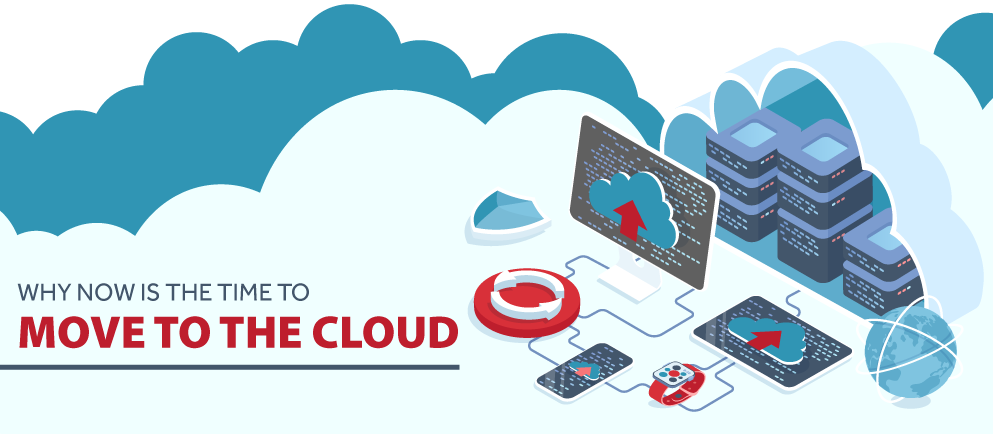
MovetotheCloud_BannerLeadership teams and firm owners have countless business elements to focus on and decisions to make. Some decisions are no-brainers, others are hard, and some just need to wait for the “right time.” There are often firm improvements pitched for consideration that may not make it to the priority list, or that are labeled as a luxury rather than a need. The word “value” can often determine where an initiative may fall on that labeling scale. One initiative that is proving to be a need is moving your firm’s ERP solution like Deltek Vantagepoint or Vision to the cloud. Now is the time, and it should be an easy decision. Let us identify some of the many advantages of moving your ERP solution to the cloud.

Make it Easy for Your Teams

Professional services firms have data… lots of data. Much of this data is centered around your people and projects and should be safely stored and easily accessible. With a device and an internet connection, teams can securely access their solution from anywhere. This allows for great flexibility with office, remote, and field team members. The cloud is not only flexible with location, but it is also flexible with firm size. Growth is a leading driver for many firms, and it is important that systems put in place now allow for scaling up when the time is right. The cloud offering makes it easy for teams to get their work done, providing value for the firm.

Reduce IT Burdens

Another benefit the cloud offers is removing the burden on your IT team, whether internal or external. On-premise hardware requires system maintenance and server upgrades which take time and money. Moving to the cloud, IT resources can be reallocated, and your firm will have confidence knowing that your ERP system is running on enhanced security, using updated hardware and software, and requiring zero maintenance from your IT team. You can also rest assured that a disaster recovery plan has been established and is ready to be deployed, if needed. The value of the cloud ultimately improves firm efficiency because you can now focus on what you do best, providing value to your own clients.

Fixed Costs vs Unexpected Costs

Planning for and managing expenses is a significant part of a firm’s financial health. Opting for a subscription-based fee for cloud services, firms can have confidence in budgeting a fixed cost. Otherwise, a best-guess amount would be budgeted for on-premise hardware needs. Another factor that should be considered is potential downtime. On average, downtime with a traditional IT system can be four times longer than the cloud alternative. Unexpected expenses and downtime can put an unfortunate burden on a firm. Choosing to be in the cloud ensures value with increasing reliability and reducing operating expenses.

Everyone is Invited to the Cloud

Small and large businesses alike have the same access to the cloud. The cloud can give businesses a competitive edge as they use the latest ERP solution like Deltek Vantagepoint for project management, financial management, and other streamlined processes. With proven tools accessed easily from the cloud, project managers, accounting teams, marketing groups, and executives can stay integrated and informed, no matter the firm size. The cloud does not discriminate on who gets value.

Continuity is a Necessity

Now is the time to make the move. Firms should be proactive in protecting their valuable data and seamlessly move it to a safe place. Do not wait until something goes amiss with your traditional IT system. Because cloud solutions are reached via the internet, users have greater flexibility with computer upgrades and mobile devices, too. The cloud is the leading choice for data storage because it is secure, reliable, and always available. With all these benefits, it should be an easy decision that NOW is the time to move to the cloud.

What Makes a Great Project Information Management System?

Posted by Amanda Roussel on Apr 22, 2020

PIM Puzzle

In this digital age, project information management is crucial to efficiently maintain firm documentation. With projects that may have a duration of five or 10+ years, project files are plentiful, from large drawing files to Word documents and email correspondence. The organization of those files can be challenging for firms of any size. Therefore, established document management practices are necessary to keep projects running smoothly. So, let’s see what a great project information management (PIM) system would look like.

Challenges to Project Information Management

In order to ensure the setup of a great PIM system, let’s first evaluate the project information management challenges faced by firms:

No Two Projects are Alike - Projects are unique. They can be similar, but there will be at least one detail that sets each one apart. Firms need to create and save project files that contain the specific project details for the benefit of all team members and others in the firm that may need to reference a document, such as a contract or correspondence. The numerous drafts and revisions as a project progresses are important and should be saved in one place as well.

Many Hands on a Project - Team size can vary from a small few to over 50. No matter how much time team members spend on a project, they need access to the files that are applicable to their work and their hours should be recorded on a timesheet. It is also no secret that employees come, and employees go, so team members get added and others get shifted. If team members change, how can the project seamlessly be handed off with no interruption in service to the client without proper documentation in an accessible place?

Information Overload can be Overwhelming - We are all familiar with the yellow folders that you can sift through on the network as you hopelessly search for that one email from the client with a very particular request from three months ago. It is somewhere in there amongst the other documents - contracts, correspondence, drawings, scope of work, photos, reports, supporting data, deliverables, etc. While firms do have various ways to save their files, they are usually not saved in one cohesive location. Furthermore, varying naming conventions also create problems regarding files since not all team members have the same naming logic.

Overcoming Documentation Difficulties

Teams can better use their time executing a project rather than searching for the latest version of a file. So, it makes sense that all relevant project documentation should be easily accessible somehow. Now, what document management practices should be set up by firms to ensure all team members have the correct tools in their toolboxes?

Proactively Manage Emails – Email is a universal form of communication in project-centric businesses. It is communication, but it also can be considered important documentation. Therefore, email can be leveraged to improve productivity, and it should be managed in a secure central location with your project information.

Inclusion of all Project Documents – Project drawings, reports, deliverables, and any documents related to the project should be saved in one location. This includes contracts and change orders as well. Having all information in one place improves efficiency and can ultimately keep projects on track.

Tagging for Searchability - Tagging documents with the correct information allows a system’s search feature to retrieve related documents quickly. As a result, this saves you valuable time and allows you to easily find the document you need to continue your work.

Mobility is a Possibility – Project information management needs to happen from anywhere – office, home, or on site. Be certain that your teams can access the data they need no matter where they are. This is a vital component to a great document management system.

Auditability – Just like accounting data, your project documentation should be auditable as well. Allowing tracking helps keep the data safe and always available.

Investing in a Great Project Information Management System

A quality project information management system is a wise investment for the future of your firm. Having best practices in place regarding accurate and easily accessible project information ensures project data is an asset to the firm, rather than a liability. Even more, a well-planned system can boost team communication and collaboration as well as project efficiency, bringing your team to the next level of excellence.

The Benefits of Being in the Cloud

Posted by Wes Renfroe on Feb 26, 2020

BenefitsoftheCloud_Banner

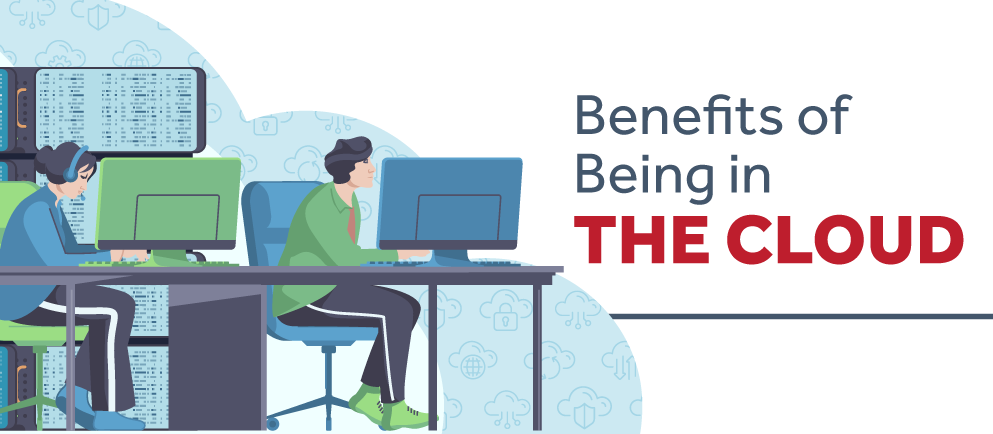
What exactly is being in the cloud? Well, being in the cloud simply means running your firm’s ERP such as Deltek Vantagepoint or Vision on a remote server. Therefore, your firm does not need to concern itself with having the IT infrastructure on premises. Furthermore, being in the cloud allows your firm to focus on the more important matters of running your successful business leaving the IT responsibilities to the professionals. Let’s check out how your firm benefits from being in the cloud.

Cloud Means Lower IT Costs

Being in the cloud, your firm doesn’t have to worry about staying up to date with hardware and software. Simply stated, there is no need to buy additional servers, Windows operating systems, or SQL licenses if your ERP system is in the cloud. As a result, IT professionals managing your ERP system in the cloud will handle all of this for you so there are no additional costs incurred.

Cloud Security is Top Notch

With cloud management, your data is safe. Cloud professionals handle automatic updates and do multiple daily backups. Malware and virus scanning are also performed regularly. Most importantly, if there is a problem, business continuity is of the utmost importance. Cloud professionals work to ensure that your data is accessible as soon as possible in a disaster situation.

Reduced Burden

Being in the cloud, your firm does not have to deal with handling the setup or deployment of your ERP solution which ensures that it does what you are expecting. Cloud professionals have experience with the product you are using or are thinking of upgrading to in the cloud. Furthermore, a testing environment can be put in place for your firm to get comfortable with the ERP it wants to use. For example, you can try Vantagepoint thoroughly before committing the company to upgrade.

All Cloud Solutions Are Not the Same

Choosing the right partner to host your ERP system in the cloud is extremely important and not all cloud solution providers can be treated equally. Therefore, picking the right cloud partner is essential to ensure your ERP system is properly taken care of by the right professionals. For instance, you want to choose a partner that specializes in the ERP system you want to have hosted in the cloud. This ensures they know the ins and outs, and all the requirements to successfully maintain your ERP system.  

The Cloud Makes Running Your Business More Efficient

Leaving your IT issues to the professionals in the cloud, you can focus on the matters that really drive firm success. Moreover, with secure 24/7 access to your data from anywhere with an internet connection, you can ensure you have what you need when you need it enabling your firm to run efficiently. If your firm does choose to upgrade your ERP from Vision to Vantagepoint, being in the cloud would make it a much easier transition for your firm.

The Bright Future of Deltek Vantagepoint

Posted by Jennifer Renfroe on Feb 19, 2020

Deltek Vantagepoint

As the life blood of project-based firms, projects must be run efficiently and effectively from start to finish. Fortunately, Deltek Vantagepoint provides the functionality to give project managers more tools to run their projects. Furthermore, Vantagepoint seamlessly integrates your firm’s business processes using an impressive feature suite bringing business development, accounting, resource planning and project management together. By empowering the different roles within firms, projects are better managed and thus more successful. Let’s check out the power of Deltek Vantagepoint.

User Convenience

Deltek Vantagepoint is user-friendly with easy to understand workflows. The browser based Vantagepoint interface offers the ultimate convenience for its users. Additionally, in 2020, there will be an add-on for Outlook. Users will be able to manage Vantagepoint activities within their Outlook calendar. Synchronizing of contact records and smart scheduling will be available to make managing projects even more convenient.

Vantagepoint Project Hub

Project managers can get access to all they need to manage their projects through the project hub in Deltek Vantagepoint. In 2020, the project hub will be expanded to include more functionality. A new interactive Gantt charting tool gives project managers the chance to view their schedules plus change them via a drag and drop option. Also, a scenario planning feature and revenue forecasting tool will be added to the project hub offerings.

Data for Informed Decision Making

In Deltek Vantagepoint, there is a dashboarding framework that ensures project-based firms have proper metrics and information for informed decision making. There will be further expansion of the dashboard to include more visual dashparts in 2020. Currently, the Vantagepoint Intelligence (VI) module is available, but later in the year there will be VI Analysis Cubes which offer pre-calculated data for analysis by anyone in the firm.

Deltek Vantagepoint is Becoming More Powerful in 2020

There will be even more improvements to Deltek Vantagepoint’s functionality throughout 2020 further powering your firm projects. The 3.0 release in late January has already provided some dashboard improvements as well as the Gantt scheduling feature. With the second release, 3.5, the new revenue forecasting tool will be available, as well as the Outlook add-on and Intelligent Character Recognition (ICR) to enhance the mobile time and expense app. Finally, the 4.0 release planned for Q4 will focus on resource planning features like scenario planning and more revenue forecasting. Are you new to Deltek and Vantagepoint? Time to learn more!

Data Visualization and How it is Used

Posted by Full Sail Partners on Jan 22, 2020

chart graphic

Business Intelligence (BI) puts together business analytics, data mining, data visualization, technology resources along with the best practices to help companies make more data-driven decisions. Business intelligence can help businesses make better choices by displaying present and historical data in their business context. Analysts can use data visualization to provide performance and competitor benchmarks for a smoother and more efficiently run organization. Analysts can also detect market trends to boost sales or income more quickly. Making sure you are using BI and data visualization properly is important. Let’s look at how you can choose the right data visualizations for your company.

Temporal Visualizations

In the temporal category, data visualizations belong if they satisfy two conditions: they are linear, and they are one-dimensional. Temporal visualizations normally have lines that either stand alone or intersect with each other, with starting and ending time. Some common examples of data visualizations include scatter plots, time series sequences, timelines, line graphs, and polar area diagrams. These visualizations are usually pretty easy to recognize and understand. Picking the right visualization all depends on the kind of story you are trying to tell. When choosing a temporal visualization, your end goal should be comparing one or many value sets. This can help you easily show the low and high values of a data set.

Hierarchical Visualizations

In the hierarchical category, data visualizations are those that organize groups within larger groups. These are best used to display clusters of information, especially if they flow from one point to another. Typical hierarchical visualizations are tree diagrams, ring charts, and sunburst diagrams. Just like any type of data visualization, it is important that you are effectively telling a story with the graphics that you use. For this type, showing levels of importance coming from a single source is the main purpose of these visualizations. The only downside is that these graphs tend to be complex and sometimes difficult to read. The tree diagram is used most frequently because of its easy-to-follow linear path.

Multidimensional Visualizations

While linear data is easier to understand, sometimes you have the need to capture your audience’s attention. Multidimensional displays two or more different variables to create a 3D data visualization. These types of visualizations are scatter plots, pie charts, Venn diagrams, stacked bar graphs, and histograms. These visuals can break down a ton of data into key takeaways, making it easier to clearly identify what you are trying to get across. Multidimensional is used to compare data and parts of a whole and show relationships between two variables. With multidimensional data, you are able to choose different colors and shapes to really customize your graphic.

Data Visualization Makes an Impact

Choosing the right visualization for your data directly impacts how it gets across to the viewers. Your main goal should always be to properly tell a story with the graphics that you use. Data visualization allows you to display specific data in an eye-catching way leading to a successful conveyance of important and relevant information.

Control Your Projects Better with Deltek PIM

Posted by Ryan Felkel on Dec 11, 2019

Deltek PIMDuring the lifecycle of a project in the professional services industry, there is a lot of information being shared among all the members of the project delivery team. Furthermore, history has shown that there is a larger amount of project related documentation being created as the professional services industry continues to become more digitized. As a result, more information is being shared and there are more decisions and final approvals to be made.

With all this information bouncing back and forth, it can become difficult to track what your other team members have reviewed. Therefore, making timely decisions becomes increasingly harder which can jeopardize the successful delivery of a project. However, Deltek has created Deltek PIM to help firms better manage project documentation to allow project delivery team members quick and easy access to important project related information.  

Easily Track Submittals with Automated Workflows

There are all types of various submittals that have to be tracked and documented during the lifecycle of a project. For many firms, this is still done using spreadsheets and other manual methods. Due to this, tracking change orders becomes a heavily manual process which is time consuming and prone to errors.  

What if there was a way to make this process less time consuming and allows for improved tracking of submittals? With Deltek PIM, firms can take advantage of the workflow functionality to create a formal submittal review process. What makes PIM’s workflow functionality so great is that it allows project team members to track the status of each submittal throughout the entire process. Even more, it allows team members to see who has reviewed the submittal and who still needs to review it to help ensure it gets processed and approved before the deadline. PIM also sends reminder alerts to individuals when a deadline is approaching to ensure they review the change order before the deadline.

Emails Here and Emails There

During the project lifecycle, email is a leading communication method amongst project team members. However, have you ever left someone off an email, or have you not been included on one? If this has ever happened, it is likely that a project team member has been left out of the loop about critical project information. Even worse, a project team member may not receive a crucial document that contains important project information.

The problem with emails is that the sender may not include an important recipient, or the recipient may not open the email in time to make an actionable decision on the information being shared. Thus, the decision-making process can be delayed, and the project timeline can be put in jeopardy. However, Deltek PIM provides a solution to improve project communication.

With PIM’s email management functionality, the entire project team has access to all the conversations that have influenced changes to the design and construction process of the project. Furthermore, PIM’s email management solution allows for the storage of project related communications in one centralized area designated to a specific project. Therefore, you never have to worry about obtaining these communications even if a team member is on vacation, out on leave, or has left the firm. All this information is permanently stored and made easily accessible.

Keep Up with Important Project Documents

A large portion of delivering a successful project requires keeping project documents up-to-date and organized. This means having access to the latest version of a document and being confident that the version you are working on is the most current version. With most document control processes, it’s difficult to know if the version you are working on is the correct and most recent version. Even more challenging, what if someone is trying to make changes to the same document at the same time? As most can agree, document management can be truly challenging and can hinder the success of a project.

The good news is that Deltek PIM makes document management simple. When firms adopt PIM’s document management functionality, they are able to implement standard document management processes and make sure project team members are compliant with them. Even more, PIM ensures one single version is available to all project team members which reduces duplication and provides the team access to the latest version.

Improve Project Collaboration with Deltek PIM

Information here and information there, information is everywhere. Well, this can be great for somethings like researching an item before making a big purchase. However, information everywhere is not so great when trying to deliver a project for a client. With Deltek PIM, all project related information is located in one space making access to it quick and easy for all project team members.  

Most Recent News Mentions

We’re changing the way project-based firms operate.

People can’t help but notice.
Who will be next?

Check out our latest newsworthy work: