
In the News


We’re devoted to revolutionizing the way our clients do business. Sometimes that gets us noticed.

No big deal.

Posts by Ryan Felkel:

Debunking Myths about Deltek Vision

Posted by Ryan Felkel on Jun 30, 2016

Deltek Vision Myths Are you thinking about needing a new accounting system or ERP? If your firm is still on Deltek Advantage, Sema4, or FMS or even on Quickbooks, Protrax or another system, you might be evaluating options to figure out which solution is right for you. We receive questions from prospects asking about the differences between Deltek Vision and some other product. Additionally, during our conversations over the years, we have heard many myths about Deltek Vision and we thought it was time to set the record straight, as we see it.

To start, what we have found is some software providers say they have a feature, but the quality and capabilities are completely different. Some people might say we are biased. You know what, we probably are, but for good reason:

  1. We use the product we sell. We know Deltek Vision inside and out. Can our competitors say that? Ask them.
  2. We aren’t just sales people. We care about the success of our clients and that’s not just rhetoric. We’d rather turn a sale away then have an unhappy client.
  3. We have done extensive migrations of all kinds of software. What we have found is many of our competitor’s software are done on the cheap or just completely leave out industry standard capabilities.

Below are the top 4 Deltek Vision myths:

Myth #1 - Deltek Vision is only for large firms.

Fact #1 – The numbers don’t support this claim. As a Deltek Premier Partner, the majority of the firms we serve are under 50 employees. Of those firms on Deltek Vision, 57% are under 50 employees; 33% are 25 employees or under; and 17% are 15 employees and under. Most importantly, the size of your firm should have no bearing on the solution you choose. What is more important is choosing a solution that fits your staff’s needs, the information you need to make business decisions and your firm’s growth plans. Deltek Vision fits firms of any size. Additionally, in 2012, Deltek came out with a cloud option (SaaS) for Deltek Vision that made Vision simpler to deploy at a lower entry price for any size firm. Check out this 10-person firm’s story.

Myth #2 – Deltek Vision is so expensive. 

Fact #2 - A recent 20-person firm looking at another AE ERP product was surprised to find that Deltek Vision’s cloud software option was less expensive. In fact, Deltek Vision has had a very comparable software pricing for small firms ever since the SaaS option became available. Additionally, the basic package of Deltek Vision’s SaaS offering includes 5 users of CRM for marketing and business developers and 5 users of Resource Planning for operations. The choice for us seems simple. For about the same price you get a much more robust system with Deltek Vision. Where the differences in pricing may come is with the services that are provided. Here are some key items to keep in mind when receiving an implementation quote to ensure you are getting the same level of service: 

  1. Does the quote include migration? Our experts have been doing migrations for almost 30 years and we are proud to say we probably have some of the best in the business. When it comes to migrating your data, we highly recommend importing your historical data. The level of import can vary, but it’s important to make sure you are comparing apples to apples. Will bringing over the beginning balances be enough? This is only a question you can answer, but our experience has been firms rarely want this option unless that is their only option. Do you really want to lose all of your historical information?  
  2. This is more than a transaction. You are not just buying software, you are buying a solution that needs to address the specific capabilities your firm’s needs. More importantly, you are buying into a relationship. From our perspective, we aim to make sure the software is the right fit. If it isn’t Deltek Vision, then we will raise our hand and tell you. That is why we take a consultative sales approach and conduct a discovery to uncover what is working well and identify if there are bottlenecks or inefficiencies that could help you improve your business. The discovery process should identify the output needed. More specifically, what data (reports, alerts, dashboards, etc.) is needed to make business decisions? These specific capabilities should drive what you are looking for. Make sure you are talking to a consultant during the process, not just a sales person and take time to establish a relationship. We are here to help you today and tomorrow as your firm grows. 

Myth #3 - Vision is complicated. 

Fact #3 – This fact is easily debatable. Driving a stick shift is difficult for some people, but for others it is simple. So the word itself is relative. We argue that Vision is not complicated, but rather it’s scalable. What can’t be debated is that Deltek Vision is great for growing businesses. Businesses are constantly changing and no one has a magic ball to predict when these changes will occur. Here are some key points to keep in mind if you are a growing firm looking for a new solution: 

  1. Firm Evolution - Should your firm have different contract work types; need to expand your business; or face evolutionary life cycle challenges, like ownership transition and retirement scenarios, Deltek Vision can easily accommodate growing firms. It has all the utilities, under the hood to handle these contingencies.
  2. Acquisitions – Should you acquire a new firm, all of the data can be accommodated in Deltek Vision. The same cannot be said about our AE ERP competitors. In fact, in addition to a push button conversion for Advantage users, Full Sail Partners has created push button conversion tool for Ajera. Additionally, we have a very streamlined process and economical migration price for Quickbooks. The same cannot be said of our AE ERP competitors. Because Deltek Vision has the ability to create custom fields, tabs, grids, and User Defined Info Centers (UDIC), all data can be represented. To put it simply, Deltek Vision can represent all data from other databases. However, if a firm was on Deltek Vision and tried to migrate to our competitor’s software, you would in fact lose data.

Myth #4 – Other AE ERP Solutions have the same capabilities as Deltek Vision.

Fact #4 – The differences between Deltek Vision and other AE ERP software are vast and go beyond just multi-currency capabilities. Here is a breakdown of some of those differences: 

  1. Audit Trail - Deltek Vision has an audit trail. When changes are made in Deltek Vision, all changes are tracked and you know who made the change and when. This is not only important from an accounting perspective, but very important for firms that have government compliance requirements.
  2. Multi-Company - If this capability is needed, Deltek Vision allows the set-up of multiple companies including reporting with a single sign-in. One financial report can be run to see how each company is doing. Other solutions have tried to resolve this issue on the cheap by creating separate database instances requiring multiple logins. Keep in mind, you will not be able to share financial reporting for all companies and there is no automated Inter-company billing process, therefore, each company reporting is separate.
  3. CRM - If this capability is needed, Deltek Vision has an integrated, seamless CRM and proposal automation module that has a single sign-in. Additionally, Deltek Vision integrates into other marketing tools, including Constant Contact, MailChimp and Hubspot. Other AE ERP solutions may integrate with other CRM solutions. Because of that you will have a separate system that requires two separate logins. The process is far from seamless and none of them integrate with other marketing tools.
  4. Security – Deltek Vision provides the ability to lock down any field in the system and make it read only. Unfortunately, security in other AE ERP solutions are not as robust as Deltek Vision.
  5. Built-in Capabilities – Deltek Vision contains tools that provide flexibility and allows users to streamline processes and clean up data on the fly without any programming knowledge. Because of the open architecture, the system is built to grow with your firm. Here are some examples of some of the built-in capabilities that can be utilized:
    • Custom Fields – Deltek Vision provides the ability to create user defined fields, tabs, grids and info centers as your firm sees fit. As your firm grows, you may need to track further information.
    • Workflows – Deltek Vision provides the ability to streamline processes through workflows. For example, sometimes data needs to be represented in two locations. However, you never want to a have dual entry process. In Vision, you can have data entered into one location and the data flows to the other location. View this webinar, to learn more about the power of workflows.
    • Utilities – Vision has built-in utilities to handle contingencies to easily clean-up and move data without a migration or custom expert.  
      • Need to move billed time to a new phase? There’s a button for that.
      • Need to combine two clients together? There’s a simple to use conversion tool to do that in seconds.
      • Need to move data from one location to another? There’s search and replace utility that is simple to use.
      • Have more than 999 projects and need to add another digit to your project number structure? There’s key formats for that.

Choosing the Right ERP 

Finding the right ERP solution for your business is not an easy process and is full of misguided information. Therefore, asking the right questions is imperative to get clear answers. Formulate your questions based on the needs of your firm. Then find out and compare how each ERP solution manages these requirements. Make sure there is substance. Those shiny features might just be an illusion to distract you from the lack of robust capabilities. Some AE ERP solutions try to act like Vision, but they don’t perform like Deltek Vision.  

 

Bid/No Bid – When to Decide During the Proposal Process

Posted by Ryan Felkel on Apr 20, 2016

Bid_No_Bid_Proposal_Process.pngOften times, upper management views the proposal process as a “cost of business” and don’t put forth a concerted effort to control proposal related costs. There are several ways to increase the cost-effectiveness of your proposal process, and starting with a bid/no bid process is the first step.

Did you know that 40% of AE firms have no formal bid/no bid process? This is according to the 36th Annual Deltek Clarity AE Report. For that reason, I’m going to focus on the importance of the bid/no bid process. More specifically, why the decision can be made during any phase of the proposal process. 

Notification of New Opportunity

Let’s start by saying that if you’re receiving notification of a new opportunity within your industry when the request for proposal (RFP) is issued, your business development team is already crippling your chances of winning that opportunity. This is a huge red flag to include in your bid/no bid process. On the other hand, if they have a great relationship with the prospective client, they probably have a decent understanding of the scope of work and the project requirements. Either way, this is the first opportunity your company has to decide whether to bid or not to bid.

Honesty is the best policy, so be honest with yourself! If you specialize in building parking garages and the RFP is for a bridge, your chances of winning are already slim. Sure, you want to branch out and do more than build parking garages, but is this client the one that’s likely to give you that chance? Odds are, probably not.

Release of the RFP

Now you have the RFP that in a perfect world has a detailed scope of work and all the requirements. This is when the page turning begins with a detailed review of every word. Does your proposed solution work within the stated budget? Have you revealed any obscure requirements that are red flags? When evaluating your solution and the requirement, create a risk management plan and think about how your company has managed similar risks in the past. 

There’s the old adage, you can’t fit a round peg in a square hole. In other words, if you can’t provide a solution within the requirements of the RFP, your chances of winning are already greatly diminished. Instead proposing on this opportunity, utilize your resources on an opportunity within your company’s skill set.

During the Proposal Preparation Process  

As you begin to develop your solution, keep in mind that it’s still not too late to abandon the RFP. In some cases, the client may issue amendments or provide clarity that changes the scope of work. Other times, the proposal preparation team may find that the proposed solution has become more complex than originally thought or certain costs were overlooked. 

Usually people say “better late than never” as an excuse. However, in this case, it’s absolutely honorable to walk away from an opportunity before committing your company to something it might have difficulty delivering. In the end, winning the work doesn’t guarantee a profit or a happy client. 

Winning with a Bid/No Bid Decision

In the proposal world, there are always two winners for each RFP. Obviously, the company that wins the bid, but the less obvious is the first company to decide to focus their resources on other business opportunities. As a proposal manager, you want to increase your win rate, and at the same time, upper management has the need to win more revenue. While this puts the two sides at odds, agreeing to an effective bid/no bid process can significantly increase your proposal cost-effectiveness and possibly increase revenue for the company.   


Full Sail Partners Hires Amy Balassone to Extend the Full Sail Partners Brand to Professional Services Firms

Posted by Ryan Felkel on Apr 18, 2016

Headshot_1.jpgFull Sail Partners, a Premier Partner for Deltek and the Client Feedback Tool, is pleased to announce the hire of Amy Balassone in the role of Direct Marketing Associate. In this role, Amy will work with the marketing and sales team to communicate the value of Deltek Vision to the professional services industry. With more than 12 years of customer service, sales, and marketing experience, Amy will conduct market research on management consulting firms to extend the Full Sail Partners brand beyond the AE industry.

“What has impressed me most about the company is their customer service and dedication to their clients, “ says Amy Balassone, Direct Marketing Associate. “I feel privileged to be a part of a company that takes a consultative sales approach to ensure prospects are the right fit for the software. That customer focused mentality is what makes this company great and easy to work for.”

Amy will support the company’s growth goals and provides the firm with the brand awareness development experience needed for Full Sail Partners to help project-based firms develop their systems and processes.

“Amy’s tenacious, yet easy-going personality combines the right touch needed to target new verticals,” said Sarah Gonnella, Full Sail Partners’ Vice President of Marketing and Sales. “We are extremely honored to have Amy join our team. What is most impressive about Amy is her drive and resourcefulness. Her varied experience with marketing and sales along with her previous experience in the Navy as a data systems technician brought the right mix for this position.”

Measure Your AEC Firms Performance with the Deltek AE Clarity Report

Posted by Ryan Felkel on Apr 6, 2016


Deltek AE Clarity Report.pngHow did your firm perform last year? Did you do better than the prior year? I’m sure the majority, if not all AEC firms, evaluate their performance in comparison to prior years, but do they evaluate how they performed against similar firms within their industry? Fortunately, the Deltek AE Clarity Report provides unique insights into the AEC industry that make an accurate comparison possible.


Each year, Deltek working in conjunction with ACEC, ACEC Canada, and SMPS, conducts an industry study that draws from over 250,000 data points provided by more than 350 US and Canadian firms of all sizes. This one of a kind study provides real insight into the AEC industry to enable firm leaders to make strategic decisions to increase their competitiveness and help their firm’s growth. As part of this study, Deltek takes an in-depth look and analyzes participants’ financial condition and market outlook, including:

  • Operating Profit
  • Net Labor Multiplier
  • Staff Growth Rates
  • Backlog
  • Utilization Rate
  • Net Revenue Per Employee
  • Current Ratio
  • Other Key Financial Metrics

Real Results Your AEC Firm Needs to Know

Prior results from AE Clarity Reports provided industry-specific insights about the most profitable trends in the AEC industry. Some key findings from the 36th Deltek AE Clarity Report were:

  • Firms that work on water, wastewater, and storm water projects, expect their work in the market to grow by 59%, the highest percentage of all surveyed markets. Additionally, markets in which more than half of respondents work in expect their business to grow. These include commercial sector respondents who expect a 58% increase, roads and bridges markets with an increase of 57%, and surveying and GIS sector with an increase of 55%.
  • Markets in which respondents are least optimistic for growth are public facilities with an increase of 38.4%, the hospitality sector with an increase of 38.5%, and a 45.4% increase in the residential sector. Nonetheless, these are still encouraging numbers!                                                                                                                                                        
  • AE firm leaders reported that the top three factors influencing the success of their companies are the right people, which was cited by 75.7% of respondents, long-term relationships with clients was by cited by 74.7%, and 65.5% of respondents said their firm reputation influenced their firm’s growth. How does client retention affect your profits? Learn the formula to calculate this here!
  • There’s even more positive news in last year’s AE Clarity Report. Of the AE firms that participated in the survey, they responded that they had a proposal win rate of nearly 50%. Further positive news is that 42.9% of respondents reported that their win rate has increased either slightly or significantly in the past two years. On the other hand, 12.3% reported that they experienced a drop in their win rate during the same period.
  • The top choices for business development responsibility were the executive team that drove 84.7% of their efforts and project managers who drove 68.6% of the business development efforts. One might suspect this comes from developing meaningful relationships with existing clients.
  • Overall, about 60% of AE firms said they employ a go/no-go process in at least some situations. Of these, 29.2% said the employ process for all opportunities, and 30.6% for specific cases, especially “strategic” opportunities.
  • Top ranked project management challenges included accurate project cost forecasting, and difficulties with collaboration and communication. On the other hand, one statistic showed that 75% of projects were currently on or under budget for the majority or survey respondents.

So how did your firm stack up against these results from the 36th Deltek AE Clarity Report?

What’s New in the 37th Annual Deltek AE Clarity Report?

Great question! But just as important, what do you do with this information? Learn what Deltek experts think and how they use this information at an upcoming AE Clarity Tour stop near you. The 37th Annual AE Clarity Report will be out soon!

5 Benefits of a Talent Management System

Posted by Ryan Felkel on Mar 2, 2016

Employee engagement is currently a hot topic in the realm of Human Resources. As a result, the enterprise software industry has responded and created a plethora of solutions to address this growing demand. The era of Talent Management Systems is upon us, and these systems are becoming a vital role in supporting business growth and increasing employee productivity.

Talent Management Systems enable the automation of the recruitment process, performance monitoring, and implementing employee training and development. Additionally, they also enable the performance tracking of your Human Resources department. So how can your firm benefit by implementing a Talent Management System?

Click the infograph below to download the whitepaper on the "Top 10 Recruiting Metrics HR Should Care About." 

Handling Write-Offs the Right Way with Deltek Vision

Posted by Ryan Felkel on Feb 17, 2016

WRITE-1.png

A common misconception for professional services firms is how to handle and manage write-offs of billable time and project expenses. For starters, understanding why write-offs (also known as "loses") occur is important. A common reason write-offs occur is the inefficient use of a person’s time and resources. You might ask, why do we not charge these expenses to the client if the time was spent or a resource was utilized for a specific project? Assuming these excesses were the result of your own firm’s inefficiencies and not a result of the client, absorbing these costs is fair to the client and also a good way to win more business from them. Additionally, if your firm is using Deltek Vision, handling write-offs is a simple process.

Write-Offs in Deltek Vision

Within Deltek Vision, write-offs will occur when a transaction posts. This will be identified for regular charge type projects as the following:

  1. Not earned in a revenue generation calculation
  2. Not invoiced either by:
    • leaving the transaction in B or to be billed status
    • leaving the transaction in H or held status
    • placing the transaction in W or to be written off status
    • placing the transaction in D or to be deleted status
In either case, the action of not billing or earning doesn’t remove the cost or burn value of the transaction from the project. This results in no matching revenue recognition, and let’s admit it, there is no way to delay the inevitable.

Tracking Losses in Deltek Vision
Now that the loss has occurred, it’s time to track them. Write-offs will appear in several places:

  1. As negative profit on a Project or Office Earning Report when run at “cost”
  2. As a negative variance on the above reports when run at “billing”
  3. On the Project Review screen (cost and billing tab) in the profit/variance box
  4. As a contributor to the Profit/Loss row on the Income Statement

Over the years, I have learned that not only best practice, but in many cases, statutory practice is to ensure when losses become apparent they must be addressed and accrued for in total. Using the functionality and reporting capabilities of Deltek Vision will provide the avenue to accomplish this.


Have You Seen What’s New in Deltek Vision 7.5?

Posted by Ryan Felkel on Feb 10, 2016

Deltek_VISION.pngReady to learn about the much-anticipated release of Deltek Vision 7.5? With each new version of Vision, Deltek strives to include new features and enhancements to help your firm know more to do more! Let’s take a look and see what’s new with Deltek’s newest version of Vision.

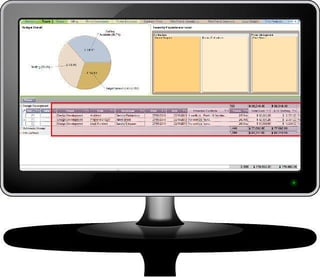
Deltek Vision 7.5 Features and Enhancements:

  • Focus to Client Nurturing | The new Client Activity Status Report allows users to quickly and visually identify clients that need attention. Add a touch of color! The new feature allows you to highlight your activities by color to easily identify clients that need follow-up.
  • Proposals Made Easier | Sometimes it’s the small things that make a big impact. Deltek has made the proposal process easier. The improved proposal module allows users to apply the selection criteria to all projects and employees at the same time. Users can also choose default graphics and have an easy-to-select graphic option. Even more, users can select project experience based on actual hours worked and merge service estimates totals. Lastly, InDesign users now have the ability to display multiple records on one page. All of these little enhancements save time during the proposal creation process.
  • Newly Created Asset Management Module | Now all of your fixed assets are in one place to increase tracking and decision-making. The New Vision Asset Management Module is integrated with the purchasing and accounting functions within Vision to enable you to create, track, manage, depreciate, and dispose of your fixed assets in one central location. Be sure to inquire about Q1 2016 incentives.
  • Manage Employees with Ease Across Multiple Companies | Vision Multi-Company just got way better! In 7.5, Multi-Company Employees can be associated with more than one company with a designated “home” company. More importantly, employee specific data carries over to each company allowing for company-specific and system-wide reporting. Find out more about the new Multi-company features here.  
  • Approvals Simplified | Stop with the endless email chains full of approval requests. In the version of Vision, absence requests and accounts payable invoices can be approved by designing simple or complex workflows to automate the approval process.
  • Better Forecast Revenue and Expenses | In Vision 7.5, the general ledger (GL) enhancements allow users to consolidate budgeting into a single view allowing for better insight into your business. This new functionality allows you to create, manage, review, edit, and approve multiple GL budgets from a single view. Learn more about these enhancements here.
  • Save Time Reconciling Bank Statements | In this latest version of Vision, users can import bank statements, automatically match records, and review records to manually match any remaining transactions.
  • Smarter Project Planning | Building on the power of task dependencies in 7.4, project managers now can effectively manage project schedules and closely track a project’s critical path and identify schedule risks. Additionally, color-coded predecessor tasks, expanded right-click functionality, and better integration with iAccess are just a few highlights to enable your project managers to make smarter decisions.
  • Keep Up with Project & Business Development On-The-Go | Obtaining the information you need on-the-go just got better. iAccess 2.2 enhancements now provides users the ability to create saved custom searches on any field, including custom fields. With an improved interface and screen designer settings enhancements, iAccess is becoming the go-to tool to access project metrics and business development updates anywhere at any time.
  • Improved Touch Capabilities | Deltek Touch now supports iPhones & iPads with iOS 8+, Android Phones and Tablets with OS 4.1+, and Windows Phones with OS 8.1. Building upon timesheet and expense capabilities, users now have timesheet auditing available on their mobile devices.
  • Much More | Deltek Vision 7.5 provides even more enhancements for accounting and project management with greater connectivity and better user interfaces.
Have questions about the newest enhancements and features included in Deltek Vision 7.5, or looking for information on how to upgrade to 7.5? Reach out to us, and we will be happy to help you get a grasp on all of the new functionality available to your firm!

New Call-to-action  

Topics:  

5 Reasons Why You Should Retire Your Planning Spreadsheets In 2016

Posted by Ryan Felkel on Jan 20, 2016

project_analyzer.jpgIs your firm still using spreadsheets to plan your projects? The good news is that you’re not alone, recent research from Zweig White found that almost 50% of AE firms are doing the same. The bad news is that using spreadsheets as an enterprise planning tool is very likely costing you time and money. Spreadsheets, while they are familiar to people and easy to customize, lack the many benefits of an integrated planning system. As I meet with Architecture and Engineering firms we hear common complaints and challenges about their spreadsheet planning “solutions”.  

Do any of these problems sound familiar? If so this may be the year to retire your spreadsheet in favor of an enterprise resource planning system.

Here are 5 Reasons why Spreadsheets are Challenging Your Entire Enterprise

1) Multiple Versions of the “Truth” Haunt Staffing Meetings

We find that firms that use spreadsheets to plan staffing assignments tend to end up with multiple versions of the truth. This tends to create havoc during staffing meetings as each manager has their own version of the truth, creating meeting havoc, and leading to errant meetings that lack focus. Say no to meeting havoc and refocus your staffing meetings on adjusting plans and assignments.    

2) Inability to Show Real-time and Accurate Actuals

Spreadsheets are great to start planning a project, but once the project starts evolving updating the spreadsheet becomes a tedious process that PMs quickly give up on. As the project progresses, spreadsheets struggle to show actual hours and costs spent to date. Even worse, a firm will devote manual hours requiring employees to track this information by hand – rather than investing in an integrated planning system that streamlines this process.

3) Disconnected Month End Processes

During the month end process, spreadsheets create chaos for accounting. The root cause of all this chaos stems from the duplicate and manual labor spawned from disconnected spreadsheets. Firms that use an integrated planning system eliminate the burden of spreadsheets to allow accounting to focus on financial performance; freeing up PMs to focus on project success.  

4) Project Managers and Management at Odds

Project Managers often find themselves at odds with management when it comes to staffing decisions – PMs need new resources; management thinks there is too much overhead. Firms without a way to plan staffing assignments are left with only their best ‘guesstimates’ when it comes time to validate new hires. Successful firms justify new hires by utilizing a single project management system to look at current staffing capacity compared to future assignments.

5) Adjustment Failure

Firms utilizing spreadsheets to identify project profitability goals at the beginning of the project often fail to adjust throughout the project lifecycle. Those that do try to adjust their spreadsheets work with outdated information. This lag in data creates the inability to make real-time decisions about staffing and scheduling that can impact the success of a project. By investing in a project management system connected to financials provides firms the ability to view up-to-date-billing, resource and revenue forecasts.

There is a Better Way with an Integrated Planning System

Imagine if you were able to standardize your planning process across the entire firm. Standardization allows your firm to strengthen communication amongst project managers, accounting and management; providing insight for the firm as a whole. Ready to ditch the spreadsheet? Check out one of the ways your firm can handle project planning and staffing in this upcoming webinar.


Does Your AEC Firm Practice What You Preach About Your Infrastructure?

Posted by Ryan Felkel on Dec 2, 2015


AEC InfrastructureI came across an article the other day written by ASCE Past President, Andrew W. Herrmann on the Golden Gate Bridge’s 75th anniversary celebration. The article Celebrating ‘Built to Last’ – Which Actually Demands a Lot of Maintenance, discussed the investment of on-going infrastructure maintenance and it got me thinking. The AEC industry touts about the government investing in infrastructure and how neglecting airports, highways, and bridges is more costly if it isn't maintained. The IT world has been saying the same about IT systems and databases. Is your firm guilty of not maintaining your IT infrastructure?  

Let's take a look at some on-going maintenance that your firm may be overlooking:  

Backup Mistakes

Unfortunately, for municipalities and governments, there is no backup for when a bridge or building falls apart. That is to say, there is no way to restore the bridge with a click of a button in the same way your firm can to restore lost data. Preparing for failure and implementing a reliable backup plan is essential to maintaining the integrity of your data.

The problem is many people believe this is an easy and mindless task, but often make some very common mistakes.

  1. Many firm’s only test their backups periodically, and it either becomes a forgotten task or done improperly. Verifying backups is a useful practice to ensure data is intact, readable, and can be restored if data is ever lost.
  2. Many firms that have their own servers tend to only backup data and not the server’s operating system and applications. While this practice saves time and valuable memory on the server, it can often be more costly in the future if the server itself fails. For example, it is much easier to restore the operating system, the applications and then the data than it is to manually install the operating system and setup the applications.   

Server and Hardware Failure

Normal wear and tear of the roads and bridges is the primary reason for the need to perform ongoing maintenance. It is required to ensure physical integrity for years to come. Likewise, many firms overlook the parts of their IT infrastructure that are prone to wear and tear. Although most of the components of servers and hardware are electrical, they also contain a few mechanical parts that tend to be more prone to failure. The reality is, as these components age, they tend to experience wear and tear that will inevitably result in a failure.

Interesting enough, failure can be avoided if you’re aware of common warning signs.

  1. Servers and hardware are designed to operate while creating minimal noise. If you start hearing a clicking or grinding sign coming from your server or computer, it’s likely you’re going to experience a failure soon.
  2. Mechanical failure is the result of wear and tear, plan on replacing servers and hardware more frequently to avoid the unexpected and dreaded failure.

Avoiding Updates

An ACEC whitepaper titled, Our Infrastructure Crisis – Your Turn to Act noted that one of the consequences of under-investment by municipalities and governments is an aging and outdated energy infrastructure. Aside from the inefficiencies of using outdated technologies, the cost to update the energy infrastructure is going to be massive. The problem is that the energy infrastructure has to work in sync, therefore updating one component means other key components will need to be replaced so the overall system can continue to work in harmony.  These same consequences can affect a firm using outdated software.

When deciding to update your antiquated software, you may also have to update other enterprise software your firm uses and maybe some hardware as well.

  1. Firms using older software that runs on unsupported operating systems, such as Windows XP, will have to update their hardware to support the new software.
  2. Also, even if your operating system may support some newer software, those can potentially impact other software that are reliant upon them.
The take away here is that using supported and current software versions might seem expensive, but in the long run, it pays to stay up-to-date. By not being on the most current software, your firms' productivity and efficiency can greatly deminish. 

The Big Picture

Just like municipalities and governments failing to maintain the roads, bridges and airports, AEC firms can experience significant costs for failing to maintain their IT infrastructure. The big picture is that maintaining your IT infrastructure requires you to ensure you backup your information, proactively prevent server and hardware failure, and most importantly, stay-up-date.    


Is Your Professional Services Firm Client-Focused?

Posted by Ryan Felkel on Aug 19, 2015

Client FocusedAll too often, certain words and catchphrases are overused in business meetings to the point they have become trite and serve little to no real purpose. These words and phrases are used in business blogs, articles, websites, and day-to-day business emails. One such term, "client-focused", is thrown around as a marketing gimmick for professional services firms, but what does it really mean to be client-focused?

Before we get too far, here’s what you need to know:

  1. There is a difference between saying you’re a client-focused firm and actually being client-focused.
  2. Your firm’s culture dictates the level of service your clients receive. 
  3. If your firm isn’t using technology to support your client relationships, you’re already behind.

The Firm-Focused vs. Client-Focused Professional Services Firm

Being truly client-focused depends on how your firm sees their clients. Sure, it is easy to talk the talk, but putting words into action is where things tend to get difficult.

When a firm places an enormous emphasis on the needs of their clients, they are firm-focused. A firm-focused business makes decisions based on the benefits to themselves and not with their client’s best interest in mind. 

On the contrary, truly "client-focused" firms make decisions that are determined by their client’s needs, as they are at the center of all such business decisions. They understand exactly what their clients need which helps to promote a symbiotic relationship between the firm and the clients.

Through the delivery of top-notch service aimed directly at the needs of their clients, a company will see a simultaneous rise in business performance. After all, the services provided were determined with the client and their needs in mind.  

Living the Firm’s Culture

Who are your clients? The answer might surprise you, but in the business world, there are two types: internal and external clients. 

Internal clients are members of your organization that rely on the help of other members to perform their job. These individuals can fall anywhere on the spectrum of your chain of command, from coworkers to upper management and executives. 

On the other hand, external clients are clients in the traditional sense of the term. They are the buyer of the services your firm provides. 

Do you feel you receive great service from the other internal customers within your firm? If you’re not receiving great service from within your own organization, imagine the service your external clients are receiving. Your firm’s culture is a reflected by the employees, and your clients can see if you live by the values you market.

If you’re not satisfied with your internal customer service, start communicating and living the values that define your firm. Your clients will notice the difference.

How Technology is Changing Playing Field  

Keep up with the Joneses - In order to be competitive and effective within an industry, your firm needs to ensure it is using innovative technology that helps promote success. Failing to innovate hinders a firms’ ability to adapt and grow while the "Joneses," aka your competitors, employ the use of industry leading technology enabling them to leave you in the dust. 

With a Client Relationship Management (CRM) software, you can take your company to the next level by keeping the functions of your company in a centralized system. This helps promote a conducive work environment in which the sales and marketing teams, and administration and finance teams can better work together to achieve client-focused results. To learn more about the basics to Deltek Vision CRM, click here.

An additional benefit of using innovative technology and software is that it enables you to access your work on-the-go. Today we have access to everything on our smartphone devices. From banking to entertainment, email to ordering pizza and everything in between, we can do incredible things with just one, single device. Having mobile access to your CRM allows you to -update client information on-the-go and enables other members of your organization access to the most up-to-date information about your clients. 

The Takeaway 

The importance of understanding what it means to be "client-focused" cannot be overstated. Your firm should define itself by its actions and not by catchphrases.

The goal of being client-focused is to nurture client relationships to retain clients and win more work. Remember, your existing clients are the lifeblood of your organization. According to Bain & Company, it cost 6 to 7 time more to acquire a new customer than retain an existing one. It seems smart to try to keep the clients you already have.

Most Recent News Mentions

We’re changing the way project-based firms operate.

People can’t help but notice.
Who will be next?

Check out our latest newsworthy work: