

Maximizing Organizational Breakdown Structure and Work Breakdown Structure in Deltek Vision
 As Deltek Vision systems are implemented and processes are written, the common denominator is most often the connection between the Organizational Breakdown Structure (OBS) and the Work Breakdown Structure (WBS). Whether it be the uniqueness of each or the relationship between the two, the attention paid to these early stages of development is instrumental in the flow and reporting of information in your Vision database. In the following, we’ll explore some areas to consider when designing the structure of your database.
Company Structure and the Organizational Breakdown Structure in Deltek Vision
The OBS can take on many different builds from the very simple to extremely detailed. Various example options include:
- Location approach
- Discipline/department approach
- Market sector BD driven
When designing the OBS in Deltek Vision, the system allows for up to five hierarchical levels and allocation of overhead requirements to be incorporated into the structure of the database. If you are using a multi-company database, then level one needs to be reserved for the different companies in your enterprise. Learn more about Vision Multi-Company in this article.
Additionally, when building the OBS it is most important to be aware of financial accountability in your organization. For example, if you are using two levels, such as office and department, each combination will produce an income statement. As a result, someone within the organization is responsible for these statements.
Furthermore, various cross sections can be extracted for combined financial reporting. For instance, if you have mechanical department in three offices, firms can create a mechanical income statement. A structure such as this allows for:
- Office accountability
- Office/Department accountability
- Overall Department accountability
Projects and the Work Breakdown Structure in Deltek Vision
The WBS specifically relates to how a project will be organized and the firm’s preference for the flow of revenue and costs. The majority of firms find it to be most effective if they build their WBS based on project budgets. Generally, this should be driven by the fee and scope using a bottom up approach.
Deltek Vision allows for three levels in the WBS, which are commonly labeled, Project, Phase and Task. However, this can be tailored to your firm’s preference. Even more, accountability within a project can be assigned through the WBS. As a result, the entire project can have a manager and/or phase and task managers, which can be assigned based on the scope and budget responsibility.
It is important to note that project builds and WBS don’t have to be the same across all projects. While not all firms are the same, it is highly recommended for most firms to let every project have at least one WBS 2. In other words, another WBS variation. Additionally, projects can be built with no WBS 3 or only some parts of the WBS 2 extending into the WBS 3.
Team Work Makes the Dream Work
Like the players on any type of team, the OBS and WBS need to play their roles both individually and in tandem to support the greater good of the team. The WBS at its lowest level drives how revenue and cost post to the lowest level of the OBS. Here are additional items to consider:
- “Mirroring” the OBS in WBS for overhead projects
- The combinations of cross charge, intercompany billing and high accountability you plan to build into WBS
- The division of financial and operational accountability
Final Thoughts
In today’s robust business environment, many firms are evaluating and updating both their OBS and WBS in Deltek Vision. A popular build methodology is using both geography and market sectors to build and operate under a 3D matrix solution. When considering changes to your current structures, the help of both functional and data consultants can result in a new and more productive Vision system. Timing and cutover planning is essential to success. Now is the time to get creative and strive to get the most out of your operations.
 Within Deltek Vision lies a very handy tool, which enables a firm to have multi-company functionality. However, the benefits of this multi-company functionality feature seem to elude many firms that would greatly appreciate its capabilities. So let’s talk in detail about multi-company functionality and the why, when and how firms should use this fantastic feature.
 Don’t be a headless chicken running around trying to get through the year-end process. Let’s review some considerations and tips to make your year-end close just a little easier.
 The Deltek Vision to Concur Connector allows both systems to work together seamlessly, automatically synchronizing finance data throughout the entire spending process, from pre-spend approval to reconciliation. Manage every expense and invoice transaction accurately and with ease, and get a complete view of your finances in one place.
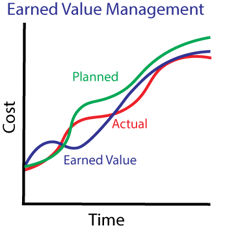 For project-based firms, measuring current firm performance is the most significant indicator of future firm performance. Furthermore, by using trend data, firms can forecast cost and schedule variances in the early stage of a project. A preferred method by project managers to factor this trend data is the earned value management technique.
  Deltek is at it again! With the introduction of Deltek Vision version 7.6, professional services firms are now able to streamline their credit card processes thanks to several new key enhancements. Providing some background, the introduction of credit cards was one of the many improvements to Vision in version 7.3. When 7.3 was released, firms gained efficiency with employee expense reporting as employees could import charges from the credit card company. This feature allowed employees to associate those charges within their expense reports. Now, based on user feedback, credit card functionality has been expanded.
 Full Sail Partners today announced it joined the Concur Solution Provider program and can now refer clients, including those using Deltek, to Concur, the leading provider of spend management solutions and services.
 I don’t know anyone that actually enjoys completing their expense report. The process is arduous, and steals valuable time from your already hectic day. The fact is, if you want to get reimbursed for a company expenditure, you have to take the time to complete your expense report. No ifs ands or buts about it. Luckily, Blackbox’s Deltek Vision and Concur Integration eliminates this pain staking process for your employees and frees them up to concentrate on client-focused, billable work.
 Our first inclination when the new FASB 606 was announced was this wouldn’t impact many of our Deltek Vision clients. But after more insight, we recognize this has a tremendous impact on our clients. The rule states applicability to ALL entities that deliver goods or services. Though many believe that GAAP, FASB, SOX and other guidelines are good rules to follow regardless of any statutory relevance, the reality is if we are not being overseen we tend to be somewhat lax in compliance.
 Deltek introduced approval workflows in Vision 7.4 for purchasing and inventory records. Since then, Vision clients have asked for more. Well Deltek listened and began adding approval workflows to each new version of Vision. Let’s take a look at the benefits of approval workflows and what’s been added to Vision 7.6.