
In the News


We’re devoted to revolutionizing the way our clients do business. Sometimes that gets us noticed.

No big deal.

Why C-Level Financial Types Are More Interested in CRM than Ever

Posted by Michael Kessler, PMP on May 3, 2017

CRM for Financial LeadersThere has been an uptick in interest recently from C-Level financial leaders to become more involved with the CRM functions within Vision. You may ask yourself why this new trend is occurring since the CRM module of Vision is for marketing and business development functions. The reason must surely be based on an informational need so that actionable decisions can be made.

CRM Information for Financial Leaders 

CRM databases are full of information to help the marketing and business development team drive new business. So, what information can provide financial leaders the insight they need to make better decisions?  

  1. The Life Cycle of Projects – More often than not, a project is born during the opportunity stage. More specifically, the opportunity can trigger a promotional project and/or a resource plan. As a result, there are financial considerations that must be taken into account: 
  • The numbering of both the promo project and the plan
  • Determining when the pursuit trigger will need to include resources in the staffing heat map
  • Figuring out the rate tables and a multiplier that are going to be used in the plan 
  1. Pipeline and Backlog – A conversation that often occurs between a CFO and director of business development is about the movement of future revenue from the pipeline to soft backlog to hard backlog. This can result in some level of double counting and is especially prevalent in task ordering agreements or infinite deliver/infinite quantity (IDIQ’s). C-Level financial people need to be involved in the definition stage of how future revenue is separated and quantified.
  2. Cost of Winning and Losing Work – Opportunities afford us the ability to track hit rates. These are metrics showing win/loss ratios and can be filtered by unique attributes that are meaningful to your organization. One suggested attribute to track separately is sole source versus competitive wins. From this metric, financial managers can begin to quantify and measure the effort that goes into these wins and losses. However, this requires creating a promo project once the decision is made to bid on an opportunity.
  3. Utilization – Having the fluidity to evaluate time spent on a proposal is a value add. Moreover, C-Level financial types are also aware of utilization. By moving time from a promo project to a regular type project, the time moves from non-productive to productive. When we use Vision functionality to isolate proposal time on utilization reports, it provides insight into why employees are not being productive. 

Sharing Information Firm Wide

It’s always best practice to share important firm data with key individuals from all teams, but those people should also be able to find the information on their own. Like this new trend for financial leaders to learn more about using the CRM module in Vision, marketing and business development people also need to know how to access information from the financial side of Vision. Most importantly, everyone should be involved in the implementation of all Vision modules to ensure the initial setup, data structure and reports are valuable to the firm.

Ashley Jabalera Joins Full Sail Partners to Strengthen Consulting Services

Posted by Ryan Felkel on Apr 28, 2017

Ashley_Jabalera.jpgFull Sail Partners, a Deltek Platinum Partner and Client Feedback Tool Premier Partner, is pleased to announce the addition of Ashely Jabalera to the consulting services team. Ashley has joined the firm as a Deltek Vision CRM consultant. In this position, she will work with clients to implement Deltek Vision’s CRM, Custom Proposal, and SF330 modules, as well as, the Client Feedback Tool and Blackbox Connector tools.
Ashley has over 17 years of experience in the A/E/C industry with an extensive background in business development and leadership within an extremely competitive and product based service environments. Her work history includes the procurement of projects ranging from $10 million to over $1 billion, with a focus on healthcare, commercial, retail, industrial, higher education, government and military clients.

"In the ever-changing world of technology choices – Full Sail Partners offers the stability of Deltek Vision, and a history of successful implementations that will allow you to spend your time and resources on what’s important to you – your clients," said Ashley.

The Full Sail Partners CRM consultant acts as a trusted advisor for all clients and their focus is to evaluate the client's existing software solution and develop a training strategy that is unique to each client experience. In this role, Ashley will leverage her knowledge to ensure our clients continue to be successful long into the future.  

“Our team will be strengthened by adding Ashley, and our clients will benefit from her strong marketing, business development and consulting experience,” stated Sarah Gonnella, VP of Marketing & Sales. “Her background combined with her keen ability to identify customer needs will provide highly responsive solutions for our clients. We are thrilled to have her join Full Sail Partners.”

For more information, please contact Full Sail Partners’ Marketing and Communications Department. Interested in learning more about the Full Sail Partners' team? Check out our crew!  

Emergency Preventing a Commute into Work? Don’t Get Stuck, Get Virtual

Posted by Jennifer Renfroe on Apr 26, 2017

Virtual OfficeIt seems like every time you turn on the news, there appears to be a new emergency. It might be a man-made disaster like the recent I-85 bridge collapse in Atlanta or a natural one like a Snowmageddon event or a devastating wildfire. The concern of lost work time due to an emergency is a reality, especially if employers expect all employee work to be done on site at the office. In order to decrease downtime and loss of productivity due to such emergencies, firms should provide flexible work options for their employees.

Getting virtual is a necessity and it is becoming a common occurrence. According to statistics from Global Workplace Analytics, the telecommuting workforce has increased by about 102% from 2005 to 2014. How your firm gets virtual first requires the employer to evaluate the specific needs of the employees and identify what would be best for the employees and the firm.

Let’s Get Virtual

The ideal situation would allow employees to work from anywhere, anytime which requires virtualization. There are different options available to get virtual depending on your firm’s desires. At a minimum, a plan should be in place for unforeseen circumstances that keep employees from getting to the office.

Let’s take a look at some solutions that would help professional services firms:

Desktop and Application Virtualization

A desktop solution like Desktops2Go is a perfect option. Using any internet connected device, such as a tablet or smartphone, you can access your virtual desktop from home or another location. Work files and resources are housed remotely in the cloud, so there is no need to be physically in the office to get your work done. Whatever your job may be, from accounting professionals to project managers, all company information and software such as Vision or AutoCAD would be accessible in this cloud solution. 

Additionally, this cloud solution has the benefit of allowing you to switch between devices and pick right back up where you left off. In case one device fails or is stolen, you could continue working without missing a beat. Since none of the company information is stored locally, you don’t ever have to worry about losing control of company collateral.

Virtual Private Network

If you don’t want to be completely in the cloud, you could take advantage of Virtual Private Networks (VPN). This solution allows you to connect your company issued laptop directly to the company network and work virtually that way. While you will feel like you are at the office, you can work from any location with internet access. The only downsides of this option are:

  • IT department approval and configuration are required
  • It may not work from every remote network an end user is connected to, such as a hotel, café or airport
  • Additional training and user actions are needed to get connected and can be difficult to troubleshoot 

Remote Control Software

Another good option to get virtual is to use remote control software such as GoToMyPC to access a company workstation from anywhere. This solution does not require a company issued laptop. Instead, any IT department approved device can be used to work remotely with internet access. The drawbacks are:

  • It requires additional software and training for remote access which can be expensive
  • IT security policies may preclude this option

Web-enabled Products like Deltek Vision, Deltek PIM and Microsoft Office 365

Finally, and specifically for Deltek and Microsoft users, you can take advantage of web-enabled Deltek Vision, Deltek Project Information Management (PIM) and Microsoft Office 365. With these products, you can access Vision and all company information such as company files, emails and Microsoft Office from anywhere. However, remote access to Vision and PIM do require IT involvement and approval to configure for remote access.

Full Sail Partners Can Help You Get Virtual

Full Sail Partners can assist you with any of the solutions you feel will fit your firm’s needs. We look forward to helping you get virtual so you will never have to get stuck again in any emergency. Click here to request more information! 


KPI - the New Industry “Buzz” Word

Posted by Michael Kessler, PMP on Apr 19, 2017

KPIs A KPI, or Key Performance Indicator, is a measurable value that demonstrates how effectively a company is achieving crucial business objectives. Organizations should use KPIs to evaluate their success at reaching targeted goals. Simply stated, KPIs provide your firm with metrics that compare budgeted amounts to the actual values. KPIs are no longer just for accounting and finance as they now reach deeper into a firm’s operational side examining marketing, business development and project management.

KPIs vs Traditional Reporting Methods 

Let’s take a look at how firms benefit from KPIs and how KPIs differ from standard reporting. A common reporting technique is to compare current profit & loss results to the same period the previous year, or to compare year to date then versus year to date for the current year. Budget data for one or both comparisons can be incorporated. Now, what if we graphed this information and included a desired growth line? We will then have a visual of actual performance in relation to a chosen measurement. This measurement will inherently become an indication of whether we are achieving our goals, and would allow us to be proactive in correcting potential challenges. 

Using KPIs to Measure Success 

As mentioned earlier, KPIs are not just a tool for the finance team. For example, a chief operating officer may not relate well to traditional financial statements and focusing on project related metrics would be more to his liking. These indicators can be project specific, relate to a grouping of projects, or be sliced and diced based on the organizational breakdown structure (OBS) or work breakdown structure (WBS). Click here to learn more about OBS and WBS.

In another scenario, a chief strategy officer believes there is a benefit from evaluating trending data regarding hit rates filtered by a predetermined criterion. However, we must keep in mind that unless a benchmark or some other distinguished metric is established, this may not result in a clear and meaningful measurement. 

Here are two examples of KPIs that have proven to be successful: 

  1. Cost and Schedule Variance – Using Deltek Vision reporting, actual project cost performance index (CPI) and schedule performance index (SPI) is calculated and compared to an acceptable mean-variance.
  2. Estimate at Completion (EAC) Analysis – This can be as simple as a two-column report showing EAC in comparison to the contract value. The criteria can also be set by contract type to “flag” anomalies that need to be further investigated. 

The Bottom-line on KPIs 

KPIs can be used company wide. C-level executives can look across client and project types and evaluate revenue multipliers or collections success. These same evaluations can be done at all levels across your enterprise from managers that are accountable for sections of your organization down to individual project managers driving the lowest levels of WBS. What is required is a benchmark, a budget or a goal. Whether top down or bottom up, the view into why businesses perform the way they do will kept top of mind.

So, how does your firm measure success across the enterprise? Is it profit centers, projects, employees or pursuits? Every firm is unique and can’t just use “off the shelf” KPIs. It all begins with a discussion of what you need to drive your firm to the finish line. Once decided, designing the reports and data is easy.


Why Aren’t Project Managers Taking Responsibility for Their Projects?

Posted by Ryan Felkel on Apr 12, 2017

iAccess for Project Management It wasn’t long ago that firm management took a “need-to-know” approach with sharing project performance information with staff. Today, most firms have changed their attitude about access to project information. Firm managers want project managers to be engaged with the financial results of their projects and have taken great steps to train them to use the Deltek Vision reporting tools and dashboards. Still, project managers are intimidated and paralyzed by the information they receive.

So why are project managers not taking responsibility for their projects?

  • Budgets are not easy to access or review against actual performance
  • Reports are complex and rely heavily upon the accounting cycle that many project managers don’t understand
  • Too much information in reports makes it difficult to focus on what is important
  • Analyzing data requires pulling information into Excel for What-If scenarios
  • Access to information “on-the-go” is not available 

How Can We Change This? 

Enter iAccess. The tool built for project managers to provide them the information they need at their fingertips to successfully manage projects. Even more, it’s ready to go right out of the box. Sure, that sounds too good to be true and one might wonder what you get with iAccess’ standard configuration. 

Here’s a high-level summary. An iAccess core feature that requires no configuration provides a simple project review tool that allows users to quickly review, analyze, and focus on projects needing attention. Any project accessed will appear with current contract, labor, and expense information in graphical and tabular formats at the project or lower levels. This removes the need of having complicated reports and performing What-If scenarios. 

Can iAccess Do More? 

iAccess, like Deltek Vision has the flexibility to meet the different and complex needs of each individual firm. From simple custom configuration of reports to in-depth configuration of projects, iAccess provides the same information that’s stored within Deltek Vision to project managers from anywhere they have an internet connection.   

With just some minimal configuration, project managers can use iAccess as a comprehensive project management tool from the beginning of the project through closeout by using the planning functionality. Starting with an original budget, project managers can interact with their projects as needed to review actual data and then provide estimates of additional effort required to complete the project. 

Stay Connected with iAccess 

The real-time connection to your Deltek Vision database and the mobile accessibility of the iAccess tool may be the missing link in motivating your project managers to take more control over their project financial management responsibilities. The use of iAccess allows them to absorb data in a friendly format while creating a platform for predictive information entry and sharing across the firm. Stop giving project managers an easy excuse for not taking responsibility.


Lower Costs and Risks with an Effective Spend Management Solution

Posted by Jennifer Renfroe on Apr 5, 2017

Spend ManagementSpend Management is a popular term, but what is it really? Spend Management can encompass anything from procurement, supply chain management, expense control, outsourcing and more. For most businesses, managing spending may not seem to provide a competitive advantage nor differentiate them from the competition. While this task doesn’t directly drive revenue, figuring out how to better manage and control your travel costs, expenses and invoicing does provide significant business value.

So, what exactly does a good Spend Management strategy need to accomplish? It should:

  • Simplify accounts payable (AP) workflows
  • Enhance the end user experience
  • Encourage mobility in the AP process
  • Improve compliance levels
  • Provide increased insight into spending
  • Allow for visibility of expenses before they are incurred

What Can All This Do for Your Firm?

Spend Management will lower your capital expense profile, increase employee productivity, lower costs for managing operational functions and drive new capabilities that have a direct impact on business performance. Accomplishing these goals allows your firm to continue to compete in this hypercompetitive environment that continually rewards sustained agility.

Organizations typically start with a manual process for managing purchasing, expense reports, and invoice management. As the company grows in size and complexity, workarounds like spreadsheets and physical reconciliation are simply no longer efficient and directly impact the further ability to grow and manage spending.

According to an IDC study (Document #US42246116 © 2017 IDC), implementing effective strategies can result in:

  • 68% less time processing invoices
  • Improving company procurement compliance by up to 14%
  • Increasing productivity by an average of 11% using mobile/OCR management tools
  • Reducing IT staff time to manage spend by 29%

How to Evaluate Solutions to Help Your Firm with Spend Management?

There are many factors to consider when evaluating a Spend Management solution. Here are some key things to contemplate:

  • Business ready: Solutions must be able to scale to accommodate your firm now and in the future, and must automatically link into existing accounting and ERP systems. These are secure, cloud-based solutions that fit within the CIO’s IT policy framework, are cost-effective and easy to deploy across the organization.
  • Business Intelligence: These solutions must be capable of providing greater business performance visibility and driving smarter decision-making. With a solution that offers more than automation, executives are armed with the insights to identify business opportunities that never existed before. What used to take days or weeks can now take hours.
  • Complete visibility: Encompassing all areas of spend in one solution, including travel costs, expenses and invoice management, is ideal. If you only see a piece of the puzzle, it is virtually impossible to view the entire picture. With solutions that can integrate all of the data and incorporate your firm’s spend management regulations, you can ensure there is maximum compliance and have the easiest adoption across the company with only one solution to learn.
  • End-user adoptability: As better financial performance rests with reducing accounts receivable turnover and achieving greater efficiency in cash flow management, businesses need to ensure that finance and accounting staff, as well as their employees, are able to quickly and accurately execute a modern, mobile process. When end users are satisfied and are able to employ solutions anywhere and anytime, this results in faster and increased adoption of the solutions and increased financial performance.

The best systems provide better visibility and insight into non-PO spend, P-card spend, and corporate card spend as well as meet employees where they are. They allow for visibility into spend before the money has been spent (PO management) and follow through to auditing with full details completely integrated into your firm’s ERP system. They also can incorporate all of these areas of spend into one solution so it’s easy to quantify spend across all areas.

Gain Control of Your Spend Management

Expectations and demands for employees, especially finance staff, have never been higher. The cost of lower productivity, employee turnover, and inefficient financial operations is now even more critical to a firm’s success and must be addressed. Employees require mobile, efficient solutions to increase their overall satisfaction and productivity. With increased industry compliance regulations, accurate reporting is now a necessity instead of a luxury. Now is the time to get control with a Spend Management solution.


Why Your Firm Needs Proposal Automation

Posted by Ryan Felkel on Mar 29, 2017

Proposal AutomationMany professional services organizations are under the false impression that proposal automation is not worth the investment. While copying and pasting previous Request for Proposal (RFP) submissions may seem expedient, it is not really the case as firms must tailor them to the unique needs of each new proposal. Let’s review a few reasons why proposal automation will benefit your firm if it is incorporated into the bidding process.

Firms Shouldn’t Depend on Previous RFP Content

Relying on past proposals as your content library is a bad move. Far too often, though, professional services firms fall into the trap of utilizing past RFPs in this way. There are a litany of reasons to avoid copying and pasting past proposal content:

  • A higher rate of human error
  • Past content typically contains other companies branding and imagery
  • A generic approach leads to a generic response
  • Lack of focus on the needs of the individual client

Proposal automation will eliminate human error. It will also create a consistent proposal format that contains details suited for each individual client and ensures proper branding.

Accurate Technical and Background Answers Are Necessary

Proposal teams can expect a list of common questions during the RFP process. RFP questionnaires typically contain background questions (founding date, partnerships, administrative information) and technical questions (performance KPIs, background details, etc.) As a result, copying previous proposals can lead to submitting inaccurate information.

With proposal automation, your firm can make sure that these frequently used answers are accurately reflected and are available for quick reference in your proposal content library.

Review Your Content!

Content reviews are an essential element in differentiating winners from losers. Your firm’s content library needs to be continually refined. Each piece of content should be relevant and error free. Additionally, your proposal team must be notified of pertinent changes so outdated content doesn’t spread into future proposals.

Using proposal automation, common content can be managed in a central location. Whoever is managing the content can ensure that the proposal team has only the most up to date information.

It should be evident now why proposal automation is worth the investment. Check out how Deltek Vision firms are implementing proposal automation to win more projects! 


The Unknown Features of Timesheets in Deltek Vision

Posted by Ryan Felkel on Mar 22, 2017

Timesheets It is a mystery why we deal with time management so badly. This is our commodity which we sell to our clients. However, we treat it like a curse, as if it’s an evil process that accounting forces on us. It somehow escapes us that this is the lifeblood of our business, and without it, we are out of business. So why don’t we manage this better and how can we improve our firm’s practices? 
Well, to begin with, the timesheet function in Deltek Vision is incredibly easy to use. You just need to know what features to focus on. Let’s take a look at timesheets and what is offered in Deltek Vision regarding time management.

Timesheet Best Practices

Project management best practices always include sound timesheet management processes. First of all, timesheets should be entered daily and submitted timely. Secondly, project manager review is mandatory. Timesheets should be corrected before they are posted to our projects and the billing system in Deltek Vision.

Poor timesheet management inherently leads to inefficient processes later. Timesheet miscodes cause incorrect project reporting and erroneous invoices. Additionally, transferring time entries in the billing system is time consuming. This slows down billing, involves the project manager, employee and accounting. Worst of all, this directly affects cash flow because of the delay in processing client invoices.

Features of Timesheets in Deltek Vision

We need sound, efficient and thorough timesheet management policies and procedures. They need to be incorporated into our culture. Along with daily entry and strict deadlines for timesheet submission, Deltek Vision has a number of tools to assist project managers with this process:

Floor Check was introduced in Version 7.2 and is a powerful tool that lets timesheet administrators see if employees are doing their timesheets. It shows the employee’s expected hours and the actual hours entered. Additionally, floor check has email functionality, so you can email employees directly and tell them, “DO YOUR TIMESHEET,” or you can also create pre-defined messages.

Unposted Labor Report is a standard project report that only shows unposted time sheets. This is the ideal tool for project managers to use in order to see what has been charged to their projects before they are posted. This is the perfect opportunity to fix timesheets before they are charged to our projects.

Project Reports with Unposted Time reports can be included in project reports by using the unposted time option. As a result, project managers can see labor being charged to their projects during the timesheet period.

Line Item Approval allows project managers to use line item approvals to put their final approval on time charged to their projects once timesheets are submitted. Line item approvals link to project ownership, so project managers will only see their projects.

Timesheet Audit Trail tracks changes to timesheets after they have been saved or submitted. You can require the employee enter a comment, or just track changes without explanation. Audit trails can also track billing transfers. This is the “where did it go” and “where did it come from” report. A timesheet audit trail report is available in employee reporting.

Get Your Timesheets Done!

With all of these tools within Deltek Vision at your disposal, timesheet management is within your grasp. You can simply start with daily timesheet reminders. Eventually, you will develop a plan that makes timesheet management best practices part of your firm’s culture. 


6 Key Statistics that Fuel the Competition for Talent Management

Posted by Sarah Gonnella on Mar 15, 2017

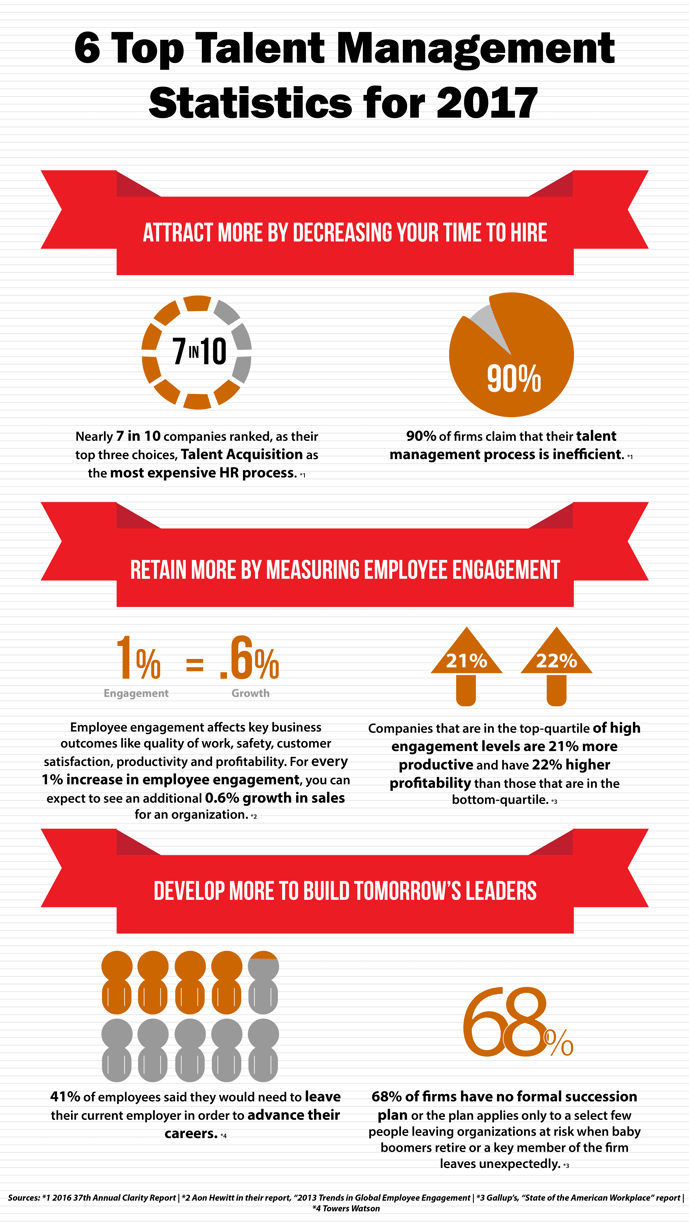
Organizations with antiquated talent management philosophies will struggle to attract, nurture and retain top talent in 2017. Many HR teams make the common mistake of having decentralized or ineffective systems and processes. This infographic illustrates six key statistics that demonstrate why HR teams can no longer be reactionary and should evaluate their talent management processes and systems.

Deltek-Talent-Infographic-Final.png

Learn More about the Challenges of Talent Management

Interested in learning more about how to overcome the increased competition for talent in 2017? Join our webinar where we will discuss how HR can overcome the top five challenges with talent acquisition.

Topics:  
HR

Using Multicurrency in Deltek Vision

Posted by Ryan Felkel on Mar 8, 2017

Deltek Vision MulticurrencyDoes your firm work internationally and deal with multiple currencies? Did you know there is a way to automate the tracking and conversion data? Within Deltek Vision is the Multicurrency function which holds the key to simplifying this process for your firm.

Vision Multicurrency allows you to:

  • Manage multiple currencies for transactions, accounting and financial reporting
  • Enter and manage exchange rates which can be done manually or can be automated to pull in exchange rates (XE.com has an auto feed subscription for this)
  • Support daily and periodic exchange rate changes
  • Revalue foreign currency accounts and automatically identify a gain or loss due to currency fluctuations

Considerations when Using Deltek Vision Multicurrency

With any changes to your standard accounting practices, there are always some items that need to be taken into consideration:

Revenue Considerations: Revenue generation will now use the billing currency fields in the project info center.

Project Considerations: Once you set a project to a currency and the project has data on it, the currency code cannot be changed on the project. It is very important to set the project to the correct currency upon initial setup. All lower levels of the work breakdown structure (WBS) must also be set to the same currency as the project. Optionally, a billing currency can be set differently than the project currency, but all lower levels will need to match.

General Ledger Account Considerations: In Vision Multicurrency accounts can be left without a specific currency or set to a single currency. In some situations, the company might set a bank account to a specific functional currency. For example, a bank account is set to USD for use by only the USD company. You might leave other accounts open to be used across companies with different currencies. Once an account is set to a currency that is different than the functional currency, it is then considered a foreign denominated account.

Unit Considerations: You must specify both a project and billing currency.

Vendor Considerations: Vendor records are stored in the functional currency of the active company. Additionally, there are several details to note for vendor records:

  • Functional Currency – the home currency or the currency in which the company operates
  • Transactional Currency – the currency in which a transaction is entered into Vision
  • Presentation Currency - used in reporting to generate a report with all amounts expressed in a single currency
  • Billing Currency - the currency used to generate invoices and billing reports for specific projects and their WBS
  • Project Currency – the currency in which the project is managed which can be different than the functional currency when needed (this currency should be used for all project management purposes including reporting)
  • Payment Currency – the currency in which the payments are made
  • Consolidated Reporting Currency – only available in a Multicompany environment and is used to create consolidated financial statements for multiple companies that are using different functional currencies
  • Account Currencies – each account setup for use as a bank account and mapped to a GL code can be set to a specific currency directly through the account setup of the GL (if you specify an account currency that is different from the company’s functional currency, the account is then considered a foreign-denominated account)
  • Tax Currency – if tax auditing is enabled then a currency must be set for each tax code (this is generally the currency in which you report and pay the tax amounts to the proper tax authority)

Generally Accepted Accounting Practices in Deltek Vision Multicurrency

Deltek Vision Multicurrency is in accordance with the Accounting Standards Codification (ASC) sections ASC-830-10-55-10 and 11. In section 55-10, the guideline states that it is acceptable to use averages or other methods of approximation. Accordingly, it is recommended to use a weighted average of the exchange rate for a period rather than applying actual day-to-day fluctuations.

Furthermore, section 55-11 states that average rates used shall be appropriately weighted by the volume of functional currency transactions occurring during an accounting period. In other words, to translate revenue and expense accounts for an annual period, individual revenue and expense accounts for each quarter or month may be translated at that quarter's or that month's average rate. The translated amounts for each quarter or month should then be combined for the annual totals.

Why Use Multicurrency in Deltek Vision?

Multicurrency can be used for tracking currency exchange gains and losses. Having foreign-denominated accounts creates the need to track gains and losses based on fluctuating exchange rates. For example, if a European company has a bank account denominated in United States dollars and the value of the euro rises against the United States dollar, the value in euros of that bank account balance drops. This results in an unrealized loss to the European company. Using Multicurrency allows you to use the Gains/Losses and Revaluations process in Vision to calculate and post these types of currency exchange gains and losses. As a result, they appear on your financial statements per the generally accepted accounting practices under which you operate.


Most Recent News Mentions

We’re changing the way project-based firms operate.

People can’t help but notice.
Who will be next?

Check out our latest newsworthy work:

Recent Posts