In the News


We’re devoted to revolutionizing the way our clients do business. Sometimes that gets us noticed.

No big deal.

Posts about Project Management (3):

Planifi and Full Sail Partners Announce Partnership to Provide Architecture and Engineering Firms with Tools to Improve Project Profitability and Performance

Posted by Jennifer Renfroe on Mar 25, 2016

Planfi_Logo.pngFull Sail Partners and Planifi announced their recently formed strategic partnership. This alliance brings together Full Sail Partners’ world-class consulting services with Planifi’s industry-leading resource planning software “Project Analyzer” to provide architecture and engineering firms with a better way to manage their resources.

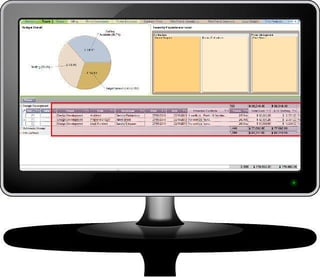
Project Analyzer is a visual resource planning software that enables project managers to quickly schedule, budget and staff projects. This graphic project management tool empowers firms to improve project planning by focusing on predictable and profitable delivery.

“We are excited to introduce Project Analyzer to our clients,” said Scott Seal, Full Sail Partners’ Vice President of Consulting. “We believe that Project Analyzer aligns with our core principals of helping professional services firms improve their business processes. Our clients will benefit from the increased visibility needed to make informed decisions around firm staffing, performance and revenue forecasts.”

Additionally, Michael Kessler, Principal Consultant at Full Sail Partners who successfully helps firms implement and utilize resource planning said, "I am looking forward to offering a powerful new planning solution to our customers. The reporting capabilities of Project Analyzer have been on my clients’ wish list for years."

This partnership will focus on enabling architecture and engineering firms to center their business on the project performance analytics that support better decision making by project managers and firm executives.

“This is a big day for Planifi,” said Tom Vandervort, Planifi founder. “This partnership will enable a whole new group of architecture and engineering firms to choose Planifi for their resource planning needs. Customers will benefit from the ability to select the solution that best works for them, all guided by Full Sail Partners’ expertise. Planifi customers will also benefit; as we are now able to offer enhanced consulting capabilities and solutions to our customers through Full Sail Partners.”

5 Reasons Why You Should Retire Your Planning Spreadsheets In 2016

Posted by Ryan Felkel on Jan 20, 2016

project_analyzer.jpgIs your firm still using spreadsheets to plan your projects? The good news is that you’re not alone, recent research from Zweig White found that almost 50% of AE firms are doing the same. The bad news is that using spreadsheets as an enterprise planning tool is very likely costing you time and money. Spreadsheets, while they are familiar to people and easy to customize, lack the many benefits of an integrated planning system. As I meet with Architecture and Engineering firms we hear common complaints and challenges about their spreadsheet planning “solutions”.  

Do any of these problems sound familiar? If so this may be the year to retire your spreadsheet in favor of an enterprise resource planning system.

Here are 5 Reasons why Spreadsheets are Challenging Your Entire Enterprise

1) Multiple Versions of the “Truth” Haunt Staffing Meetings

We find that firms that use spreadsheets to plan staffing assignments tend to end up with multiple versions of the truth. This tends to create havoc during staffing meetings as each manager has their own version of the truth, creating meeting havoc, and leading to errant meetings that lack focus. Say no to meeting havoc and refocus your staffing meetings on adjusting plans and assignments.    

2) Inability to Show Real-time and Accurate Actuals

Spreadsheets are great to start planning a project, but once the project starts evolving updating the spreadsheet becomes a tedious process that PMs quickly give up on. As the project progresses, spreadsheets struggle to show actual hours and costs spent to date. Even worse, a firm will devote manual hours requiring employees to track this information by hand – rather than investing in an integrated planning system that streamlines this process.

3) Disconnected Month End Processes

During the month end process, spreadsheets create chaos for accounting. The root cause of all this chaos stems from the duplicate and manual labor spawned from disconnected spreadsheets. Firms that use an integrated planning system eliminate the burden of spreadsheets to allow accounting to focus on financial performance; freeing up PMs to focus on project success.  

4) Project Managers and Management at Odds

Project Managers often find themselves at odds with management when it comes to staffing decisions – PMs need new resources; management thinks there is too much overhead. Firms without a way to plan staffing assignments are left with only their best ‘guesstimates’ when it comes time to validate new hires. Successful firms justify new hires by utilizing a single project management system to look at current staffing capacity compared to future assignments.

5) Adjustment Failure

Firms utilizing spreadsheets to identify project profitability goals at the beginning of the project often fail to adjust throughout the project lifecycle. Those that do try to adjust their spreadsheets work with outdated information. This lag in data creates the inability to make real-time decisions about staffing and scheduling that can impact the success of a project. By investing in a project management system connected to financials provides firms the ability to view up-to-date-billing, resource and revenue forecasts.

There is a Better Way with an Integrated Planning System

Imagine if you were able to standardize your planning process across the entire firm. Standardization allows your firm to strengthen communication amongst project managers, accounting and management; providing insight for the firm as a whole. Ready to ditch the spreadsheet? Check out one of the ways your firm can handle project planning and staffing in this upcoming webinar.


The Pitfalls of Project Management Planning for Project-based Firms

Posted by Scott Seal on Oct 14, 2015

Project Planning Blog GraphicCongratulations! Your firm just won the largest project in its history and it’s time to celebrate, or is it? Unfortunately, winning the big project doesn’t guarantee success and big profits. For project-based firms, project management is synonymous with profit management, but many projects start in the red making it nearly impossible to make a profit. Here’s a look at some common pitfalls project-based firms face before they ever start a project.

Accurate Job Costing

If you have been on a proposal team, you know the feeling of relief that overcomes you once you finally submit the proposal. Weeks of working long hours reading and writing exhilarating technical content and attending meeting after meeting. All this work and time exhausted by several people when in reality, your final price is the biggest factor in winning. But, can your firm deliver the project on the proposed budget?

Accurate job costing requires accurate information, and most firms believe they have the right systems for their business model. Excel sheets and the time clock work, but these systems don’t communicate very well. Even more, consider the unreported overhead time to reconcile these systems and the mistakes made during this process.

“If it works, don’t fix it” doesn’t always apply, and information in more than one system doesn’t work when trying to maximize profit. When it comes to job costing, you already have to worry about inaccurate estimates from suppliers. These are costs you can’t control, so be sure to take control of your internal cost monitoring to create profitable bids you can deliver.

Establishing Key Performance Indicators

Key Performance Indicators (KPIs) are various quantifiable measurements used for determining the success of the project. The KPIs establish a guide to the project and are used as the basis for critical decision-making. More importantly, not executing on a specific KPI can affect the project’s profitability for your firm and your client’s satisfaction.

Here’s where some project-based firms struggle. In many cases, several of the KPIs are destined for failure before the project starts. The problem is that defining KPIs is truly challenging and your clients usually lack experience with the process. All too often, this results in KPIs that are unrealistic and unmeasurable.

Establishing realistic KPIs is the first step to managing the profit of a project. As the project manager, it’s in your best interest to have a strong role in creating the KPIs. Good project KPIs have values that can be accurately measured and clearly reported on. Further, they need to be understood and agreed to by all parties. To learn more about project KPIs, click here.

Risk Management

Projects are full of unforeseen obstacles and predicting these is not always possible, but this doesn’t mean your firm can’t minimize the impacts. They just need to have a formal risk management strategy. Although this might be a time consuming process, it’s a necessary process required to protect your profit.    

A study by Info-Tech Research Group found that organizations with a formal risk management strategy are more than half as likely to have project management success than those with a reactive approach. To put it another way, having a risk management strategy before the project gets started is critical to the project’s success and profitability.

A risk management strategy starts with identifying common risks such as unrealistic schedules and requirements that fail to align with the strategy of the project. Once these risks are identified, evaluate the impact each risk will have on the project. From there, make a contingency plan that has a pre-planned response to the unexpected event.       

Become a Profit Manager

Don’t start your next project in the red. Project management starts with project planning, and not having the right systems and processes in place can hinder the success of the project. If your firm is falling into any of these pitfalls, consider the changes that you can make to become an effective profit manager.  

Tackle a Project with Resource Planning

Posted by Michael Kessler, PMP on Sep 23, 2015

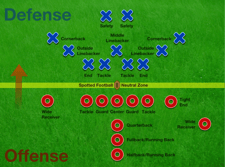
American Football Positions2It’s finally fall again and you know what that means, the leaves are changing color and the temperature is dropping, but most importantly - football is back and the wait for our favorite teams to take the field is finally over. Nevertheless, what does football and resource planning have to do with each other? Simple, coaches are like project managers, their resources are the players, and the project is the season. So what we can learn from football coaches to become more effective project managers?

Monday Morning Quarterbacking

A good coach always reflects on each game to identify plays that worked and plays that need work, and of the players, who played well and who under performed. They spend hours watching videos of the previous game to develop a plan to overcome shortfalls. Successful coaches know planning forward cannot occur until they’ve planned backwards.

Smart resource planning starts with planning backwards. Like football coaches, project managers need to think back on the previous week and evaluate their performance. This is a time when you ask yourself how efficient was your previous plan?

Let’s say you planned a task to take 20 hours and it was really done in 10 hours. Is this a result of a great resource or an over-estimated work duration? Identifying what went well and what didn’t go so well allows for continuous improvement throughout the project lifecycle. As a result, project managers can make cost saving decisions and improve resource utilization.  

Have the Right Playbook

The playbook is the lynchpin to a winning team in football. A team can have all the best players, but without a plan, they can’t play as a team. Even more, the teams they play each week change and players get injured. To build the right playbook, the coach needs to know what to expect from the other team and which players they have available.

So who are your injured reserve resources and who do you have available?

Let’s start with your injured reserve. These resources are allocated to non-billable work such as marketing and business development or out on PTO. These resources don’t have 100% availability and this needs to be taken into account when developing your playbook. Therefore, non-billable work needs to be aggressively maintained when resource planning to make sure resources are not over utilized.

Now think about your shared resources. Are other project managers keeping their project plans up-to-date so you know which shared resources are available? Shared resources availability may change throughout the lifecycle of a project and it may change several times. As a result, they often become over utilized. A shared resource’s time has to be updated regularly to ensure project plans across the organization stay on track.

Be Prepared to Call an Audible

The playbook is complete and now it’s game day. Everything is going as planned and the plays called by the coach are unstoppable. Then all of a sudden, the opposing team changes their formation on the line. The coach then instructs the quarterback to call an audible.  

Like the coach's playbook, your plan needs to be flexible. Being blindsided by unforeseen circumstances in project management should be anticipated. Don’t let dependent tasks get disrupted and destroy your plan. By adding contingencies to dependent tasks, you can avoid major disruptions to your project plan and be ready to call an audible.  

Earning the Gatorade Shower!

Every week, coaches are revamping and tweaking their plans. They evaluate their bench and design plays based on their available players and their individual skills. Constantly trying to improve and continue to win all in hopes that their resource planning throughout the season earns them the championship and they receive the coveted Gatorade shower.

Why Project-Based Firms Should Utilize the Deltek Vision Contract Management Feature

Posted by Rana Blair on May 6, 2015

contract managementI don’t know of a single Professional Service firm without a formal contract management process. Firms spend significant dollars purchasing contract templates and some even retain legal counsel for review. Everyone knows that the contract is an important document in any project undertaking.

Nevertheless, those same firms often begin work without getting the document signed!

Does the importance of the document cease once work has begun? Of course not. But what happens is that the production machine must and does begin before the administration machine can catch up. The contract seems to be subjugated to more pressing needs and the team begins operating on ‘Good Faith’.

External stakeholders have a vested interest in the firm’s contract habits. Professional Liability Insurance applications have at least a few questions relating to whether or not a contract is required, how much work is performed without a contract, and so on. Even the bank wants to know about the status of firm’s contracts and the processes employed. Banks analyze aging or large Accounts Receivable (AR) and next ask about the project’s contracts status. Both want to assess the risk inherent in providing their products to the firm.

It’s All About the Risk

Business is risky. There is no way to eliminate it, only to reduce. Written contracts certainly mitigate risks. Signed ones reduce it further.

Having a signed contract doesn’t guarantee against litigation. There are always competing interpretations of the language after the fact. Better contracts decrease collection time and reduce disputes.

Not having a signed contract does not mean that the firm will not be paid. As long as it is clear that money was to be exchanged for services, there will be some value exchanged. However, the firm might have to perform more work than intended for the stated amount. Additionally, it might mean considerable expense or time attempting to get those dollars.

The truth is, all Professional Services firms have a tendency to do some work without a contract. How much, how often, and with whom is important information that should be assembled and available for review by stakeholders to stay informed about the risks of the firm.

Leveraging the Deltek Vision Contract Management Feature

The Contract Management feature included in Deltek Vision’s Finance Core is one such tool that can be used to assist in accumulating information on this risk factor in the firm. The tool and system are designed specifically with project-based firms in mind. Let’s take a look at how this feature can help:

Track It

Deltek Vision Contract Management allows users to track multiple contract documents, their origination and approval dates, status, and fees requested per document. Because the information is entered on each project, it makes a variety of reports and workflows available allowing for efficient and integrated contract tracking. Optionally, information can be extended neatly into the Project’s Work Breakdown Structure which will allow users to easily see which documents created and amended the fee on each level.

Identify It

By using the Contract Management area of the Project Info Center, users can add the information to reports already in use. Both the Project Summary and Office Earnings allow the Contract Management fields to be selected as columns to appear along-side the existing data on firm reports. Contract statistical data can also be used as a filter on other reports.

Manage It

Integrating project contract information into Deltek Vision allows users to employ the powerful workflow engine in the software. Vision Workflows enables Contract Management users to automate the reporting and informing process around Contracts.

Consider these workflows:

    • Notify Project Manager and/or Principal when a contract has been marked as Approved
    • Remind a user of special handling when a contract exceeding $XXX,XXX has been created
    • Update a column on the Project record when a contract record has been inserted

Use It

Deltek Vision Contract Management users can leverage the information about contract status in other organizational processes. The Contract Management fields are available as filters on any project-based report. This allows the contract status to become a part of the firm’s management process.

Consider using Contract Management data and filters in these activities:

    • Client Management – Create a Project List report for active projects and sorted by Client. Include Contract creation date and status as columns to get the most from the client check-in call.
    • Collections Management – Create a scheduled report for outstanding AR where contract documents are in ‘Pending’ status. Create an AR alert for projects with certain contract status’.
    • Employee Management – Use the Optional Sales Credit feature to measure employees’ participation on specific contract documents. Use in reviews or statistical reporting.

Know the Risk and Accept It

None of us live in a perfect world where a single project meeting hasn’t been had until the contract is signed. However, our focus should turn to understanding and measuring the risk that will be taken on. Firm management should be well informed of the status of the firm’s contracts and have the necessary information on hand should they need to intervene. To support this, contract tracking and management should be integrated with the projects to which they relate. Your Vision software is already well equipped to assist you in the mechanics.

To get started today you can:

  • Review our technical webinar on the Contract Management feature
  • Enter a test contract or two to understand how the feature works
Later you can:
  • Identify how your current process can improve with automation, integration and reporting
  • Backfill existing contract data
  • Contact a Full Sail Partners consultant for more advanced training to customize menus, write workflows and complex reports.

The Importance of Project KPIs for Project Based Firms

Posted by Sarah Gonnella on Jul 14, 2014

Project KPIsBecoming a champion of project management is as easy as solving a puzzle. The puzzle is rather complex and requires specialized training with a very specific kind of expertise, but a puzzle nonetheless.  So what does it mean to be a project based firm? What do project managers do? What do project KPI’s have to do with project management?  As with all puzzles, the best way to solve is to take the puzzle apart, piece by piece, and decode it.

Puzzle One: Am I a project based firm?

Interestingly, business theorists debate as to what determines “a project based firm”.  There is not a hard-and-fast rule for defining whether or not you’re project based and would need the services of a project manager. So let’s just stick with the basics.  The most obvious way to decide is if you have a business model where you perform “projects,” “jobs,” or “services” for external clients.  Ultimately, you are offering your expertise – NOT your goods – to an external customer.

The Project Management Institute says that a project “is a temporary group activity designed to produce a unique product, service or result like building a bridge, relief after a natural disaster or expansion of sales into a new market.”  Examples of project based companies include:

  • Management Consulting Firms
  • Architecture, Engineering or Construction Companies
  • System Integrators
  • Advertising Agencies

If you’re goods oriented (you sell software or insurance) or operationally oriented (i.e. you manage clients’ IT structure), you are not naturally a project based firm.  We could expand our definition by looking at your business organizational structure – project based firms tend to organize around their projects or jobs.  In a non-project based firm, “a business may include separate departments for manufacturing, accounting, marketing, and human resources because the organization is based around functions, not projects, …” (Miranda Morley, Demand Media, “What Is the Difference Between Project Based & Non-Project Based Organizations?”)

Puzzle Two: Am I a Project Manager?           

Most of us have a general understanding of project management, but we can go to the Project Management Institute (pmi.org) for a good definition – “project management is the application of knowledge, skills and techniques to execute projects effectively and efficiently.  It’s a strategic competency for organizations, enabling them to tie project results to business goals – and thus, better compete in their markets. Project Managers Initiate, Plan, Execute, Monitor and Control, and Close their projects.”  

Many would argue that there is more to being a Project Manager. I would argue that communication and follow-up are key areas required to be a successful Project Manager. However, the basics of being a project manager revolve around the delivery of a project. 

Puzzle Three: What are Project KPI’s for Project Management?

KPI’s are Key Performance Indicators and they are quantifiable, measurable indicators of goal attainment.  They are the very backbone as to what makes projects succeed or fail – which is directly tied, in your project based firm, to your company’s success or failure.  When given a new project, Project Managers create KPI’s to:

  • Initiate the project and its deliverables
  • Plan project details
  • Execute those details
  • Monitor and control each step in the project
  • Close the project upon completion of the deliverable and the project post-mortem

Some subject examples of project management KPI’s are adherence/deviation of budgets, milestones, and task times.  Here are some sample KPI’s that might be part of a project plan: 

  • Determine percent of rework attributable to requirements definitions. 
  • Conclude deviation of planned ROI
  • Establish cost of managing processes

For more information on writing project KPI’s, refer to “KPIs | Writing, Establishing, and Measuring" by Full Sail Partners, Inc.

Bonus Round…

Although joining a game show is potentially a quick way to make some money, it’s the savvy business owner who aligns his project based firm with project KPI’s. This alignment helps ensure the firm’s bottom line is replete with positive cash flow and employees who are happy, because they know their jobs and how to be professionally successful.  No, we shouldn’t rely on a game show host to guide us to riches, but we can depend on consultants at Full Sail Partners to help guide us to metrics that matter.  And don’t worry about buying a vowel, just turn over your mouse to this webinar and see how achievable all your goals are.


Join the 21st Century and Get More Social with Deltek Kona

Posted by Rana Blair on May 28, 2014

In the last 200 years we’ve developed a variety of methods for communicating with one another.  We’ve taken the journey from individual letters delivered by horse to instant mass communication.  How can things get any more social than that? Deltek Kona, that's how!

Being ‘social’ involves more than just communicating and working together. Merriam-Webster defines social as relating to or involving activities in which people spend time talking to each other or doing enjoyable things with each other”. 

The key phrases “talking to” and “doing enjoyable things with” only seem to reference something outside of the workplace.  In the 1980s, the focus was on output and productivity.  In the decades that followed, we labored to attain the ever elusive ‘work-life balance’.  In the new millennium, we strive toward contributing fully in our work and personal lives without restrictions of time and space.  We want to enjoy ALL of our life.

get more social, deltek konaDeltek Kona, released in spring 2012, combines all that we know about working together with the best methods of communication.  It presents that blend to us allowing us to talk to each other AND do enjoyable things with each other across our work and personal lives.  Guided by the principles of confluence, immersion, accessibility, and digestibility; the innovators at Deltek Kona have found a way to leverage the best of all the communication tools developed in the past 50 centuries (not a typo: we still draw on walls to convey our thoughts) to help us interact in a more social and enjoyable way today. 

How does Deltek Kona help us get more social?

Use Deltek Kona to Create a Hometown

Kona is organized around context specific spaces or groups.  Each space is formed with a level of focus appropriate for its purpose.  There are no limits to the number of spaces an individual can belong to or the number of members in any one space.  Each space landing page is the “hometown” for the group allowing members to participate in and view interactions that are taking place.  Over time, users begin to become acquainted with each other’s concerns, thought processes, and involvements.

Enhancing Personal Interaction

Individual users may have more than one group in common across work and personal interests.  Knowing more about what you have in common with others allows you to get more social with them as individuals.  The ability to create and store one-on-one conversations with people in your Kona network allows users continuity and privacy even when time and distance are barriers to traditional communication methods.

There are times when we are having a conversation in a group but need to direct our comments to a particular person.  Deltek Kona incorporates “@mention” functionality to expand the personal contact in the context specific discussion. Nothing encourages us to communicate more than feeling like we are being listened to and understood.

Eliminating Polarization

Deltek Kona was built to be free.  Users can enhance their organizational experience with an upgraded account.  Regardless of the type of account, the experience and interaction is the same. This removes the barriers of participation across all members of the group and continues the social experience as no one is barred from participation because they must pay.  This allows us to use Kona for all sorts of purposes, from family reunions, to political organizations, to multi-firm business projects.

Deltek Kona further removes barriers by elimination of platform dependencies.  The Kona software works the same on any operating system and internet browser.  The accessibility extends to the mobile platform where users continue to get more social from wherever they are and whenever they want to. 

Increasing Personal choice

One of the favored features of the Deltek Kona product is its flexibility with the individual users’ need to digest information and connect on in his or her own time.  From the moment one opens the Kona product, it is clear which items take priority.  A user can access a conversation with 20 unviewed in-line comments and get a clear picture within minutes.  This is the first step in creating an enjoyable social experience when working with a group.

Because the Kona team recognizes that email has its merits, they’ve enabled the individual to decide how much or little Kona activity is transferred to email.  The possibilities to limit but not eliminate are almost endless for the individual user.  Being able to choose which groups to get more social with enhances the interactions that are wanted.

With much of our productivity arising from collaborative efforts conducted across vast geographic spaces, we meet and interact with more people than ever.  The Deltek Kona tool allows us to stay informed and control the inflow of information leading to a more relaxed experience.  When we remove unnecessary stressors, we naturally take time to get more social and find common ground with those around us.  Sign-up for Deltek Kona today and join the 21st Century’s answer to communicating, socializing, and getting things done.


Departing platform 9 ¾, Project Management Training … all aboard!

Posted by Full Sail Partners on May 21, 2014

project management trainingHarry Potter’s Hogwarts Express isn’t the only train that uses platform 9 ¾.  There are other trains, similarly magical, that take their passengers to places they’ve never been.  Take project management training, for example.  Just like at Hogwarts, project managers are trained in a kind of wizardry, i.e. transforming the business experience of their clients from nothing more than a mere idea into something special. And those lucky enough to “receive their letter” to attend, must have honed ALL their skills in order to reach their final goal – being a productive and effective project manager. 

At Hogwarts, Harry takes classes like Divination, Transfiguration and Potions.  And although the names of the classes they take are very different, the content of the classes they take is very much the same. 

  • Divination is the art of “seeing.”  A good project manager must indeed learn to read signs.  Is the project moving smoothly?  Is the client happy with progress and with process?  Are the employees on the project satisfied and therefore doing a good job?  Too often, these “signs” are definitely not clearly communicated.  They are often muddied, and it takes a good project manager to see them.
  • Transfiguration is really about how to transform yourself.  During project management training, attendees will transform their natural business gifts – financial acumen, business savvy, and communication expertise – into a project manager who really knows how to wield those skills to benefit their customers, their employees, and their company. 
  • Potions is a class on how to take seemingly dissimilar ingredients and turn them into a concoction which is business changing.  Take, for example, a handful of employees from various areas like a programmer, a writer, a financier, an administrator, a quality controller, and an executive – put them together into a cauldron-like project plan, and you have a new business process gaining efficiency, money, and time.  A potion any business would be proud of!

Another similarity between Harry Potter and those wishing to become effective project managers is natural skill.  Wizards aren’t made at Hogwarts, they are honed:  the young wizards who attend school already have the necessary abilities and project management is very much the same. 

One doesn’t become a project manager because of project management training;

one becomes a project manager because of their natural abilities refined at training.

Other than project management training, a good project manager must also have

Communication ability – exceedingly important!  Project management is not only completing and managing a Gantt chart, but effectively and efficiently communicating every portion of the project to every person involved … to their understanding.  The project manager is the translator of all things, so that each interested party is clear and satisfied.  A superhuman feat but one which good project managers achieve every day.

Business savvy – Someone who is good at business is just plain impressive.  Those who see ramifications outside of the project plan are the best at their jobs.  Project managers have an understanding beyond the project as to the impact to the surrounding business processes and how to structure a project to either improve or not negatively impact them.  It’s really knowing how to do your job in the project management box, but seeing and managing the effect outside of the box.

Experience – you just can’t teach experience!   People who have “been there, done that” and who then apply that experience to their projects are truly the most successful project managers.  And, to be clear, it’s not the same experience over and over, but broad experience garnered through years of accumulation.   

So how do you find out if your project management training was successful?  How do you know if you have what it takes to be a great project manager?  Just call our friends at Full Sail Partners (which could be considered the Hogwarts of Project Management).  Although they aren’t called that at Full Sail, you will have access to the likes of Professors Dumbledore and McGonagall – people who are sage, savvy, and just plain good at their jobs (oh, and really nice, too).  

Although project managers will probably never make the big screen success of Harry Potter.  They are, in fact, the real wizards working in our midst.  Their project management training has sharpened their skills to perform magic every day:  turning an idea into a project plan and then into something special for our businesses. 

Without the wand or robe, of course. Click your wand below to learn more. 

Project Accounting: One, one deliverable met … ah, ah, ah! (Lightening flash)

Posted by Admin on Apr 30, 2014

Project AccountingLike the beloved Sesame Street Count Von Count character, your project accounting should be just as obsessive about tracking numbers – project management numbers that is.  Many companies are very good about ensuring that their general accounting functions (things like their A/P and A/R balances, for example) are consistently maintained and reported to those who need this data.  But when it comes to project accounting, too many companies fall short.  

But first – what is project accounting?

Let’s start by comparing it to standard accounting, which most of us know.  Standard accounting manages the financials using a company’s organizational structure – how divisions or departments are tracking (like their G&A, labor, etc.) compared to their budgeted amounts on a periodic basis.  For those who embrace their arithmomania (a compulsive love of counting) and for those companies where growth is a key component of their future, there is another layer which is a must.  Project accounting looks closely at the projects a company has undertaken most of which regularly cross departments and might last months or even years. 

Let’s say, for example, company X wants to undergo a new green initiative in their office.  Our standard accounting will keep good track of costs for things like the smart electronics to manage lighting and HVAC or the newly hired “Green Officer.”  What standard accounting doesn’t do is manage the costs for the actual project, i.e. how much did it cost you to achieve your final goal.  Things like:

  • The project manager’s time to create and manage the project plan: the work breakdown structure and project hierarchies.
  • Were deadlines met?  If not, what the cost of missing those deadlines?  If so, how did meeting those deadlines translate into cost savings?
  • How is percentage of completion managed and tracked to budget?
  • What long or short-term investments will need to be managed on an on-going basis once this project is complete? 

But let’s take this a step further.  Let’s say you need to perform a customer project – you’re going to implement that same green initiative in your customer’s office.  You probably have access to someone who is really good at estimating the costs of a project, so you have this first step covered.  You may not, though, have a good system for tracking those project costs to the actual costs which means for the entire project, you’re working with blinders and hoping that at end of the project, you’re not bankrupt.  That’s where a good project accounting system will save you.  Forbes.com contributor, Bill Connerly’s piece, “Businesses Lose Money From Bad Accounting,” says he’s surprised at “how many businesses do not know the profitability of each customer or project or order they have. For instance, a sign company could not tell … how much it cost them for a particular job they undertook. Their financial statements told them whether the entire business made money in the month” or not but there was no accounting in place to determine to which project the gain or loss was attributed.

Now, SOLUTIONS, please.

When you’re a small company doing your best to manage your business day-to-day, a smaller accounting solution, like Quick Books, serves your needs … for a while.  J. Carlton Collins, CPA details those limitations in his piece “Practical Advice for Companies That Have Outgrown QuickBooks” (http://www.iyoungland.com/_pdfs/outgrown_quickbooks.pdf)

QuickBooks has two basic limitations:

• Limited accounting system features

• Limited database performance 

If you run a smaller operation, these product characteristics are actually appealing … If your organization is rapidly expanding, however, you will eventually outgrow the QuickBooks feature set and database performance … growing companies often find they need more sophisticated features that aren’t offered by QuickBooks.

And therein lies the rub.  Growth.

For companies who have “growth” as part of their future – and “growth” can be defined any number of ways like increase in revenues, employees or customers, higher profits, greater market share, etc. – they will outgrow these types of small accounting solutions and have to take the leap to accounting sophistication by finding a solution that manages both their standard accounting as well as their project accounting.  

But before you take that leap alone, let’s get you a partner.  As much as we all love Count Von Count, you should look to a partner who is just as obsessive about numbers, but without the funny accent.  Your friends at Full Sail Partners are just what the Count ordered.  Take, for example, this piece by Mark Lovstrom with Full Sail.  He writes that growth is a KPI which should be analyzed with “a project KPI dashboard [that] can examine some simple indicators [to] allow a project manager to gauge which project(s) need more attention.”  He goes on to list those items which should be closely examined in order to manage your project costs.  Things like:

  • Accounts Receivable
  • Unbilled Labor
  • Estimated to Complete (ETC) and/or Estimate at Completion (EAC) 

In the end, we are all working toward success for our business.  And to most of us, success means growth which then means managing every minute and every dollar – through project accounting – to achieve your success.  Click to view this webinar by Full Sail Partners to learn more about how your particular style of growth can be achieved. 

Count Von Count and all his Sesame Street friends will be proud of how much your project accounting has allowed your business to grow!

5 Key Reasons Why Business Collaboration Tools are the Future

Posted by Sarah Gonnella on Apr 3, 2014

business collaboration, collaboration toolsBusiness communication continues to change with each generation. The quantity and speed of information has exploded and firms are seeking new ways to handle the pressure of information overload. Are business collaboration tools the answer? We predict that these 5 reasons demonstrate why collaboration tools are the way of the future.   

  1. Reduce Dependency on Email | Imagine a world of no email. I know it sounds crazy, right? However, if you had a designated space that colleagues, sub-consultants, vendors, and clients used to collaborate about specific initiatives, projects, or marketing efforts, wouldn’t it be nice to capture all of those thoughts in an organized fashion in one area? When you think about some of the biggest challenges with email and the fact that colleagues are not always down the hall anymore, it makes sense that businesses are looking beyond email. Here are some of the things that can be improved through business collaboration tools where email consistently fails:

      • Eliminate forgotten or missed requests
      • Categorizing comments, notes, files, tasks, and requests
      • Capturing ideas, competitive intelligence, or ways to improve your business that are easily searchable
  2. Personal Meets Business | The line of business and personal continues to blur. When was the last time you worked 9-5? People are working at all times of the night and answering questions while watching their favorite TV show. Business colleagues and clients are now connected to us on Facebook and personal activities and responsibilities need to be accomplished sometimes during the work day. Social collaboration and business collaboration tend to have the same needs: to share files, ideas, assignments, calendar of events, etc. Wouldn’t it be nice to organize both business and personal in one tool? Collaboration tools like Kona are making this possible.

  3. Make Life Easier | Employees are looking at ways to balance their work and personal life, as well as, have more flexibility with their schedule. Not all tasks need to be done during work hours or even at their desk. Virtualization is becoming more common, requested, and needed in corporate America. Disasters or state emergencies have made that even more apparent. Collaboration tools are designed with mobility and accessibility in mind. Additionally, they allow people to access information and other individuals anywhere and anytime with the comfort that the information is readily available in the cloud.
     
  4. Instant Access | Business collaboration is not just for internal communication, but is also being requested by clients. Clients are looking for a better way to communicate and a better client experience. No more excuses of lost emails. Clients can instantly ping you with a question and you can immediately respond with an answer through the use of collaboration tools. What client wouldn’t like to immediately IM or video chat with their consultant to resolve issues? Setting expectations of this instant access is important. Alternatively, you could set a schedule that you are available for client questions at a particular time each day and quickly answer those pending questions in one collaboration tool.
     
  5. Integration | Collaboration tools are becoming more and more integrated with other business tools. Not only are they now integrated with our ERP, CRM and Outlook, but collaboration tools integrate with other sharing tools like Dropbox, Box, Google docs, Skype, and the list goes on. The ease of use and social familiarity increases the likelihood of usability. Integration makes it even easier for users to access data in one place through connectors.  

Business collaboration tools are all about working more effectively as a team. Let us know what you think. Has your firm been contemplating collaboration tools? See what others are saying: 

Most Recent News Mentions

We’re changing the way project-based firms operate.

People can’t help but notice.
Who will be next?

Check out our latest newsworthy work: