Full Sail Partners Blog | Human Capital Management

Posts about Human Capital Management:

People First, Data-Backed: What the 2026 Clarity Study Says About Human Capital Management
Posted by Katie Manning on Aug 13, 2026, 6:16:44 PM


2026-DeltekClarity_Human_Resource_Trends_banner


Each year, the Deltek Clarity A&E Industry Study gives architecture and engineering firms one of the clearest pictures available of where the industry stands — financially, operationally, and strategically. The 47th edition surveyed 896 firms of all sizes and types, and the throughline across every section is the same: this isn't a market that rewards guessing. It's a market that rewards intentional, data-backed decisions.

This is the fifth and final installment in our blog series walking through each section of the Study. We're closing out with the section that ties them all together: the people who actually do the work.

The headline for Human Capital Management this year is a shift in focus. Firms are moving from growth mode to sustainability mode — from "how do we hire more people" to "how do we keep, develop, and deploy the people we already have." Turnover is still elevated at 13.8%, the highest in five years, but relatively unchanged from the prior year. Hiring has stabilized. What hasn't stabilized is the pressure to build workforce systems that hold up: ones that connect learning, planning, and staffing decisions to real data instead of instinct.

The skills firms need most are the ones data-driven teams build faster

For the first time, the Study asked firms to name the skills they'll need most over the next three years. Strong project management topped the list by a wide margin at 70%, followed by AI literacy at 41%. Rounding out the top five: collaboration (34%), adaptability (34%), and change management (26%). Decision-making under uncertainty came in at 22%.

Look at that list again and a pattern shows up fast. Project management, collaboration, and sound decision-making all depend on the same thing: everyone working from the same accurate information. A team can't collaborate effectively if half of them are working from a spreadsheet and the other half from the system of record. And nobody makes a confident decision under uncertainty by guessing harder — they make it by having the right data in front of them at the right time.

This is exactly the argument we've made throughout this series, especially in our Project Management post: the tools don't replace good judgment, they support it. A well-configured Vantagepoint environment, paired with clean CRM data, means your PMs, your BD team, and your leadership are all looking at the same numbers instead of reconciling three versions of the truth. That's the foundation the most-needed skills on this list are actually built on.

Learning and development just became a metric that matters

Learning and Development hours entered the Study's list of tracked KPIs for the first time this year, and it didn't ease in quietly. It landed at 49%, immediately one of the most widely tracked metrics in HR, just behind the long-standing top three of revenue per employee (67%), voluntary turnover (63%), and employee retention (63%).

That's a meaningful signal. Firms aren't just talking about development anymore, they're measuring it. And the reason is straightforward: the skills firms say they need most, like collaboration, adaptability, and sound project management, aren't the kind of thing you learn from a slide deck. They're built through mentorship, repetition, and hands-on experience.

If your firm is starting to track L&D hours as a real metric, it's worth asking content and programs fill those hours. A recorded video counts. Someone sitting with your project managers while they work through real scenarios in Vantagepoint tends to stick a lot longer. That’s where Full Sail Partners consultants can lend a hand; reach out if you’re interested.

The technology gap that's quietly limiting workforce strategy

Technology investment in HR is growing, but it's uneven. LMS adoption grew 5.6 percentage points, yet many firms still rely on spreadsheets and manual processes to track workforce skills. That gap limits the ability to connect learning investment to talent deployment, succession planning, and long-term workforce strategy. Firms with more connected HR infrastructure are simply better positioned to act on their data and respond quickly to changing staffing needs.

We see this pattern constantly, and not just in HR — project data trapped in a spreadsheet, marketing leads that never make it into the CRM. The information exists somewhere in the firm. It's just not connected to the systems that need it.

More than four in ten firms haven't touched their HR system in over five years, and small firms in particular are still operating on aging infrastructure. That's not just an HR problem, it's a strategy problem. As the report's outlook puts it plainly: an LMS without a skills tracking practice, or a new HR platform that doesn't connect to project staffing and financial data, won't deliver its potential value. The priority should be integration — connecting people data to operational decision-making so that workforce planning and project capacity planning inform each other in real time.

That's a high bar, but it doesn't have to happen all at once. Closing those gaps one connection at a time is exactly what the Blackbox Connector is built for: bringing HR, project, and financial data together instead of leaving it scattered across systems that don't talk to each other. If your firm is trying to figure out what a more connected HR setup could look like, our HRIS integration webinar walks through it in more detail.

Workforce capacity and planning is a top challenge for a reason

When firms ranked their top challenges in managing human resources, succession and career development planning held the top spot at 49%, but workforce capacity and planning came in a close second at 40%, reflecting how hard it still is to align staffing levels with shifting project demand.

Workforce capacity is a particularly sharp challenge for engineering firms, where it ranked even higher at 44% compared to 35% for architecture firms, and it hits medium-sized firms especially hard. These firms are often complex enough to have sophisticated staffing needs, but without the dedicated HR infrastructure larger firms can lean on to manage it.

Staffing decisions live at the intersection of two things firms often keep separate: who's available and what work is coming. When those two pictures don't talk to each other, firms either overstaff and eat the overhead or understaff and burn out the people they can least afford to lose.

Vantagepoint has some resource planning capability built in, enough for many firms to get a real read on who's available and where. But as staffing gets more complex, across multiple offices, disciplines, or a growing project load, some firms need more: longer-range forecasting, what-if scenario planning, or a more granular view of capacity by role and skill. That's what Vantagepoint's planning module add-on is built for. Either way, the point isn't buying more software, it's making sure resource availability and pipeline data live in the same system instead of two. If workforce capacity keeps showing up on your firm's list of top challenges, check out a few of our mini-demos on planning.

Firms are hiring younger — but the support structure isn't keeping up

One of the clearest strategic shifts in this year's data is how firms are thinking about their talent pipeline. Targeting new graduates and younger professionals debuted as a response option and immediately landed at 47%. Career paths defined within the firm for candidates followed at 42%. Firms aren't just competing on pay anymore — they're investing earlier in the pipeline and making the path forward visible before someone even accepts an offer.

That's a smart play, especially as the availability of experienced candidates remains the top talent acquisition challenge at 80%. But hiring younger talent only works if the infrastructure to develop them is in place. And right now, the data suggests it isn't. Mentorship programs declined as a formal initiative this year, even as the skills firms say they need most are precisely the kind built through experience and guidance, not coursework.

Modern performance management practices did gain ground, growing nine percentage points to 28%, reflecting a shift from annual reviews to continuous feedback. That resonates with younger employees, but feedback isn't the same as development, and it doesn't replace the hands-on guidance that turns a new hire into someone who can run a project.

Firms are naming the right priorities. The next step is turning them into something more durable than a to-do list.

The bottom line

This year's Human Capital Management data tells a consistent story: firms are shifting their attention from hiring more people to getting more value, insight, and longevity from the people they already have. That shift only works if it's backed by real data. Skills you can't see, learning you can't measure, and capacity you can't forecast are all the same problem wearing different hats.

The firms making real progress are collaborating so that a decision about training, staffing, or succession is made with actual information instead of a best guess.

That's the theme that's run through this entire series, from technology adoption to business development to project delivery to the people doing all of it. Intentional decisions require good data. Good data requires connected systems. And connected systems are something we spend every day helping A&E firms build.

Catch up on the full series: Technology Trends | Business Development | Financial Management | Project Management 

Want to talk through what the Clarity Report data means for your firm specifically? Contact us — we'd love to dig into it with you.



5 Benefits of Knowledge Sharing with Your Professional Services Firm

Posted by Tasia Grant, PHR on Jun 27, 2024, 12:00:00 AM

06-27-24 Benefits of Knowledge Sharing - Banner

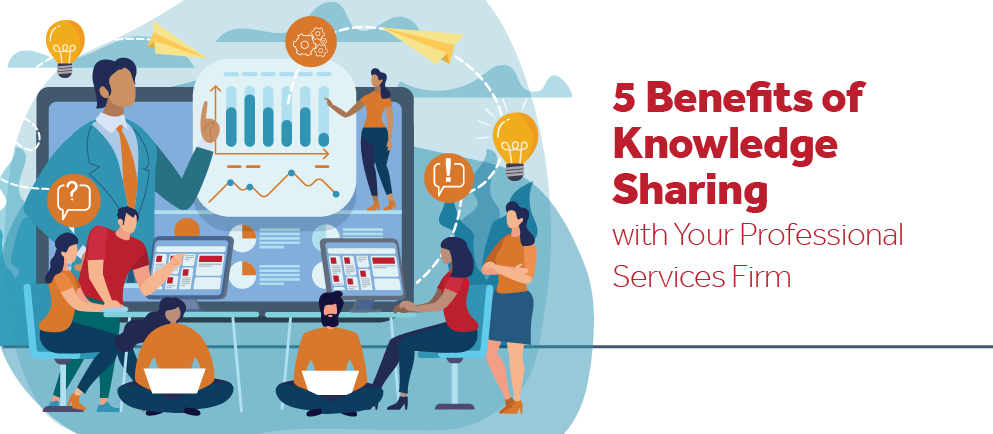
A crucial goal for organizations in 2024, according to an online article by Reworked, is to start spreading the wealth of knowledge that your employees have. Firm growth stagnates and employee retention suffers when information is hoarded and not shared. In today’s constantly evolving economic landscape, leadership at professional services firms should embrace the idea of knowledge sharing, setting clear expectations, and creating a culture of trust. Let’s check out 5 key benefits of knowledge sharing for your professional services firm. 

#1 Promotes Innovation

By enabling employees at your professional services firm to access the collective knowledge of their team and other teams, knowledge sharing promotes innovation. When employees can hear the ideas of others and see new perspectives, new solutions can be imagined and new approaches to problems can be taken. Shared knowledge from others removes silos and draws employees together to collaborate creating even more energy.

Then, with this collective knowledge, everyone at your firm can see the bigger picture. This wider view helps challenge existing norms or offers thinking outside of the box and exploring unconventional options. Access to diverse insights encourages the generation of new ideas and promotes a more creative environment which leads to innovation at your professional services firm.

#2 Enhances Employee Engagement

When professional services firms create a culture of collaboration and shared learning, employee engagement is enhanced. Sharing knowledge ensures that everyone at your firm feels like a part of the organization. Specifically, hearing how certain decisions are made empowers employees, and keeping them in the loop lets them know that their voices are heard.

When employees feel valued and involved, they are much more engaged in their tasks. Furthermore, those employees sharing their expertise additionally feel valued for their contributions to your firm. They then are more likely to actively participate in sharing more knowledge. This sense of belonging enhances employee satisfaction and leads to a higher retention rate and a more positive workplace.

For example, at Full Sail Partners, we host quarterly all-company meetings. One section of these meetings is “Top Cool Things to Know” where employees submit the cool things that they discovered the previous quarter. This can include new items they’ve built for clients or a new process to help within their work day. We spend a few minutes during the company meeting sharing these “cool things.”

Having an intentional opportunity to share experiences and proactively planning collaboration time is also critically important with remote working professionals, like our crew.

#3 Supports Learning and Development

Knowledge sharing supports learning and development because employees are allowed to acquire new knowledge and skills from their other teammates at your firm. Enhancing their skills and competencies allows employees to grow and develop. This creates room for more creativity and further development enriching the culture of your professional services firm.

Employees being given access to best practices, lessons learned and expertise at your firm facilitates professional growth and learning. When employees feel encouraged in their quest for knowledge, they are motivated to keep learning. The more learning that occurs the more these employees are even better equipped to contribute to your firm’s overall success.

One way to support learning and development in an on-demand, remote work environment is by recording bite-sized training videos. As you onboard a new employee take a moment to record the different processes they are learning. Keep the videos short and focused on specific processes like how to enter their timesheet, or how to add a new contact to the database. Then store these bite-sized training videos on your intranet or a shared drive. This will allow all employees access to the information when they need it.

#4 Enhances Company Culture

The culture at your professional services firm will be enhanced with knowledge sharing as it promotes transparency and trust. Freely sharing knowledge breaks down barriers between departments, promoting collaboration and working across your teams. When employees can leverage the expertise of others, there is an increase in productivity which creates a harmonious working environment.

Moreover, for newly onboarded employees, knowledge sharing makes them work efficiently from the beginning as they feel valued at the outset. For the more seasoned employees, sharing knowledge helps them move on knowing that they are leaving a legacy. What knowledge they have acquired during their tenure will remain with your professional services firm.

#5 Builds Firm Wide Knowledge

Building firm-wide knowledge through your teams sharing their expertise only brings greater value to your professional services organization. All this vital information shared can be captured and preserved in a reservoir of learning. This is especially useful in the world of remote or hybrid workplaces.

Using technology or in-person methods of knowledge sharing will both yield powerful results. Your professional services firm can leverage digital platforms to store and share this knowledge. Additionally, face-to-face knowledge-sharing sessions can be organized and recorded. Whether your employees are in the office every day, several days a week or only working remotely, knowledge sharing can be accomplished to build this wealth of knowledge available firm-wide.

Positively Impact Employee Retention and Growth with Knowledge Sharing

There are many benefits for leadership at professional services firms to encourage knowledge sharing. It boosts the standard of the workforce. Knowledge sharing encourages employee collaboration, fosters a culture of learning, and creates a safe environment for innovation. Furthermore, when employees at your professional services firm can share their expertise, and other employees can build on their skills, it will help reduce the skills gap, widen the talent pool, and promote retention. Click the image below to go in-depth on upskilling and reskilling your employees.

Why DEI&B Matter in Project Based Firms

Posted by Full Sail Partners on Mar 14, 2024, 12:00:00 AM

03-14-24 DEIB-Human Resources-Banner

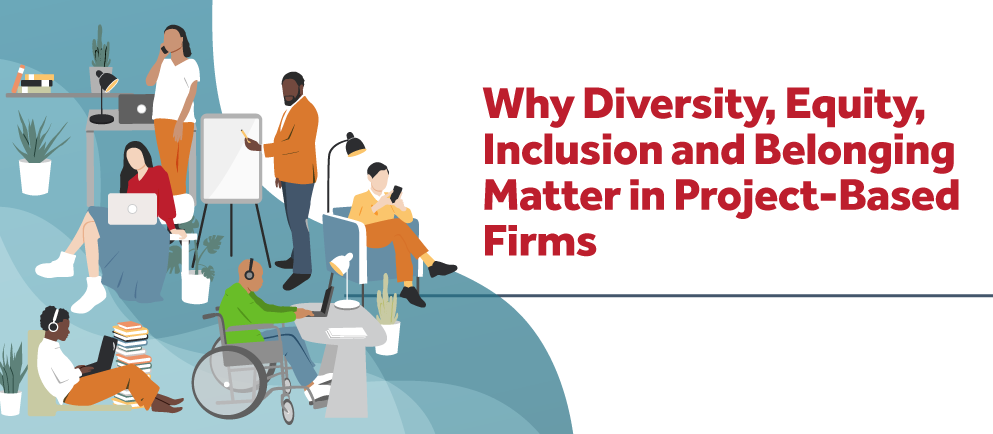
Fostering Diversity, Equity, Inclusion, and Belonging (DEI&B) is not just a moral imperative but a strategic necessity for project-based firms. DEI&B creates environments that go beyond just diversity and inclusion, aiming to build equitable spaces where individuals feel welcomed, valued, and empowered. Surprisingly, not every company has a DEI&B initiative in place. Let’s review the core aspects of DEI&B, and what implementation strategies firms can use to promote these values.

Diversity

Diversity, the first pillar of DEI&B, acknowledges the variety of human characteristics and identities within a group or organization. It goes beyond just race and gender, encompassing various aspects that we don’t always think about such as age, ability and disability, socio-economic status, religion, nationality, and many more. In the context of project-based firms, where collaboration and innovation are key, recognizing and embracing diversity is especially important. Recognizing this is the foundation for fostering an environment where each team member's strengths and talents can thrive, ultimately contributing to the overall success of the projects and the organization.

Equity

Equity is about ensuring fairness, impartiality, and justice in the treatment of individuals, particularly in environments with historical disadvantages. Project-based firms need to actively address systemic biases, structural inequalities, and discriminatory practices. Achieving equity in a company involves creating policies and procedures that reward based on personal merit, ensuring everyone has an equal chance to succeed no matter what groups they may belong to.

Inclusion

Inclusion is the creation of environments where all individuals feel welcomed, respected, and valued. In project-based firms, inclusive practices involve actively embracing diversity and fostering a sense of belonging. This means creating spaces where people of diverse backgrounds, identities, and perspectives can thrive, express themselves authentically, and engage in meaningful collaboration without fear of discrimination.

Belonging

Belonging is the newest addition to DEI&B. It goes beyond diversity and inclusion, addressing individuals' emotional and psychological need to feel connected and respected within their professional environments. The feeling of belonging involves creating spaces where people can bring their whole selves to work, form genuine connections, and contribute to a collective identity and purpose.

Importance of DEI&B to Project-Based Firms

Beyond being morally imperative, DEI&B is crucial for project-based firms for several reasons: Fosters Positive Employee Engagement: DEI&B creates a positive and inclusive work culture, leading to higher employee engagement and satisfaction. Drives Innovation: Diverse teams bring a variety of perspectives and ideas, driving innovation and problem-solving in project-based settings. Broadens Talent Pool: Embracing diversity expands the talent pool, bringing in individuals with different skills, experiences, and viewpoints. Maintains Competitive Advantage: Companies with diverse teams often outperform their peers, maintaining a competitive advantage in the market.

Methods to Foster DEI&B in the Workplace

We’ve seen why DEI&B is important, but how do we go about putting these systems in place? Here are several ways that project-based firms can implement various initiatives to foster DEI&B:

  • Diverse Hiring Practices: Actively seek diverse candidates and create inclusive hiring processes. Remember to look deeper into the categories we don’t always recognize, like nationality, socio-economic status, and age.
  • Training and Education: Provide ongoing training on diversity, equity, and inclusion to enhance awareness and understanding.
  • Employee Resource Groups (ERGs): Establish ERGs to provide support, networking, and mentorship for underrepresented groups.
  • Flexible Work Policies: Implement flexible work policies to accommodate diverse needs and promote work-life balance. This can include options for hybrid and fully remote work.
  • Leadership Development: Invest in leadership development programs that prioritize diversity and inclusion.
  • Diversity Metrics & Accountability: Establish measurable goals and hold the organization accountable for progress.
  • Employee Engagement Activities/Events: Organize activities and events that encourage diversity and promote inclusion. These can be as simple as company mixers, sporting events, or other group activities.
  • Promotion of Diversity in Content and Marketing: Ensure that marketing materials and content reflect the diversity within the organization.

Making Diversity Programs Effective

Initiating diversity programs can be challenging, but it is essential for the success of DEI&B. Companies need to do three things in order to make an effective diversity program.

  1. First, you must recognize the full spectrum of diversity. As we’ve talked about already, not all aspects of diversity are easy to see. Understand that diversity encompasses various categories beyond gender and race, including gender identity, age, ability, religion, political beliefs, and socioeconomic status.
  2. Second, embed DEI&B in the company culture. Company culture is many things: the embodiment of a company’s values, its mission, and even its environment. DEI&B should be ingrained in the philosophy of the company.
  3. Finally, appoint DEI&B Leaders. Designate a group responsible for DEI&B programs and initiatives to ensure focused attention and progress. This group does not necessarily have to be management, instead, a dedicated team or individual can ensure focused attention and steady progress in promoting diversity and inclusion within the organization.

Conclusion

Embracing and valuing the concepts of DEI&B in project-based firms not only aligns with social responsibility, but also drives positive organizational outcomes. By actively fostering diversity, equity, inclusion, and belonging, project-based firms can create environments where individuals thrive personally and professionally, ultimately contributing to the success and innovation of the organization. To learn even more about DEI&B and how Full Sail Partners is helping firms with this initiative, check out the replay of our LinkedIn Live by clicking the image below.

Latest Posts