Full Sail Partners Blog | Accounting (7)

Posts about Accounting (7):

Getting Your Firm and Deltek Vision Ready for Year-End 2016

Posted by Ryan Felkel on Dec 21, 2016 12:00:00 AM

Is your firm ready for the inevitable year-end process? Sure, year-end is always a stressful time. However, it doesn’t have to be overwhelming if you make a plan, document your actions and prepare Deltek Vision.

Setting-up for a Successful Year-End

Year End 2017Don’t be a headless chicken running around trying to get through the year-end process. Let’s review some considerations and tips to make your year-end close just a little easier.

Communication | Communicate with the rest of the firm that year-end is approaching and provide the important dates that they should be aware of, such as final timesheet due date, final expense report due date, etc.

Create a Calendar | Develop a calendar noting key items you need to complete before the year-end. Your calendar should contain all of your year-end deadlines, such as:

  • Final AP check run
  • Final timesheet due date
  • Final bank reconciliation

Develop a Year-End Checklist | Given that year-end procedures change very little from year to year, you should create a checklist. In addition to your firm’s specific year-end tasks, you may want include these steps in your list:

  • Review the unbilled detail report and make sure the allowance for doubtful accounts is current
  • Reconcile all sub-ledgers to the general ledger
  • Update accrued vacation
  • Calculate depreciation
  • Complete bank reconciliations
  • Create a budget for the new fiscal year

Reconcile Monthly | Stay on top of your monthly reconciliations. Nothing adds to the stress of year-end more than having to perform several months of reconciliations that could be have been done monthly.

Recurring Transaction Files | If there are yearly JE’s or other transactions that you only post once a year, consider creating a recurring transaction file. Each year those files will already be in place so you don’t have to re-create them from year to year.

Order Year-end Forms Early | Why wait until the last minute to order your 1099 and W-2 forms? By ordering your forms in advance, you know they are on hand when you are ready to use them.

Prepare Deltek Vision for 2017

In Vision, opening the 1st period of your fiscal year also opens the new fiscal year. If your security role permits, you can still process in the prior fiscal year if needed.

There are a number of Initialization Utilities that need to be performed in Vision. Take note that these utilities need to be completed once per fiscal year. Vision will generate a posting log for the initialization utilities, which are available in the Transaction Center under the Posting Review Report. If your Vision Database is set up with Multi-company functionality, the Initialization Utilities need to run in each company.

There are also tax forms that will need to be processed in Vision:

  • W-2s if you use Vision Payroll
  • 1099s for vendors that require a 1099 form

As part of the year-end process, a new benefit year will need to be opened to roll over any PTO or vacation time into the next year and to start accruals for the new benefit year.

In addition to the information above, you can view the 2016 Year-End Vision guide in the Deltek Customer Care Connect Portal here.

Take note that Vision Year-End updates in 2016 will be provided for versions 7.4, 7.5 and 7.6. If your firm is running Vision 7.3 or older, you must upgrade to a supported version to receive a 2016 year-end update. Please refer to the Support Assurance Product Lifecycle for maintenance phase descriptions.

Is Your Firm Prepared for 2017?

Following the suggestions above should make for an efficient completion of the tasks required for 2016 year-end. Don’t forget to make sure your firm is using the latest version of Deltek Vision - 7.6. If you need any assistance with completing your year-end or moving your firm to version 7.6, just let us know!

  

Better Manage Your Professional Services Firm’s Margins with Deltek Vision

Posted by Ryan Felkel on Dec 15, 2016 12:00:00 AM

Manage Profit Margins

One area that challenges professional services firms is managing margins. As a result, the profits from a particular engagement or project fall short the projected amount. However, you’re not alone. In a recent study by Consulting Magazine, 80% of professional services firms indicated that they struggle with managing and protecting margins. For Deltek Vision users, this does not have to be the case.

The Challenges with Managing Profit Margins

There are four main reasons professional services firms struggle with managing margins: over-servicing, scope creep, unrecorded and lost time, and changes in client fee structures. Firms should be able to maintain control over these things with the exception of changes in fee structures. So what’s the problem here?

The long and short of it comes down to cumbersome processes and tasks, and disjoined systems limit visibility and insight into real-time critical project data. Additionally, let’s not forget about the time required to enter the same information into multiple systems. This time is now lost when it could be used for more beneficial purposes such as, keeping up with tracking time and expenses.

Increase Profit Margins with Deltek Vision

Successful businesses need to make informed decisions quickly. With Deltek Vision, critical project data are in one accessible place. Therefore, executives can review the health of the firm, identify areas of weakness and develop plans to change the direction of the business. At the same time, accounting and project managers have insight into real-time project data, which allows them to manage their projects effectively and eliminate surprises.

Deltek Vision has several helpful features which ensure project managers are able to protect profit margins. With Vision, accountants and project managers have access to mission critical data which allows them to:

  • Compare budgets to actual
  • Compare costs versus billing
  • Identify outstanding invoices

Furthermore, projects which are built in Vision are based on actual people and actual hours using the Vision Planning Module. In addition, time tracking and expenses are part of the core system and are easily associated with a specific project so project managers are able to keep a close eye on project performance.

Visualize Project Performance with Deltek Vision

Numbers are definitely necessary in managing projects, but they don’t reveal critical project data like a colorful chart or graph will. Using Vision Performance Management (VPM), executives, project managers and accounting all have the ability to clearly visualize project performance quickly in a user friendly dashboard. This allows users to identify problems at a glance before taking a deep dive into the means for overcoming them. Think about VPM as visual performance management. To learn more about VPM, check out this article.

Take Control of Managing Profit Margins

In the end, firms using Deltek Vision don’t have to struggle with managing profit margins. Foremost, all professional services firms must keep a close eye on their projects using the features provided by Deltek Vision. Additionally, firms can then add the convenience of visual performance management to their toolbox with VPM. Let Deltek Vision help your firm take back control!


The Deltek Vision to Concur Connector: The Simple, Secure Way to Manage Spending

Posted by Jennifer Renfroe on Dec 7, 2016 12:00:00 AM

concur + Vision.pngThe Deltek Vision to Concur Connector allows both systems to work together seamlessly, automatically synchronizing finance data throughout the entire spending process, from pre-spend approval to reconciliation. Manage every expense and invoice transaction accurately and with ease, and get a complete view of your finances in one place. 
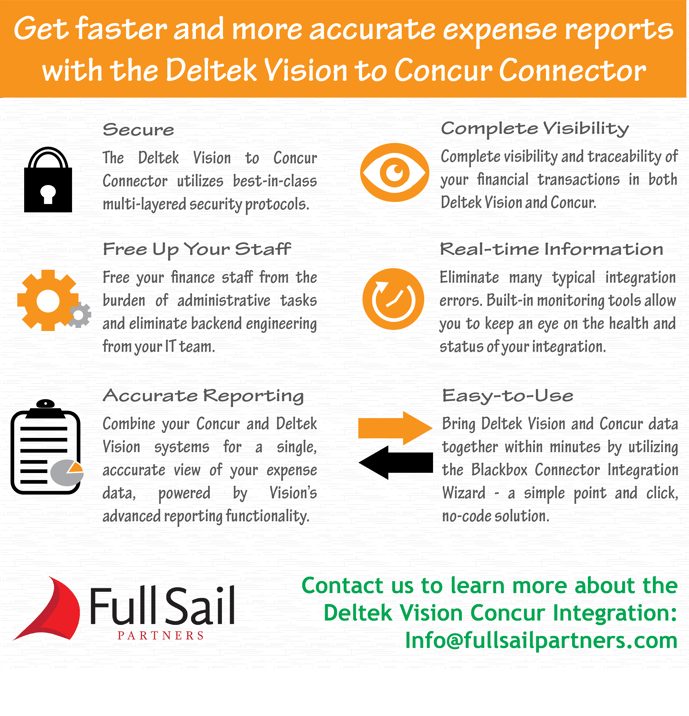
Gain Complete Visibility and Greater Control of Your Finances with the Deltek Vision to Concur Connector

Concur Meets Vision_blog.png

Why Your Firm Should Be Using Earned Value Management

Posted by Michael Kessler, PMP on Nov 10, 2016 12:00:00 AM

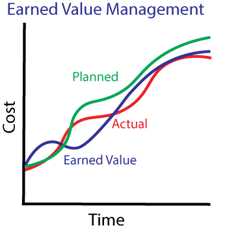
Earned Value Management For project-based firms, measuring current firm performance is the most significant indicator of future firm performance. Furthermore, by using trend data, firms can forecast cost and schedule variances in the early stage of a project. A preferred method by project managers to factor this trend data is the earned value management technique.     

Using Earned Value Management

Earned value management allows firms to evaluate cost and schedule variances in both dollars and percentages on projects. These factors are derived by considering planned value, actual cost and earned value over time.

A common way of looking at earned value is by using both the financial percent complete job to date (JTD) and the estimate too complete (ETC) by using the formula, JTD/(JTD + ETC) and the project managers reported physical percent complete. These two factors when equated provide a quick and easy comparison. For example, the financial percent complete on construction documents may be at 75% when the reported percent complete on construction documents is 50%. There are several possible explanations for these variances, such as:

  • There were many revisions that were client driven and not in scope
  • The complexity of the work was under estimated
  • We have just been very inefficient

Keep in mind, there are a number of other scenarios that can also explain these factors as well.

Factoring Earned Value Management

Getting the information above is actually simple. It requires holding project managers to a high level of accountability. Project managers need to evaluate the amount of hours budgeted, hours burned (JTD), and the effort required to finish the scope of work (ETC).

As a result, this will produce the financial percent complete. Project managers then need to record where the project is from a physical percent complete, which should tie to progress on the project schedule.

Much like a crossover episode of two TV shows, this is where EVM crosses over with a previous blog about FASB 606. EVM will ultimately meet the requirements that in turn will keep the accounting team compliant with FASB 606.

Enter Deltek Vision

The Resource Planning module in Deltek Vision addresses EVM by:

  • Allowing the financial percent complete to be calculated
  • Providing a physical percent complete plan in the form of an EV%
  • A default report in the Resource Planning module known as the Earned Value Chart, which represents the S Curve

By maintaining a project plan in the Resource Planning module, firms can be successful in developing a project report that shows cost and schedule variances in both the dollars and percent (CV, SV, CPI and SPI). If your firm has a benchmark or standard range, you can then compare the actual to that standard to identify anomalies in your projects performance.

The title of this blog is, “Why Your Firm Should Use Earned Value Management” and the answers are:

  1. It’s an industry standard and proven method for project management and project accounting
  2. It’s a common language among project managers across industries
  3. It provides quick visibility into a projects performance
  4. It brings firms closer to compliance with FASB 606

Learn more about Michael Kessler and his more than 30 years of experience of working in and around project-based accounting here.


Streamline Processes with Credit Card Enhancements in Deltek Vision 7.6

Posted by Wendy Gustafson on Nov 2, 2016 12:00:00 AM

Vision 7.6 Credit CardsDeltek is at it again! With the introduction of Deltek Vision version 7.6, professional services firms are now able to streamline their credit card processes thanks to several new key enhancements. Providing some background, the introduction of credit cards was one of the many improvements to Vision in version 7.3. When 7.3 was released, firms gained efficiency with employee expense reporting as employees could import charges from the credit card company. This feature allowed employees to associate those charges within their expense reports. Now, based on user feedback, credit card functionality has been expanded.

Review and Reconcile Credit Card Expenses with Ease

Deltek has enhanced the Credit Card Review application in Vision 7.6 which now allows users to easily review, filter and analyze credit card charges. This updated Credit Card Review offers additional information such as the expense report or voucher details and the General Ledger account number for each charge. Furthermore, any user-defined fields imported to help the employee categorize the charge can now be displayed in both the Credit Card Review and Credit Card Reconciliation screens.

More Functionality than just Company-Paid Credit Card 

When credit cards were initially introduced, the focus was on cards paid by the company. In Vision 7.6, purchases made by employee paid credit cards are now included. These charges are treated like typical expenses that are reimbursed to the employee.

As with the company paid credit cards, these charges can be uploaded and made available for the employee to associate with the matching expense within expense reports. Additionally, the Merchant/Description from the imported credit card charge now appears in the expense report description field. This option is available for selection when setting up credit cards in Vision.  

Do More with Deltek Vision 7.6 

Deltek has been listening to Vision users over the years. With each new version, Vision becomes more robust in order to meet the growing needs of professional services firms. If your firm is on Vision 7.6, make sure to activate Credit Cards and begin to streamline your expense report process.

Full Sail Partners Joins Concur Solution Provider Program Allowing Clients to Synchronize Concur Data with Deltek Vision

Posted by Ryan Felkel on Oct 7, 2016 12:00:00 AM

ConcurFull Sail Partners today announced it joined the Concur Solution Provider program and can now refer clients, including those using Deltek, to Concur, the leading provider of spend management solutions and services.

This partnership expands the Full Sail Partners offering to include Concur solutions and allows Concur data to flow into Deltek Vision, helping professional services firms create a better expense reporting experience for their employees and also enable the firms to realize significant cost savings.

“We are ecstatic to introduce Concur to our clients,” said Tanya Drake, Full Sail Partners Technology Division’s Technical Consultant. “This partnership gives project-based clients the most efficient expense reporting solution ever. Our clients will experience firm-wide cost savings and eliminate mistakes and fraud with the automated controls and duplication verification. Employees will love the automatic pull of data to their expense reports, virtually eliminating manual entry of expense reports. It’s a win-win for both the firm and employees.”

Concur Travel, Expense and Invoice are the industry’s leading solutions to help businesses manage spend and gain insights that drive savings. Concur has more than 40 million users globally, and in 2015 the company processed transactions worth more than $70 billion in travel and expense spend.

Kelly Duquette, Principal Solutions Consultant at Full Sail Partners who has worked with the Concur product at a previous firm said, “We believe this is a great opportunity for the Deltek Vision community to leverage Concur to create a fast, efficient process that allows employees to spend less time on tedious tasks and more time focusing on their billable work.” 

Together, Full Sail Partners and Concur will enable HR and accounting professionals to better manage expenses and invoice processing from approval to payment posting. The expanded capabilities offered through Concur will enable professional services firms to capture paper and electronic invoices, enabling efficient, automated processing – from purchase request through payment, including 2-way and 3-way match capabilities. 

“Travel and expense is the second largest area of controllable business spend – a challenge especially significant to SMBs. With a partner-focused initiative like the Concur Solution Provider program, we can help partners like Full Sail Partners expand the value they provide SMBs while driving business growth and profitability,” said Christal Bemont, SVP and GM of SMB and National Accounts, Concur.

To receive details about this partnership and the Concur solutions offered through Full Sail Partners, please visit http://www.blackboxconnector.com.

Full Sail Partners provides technology services and solutions for more than 1,000 professional services firms nationwide. Blackbox Connector, a division of Full Sail Partners, helps bring data together with a no-code, low cost, integration solution connecting Deltek Vision users to any API-powered application within minutes. Full Sail Partners represents project-based products focused on integrating business processes by connecting front-end and back-end systems. We seek to help organizations identify the critical resources needed to create a faster, more efficient, and cohesive business infrastructure.

Eliminate the Black Cloud Hanging Over Your Expense Reports with the Deltek Vision and Concur Integration

Posted by Full Sail Partners on Sep 28, 2016 12:00:00 AM

Concur Expense ReportsI don’t know anyone that actually enjoys completing their expense report. The process is arduous, and steals valuable time from your already hectic day. The fact is, if you want to get reimbursed for a company expenditure, you have to take the time to complete your expense report. No ifs ands or buts about it.  Luckily, Blackbox’s Deltek Vision and Concur Integration eliminates this pain staking process for your employees and frees them up to concentrate on client-focused, billable work.

So, how can the Blackbox Concur Connector help you combine the benefits or Concur's expense controls and management with Vision's financial and project management tools? Easy! See how below.

The Deltek Vision and Concur Integration Made My Life Easier:

As someone who travels a fair amount, the Deltek Vision and Concur integration has allowed me to get the most out of my business expenses. Before, I was overly focused on diligently taking a picture of every receipt and documenting every incurred cost. Now, when I am out with a client, I can focus on listening and cultivating our relationship.  Here is how:

No more expense report time dump! Concur’s credit card integration is freakin’ awesome. I’ll admit it, I am terrible at manually documenting receipts and deciphering between my credit card charges vs. cash expenses. I used to stress out when thinking about the time dump required to complete my expense reports. Now, the Deltek Vision and Concur integration allows me to complete and submit my expense reports faster, rather than waiting until the end of the month to begin the process.

User protection / fraud prevention. Recently after traveling in New York City, I submitted an expense report with duplicate charges for an Uber ride. This minor mistake held up the processing of my expense report as we internally worked out my error. Concur allows me to eliminate this time consuming process of going back and forth from submitter, management and accounting. Additionally, these controls protect the company from accidental or direct fraudulent activity.

Mobile is where it’s at! I’m constantly on the go and I rely on my smart phone for just about everything. I can honestly say that Concur’s mobile app has been a big reason that I have been more diligent with completing my expense reports.

The app utilizes OCR technology that allows me to automatically pull all relevant information off of receipts, including:

  • Vendor
  • Date
  • Dollar amount
  • And more

Additionally, the mobile app sends me alerts when I have new charges, reports to approve or notifications.

Real-time, Automatic, Transaction-based Integration.  No more waiting for new projects to show up so I can associate expenses.  No tedious manual uploads to share information between the two systems.  No more having to input the same information in multiple places.  The bi-directional connector allows the information I and my accounting team need to be available where and when it is needed.

Ready to See How Concur Integrates with Deltek Vision?

Are you ready to learn more about this turn-key integration of Deltek Vision and Concur? Join Pete Nuffer as he unveils how all Deltek Vision users can win with automated expense management.

How Does the FASB 606 Impact AE Firms and How Can Deltek Vision Revenue Generation Help?

Posted by Michael Kessler, PMP on Sep 14, 2016 12:00:00 AM

FASB 606Our first inclination when the new FASB 606 was announced was this wouldn’t impact many of our Deltek Vision clients. But after more insight, we recognize this has a tremendous impact on our clients. The rule states applicability to ALL entities that deliver goods or services. Though many believe that GAAP, FASB, SOX and other guidelines are good rules to follow regardless of any statutory relevance, the reality is if we are not being overseen we tend to be somewhat lax in compliance.

On May 2014, FASB issued Accounting Standards Update (ASU) 2014-09, Revenue from Contracts with Customers. As a result, nonpublic entities will be required to apply the revenue recognition standard. In the case of FASB 606, if you are subject to any audit oversight, whether it be the bank or a taxing agency, FASB 606 now becomes relevant. This is also relevant if revenue is used and or needed for verification. Lending institutions and those requiring financial statements for qualification have been requiring GAAP compliant financial statements and will likely begin to demand conformance to the new standards. Finally, CPAs offering attestation services will now give increased scrutiny to how firms recognize revenues on their contracts.

“Revenue is recognized when a company satisfies a performance obligation by transferring a promised good or service to a customer (which is when the customer obtains control of that good or service).”

Architects, Engineers, and Professional Service Firms that “sell” labor and drawings fall under this definition and will be subject to FASB 606.

Enter Deltek Vision Revenue Generation

Using Deltek Vision Revenue Generation was always a good idea for Project Management as it allows us to begin recognizing what we have earned as compared to what has been spent. This is done by using basic revenue generation factors such as: 

  • Job to Date Spent (or as I refer to it “earn as you burn”)
  • Percentage of Complete
  • Milestones or Deliverables

Using Vision’s User Defined Revenue capabilities, these and other potential methods and formulas can also be developed.

Preparing Deltek Vision for FASB 606

All firms need to understand how this measure requirement relates to them and seek advice from CPAs and Tax Professionals to ensure they will meet the requirements. Our role is to work with you and your CPA to configure Deltek Vision appropriately to accommodate the methods. In advance of your discussion with your advisors, we will assist in the creation of commonly understood measures. 

To learn more about overall revenue recognition concepts in Deltek Vision, check out this past blog. For further information on how to set-up revenue generation methods related to FASB 606 in Deltek Vision, please reach out to us and a consultant will be in contact.

* Rana Blair contributed to this blog.


Give Your Employees Their Own Personal Assistant with Concur Expense Solution

Posted by Full Sail Partners on Aug 24, 2016 12:00:00 AM

Concur LogoIf someone were to ask you what do you like least about your job, what would you say? Assuming you like your boss, your environment and co-workers, there is still always a task that you just wish you didn’t have to do. For me, it is my expenses. You would think, getting reimbursed would be motivation in itself. Yes, at some point it absolutely is. It has gotten much easier now that I can take a picture of my receipts and quickly upload through my Deltek Vision Touch application with my phone. However, I still have to fill out the details which takes time. Time I don’t always have. What if I told you it could get even easier? I was then introduced to the Concur expense solution.

I literally was giddy over expenses when I saw what the solution could do. The Concur expense solution automatically imports credit card charges and matches them to receipts and itinerary data. Instead of manually entering your expenses, I can simply take a picture of the receipt and it reads the information and fills out my expenses. Sounds too good to be true, right?

So how can this help Deltek Vision users you might ask? Well, there is an integration being finalized right now. I invite you to view the video below to begin to learn more about the Concur expense solution:

Learn more in the upcoming Concur webinar. This webinar will further show you how Concur expense reports write themselves and we will provide a sneak peek of the upcoming Deltek Vision integration.

Fascinating Facts about Timesheets in Deltek Vision

Posted by Ryan Felkel on Jun 8, 2016 12:00:00 AM

Timesheets, Timeclock For project-based firms, timesheets are essential to ensure that an employee’s time is reflected to a specific project. I’m sure you already knew this, but do you manage timesheets correctly in Deltek Vision? Here are some facts and best practices for different scenarios to help you better manage timesheets in Deltek Vision.

Intro to Timesheets in Deltek Vision

Hopefully, one of the first things your Deltek Vision Consultant explained to you about timekeeping is that timesheets create payroll cost not payroll. As a “nuts and bolts” accountant, at least one side of our brain struggles with processing this information. So let’s break it down: 

  1. The employee’s job cost rate on the accounting tab of their info center should represent their rate of pay. If they are true hourly, this is quite easy to determine. On the other hand, if they are salaried the hourly rate should reflect their annual salary divided by 2080 hours.
  2. If adjusted salary job costing is used, the amount should reflect their salary based on the configured interval. For example, weekly, biweekly or a set number of days.

How Timesheets Work

When a timesheet is posted an amount based on the hourly rate multiplied by the hours charged is applied to the selected projects. Thereby creating direct or indirect (overhead) labor/payroll cost in the General Ledger. The credit created by the timesheet can go to either one of two places: 

  1. The Income Statement as job cost or payroll variance - This account is an overhead line item used to adjust the total of the timesheet posting to the actual payroll distributed. Furthermore, amounts that remain in this account after the payroll journal entry has been entered reflect a net of uncompensated overtime (OT) for salary staff (negative amounts), and based on this process, the premium portion of OT for hourly staff (positive amounts).
  2. The Balance Sheet as a payroll liability - After the payroll journal entry has been entered, the remaining amount needs to be reclassified to the Income Statement as stated above.

Accounting Tip for Paid Time Off

Have you ever noticed your Paid Time Off (PTO) balance not being relieved even during peak vacation periods? You might want to consider booking PTO taken to the Balance Sheet. To do this, you need to configure timesheet postings for PTO to go to a PTO liability account. Then when time off is taken and posted, the debit entry reduces the liability. Based on a true computed liability, an entry can be made on a pre-determined interval to accrue additional PTO and book the expense. If you are using benefit accruals in Vision, the entry can be taken from that report.

Handling Leave without Pay

Many firms fail to account for leave without pay (LWOP) properly. Sure, there is a need to track hours for statutory purposes when employees are on leave, however, no payroll cost should be recorded. The simple fix is to enable cost rate tables and attach one to LWOP projects. The table should contain either a labor code(s) or a list of employees with a ZERO job cost rate. This will override the employees default job cost rate and avoid any recording of payroll costs.

Punch the Clock

Some of this might seem complicated at first, but these best practices should help keep your books in order. I hope that this has taken the mystery out of Deltek Vision timesheets. Now punch the clock and update your timesheets.


Latest Posts