
Full Sail Partners Blog | Building Business (6)

Posts about Building Business (6):

Get More from the Deltek AE Clarity Report with Vision Performance Management
Posted by Ryan Felkel on Oct 19, 2016 12:00:00 AM

Firm PerformanceKnowing how your AE firm compares to your peers is critical for evaluating the health of your business. Fortunately, regularly monitoring your firm’s performance doesn’t have to be a challenge for Deltek Vision users. In this article, we’ll take a quick look at the background of the AE Clarity study and introduce the Vision Performance Management (VPM) interactive dashboard.

What is the Deltek AE Clarity Study?

Each year, Deltek works in conjunction with the American Counsel of Engineering Companies (ACEC), ACEC Canada and the Society for Marketing Professional Services (SMPS) to gather and benchmark key performance metrics for the AE industry. The study draws from over 250,000 data points provided by 386 US and Canadian AE firms of every shape and size.

As the oldest and longest running study of its kind, Deltek AE Clarity report is the authoritative industry standard and the 37th annual Deltek AE Clarity Study is out and available for download. This report is a comprehensive summary of performance results for 2015.  Additionally, these results include several key statistics that are easy to calculate and monitor, plus allows you to compare your firm’s performance against your industry peers.

How Can Your AE Firm Use the Results?

Having measurable insight into the key performance metrics of your firm plays a vital role in strategic planning and decision-making. The Clarity report shows a number of measurements, and all are important items to track. However, every firm should track several key measures regularly such as:

  • Operating Net Profit on Net Revenue
  • Utilization Rate
  • Net Labor Multiplier
  • Total Payroll Multiplier
  • Overhead Rate
  • Net Revenue per Employee

Some of these statistics can be calculated in Vision, but they are not encapsulated into one comprehensive report without extracting individual measurements into a summary table like Excel. However, the spreadsheet will need to be a manual update for ultimate presentation to firm stakeholders. Surely, there’s got to be an easier way, right?

Introducing Deltek Vision Performance Management

With Deltek VPM, these statistics incorporate easily into an interactive Vision Dashboard. As a result, executives can simply view these vital statistics on the screen and use built in filters to “slice and dice” the numbers as shown below.
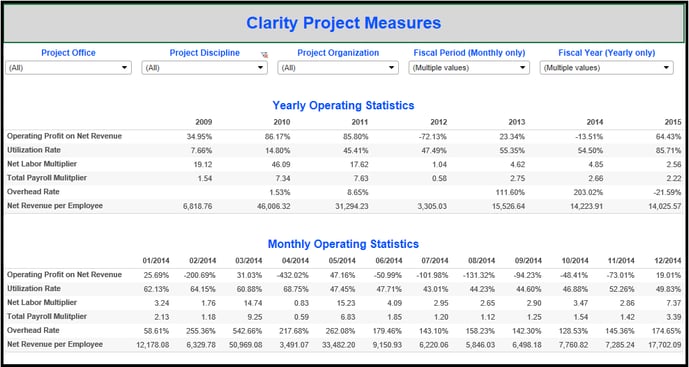
Vision Performance Management Clarity Metrics

But wait, there’s more! With VPM, you also have interactive graphs to monitor performance. These graphs allow users to transform rows and columns into bars and colors. VPM will also enable users to see performance using visual metrics. In other words, Vision Performance Management is more like Visual Performance Management as demonstrated below.
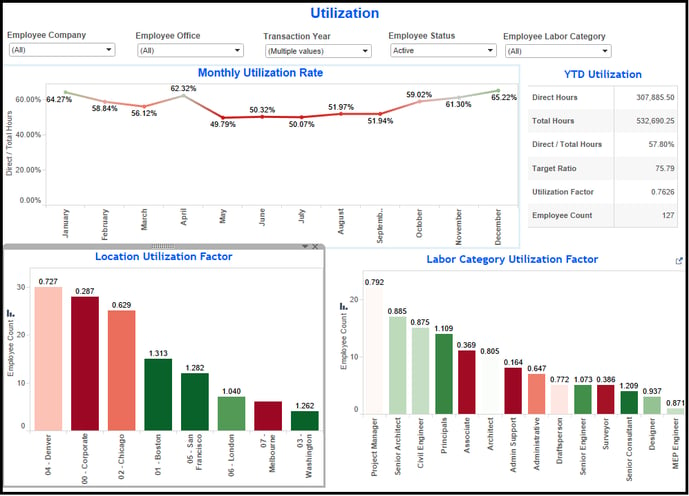
Vision Performance Management Utilization Screen

Start Monitoring Your AE Firm

Staying ahead of the competition requires knowing where your firm matches up in terms of these key performance indicators. Luckily, VPM allows Vision users to see where their firm stands on a regular basis.

Ten Traits of a Great Seller

Posted by Amy Balassone on Sep 21, 2016 12:00:00 AM


Traits_of_a_Good_Seller_2.pngSales is a tough industry where success is measured by attaining goals and quotas. So why are some sales people more successful than others? The reality is, selling and buying are not completely an intellectual process and actually requires building an emotional relationship. In order for you to be a great seller, several of these personality traits should characterize you.

  1. Visionary – Seeing the future and the big picture is a key to being successful in sales. More importantly, they do not allow where they are today to determine where they are going in the future.
  2. Ambitious – Top sellers have personal drive and don’t wait for someone else to tell them to do something. They know there is no time to wait for the next opportunity to come along, but that they need to be actively seeking more opportunities.
  3. Enthusiastic – It’s hard to sell anything if you’re not excited about the product. In fact, there might be some situations where your product is inferior to the competition. But if you’re more passionate about your product it’s more likely the buyer is going to be convinced to purchase from you.
  4. Persistence – The length of a sales cycle is different for every product and other outside factors such as under-motivated decision makers. Top sellers are tenacious. They know how to stay top-of-mind with decision makers so that when they finally decide to move forward, they’re there to close the deal.
  5. Conscientious – This is a personality trait used to describe a person that is efficient and well organized. Conscientious sales people are also motivated and able to keep moving forward after facing rejection.
  6. Active Listener – It’s hard to know the challenges a client faces without them explaining them. An active listener helps drive the conversation so everyone involved is able to come to a mutual understanding about the challenge at hand. Therefore, great salespeople take the time to understand the challenge from the client’s perspective. They stay focused on the conversation and make notes  
  7. Ask the Right Questions – There’s always multiple ways to ask a question, but choosing the right wording is critical to getting the right answer. “How’s business going?” will get a simple answer. Whereas, “What’s your biggest challenge this year?” can create a conversation.
  8. Problem Solvers – Sales people are often called solution engineers and for good purpose. Sellers need to know how their product solves the problem or problems the client is facing. Additionally, they need to be able to demonstrate how the solution can solve a problem.
  9. Assertive – When going through the sales process, sales people can become passive or overly aggressive. This is a huge mistake and can quickly dissuade a prospect. Assertive sales people use conversation to understand what’s going on so they know how to properly approach the situation to keep the sale process moving forward.
  10. Create Value – There’s common saying about gifted sales peoples, “he/she could sell ice to an Eskimo.” In most terms, this means they are smooth talkers. However, what if the ice they are selling is perfectly shaped to build an igloo? Now the ice has more value to an Eskimo.

Which Traits of a Seller Do You Have?

It’s time to take your sales to the next level! Start selling more by first identifying the personality traits you already possess. Next, identify ways to improve on the traits you lack or need to hone. 


Ten Tips for Improving Your Business Proposal Process

Posted by Ryan Felkel on Aug 18, 2016 12:00:00 AM

Business Proposal, Proposal Process  For project-based firms, the competition for new business is constantly increasing. As a result, the ability to win new business requires firms to produce powerful and convincing proposals. Here is a list of tips to improve your business proposal development process to help you increase your firm’s win rate.
  1. Create a Checklist – There’s nothing worse than completing a proposal and realizing that a required form or document is missing. Start the proposal process by studying the request for proposal (RFP) and creating a list of requirements, forms and documents that have to be included when submitting the proposal.
  2. Identify Areas of Focus for Subject Matter Experts (SMEs) – It’s rare for companies to employ full time SMEs dedicated solely to the proposal team. In reality, SMEs have other responsibilities within the company that relate to their expertise, and the proposal team gets a limited amount of their time. Therefore, help them so they’ll help you! Identify and assign key sections of the RFP to the appropriate SME to allow them to maximize their time dedicated to the proposal team.   
  3. Have a Kickoff Meeting – This is the time to bring together all contributors for the proposal to set expectations in regards to timelines, writing assignments, and writing guidelines. During this meeting, the team should discuss the win strategy and major themes, and how the proposal will differentiate your firm from the competition.
  4. Know When to Bid or No bid – Red flags, such as tight project timelines and rigid subcontractor requirements are indicators that the risks might outweigh the benefits. Additionally, red flags can present themselves at any moment in the proposal process. As a result, making the decision to no bid on an opportunity can happen during any point in the proposal development process. Learn more about the bid/no bid process here.
  5. Avoid Information Overload – More information doesn’t always make a better proposal. Instead, what ends up happening is important details get lost in all the added irrelevant text. If you desire to include additional or unrequested information, provide this in the Appendix.
  6. Avoid Stale Boilerplate Content – It’s likely that your company submits several proposals to the same client for different work. Additionally, certain content can become outdated and inaccurate. Use periodic reviews and rewrites of boilerplate content to keep proposals fresh and current.
  7. Use Graphics – Always remember this, “a picture is worth a thousand words.”
  8. Create an Executive Summary that Wins – The executive summary should tell the reader how the proposal is organized by summarizing each key section. More specifically, the summaries should show that you understand the goals and expected outcomes, and also contain an overview of your firm’s solution.
  9. Keep in Touch with References – Checking in with references and saying thank you can go a long way. Let them know you appreciation their endorsement and tell them about future anticipated reference requests.
  10. Deadlines are set in Stone – When creating a timeline for the proposal development process, the internal deadlines are dictated by the deadlines in the RFP. Therefore, internal deadlines should not be treated as suggestions.

Increase Proposal Process Efficiency

Is your firm struggling to win more business? Gain a competitive edge by using these tips in your business proposal development process.

Facts about Client Data Integrity

Posted by Ryan Felkel on Jul 6, 2016 12:00:00 AM

Garbage in, garbage out! Believe it or not, this is a real term in the field of computer science and it has an acronym, GIGO. More importantly, this theory can be applied to the data integrity in a client relationship management (CRM) software. Marketing decisions are only as good as the data used to make them. If the data in a CRM are incomplete and erroneous, developing strategic decisions becomes nearly impossible. In other words, it’s like throwing ideas at a wall and waiting to see what sticks. According to data experts, many businesses are struggling to maintain a CRM database with consistent and usable information about their clients. Look below to see what these experts have to say about client data integrity.

3 Critical Connections for Project-Based Firms

Posted by Ryan Felkel on Jun 6, 2016 12:00:00 AM

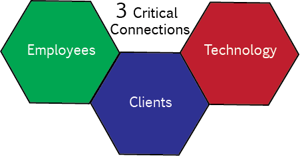
Three Critical Connections Let’s admit it, running a business has plenty of challenges. Why create more by overlooking the critical connections that support your business? Throughout my tenure as a business owner and entrepreneur, I have found three connections a business must have to reduce the challenges. These are connections with employees, clients, and technology. Let’s take a look at the importance of these three connections.

Connections with Employees

For starters, firms need to create a workforce that are driven to work hard and are enthusiastic about their jobs. To achieve this, employers must find ways to create connections with employees that shows them you see them as people, not just employees.

The easiest way to show an employees you see them as people is to engage them. For example, use meetings as a time to let everyone express their ideas. Ask for their opinions, and ask them to think critically about things. At the end of the meeting, people walk away feeling as if they contributed to the better good of the organization. For more about connecting employees, check out the “9 Ways to Connect with Employees” blog.       

Connections with Clients

For project-based firms, it’s important to connect with clients throughout the entire project lifecycle. Ponder this question. Have you ever completed a project for a client and you believe they are completely satisfied with your services, but find out later that they were not happy? Sometimes even a client you know may feel uncomfortable telling you something is bothering them. So how do you identify there is an issue?  

First, work with the client to setup expectations before a project starts. Secondly, continuously check-in with a client on a regular basis during the project lifecycle to manage expectations of the entire team. One of the best ways to do this is through an automated feedback process. Watch this vlog, “Client Connections – Create Unique Client Experiences” for more ideas about connecting with clients. 

Connections with Technology

Most if not all businesses use technology to support their operations. The question here is, how many different systems does a business use and how do they connect? In reality, they usually don’t seamlessly connect and share information. As a result, critical business data is stored in multiple systems, making it difficult for business leaders to make informed decisions.

For businesses to be successful, systems and applications must be in place to support all departments. Although each application is designed to support a specific function of the business, the data for these systems should start with a core ERP system and have the ability to connect to other critical systems. This allows for clear visibility throughout the entire organization. Interested to learn how you can connect to other external systems? Watch this vlog, “Systems Connections – Is Your Critical Technology Connected?” to learn more.    

Connecting It All Together

A project-based firm is so much more than the service they provide; rather, it is a network of connections that require special attention. It is important to connect and communicate with employees and clients in order to build a sturdy foundation for your business to grow from. Connecting with technology is equally as important, as doing so can maximize efficiency in operations while also providing an edge against competitors. Ensuring that these three critical connections are a priority is simultaneously ensuring your business will be successful.   


9 Ways to Connect with Employees

Posted by Ryan Felkel on May 17, 2016 12:00:00 AM

Connect with EmployeesWhat is the lifeblood of your business? Some might say clients and others might say employees. I tend to agree with the latter. Every company needs employees that are enthusiastic about their job and care about the company. Additionally, employees need to bring excitement and drive every day they show up to work in order for companies to be competitive. But how can a boss or employer create driven workforce? Simply by connecting with their employees. Let’s take a look at ways to connect with employees so your company can thrive.

Nine Ways to Connect with Employees

  1. Create Dialogue – The act of conversation in itself is a way to stay connected with employees. Far too often though, bosses find themselves leading conversations and doing most of the talking. As a result, employees are not engaged and the conversation is one-way. This doesn’t have to be the case. Whenever you are engaged in conversation with employees, it’s important to ask open ended questions to encourage employees to express their ideas and opinions.
  2. Keep Your Ears Open – You have two ears and one mouth for a reason. This might sound cliché, but it’s still a good thought to keep in mind. In reality, many people don’t understand how to listen. A good listener remains patient, absorbs what other people are saying, and ask engaging questions for clarity. More importantly, some people express ideas better than others, but that doesn’t diminish the value of their ideas.
  3. Give Ownership to Employees – I’m not saying give them actual ownership, although that could be appropriate at times. What I mean is to allow employees to own responsibilities and tasks within the organization. Give them the power to make decisions that truly affect their job and performance.  
  4. Provide a Career Path – Words and actions are two different things. Telling an employee they are doing well and they have a promising career with the company sounds nice, but it lacks an actual roadmap or path to where they are going and how to get there. Instead, find out what the employee’s career goals are and figure out a way to get them there. Put this in writing, and include challenging responsibilities to drive their personal growth. Additionally, include clear milestones that allow the employee to see they are achieving their goals.
  5. Educate Employees – Education doesn’t stop when you leave school and start a career. Even more, the skills we learned in school might not be exactly applicable to where your career path is going. Any company can train their employees, but how many of you educate your employee beyond their job responsibilities? Spend time educating about soft skills and even topics that help employees grow as a person. Investing in employee education provides a path to connect with your workforce. It also shows you care.
  6. Provide Guidance to Employees – One of the best learning opportunities for employees come from their boss. Furthermore, bosses provide more than explicit knowledge; they also provide a great deal of tacit knowledge. Here’s the difference. Explicit knowledge is formalized and documented. Whereas, tacit knowledge is more situational based knowledge. This experienced based knowledge is hard to teach, but as a boss, you’re in the perfect place to teach this based on your past experiences by applying this knowledge to current situations. For more about knowledge sharing, check out this whitepaper.
  7. Be Flexible with Employees – Technology has changed the way we work. The good thing about this is that many professional jobs can be accomplished from nearly anywhere with an internet connection. Additionally, these roles are no longer working from to 8:00 to 5:00, Monday through Friday and some days are longer than others are. Value your employee’s time and recognize the need for positive work to personal life balance. This allows you to connect with employees through trust, and that you know they will manage their responsibilities.
  8. Honesty is the Best Policy – Honesty is a powerful personal characteristic to exemplify. In fact, honesty is a characteristic that most, if not all leadership guides list as a key characteristic of a good leader. The reason for this is employers that are honest build confidence and trust with employees.   
  9. Always Remain Calm – Keep calm and connect with your employees. In other words, overreacting to stressful situations builds a wall between bosses and employees. By remaining calm and not screaming, employees find bosses more approachable and open minded.

Make It about the Employee

What this all boils down to is that employees want to be seen as people and to know that the company is invested into them. So in order to connect with employees, your goal should be to create a culture that empowers employees and shows you value them. After all, you want them to value the company as well.  

Bid/No Bid – When to Decide During the Proposal Process

Posted by Ryan Felkel on Apr 20, 2016 12:00:00 AM

Bid_No_Bid_Proposal_Process.pngOften times, upper management views the proposal process as a “cost of business” and don’t put forth a concerted effort to control proposal related costs. There are several ways to increase the cost-effectiveness of your proposal process, and starting with a bid/no bid process is the first step.

Did you know that 40% of AE firms have no formal bid/no bid process? This is according to the 36th Annual Deltek Clarity AE Report. For that reason, I’m going to focus on the importance of the bid/no bid process. More specifically, why the decision can be made during any phase of the proposal process. 

Notification of New Opportunity

Let’s start by saying that if you’re receiving notification of a new opportunity within your industry when the request for proposal (RFP) is issued, your business development team is already crippling your chances of winning that opportunity. This is a huge red flag to include in your bid/no bid process. On the other hand, if they have a great relationship with the prospective client, they probably have a decent understanding of the scope of work and the project requirements. Either way, this is the first opportunity your company has to decide whether to bid or not to bid.

Honesty is the best policy, so be honest with yourself! If you specialize in building parking garages and the RFP is for a bridge, your chances of winning are already slim. Sure, you want to branch out and do more than build parking garages, but is this client the one that’s likely to give you that chance? Odds are, probably not.

Release of the RFP

Now you have the RFP that in a perfect world has a detailed scope of work and all the requirements. This is when the page turning begins with a detailed review of every word. Does your proposed solution work within the stated budget? Have you revealed any obscure requirements that are red flags? When evaluating your solution and the requirement, create a risk management plan and think about how your company has managed similar risks in the past. 

There’s the old adage, you can’t fit a round peg in a square hole. In other words, if you can’t provide a solution within the requirements of the RFP, your chances of winning are already greatly diminished. Instead proposing on this opportunity, utilize your resources on an opportunity within your company’s skill set.

During the Proposal Preparation Process  

As you begin to develop your solution, keep in mind that it’s still not too late to abandon the RFP. In some cases, the client may issue amendments or provide clarity that changes the scope of work. Other times, the proposal preparation team may find that the proposed solution has become more complex than originally thought or certain costs were overlooked. 

Usually people say “better late than never” as an excuse. However, in this case, it’s absolutely honorable to walk away from an opportunity before committing your company to something it might have difficulty delivering. In the end, winning the work doesn’t guarantee a profit or a happy client. 

Winning with a Bid/No Bid Decision

In the proposal world, there are always two winners for each RFP. Obviously, the company that wins the bid, but the less obvious is the first company to decide to focus their resources on other business opportunities. As a proposal manager, you want to increase your win rate, and at the same time, upper management has the need to win more revenue. While this puts the two sides at odds, agreeing to an effective bid/no bid process can significantly increase your proposal cost-effectiveness and possibly increase revenue for the company.   


5 Benefits of a Talent Management System

Posted by Ryan Felkel on Mar 2, 2016 12:00:00 AM

Employee engagement is currently a hot topic in the realm of Human Resources. As a result, the enterprise software industry has responded and created a plethora of solutions to address this growing demand. The era of Talent Management Systems is upon us, and these systems are becoming a vital role in supporting business growth and increasing employee productivity.

Talent Management Systems enable the automation of the recruitment process, performance monitoring, and implementing employee training and development. Additionally, they also enable the performance tracking of your Human Resources department. So how can your firm benefit by implementing a Talent Management System?

Click the infograph below to download the whitepaper on the "Top 10 Recruiting Metrics HR Should Care About." 

Anderson Hallas Architects Selected as a Finalist for a 2015 Deltek Project Excellence Award

Posted by Ryan Felkel on Nov 13, 2015 12:00:00 AM


Full Sail Partners is proud to announce that Anderson Hallas Architects, PC was a finalist for a 2015 Deltek Project Excellence Award in the Biggest Business Impact Category. Deltek specializes in providing project-focused enterprise software and information solutions for professional services firms and government contractors.  

Deltek’s annual Project Excellence Awards recognizes firms that use Deltek products to achieve remarkable success in various categories. This year, Deltek honored selected firms for five categories, and Anderson Hallas Architects was a finalist for the Biggest Business Impact award. This award recognizes organizations who received the biggest benefits and ROI using a Deltek solution.

During 2014 and 2015, Anderson Hallas Architects migrated to Deltek Vision with the assistance of Full Sail Partners. This migration from their existing disparate systems to Deltek Vision allowed them to centralize and integrate their financial, operations, marketing and business development, project data, and human resources into one system.

“We used to track everything in separate places (timesheets, marketing, labor utilization, weekly status, personal project memories, etc.). Each category of information had its own ‘home’ – a custom program, an Excel spreadsheet, a Word document or our individual brains – there was a lot of time, effort and duplication in updating and retrieving information. Now, it’s literally the click of a button,” explained Nan Anderson, FAIA, LEED AP, Principal with Anderson Hallas Architects.

As a result, Anderson Hallas Architects now has increased visibility into firm-wide metrics, improved cost control and resource planning, and delivers more projects on time and on budget. The implementation of Deltek Vision has influenced their thinking about how to approach marketing and business development and provided a centralized and integrated business better able to serve and respond to clients. 

“For a firm their size, Anderson Hallas aimed for massive transformation in information management, and achieved it,” stated Sr. CRM Consultant, Kevin Hebblethwaite, FSMPS, CPSM. “They demonstrated what is possible with unified goals and commitment - working with them was a blast.”

The Pitfalls of Project Management Planning for Project-based Firms

Posted by Ryan Felkel on Oct 14, 2015 12:00:00 AM

Project Planning Blog GraphicCongratulations! Your firm just won the largest project in its history and it’s time to celebrate, or is it? Unfortunately, winning the big project doesn’t guarantee success and big profits. For project-based firms, project management is synonymous with profit management, but many projects start in the red making it nearly impossible to make a profit. Here’s a look at some common pitfalls project-based firms face before they ever start a project.

Accurate Job Costing

If you have been on a proposal team, you know the feeling of relief that overcomes you once you finally submit the proposal. Weeks of working long hours reading and writing exhilarating technical content and attending meeting after meeting. All this work and time exhausted by several people when in reality, your final price is the biggest factor in winning. But, can your firm deliver the project on the proposed budget?

Accurate job costing requires accurate information, and most firms believe they have the right systems for their business model. Excel sheets and the time clock work, but these systems don’t communicate very well. Even more, consider the unreported overhead time to reconcile these systems and the mistakes made during this process.

“If it works, don’t fix it” doesn’t always apply, and information in more than one system doesn’t work when trying to maximize profit. When it comes to job costing, you already have to worry about inaccurate estimates from suppliers. These are costs you can’t control, so be sure to take control of your internal cost monitoring to create profitable bids you can deliver.

Establishing Key Performance Indicators

Key Performance Indicators (KPIs) are various quantifiable measurements used for determining the success of the project. The KPIs establish a guide to the project and are used as the basis for critical decision-making. More importantly, not executing on a specific KPI can affect the project’s profitability for your firm and your client’s satisfaction.

Here’s where some project-based firms struggle. In many cases, several of the KPIs are destined for failure before the project starts. The problem is that defining KPIs is truly challenging and your clients usually lack experience with the process. All too often, this results in KPIs that are unrealistic and unmeasurable.

Establishing realistic KPIs is the first step to managing the profit of a project. As the project manager, it’s in your best interest to have a strong role in creating the KPIs. Good project KPIs have values that can be accurately measured and clearly reported on. Further, they need to be understood and agreed to by all parties. To learn more about project KPIs, click here.

Risk Management

Projects are full of unforeseen obstacles and predicting these is not always possible, but this doesn’t mean your firm can’t minimize the impacts. They just need to have a formal risk management strategy. Although this might be a time consuming process, it’s a necessary process required to protect your profit.    

A study by Info-Tech Research Group found that organizations with a formal risk management strategy are more than half as likely to have project management success than those with a reactive approach. To put it another way, having a risk management strategy before the project gets started is critical to the project’s success and profitability.

A risk management strategy starts with identifying common risks such as unrealistic schedules and requirements that fail to align with the strategy of the project. Once these risks are identified, evaluate the impact each risk will have on the project. From there, make a contingency plan that has a pre-planned response to the unexpected event.       

Become a Profit Manager

Don’t start your next project in the red. Project management starts with project planning, and not having the right systems and processes in place can hinder the success of the project. If your firm is falling into any of these pitfalls, consider the changes that you can make to become an effective profit manager.  

Latest Posts