Full Sail Partners Blog | CRM (7)

Posts about CRM (7):

5 Tips to Win Projects with Deltek Vision CRM to Kona

Posted by Ryan Felkel on Jun 12, 2013 12:00:00 AM

Deltek Kona, Deltek Vision, Win ProjectsIn today’s day and age of fast changing technology, firms must stay abreast of all available solutions to better compete with competition, and win work. Since the ‘great recession’ of 2009, competition on winning work has increased exponentially. Successful firms have combated this increased competition by staying current with technology, and using well thought out techniques to win projects. Included below are five tips that will help your firm better impress clients, and ultimately win more work.

  1. Collaboratively share information with your project team. When responding to a client request / RFP, sharing data can become a cumbersome task in itself when working with remote teaming partners or staff. Often, the ability to seamlessly coordinate tasks/assignments, or share large files amongst your team can be the difference in winning or losing the work. To avoid these types of hiccups, leverage collaborative sharing tools such as Deltek Kona to keep your project team on the same page. Deltek Kona allows users to share files, and schedule important dates, seamlessly as though the users were all working in the same centralized office. You will be amazed at how Kona will empower your project team!
     
  2. Hasten your proposals process through the use of templates. Unfortunately, many times firms will find out a about a project that they are a perfect fit for days before the due date. These time restrictions can ensnare the proposal process and make it difficult to respond sufficiently. Empower your marketing/business development department by creating templates that will allow you to export your information from Deltek Vision CRM to Microsoft Word or InDesign. This will allow you to streamline the proposal process, and concentrate on the areas of the proposal that require custom attention.
     
  3. Avoid boring old PowerPoint presentation. Many firms make it to the short-list process only to utterly disappoint the client through the use of a boring, stale PowerPoint presentation. If you are unable to separate yourself from your competition, you are not doing your best to win projects. PowerPoint has been around since the late 1990’s, and sadly a large majority of presentations look like they came out of that same era. By using presentation software such as Prezi or PreZentit, your firm can immediately stand apart from your competition. With that said, don’t forget the importance of impressing the client by being personable and demonstrating your understanding the project. Overly relying on the use of presentation software is one of the quickest ways to lose a client’s attention.
     
  4. Use a CRM solution to track relationships. We have all heard the saying, “It’s not what you know, but who you know!” This begs the question; does your firm know who it knows? If you are not tracking your relationships through CRM software such as Deltek Vision, then you are simply throwing darts at a board, blindfolded. A CRM solution will allow you to track who you know, recent conversations, and other important relationship data such as birthdays or anniversaries. This type of knowledge insight is important for creating meaningful relationships between your company, and your clients.
     
  5. Optimize information for smart devices. If you own a smart device, and you have not optimized your marketing contact the device, you are not working smart! You never know when, or where, you might bump in to a perspective client. If you are unable to demonstrate your firms expertise at the drop of a hat, expect to lose out on a lot of potential work. Your firms website should be optimized for smart devices (iPhones, Androids, Tablets, Everything!) allowing you to be ready to show off how great your firm is, at a moment’s notice! In addition to optimizing your website for these smart devices, take the initiative to pre-load content on to your smart phone, in case you are unable to get internet service! By doing this, you will not only impress the client with all of your great works, but you will also demonstrate your ability to think ahead and be ready for the unexpected.

    If your firm is utilizing Deltek Vision CRM, make sure to check out Vision Unleashed. Vision Unleashed will allow you to access your full Vision system on teh go, from a mobile device. It also allows MAC users to access Vision without the need for running parallels or bootcamp. This allows MAC users to utilize their workstation to it maximum potential without dedicating resources to addition process just to access Vision!

I hope you learned something from this blog. Some of these technologies or techniques might seem obvious, but unfortunately many times it’s the obvious omissions that cause us to lose out on winning new work. If you use any of the concepts highlighted in this blog, make sure to comment below and let us know. We love to hear success stories!

Once you win your next project, make sure to review these project management concepts.

Are Forums Just as Good as Top Consulting Firms?

Posted by Sarah Gonnella on Apr 30, 2013 12:00:00 AM

In keeping up with CRM related forums, someone asked about the best approach to handling and maintaining their CRM system.  It started to make me think about the value of what is communicated in these forums and how much people trust advice from others they believe to be their peers. It made me wonder why people instantly trust others that may or may not have all of the background information that top consulting firms discover when providing their services.  

Top Consulting Firms, Deltek Vision, ERP, Forum AdviceIn this situation, I observed people giving advice as opposed to just sharing experiences.  I found it curious that contributors to the forum assumed many of the variables the person inquiring had not provided and further, the person making the inquiry hoped to find solutions without providing any background or specifics.  

No two companies are alike. Sure there are similarities, but my experience in consulting has led me to believe that if you want a true solution to your issue, you have to take the time to identify the “who”, “what”, “where”, “when”, “why”, and “how” (wwwwwh) questions and the most important question, “What do you need?”.  As the forum conversation continued the inquirer thanked people for their input, but soon added more information as the responses were not really the direction they were looking for.  This occurred to me to somewhat frustrate many of the individuals that had already offered their “advice”.  One such comment was “well if you had told me that when you asked the question.” 

So What Happened?

When we ask a question, individuals drive off of their experience and what worked for them. However, they don’t necessarily provide context of why that worked for them and include those specific reasons. This poses a huge problem to the answers they receive. Many people go directly to wanting a solution without having any true understanding of the context of their question. When the basic “wwwww” are not qualified, the inquirer runs the risk of not addressing their true needs. Even some of the top consulting firms tend to take the same approach with their clients.  In fact earlier in my career I used the phrase, “when I was in industry, what worked for us was…”. 

So why do individuals seek a solution in these forums before building context and clearly defining what they need?  Here are a few thoughts I had on why this may occur:

1)     We seek good ideas from others in the same industry

2)     We crave solutions with little challenge

3)     We need immediate answers

4)     We love FREE advice!

Just like the advice provided by contributors in a forum, consultants sometimes fall into this pitfall of providing quick advice. In order to not challenge a client, consultants may diminish the level of anxiety to both their client and themselves by giving “a solution”.  As a consultant, ready-made solutions give a sense of accomplishment.  But sometimes that solution is short-term because the question asked is out of context of the bigger issue.  Because the question was asked in a vacuum (forum), there is little room for further qualifying discovery. 

Inquiring about what others in industry are doing and or have done allows one to know others experiences.  From this may come ideas that generate further inquiry, but the inquirer should look to put this further inquiry in context of their “wwwww” questions.  The key here is to be able to have these “wwwww” questions already established and to quickly hear the advice against what you already know.  The same preparation should be part of ones working relationship with the consultant. The difference is, one can dynamically interact with a consultant and establish the context.

So an important distinction the next time one works with a consultant: if the consultant is not looking to build the context of your issue, they likely are going to only provide short-term solutions that do not fit well in the long run with your company’s needs. 

Do you have any stories to share about a consultant that applied the “wwwwwh” principals that allowed you to develop a true solution and avoid thinking short-term? Share in our comments section below. 

Deltek Vision Tips: Setting Up Remote Access for Deltek Touch

Posted by Ryan Felkel on Apr 19, 2013 12:00:00 AM

Vision UnleashedSo, you’ve heard about the new Vision Unleashed, Deltek Touch Time and CRM mobile applications and want your smartphone users to be able to utilize these applications to access Vision offsite. Perhaps you like the idea of your Vision users having the ability to work from home or abroad or maybe you think the new Navigator interface would be really helpful for project managers out in the field.  However, you feel opening up Vision access from the web sounds kind of scary and you have questions. Is it safe? Is it expensive to set up? Is it hard to configure? 

Well, let’s take a look!  

Is it safe?

Yes it is!  When properly deployed using Secure HTTP and a strong password policy, accessing your Vision data from anywhere is as safe as accessing your banking information. 

Is it expensive?

Only in the time to set up (generally an hour or two) and the purchase of a security certificate. The certificate is good for several years and costs only a few hundred dollars. 

Is it hard to configure?

For a single server install the process is simple and can be completed with very little downtime or afterhours with proper planning.  Multi-tier installs offer a bit more complexity and should be discussed to ensure all the nuances are covered before beginning.  Full Sail Partners has assisted many firms with the transition. Feel free to reach out to us for support.  

Here are the steps to open Deltek Vision to the internet to allow your firm access to new features like Deltek Touch.

  1. Configure a Fully Qualified Domain Name (FQDN) that you will use to reach Vision from offsite. ‘Vision.yourcompanyname.com’ is a common format.
  2. Purchase and install a SSL security certificate for your new FQDN on your Vision server.
  3. Modify your firewall rules to allow port 443 (secure http) traffic to be forwarded to your Vision server. Note: This is a good time to try visiting your Vision login page to see if everything is on the right track, in Internet Explorer. Visit HTTPS://Vision.yourcompanyname.com and make sure it loads.
  4. Verify the FQDN is also reachable internally, DNS may need tweaking.
  5. In Reporting Services Configuration Manager, under the Web Service URL tab, add the SSL identities now available since applying the new security certificate.
  6. In the Vision Weblink, on the reporting tab, change the Server URL to your new FQDN/reportserver. For example: https://vision.yourcompanyname.com/reportserver. Note: Be sure to click the Test button to verify you have it right!
  7. Voila! You should now be able to log in from both onsite and offsite and successfully run reports.  Once verified, you can notify all of your users to use the new link for their Vision needs. 

iAccess, Deltek Touch, and Vision Unleashed can now be deployed.  Enjoy safely and securely accessing Vision, anywhere, anytime! Let us know your experience.

8 Reasons an ERP System Implementation Succeeds

Posted by Sarah Gonnella on Apr 10, 2013 12:00:00 AM

Significant investment is required to purchase an ERP software package and so it’s important that firms go into the purchase with eyes wide-open. Many studies have been done on why an ERP system implementation fails, so what should your company know before purchasing an ERP system?  Through our own success and failures, we’d like to share with you eight (8) key areas that impact an ERP system implementation: 

  1. Executive Support – In order to get buy-in from employees on the importance of using any system or adopting any process you implement, you first MUST have executive support.  Your firm is investing a lot of time ERP System Implementationand money into this decision.  The message must come from the top.  If the executives of your firm don’t see the importance, then others will probably feel the same way.  As with any new process or change, it’s important to demonstrate a ROI and the key areas that will be improved within your company.   

  2. Establish Goals/Objectives – Make a list of the items that need to be improved within your company.  With that list, apply Pareto’s 80/20 rule to your business.  Focus on the 20% that matters and the other 80% of issues will fall into place.  What information do you need to grow your company?  What processes do you need in place to make things better, faster, and easier?  Be specific.  These goals should drive the functionality of your solution.  
  3. Invest in Training – A vital part, commonly overlooked in an implementation, is training.  Training enables and empowers your users.  Taking the “they’ll figure it out” approach is a quick way to discourage users from using the system.  Learning from experts on how to do it quicker, more efficiently, and correctly from the beginning can keep you from feeling you’ve wasted money on a system. The system doesn’t run the process; people do!  The system will only be as good as the information put into it so make sure to support the people within your firm that will help keep the process running smoothly.
  4. Choose a Champion – You’ve heard the saying about too many cooks in the kitchen, right?  Designate a consensus-building champion for the implementation.  We recommend identifying three main roles with distinct purposes: Project Coordinator (PC), Executive Sponsor (ES) and Application Administrator (AA).  The PC is involved with every phase of your firm’s implementation. This role will be involved with making key decisions and consider the global impacts of those decisions.  They are also responsible for the schedule, progress, and team communication.  The AA is an individual that develops a thorough understanding of the application throughout the implementation process, later performing the ongoing day-to-day administration, and leads the internal training effort. The ES is responsible for securing commitment from executive management, department/office management, accounting, marketing and project management and should be an individual within senior management.  They are to stay in contact with the PC and consultant to convey any expectations or concerns.
  5. Think About the Future – Make sure all areas of your company are talking to one another. Consider your growth plans, customer communications needs, and internal knowledge sharing.  Integration and streamlining processes impact profitability and obtaining/maintaining clients.  Most firms think about the finance side first; an essential part of any business since they handle the money. However, what about the side that brings in those customers or work with them on a day-to-day basis?  Is finance sharing information with them?  Integration can help breakdown the silos and build true customer interaction.  Keep in mind you don’t have to do everything at once, but make sure you think about the next steps.
  6. Gain Consensus from End Users – Gaining consensus within the company requires work upfront during the planning process.  Consider the needs of end users and how the process will impact all areas of the company.  Check back with them periodically to demonstrate solution designs to confirm you aren’t missing anything.
  7. Demonstrate Key Wins – Identify quick wins that can demonstrate progress with the system and track your results.  The goals established at the beginning should be checked periodically to ensure you are making progress.
  8. Take a Phased Approach – By taking a phased approach, the Project Coordinator isn’t burdened thinking about everything all at once.  Remember, this is a job upon a job.  On top of doing their daily duties, the implementation team is taking on a project that requires significant time and dedication.  In addition to spreading out the implementation, training should be incremental. This keeps employees from experiencing information overload.   

A successful ERP system implementation require a collaborative effort amongst your firm’s implementation team. Empower your employees and establish a good relationship with your consultant. Overall, strive to constantly evolve and improve your company in order to ensure you are ready for tomorrow’s challenges. 

Did any of these steps ring a bell during your past implementation? Do you have any suggestions to share? 

Be sure to check out other articles written by Sarah Gonnella

Deltek Vision Customization: Past Trends Provide Insight into the Future

Posted by Sarah Gonnella on Mar 11, 2013 12:00:00 AM

When evaluating your professional services firm, understanding your past trends can provide valuable insight into the future.

It is important to know where you are going, as well as, where you have been. Understanding mistakes and achievements is paramount to truly understanding how to progress your firm. The old adage by George Santayana remains true, “Those who cannot remember the past, are condemned to repeat it.”

Luckily, firms don’t have to rely on people’s memory. There are all kinds of ways to track information. However, having the tools set-up to extract, dissect, and analyze the data is a different story. When it comes to proposals, it is essential to know the Win to Loss Ratio (Hit Rate).


In a recent 2012 survey, SMPS Technology Committee reported firms are tracking the following marketing metrics:

56% | Win to Loss Ratio
50% | Client Satisfaction
46% | Marketing Expenditures
39% | Revenue
30% | Sales Funnel/Pipeline
27% | Sales Potential Forecast
26% | Proposal Cost vs. Revenue         Generated
24% | Referrals

In a recent, SMPS Technology Committee survey, only 56% of firms stated they tracked this information, which is surprising. This type of report allows you to evaluate the overall hit rate by the firm, a division, the pursuit lead, or other criteria.  You can also evaluate it by percentage or by revenue.  Knowing both provides you a different story.

Take William Apple, who has a 50% hit rate for the number of projects he has pursued.  He pursued 10 and won 5.  Ann Johnson on the other hand only has a 33% hit rate. She pursued 3 and won 1.  Seems like William is doing better, right?  However, if you evaluate them on revenue, William only has a 24% while Ann has a 73% hit rate.  Why the difference? 

Well, the one project Ann won, was a large project worth millions of dollars.  William however, won a lot of smaller projects and lost out on the bigger project. Both are important to the business.  However, if you start to see that William is constantly losing out on the large projects or maybe particular project types, this type of analysis would be valuable information that could be acted upon.

Key metrics like the Win to Loss Ratio allow a quick snap shot to determine if you need to dig deeper.  The historical progress of an opportunity sometimes provides further clues. 

  • Were you realistic with your expectations?

  • What stage did you lose the opportunity?

  • Did you have an established relationship and effective pursuit strategy?

Is your firm able to answer these questions or are you repeating the same mistakes? Let us know how your firm learns from your success and failures and how your firm is improving your hit rate by leaving a comment. Interested in more historical trends information?

Deltek Vision How-To: Info Center Help

Posted by Admin on Jan 10, 2013 12:00:00 AM

Welcome to our first Deltek Vision How-To Video Series. Today we will learn about Deltek’s Vision Info Center Help section. This video will answer some common questions asked by clients are:

  1. Do you have a complete list of the fields in Vision?
  2. Do you have a help guide so I can learn about the fields available?


Check out additional how-to videos by clicking here. 

Deltek Vision Tips: Workflow for Modified User

Posted by Sarah Gonnella on Dec 21, 2012 12:00:00 AM

It looks like the world will not come to an end! So back at it campers. Let's learn some quick tips about Deltek Vision.

As the first of our Deltek Vision Tips & Tricks Series we would love to hear if you find the information helpful. Recently I came across a question about how to know who modified a record. Of course the audit reports can provide this information, but there are two easier ways to get this information.

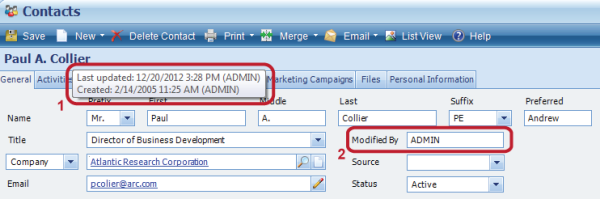
In every info center you can hover over the name of the record at the top of the record. It will tell you who created the record and on what date. Additionally, it will tell you who last modified the record and on what date. So in the image below for item #1, the mouse is hovering over the word Paul A. Collier in blue. If you need to know what field was modified then you would need to run an audit report.  

Deltek Vision Record Audit Trail


Additionally, you could set-up a field that displays who modified the record. This is accomplished through a workflow. First create a new character field. (Note: An employee field will not work.)  In this example it is named Modified By.  See image item #2 above. 

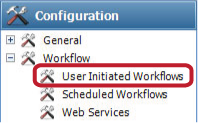
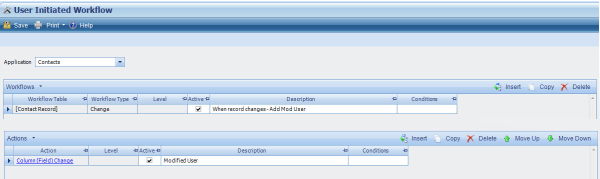
Then set-up a User Initiated Workflow. Choose the Application, which in this instance will be the Contacts. Click Insert on the Workflows grid. The Workflow Table will be Contact Record and the Workflow Type will be Change. This simply means every time the contact record is changed, the workflow will trigger.

User Initiated Workflow


User Initiated Workflow Contacts


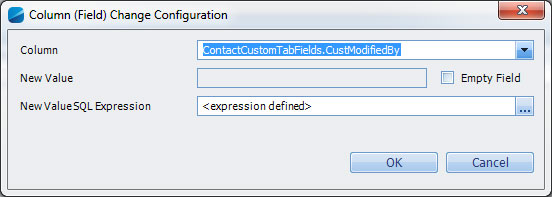
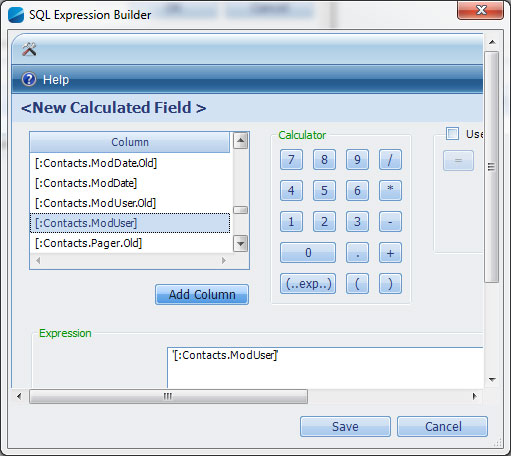
Now on the Actions grid click Insert to add an action. Choose Column (Field) Change for the Actions column. Next, choose the field to update. In this case it is ContactCustomTabFields.CustModifiedBy.  Then set-up a SQL Expression. The expression is simply, a field that already exists: [:Contacts.ModUser]. Find that code and click Add Column. Then click Save. Be sure to add descriptions so you know what the workflow is related to and then Save the workflow. To test it, change something on a Contact record. You should see the users login name filter in.

Column Field Change


Column Field Change SQL Expression


Check back in 2013 for new blog entries related to Deltek Vision tips. Let us know if you learned something new by leaving a comment. Wishing you a wonderful 2013!


Latest Posts