
Full Sail Partners Blog | Professional Services (13)

Posts about Professional Services (13):

Breaking Down the Early Stages of the Project Lifecycle

Posted by Ryan Felkel on Aug 8, 2018 12:00:00 AM

Project Lifecycle For professional services firms, having the right project lifecycle is essential to having a profitable company. Even more, the processes that drive your firm’s project lifecycle must be in sync with the systems you use to manage them. There are several stages in the project lifecycle and evaluating your processes requires breaking down the steps. In this blog, we’ll look at the initial and most overlooked phase of the project lifecycle…winning the work.

Leads and Opportunities

Here’s where many firms go wrong when examining their project lifecycle…to start a project, you must first win the job. So, evaluating the lead to opportunity process is an essential component and must be considered in the project lifecycle.

When a new lead is acquired, it needs to be captured in a system that provides visibility to the entire company. As a business development person learns more information from the lead, it is input into the system and analyzed to see if the firm can meet the requirements to win the project. Once the decision is made that your firm can win the work then the lead becomes an opportunity.

If you are using Deltek Vision or Deltek for Professional Services (DPS), it is recommended that you create a “proposal project” to track the time to prepare the proposal. By using a proposal project, your firm will have the analytics regarding the cost of winning and losing work as well as the total cost of the business development efforts.

Fee Proposal Development

Developing the fee proposal is another important step to the business development portion of the project lifecycle. The fee proposal will eventually become the basis for the project budget. It will include what your firm is being paid for the various stages of the project. This may also include bonuses or penalties for meeting or failing to meet certain milestones.

It is recommended for Deltek Vision and DPS users to develop the fee proposal using the resource planning module. This will allow you to incorporate previous performance from similar projects to ensure you are charging the right amounts and including the correct milestones. Additionally, firms should continuously check the scope of work and make sure it’s in line with the fee proposal you are developing.

Fee Negotiation and Finalizing a Budget

Once the client indicates it has a desire to move forward with your firm, the fee negotiation and budget finalization phase of the project lifecycle begins. Things to keep in mind during this stage are possible changes to scope, schedule and fees. The budget created during this process will serve as the guide for the project manager to execute the work.

Next Steps to the Project Lifecycle

This blog discussed the business development piece of the project lifecycle. Remember that periodic reviews of your firm’s project lifecycle are a must to ensure that the process is still in line with how your firm has evolved. Stay tuned for more blogs about project execution and project closeout.


 

The Value of Continuous Employee Feedback

Posted by Amy Balassone on Jul 25, 2018 12:00:00 AM

Employee Feedback

Annual review time is often seen by many employees as a stressor. For even the most productive employee, the question of what hasn’t been said until this one point in the year causes concern. From the manager’s perspective, how is it even possible to clearly remember a year’s worth of employee performance? It makes much more sense to offer feedback consistently throughout the year. Let’s take a closer look at the value of continuous employee feedback especially for project-based firms.

Employee Engagement

With continuous employee feedback, managers can initiate employee engagement which leads to further discussions. The more opinions and ideas that are gathered will ultimately improve the project and ensure that it is done efficiently and on budget. If issues crop up, as they often do, engaging employees frequently will allow for proactive problem resolution instead of reactive analysis down the road. 

Good Balance

Keeping a balance between positive and negative feedback is another benefit of continuous employee feedback. While an employee’s performance may have to be corrected over some issue during a project, other things that have been done well can be provided to offer encouragement. This way, employees are still motivated to do their best work and don’t react negatively to the one matter that needed improvement.

Actionable Feedback

Continuous feedback provides actionable items that are mutually beneficial to managers and employees. Freshly addressing the situation at hand allows managers to respond and employees to correct immediately rather than reacting to what has already transpired and cannot be changed. Employees can also be given proper training to improve their efficiency and the outcome of the project. 

Goal Setting

Talking regularly about performance allows employees to set goals for themselves. When employees see how they are contributing to a project and know they will be a part of the positive outcome, they are inspired to perform better than before. Goal setting benefits managers and employees alike. 

Learn from Feedback

Offering continuous feedback is a way for employees to learn, grow and develop. It is a much better strategy for project-based businesses than annual performance reviews. Consistent feedback encourages conversations, goal mastery and efficiently run projects which is a win for everyone in your firm.


The 39th Annual Deltek A/E Clarity Report is Now Available

Posted by Ryan Felkel on Jul 11, 2018 12:00:00 AM

39th Annual Deltek AE Clarity Report Each year Deltek conducts a survey of firms in the architecture and engineering industry to identify key issues impacting the market, highlight bright spots, and forecast future trends. Guided by industry experts, the survey focuses on financial statements, business development, project management, human capital management, and technology trends. This year, in total, 952 individuals took the survey, and nearly 450 companies provided input. Firms in this study are of varying sizes and headquartered across the US and Canada.

Key Findings in This Year’s Deltek A/E Clarity Report

Financial Statements

Firms’ financial statements reveal year-over-year stability in the industry, with most impacts appearing to be driven by talent management and staffing changes.

  • Average operating profit on net revenue was 13.2%, up just slightly from last year’s 13% and the previous year’s 12.8%.
  • Utilization rates dropped slightly to 59.4% from 60.0% last year.
  • The net labor multiplier saw a decrease to an average of 2.96, down quite significantly from a spike of 3.02 last year and back in line with 2015.
  • Firms reversed a five-year decline in overhead rate, increasing from 154% to 155%.
  • The average collection period dropped by one day to 71 days, although high performers increased by two days to a 67-day average.

Business Development

Firms are looking to diversify opportunities and their business development efforts to stay ahead in a competitive market.

  • Net revenue growth forecast was 5.2%, down just slightly from last year’s 5.3%.
  • Firms are using a diverse array of staff for business development, with 19% of firms using dedicated business development staff only, 31% sellers/doers only, and 50% using a mixture of both. However, only 46% of firms had a formal business development process for their staff.
  • Win rates improved to 50.0%, rising 9.8 percentage points from last year’s 40.2%.
  • The percentage of firms with a formal go/no-go process decreased from 75% last year to 67% this year.
  • More firms expect growth in surveying/geographic information systems (GIS), transportation, and commercial markets than any other industry, whereas nearly 60% of firms expect their position to stay the same or decline in the residential, education, and hospitality markets.

Project Management

Firms need to continue to focus on improving the project management discipline and increasing client satisfaction.

  • Two-thirds of all firms have a high level of visibility on cost variance, whereas more than half of all firms stated that they had low or moderate visibility into schedule variance and client satisfaction. Compared to last year, client satisfaction visibility decreased from 53% to 45%.
  • Firms this year reported that 20% of their projects were over budget and 25% of their projects were behind schedule.
  • Sixty-one percent of firms had high confidence in their overall project reporting abilities, down from 72% last year. More than 90% of firms felt confident they were accurately reporting the actual cost and budget of their projects, whereas only 69% of firms felt the same about the accuracy of their schedule reporting.
  • In terms of discipline maturity, only 47% of firms used a formal project management process for three-fourths or more of their projects. Overall, 18% of firms had a PMO or center of excellence. Additionally, only 39% of firms have less than one-quarter of staff with formal project management training.
  • Eighty-one percent of firms are measuring client satisfaction, and of these firms, 45% are conducting these measures for all projects and 49% for strategic projects only. The majority are measuring client satisfaction irregularly, compared to 22% of firms that do so at key project milestones. 

Human Capital Management

Firms are experiencing growth, but employee turnover—particularly voluntary turnover—has increased, making staff retention and improved talent acquisition imperative.

  • Staff growth is 4.3%, declining from 6.9% last year.
  • Employee turnover increased to 12.8%, up from 11% last year.
  • 34% of firms had more open positions, compared with only 15% with fewer open positions.
  • The average time to fill positions was 31–60 days, although for 15% of firms, it takes an average of 90 or more days to fill positions. Compared to last year, there was a 7-percentage-point decrease in firms that filled positions in less than 30 days.
  • Of all firms, 43% have a formal succession plan. For 68% of firms, their succession plan applies only to current leaders and next-in-line leaders, whereas for 7% it applies to all employees.

Technology Trends

In the first year tracking technology trends, firms are looking for better ways to collect data that can be leveraged for strategic decisions.

  • Geolocation and the Internet of Things (IoT) were the most important technology trends.
  • Most firms did not rank artificial intelligence (AI) or wearable technology as technology trends they are focused on, but it can significantly change the way we run our businesses when the time is right.

Benchmark Your Firm with the Deltek A/E Clarity Report 

While these are the highlights of the 39th Annual Deltek A/E Clarity study, the report goes into much more detail. Using these results, you can see how your firm has been doing not only compared to your previous year, but also to other comparable firms in your industry. With these industry insights, you can develop future goals to help your firm stand out against the growing wave of competition. For an in-depth view of everything included in the 39th Annual Deltek A/E Clarity report, download your copy today.


Reasons Why You Should Attend a Professional Conference

Posted by Ryan Felkel on May 30, 2018 12:00:00 AM

Get IdeasAttending a professional conference is a great way to learn solutions to obstacles you currently face, new ways to challenge yourself, and learn about trends in your industry. Additionally, you should never hesitate to ask your employer to allow you to attend a good and relevant conference on their dollar. Furthermore, managers should require employees to go to professional conferences to get out of the office and learn new things they can bring back to share with their coworkers. So, what are the benefits of attending a professional conference?

Network with Likeminded People

Sure, your LinkedIn network is huge. However, when was the last time you spoke to someone in your network face to face, or have you ever met them face to face? Professional conferences attract people from all different geographies from different continents to regional or smaller local conferences. In other words, conferences bring people together in one place in an environment that promotes talking to others. So, don’t be shy! Get out there and meet new people.

Get Fresh Ideas

In reality, you sit in our workspace and either not talk to coworkers about your ideas and their ideas because you are the only person in that role, or you’re talking to the same people about the same ideas every day. As a result, you tend to grow stale on the subject that you’re respected as an authority upon. Therefore, this is probably the number one reason to attend a professional conference.

When attending a conference, you get to attend seminars and panel discussions led by respected industry leaders and take part in roundtable sessions. Here you can get fresh ideas on challenges others are facing industry trends. Remember, you’re going to be inundated with a lot of information, so make sure to stay attentive and take notes.

Present Your Ideas to Others

In today’s age, your company’s brand is built on the brand of its employees. Prospects and clients are more likely to make a purchase from a company that they know, and trust employs thought leaders in their respected industry. This means employees must build their personal brand by showing they are a thought leader in their industry.

Becoming a thought leader requires making presentations about your ideas to peers to develop your “authority” reputation. It will also give you confidence in your work. Here’s a tip, make your presentation fun and interactive to keep the audience’s attention.  

Meet an Expert

You read their blogs and books, and if they have a television show or podcast, you probably tune into that too. Even more, their a mentor to you, but you’ve never talked or corresponded. However, that doesn’t have to be the case anymore.

Industry experts attend the conferences you should want to attend. They give presentations about their ideas, you know…the ones you read about, but now you can easily interact with your mentor and ask questions while attending a conference. Most importantly, experts also attend the conference social events, giving you a chance to have a face to face conversation. Keep in mind, they’re humans too. So, don’t get nervous when having your one on one time.

Make the Most of Every Professional Conference You Attend

Last tip! Keep a pen handy and remember your business cards at all times! Conferences are short, and you’ll be having a lot of fun. Remembering what you talked to someone about and having them remember you isn’t easy. With your pen, write notes other people’s business cards about what you talked about and make sure you have your cards, so they can do the same. There are so many benefits to attending a conference, but it’s up to you to make the most out of it.

Top Trends in Recruiting Quality Talent

Posted by Ryan Felkel on May 23, 2018 12:00:00 AM

Recruiting Top TalentWith repetitive sourcing for candidates, constant scheduling, and continuous boilerplate interviews, recruiting and hiring has become very mechanical in nature. It should instead be focused on discovering the best talent fit for the company culture and be done in a more strategic and efficient way. To accomplish this, recruiters need to improve their methods which have often been unknowingly biased, think outside the box, and find ways to streamline the recruiting and hiring process for quality talent. Let’s check out the top 4 recruiting trends.

Seeking Out Diversity

It has been shown that diversity is directly tied to company financial performance. Companies with diverse leadership are more successful and are thus better able to win quality talent. There is also increasing evidence that diverse teams are more productive, innovative and engaged. Based on these facts, recruiters are now actively pursuing more diverse candidates in the gender, ethnicity, age, and LGBT categories. Nonetheless, for the diversity initiative to really work, it must start at the management level. Senior executives should be held accountable for the company diversity and inclusion outcomes.

Utilizing New Interviewing Tools

Conventional interviews have been shown to present bias and be an ineffective way to really read candidates. As human beings, we are comfortable with the familiar and often unconsciously choose applicants like us as the best hires even though other candidates may be more qualified. Additionally, with traditional interviews, there is less ability to address soft skills and weaknesses of the candidates. Now, with new interviewing tools, recruiters can get many more useful details to determine quality talent:

  • online soft skill assessments - used to measure traits like teamwork which give a better picture of candidates
  • job auditions - candidates are paid to do real work, so their skills can be observed in action
  • casual interviews - take place during a meal and offer a look into a candidate’s character
  • video interviews - recorded or live and help tap a broader talent pool in less time

Being Super Data Driven

While data has been used in the past to make recruiting decisions, the amount of available data for talent acquisition and the speed at which it can be analyzed has increased. This data can now be used to predict hiring outcomes rather than just track them. Data can even be used to test the effectiveness of diversity initiatives. With all this accessible data, every recruiting and hiring decision can be made on facts instead of feelings. Essentially, the sheer volume of data allows recruiters and their companies to compete for quality talent with their own talent intelligence strategy.

Streamlining with Artificial Intelligence (AI)

Artificial Intelligence (AI) is quickly becoming the recruiting industry standard. Using AI, recruiters can capture information from candidate resumes for qualities that indicate a workplace culture fit. AI can also be used to increase diversity in the workplace as it can be programmed to ignore demographic information when sourcing candidates. Once candidates have been hired, AI can even help with retention by identifying ideal learning opportunities. Finally, letting AI do the more tedious tasks for recruiters will offer more time to build relationships with quality talent which has a greater impact on company success.  

Recruiting Quality Talent for the Future

When vying for quality talent in a very competitive market, recruiters must stay on top of current trends instead of relying on standard recruiting protocols. Recruiters can maximize their talent acquisition efforts by choosing new technologies and streamlining their inefficient processes. With super data at their fingertips and a plethora of AI options to choose from, recruiters are well positioned for a successful talent acquisition future.


Top 5 Benefits of Deltek for Professional Services by Role

Posted by Ryan Felkel on Apr 25, 2018 12:00:00 AM

Deltek for Professional Services By now, you’ve probably heard about Deltek for Professional Services (DPS), but how does the next generation Deltek product help your firm? To answer this question, it’s easiest to break down the firm into its key roles and show the benefits of DPS to each of them. So, role by role, let’s look at the top 5 benefits of DPS.

Marketing Manager      

Marketing is all about firm promotion to assist the business development team with connecting a firm to a potential new client. Firms must deliver and manage marketing campaigns and streamline the proposal process to win more projects. So, how does DPS benefit marketing managers?

Using DPS, marketing managers can:

  • Monitor campaigns to find potential clients and follow up on leads
  • Track marketing ROI and win rates
  • Deliver better and more information packed proposals
  • Eliminate wasted time and double entry with all the information you need in a single view
  • Collaborate on proposals through conversations, tasks, shared documents, and calendar events

Business Development Manager

Business development requires keeping a close eye on all your opportunities. Business development managers must track all their activities and touchpoints to ensure they are meeting their goals. Let’s see how DPS benefits business development managers.

Using DPS, business development managers can:

  • Cultivate, nurture, and manage relationships with clients employing tools available
  • Easily see your sales pipeline to ensure goals are met
  • Provide competitive and reliable project estimates to ensure profitable projects
  • Easily collaborate across the firm to make the most of limited business development time and resources
  • Drive the go/no-go process to determine the best opportunities to pursue

Project Manager

Delivering a profitable project on time that exceeds the client’s expectations can be difficult. Project managers must have the tools at their fingertips to make this happen. How does DPS help project managers?

Using DPS, project managers can:

  • Easily build project schedules and budgets for a profitable project
  • Utilize the right people on the right projects to deliver on schedule and under budget
  • See all necessary project aspects on one screen
  • Utilize alerts and dashboards to identify potential risks and make the required adjustments
  • Collaborate with project teams through conversations, tasks, shared files, and events to ensure projects are delivered on time and on budget

Human Resources Manager

Finding and retaining the best talent in the professional services industry can be difficult for human resources managers. Human resources managers need to quickly find, onboard, and retain top talent. What can DPS do for human resources managers?

Using DPS, human resources managers can:

  • Manage skills and certifications so they have the information they need to assign the right resources to projects
  • Forecast and fill resourcing gaps
  • Utilize customized self-service onboarding so talent can become billable faster
  • Evaluate resources at the project level to ensure project performance is at its best
  • View your firm’s new hire information, retention rates, and turnover ratios

Controller

For a controller at a professional services firm, it can be extremely difficult to get accurate and timely financial information on projects and clients. Controllers need to track important metrics and address red flags before they affect the profitability of projects. Check out how DPS benefits controllers.

Using DPS, controllers can:

  • Generate invoices that are correct the first time
  • Get paid faster with interactive and automated billing tools in combination with robust accounts receivable management
  • Always know when things need your attention with thorough reporting
  • Track your goals by monitoring key metrics including margins, utilization rates, and cash flow
  • Quickly capture accurate information with simple timesheets and expenses

Executive

As the firm leader, the executive needs critical firm information at his fingertips. Executives manage the entire project from pursuit to payment and everything in between. How then do executives benefit from DPS?

Using DPS, executives can:

  • See the most profitable types of projects
  • Gain more profitability and efficiency by adjusting teams, projects, and resources
  • Make better and faster business decisions with all the information about the firm in a single view
  • Give employees a solution that is easy to use so they have more time for things that matter most
  • Find clients that are draining resources and hurting the bottom line

Deltek for Professional Services is the Answer to “What if”

What if it all just worked? With DPS, your firm can simplify the entire project lifecycle, from winning the project to getting paid by the client at the end. If your firm is ready to increase its profits and win more business, now is the time to see what DPS can do for you.


How Do You Measure the Success of Your Firm’s Talent Management?

Posted by Jennifer Renfroe on Apr 18, 2018 12:00:00 AM


Talent Management Many people don’t realize that talent management is a key business strategy and is vital to a firm’s success. It begins with recruiting potential hires and follows employees throughout their entire life cycles with a firm. Since talent management has such a great financial impact on a firm, talent metrics should be used to show return on investment and to make informed business decisions. So, which metrics are the most significant?

5 Important Talent Management Metrics 

  1. Cost to Hire

It is very expensive to hire a new employee. Up front, you have ad placement and sourcing costs. Additionally, there is the time spent by the recruiter and managers to interview and determine the best candidate from the pool. As much effort and time will be put into selecting and onboarding the right match for a position at your firm, you want to ensure the new hire is a good return on investment. You also want to assess whether your ad placements and sourcing tools are getting you the quality candidates you desire. 

  1. Time to Full Productivity

Every new hire needs some time to become acquainted with the new position and learn the ropes. Generally, it requires several months before a new hire can be fully productive. However, it is imperative that your firm has an effective onboarding and training program to get new hires up to speed as fast as possible. The quicker a new hire moves to full productivity, the faster there is the return on investment. 

  1. High Potential Talent

As part of your talent management plan, you should hire a percentage of people that you expect to provide more value down the road for the organization. This talent should be the best of the best. These employees will be the ones you pull from for future succession into higher-level roles. Making sure you hire talent with potential is necessary to avoid more costs of hiring. 

  1. Talent Mobility

Retention of talent is another important factor to consider, especially when concerned with the financial impact of hiring a replacement. Employees need to know that there are opportunities for them to move within the firm, so they don’t stagnate in the same position after several years. Your firm should offer career paths for upward mobility for top performers who seek new challenges. 

  1. Talent Turnover

Turnover is probably the most relevant metric of all. Your firm will want to keep this number as low as possible to reduce its financial impact. With turnover, you have the cost of replacing the position with a new hire and the loss of the knowledge gleaned during the years of service. Additionally, turnover stops the cohesive flow of business and causes efficiency to wane.

Manage Your Talent Well

Of course, there are cases where turnover cannot be prevented no matter what the firm does. Overall though, your talent should be chosen wisely, trained properly and given opportunities for mobility. When you manage your talent well, you will in fact reduce your costs because word of mouth is free and high potential talent will come to you.

Understanding Project Budgets in Deltek Vision

Posted by Ryan Felkel on Mar 8, 2018 12:00:00 AM

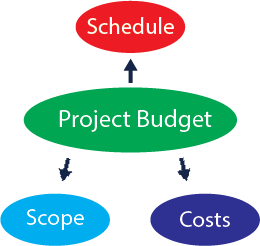
Project Budget

More often than not, firms that use Deltek Vision can find project budgets in the Budget and Revenue tab of the Project Info Center. There you will find a series of fields that will be further defined later in this blog. Before we go too far down the rabbit hole, let’s dive into some basics. 

Deltek Vision Project Info Center

A good place to start is the Project Info Center, and whether you use the Budget and Revenue or Contract Management tab, the definitions are the same. Deltek Vision refers to budget as total compensation, but in very simple terms, it is your contractual fee or upset amount. It is statutory, referring to the agreed upon amount between seller and buyer. In no way should this be minimized as Vision uses it for many calculations and processes, but it may not necessarily be the budget. Here are some key terms you should be familiar with: 

  • Direct Labor is the portion of the contract value that relates to your firm’s effort and you can segregate WIP and backlog specifics to this amount using revenue categories
  • Direct Expense is other direct costs such as travel that is part of your fee and not a pass through
  • Compensation is the sum of Direct Labor and Expense in Vision
  • Direct Consultants are third party consultants that are part of your fee and not a pass through
  • Reimbursable Expenses are other direct costs such as travel that are going to be passed (possibly with a markup) to your client through invoicing
  • Reimbursable Consultants are third party consultants that are going to be passed (possibly with a markup) to your client through invoicing
  • Reimbursable Allowance is the sum of the Reimbursable Expense and Allowance
  • Agreed Upon Contractual Value is the sum of the Compensation, Direct Consultant and Reimbursable Allowance 

Furthermore, all these fields are available for reporting and revenue calculations. 

Locating Budget Amounts in Deltek Vision 

It is important to remember that even though these amounts are available in the Billing module, they are not systematically linked. It is true, however, that total compensation is the maximum that can be invoiced or earned. This amount is external client facing. Keep in mind, this is not the project budget. 

What, what, what? The above is not a budget? In the case of a fixed fee or a lump sum project, we would expect the total compensation to reflect the budget, but the budget should be comprised of labor and expense loaded hours/amounts over a proposed schedule based on fee and scope. Simply stated, a budget is internal and should be used for comparison to actual costs charged to the project. 

Maintaining Project Budgets 

In closing, budgets should be re-visited and re-casted. If managed properly, firms will gain high levels of profitability. A key take away is that, for fixed fee or lump sum projects, performing under budget creates “windfalls” or the difference between the total compensation that was invoiced and earned.


Using Proper Data Analysis to Drive Business Development Decisions

Posted by Ryan Felkel on Jan 31, 2018 12:00:00 AM

Analyze Data Many firms have a plethora of data regarding existing clients, prospects, and wins and losses just sitting around being underutilized or possibly not being used at all.  So, what should these firms be doing with all this data? Well, this significant information needs to be analyzed to create actionable insights which will help drive business development decisions. Here are some thoughts to ensure a proper data analysis.

Reports Don’t Equal Analysis

Reports are pretty and give you an easy view of your data. The line goes up and you smile, the line goes down and you frown. However, quickly glancing over these reports doesn’t actually answer why these are the results you see?

Analyzing means taking those results to the next level and learning why these are the trends your firm is experiencing. You must ask the right questions to find answers in your data and then form a hypothesis to test your data against. This will allow you to find the reason behind your numbers.  

Using Analysis to Achieve the Real Goals

As simple as this sounds, getting the right information from your data analysis can affect achieving your firm’s goals. To make actionable decisions, the goals of the business must be what drives your measurement strategy. Using the correct data analysis technique requires that you know what questions you’re trying to answer.

Think about it, generic questions tend to lead to generic answers. To determine what you’re trying to figure out from your data analysis, you’ll need to have clear objectives provided by the firm’s stakeholders. Without having a specific question to answer, you won’t get a clear answer.     

Creating Metrics That Promote Action

Communicating the results of your analysis in a way to create actionable insights can often be difficult. It doesn’t have to be when the results of your analysis answer the questions that have been established by the business objectives. Therefore, communicating actionable insights requires being able to quantitatively measure the success of the plan you recommend.

The findings of the analysis should drive the development of key performance indicators (KPIs). With these KPIs, the company knows what quantifiable objectives determine the success of the business. Keep in mind, your KPIs need to be realistic based on your data. 

Good Data in Equals Good Data out

Collecting the right data and maintaining it is the most important part of data analysis. For project-based firms, projects are the lifeblood of the business. Winning more projects is essential to generating more revenue. As a result, discovering key project related data from your analysis is integral to creating compelling proposals that win new business. 

Making Data Work for Your Firm

To learn more about project data collection and maintenance best practices, make sure to attend this year’s SMPS Pacific Regional Conference and the Southeast Regional Conference. Lindsay Diven, Full Sail Partners’ Senior Consultant, will be presenting a session titled, “Develop Your Data Collection & Maintenance Program – No CRM Needed” to address this specific topic. Let your data work for you.


Bringing Data Down the Mergers and Acquisitions Road

Posted by Ryan Felkel on Jan 24, 2018 12:00:00 AM

Merge DataMany firms in the architectural and engineering (A&E) industry are using mergers and acquisitions (M&A) as a strategy to grow. As discussed previously in a blog by Mike Kessler, a firm must first choose the best fork in the M&A road to accomplish its goals. Once this path has been taken, a decision must then be made about which data to migrate and the steps to take for a smooth transition.

Deciding Which Data to Migrate 

If you ask project managers which data is important to them, they will usually say all of it. However, is that truly the correct answer? Probably not. Depending on which direction your firm chose in the M&A process, there are many questions to ask. Something that may help decide which data to migrate is to determine who is responsible for the work completed prior to the M&A. 

Additional concerns might be: 

  1. Are there government contracts or audit requirements that require full detail?
  2. Are there open accounts receivable that may be disputed and why?
  3. Are there any outstanding claims against a project?
  4. Did the acquisition include assets that need to be tracked?
  5. Who will own the open accounts receivable?
  6. Will you be responsible to pay any outstanding vendor payments?
  7. Do you need prior invoice details, prior invoice totals or just prior billed totals?
  8. How much value is left to recognize for revenue?
  9. Does the prior revenue method used by the previous firm line up with how you recognize revenue?
  10. Will the client let you assume the contracts?
  11. Are there reporting requirements that are ongoing with the client?
  12. Do you need visibility into prior work for cost comparisons?

The answers to these questions, or even other scenarios, may place data requirements on how much data you bring in and at what level. Again, the amount of data to be migrated depends on which fork was taken in the M&A road and the organizational structure of the entity post M&A. After addressing which data to migrate, then you can move on to the how. 

Options for Migrating the Data 

So, now that you know which data to migrate, how are you going to do it? 

Before providing the migration options, please note that having knowledgeable personnel to assist in this process can save time and prevent frustration. 

There are three options for data migration: 

  • Vision Data Import
  • Microsoft SQL
  • Manual Entry 

Determining the Data Migration Process 

Once you have picked the migration option, you must decide what order to migrate the data in. This is important because every firm has critical processes and secondary processes that need data to function and keep the company running. 

Here are some things to consider: 

  • Prioritizing the critical areas
  • Setting a schedule of what is required (this will help guide you in the process and make sure necessary parties are involved)
  • Having a company champion or champions who can answer employee questions
  • Keeping communication lines open (this will allow for an easier transition) 

Assistance with Data Migration Decisions is Available 

Regardless of which direction your firm takes in the M&A process, Full Sail Partners can offer help with your data migration decisions. Contact us and one of our subject matter experts will be in touch. Let us help you ease on down the M&A road.


Latest Posts