
Full Sail Partners Blog | Professional Services (12)

Posts about Professional Services (12):

Things We Learned at Deltek Insight 2018

Posted by Ryan Felkel on Nov 16, 2018 12:00:00 AM

Deltek Insight 2018

It’s important to keep in mind that Deltek Insight is about much more than just Deltek and its products. This annual networking event always offers so much to those who attend - from what’s new with accounting standards to inspiring stories from keynote speakers to opportunities to exchange ideas with colleagues. For those who didn’t have the opportunity to attend Deltek Insight 2018, here are some interesting things we learned this year.

Fun Facts Learned at Deltek Insight 2018

  • FASB ASC 606 impacts must be taken against retained earnings in 2018.
  • Deltek Vision will continue to be supported through at least 2022.
  • Deltek products are evolving and one new enhancement is “Hey Deltek” - the natural language processing and interaction creation like Siri and Alexa.
  • Johnny Cupcakes doesn’t actually sell cupcakes but t-shirts. So many people love his creative branding and messaging.
  • “Failures are just experiences. Experimenting is how we grow,” according to Johnny Cupcakes who started 16 companies before he was 16. Most people think they might fail so they don’t even get started. His advice? Take more chances and fail faster. When we fail, we learn, and failure helps us redefine priorities in life allowing us to be successful.
  • B2B and B2C are old fashioned concepts. You should now think H2H (human to human connection). How is your role and work impacting lives and making them better? This human connection is what brings us closer and builds memories.
  • Johnny Cupcakes also suggested “do more of what makes you happy,” which reinforces that human touch. Life is too short. Your clients have the same needs as you. Doing more of what makes you happy in return makes those around you happy.

Deltek Insight is Always Full of Information

As always, this year’s conference provided much value to those who attended. If you want to know more about attending Deltek Insight in the future or have any questions about this year’s conference, reach out to us using the link below. We hope to see you at Deltek Insight 2019 in Orlando, Florida.

 

Resources to Achieve Maximum Efficiency

Posted by Jennifer Renfroe on Oct 31, 2018 12:00:00 AM

BrainFull Sail Partners is dedicated to helping businesses be the best they can be. Therefore, we consistently provide a variety of resources offering much insight to our clients. These can be found on the resources tab of our website. From webinars and webcasts to whitepapers and events, we want to ensure our clients run at maximum efficiency. Let’s check these resources out.
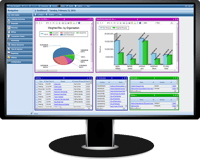
FSP Webinars & Webcasts

With our webinars and past webcasts, you gain insight on valuable information from leaders and industry experts. Our webinars focus on many relevant topics providing you the tools needed to move your firm forward. If you missed a webinar, we have an archive page with all our past webinars. Just request the video and a PDF of the presentation you are interested in by filling out the form to the right. Some of our most recent past webinars include; Talent Solution Speed Session: Career Paths, and What to Measure, How to Measure, and Making Sense of it All. Don’t hesitate to find a webinar that will help you! 

Events & User Groups

Full Sail Partners conducts virtual user group meetings to help our clients learn more about Deltek products. We encourage you to contact your area representative to meet and network locally while viewing our virtual presentation as a group! The largest networking event for Deltek users is Deltek Insight, and this year it is November 5th-8th in Dallas, TX. The Full Sail Partners’ team will be presenting at Deltek Insight and topics include DPS (Vantagepoint), workflows, accounts payable process, and functional database. If you want to attend these classes at Deltek Insight 2018, you can register here. Interested in a Full Sail Partners’ speaker for one of your events? Fill out the form to the right of the Events & User Groups’ page and specify your company, topic, and how many people! 

Whitepapers

Full Sail Partners provides complimentary whitepapers as a part of an ongoing effort to provide information about the newest technology and industry standards. These resources can help your business stay ahead of the competition. There are many to choose from to learn about solutions for your project-focused business. Some of these include: Benefits of an Enterprise Resource Planning System, Growth and Transition, and Top 10 Recruiting Metrics HR Should Care About. Be sure to check out all of the amazing whitepapers we have to offer. 

eBooks by Deltek

To ensure users get the most out of their systems, Deltek has published a Dummies eBook series that addresses the importance of several tools and industry best practices. If you are interested in downloading a copy of an eBook, simply fill out the survey including your name and email. Some of the eBooks we have to offer include: Talent Management for Dummies, Resource Planning for Dummies, and Planning a Great Project for Dummies. Whatever topic you are struggling with, there is an eBook to help. 

Keep Learning! 

The more knowledge firms have, the more smoothly they will run. Full Sail Partners strives to continuously provide information to our clients that helps them achieve maximum efficiency and stay ahead of the competition. Keep an eye out for more resources as they come available!


Reasons to Have a Project-Based ERP System

Posted by Jennifer Renfroe on Oct 24, 2018 12:00:00 AM


Project-based ERPThe goal of an Enterprise Resource Planning (ERP) system is to integrate all aspects of a business from finance to CRM to HR. To have and maintain a successful business operation, accurate and timely information must flow between all the different business functions. With an ERP in place, there is visibility into operations which provides greater control over the business. However, while all businesses benefit from an ERP system, one size does not fit all. Project-based companies are distinct and thus require ERPs suited for their needs.

Unique Financials

Unlike firms just selling products to be shipped, project-based firms have financials reflecting more specific details. Project-based financials are focused on resources, projects and clients. Project-based firms are concerned with billing and time and materials needed per project which is vastly different than a firm that simply tracks inventory. Since project-based financials are so particular, project-based firms should have ERP systems that are equally so.

Deeper Function of Resource Management

Resource management for project-based firms is also a lot more involved. Project-based firms must manage both clients and projects matching the scope of a project to delivery. More than just people, resources here mean skills needed in a project and determining when certain skills are to be used. CRM with projects is built around proposals and recurring client interaction. With the intricate nature of running projects, project-based firms require ERP systems set up to manage resources in this more complex way.

Designed for Different Roles in the Firm

Executives, accountants and project managers all have different focal points. Executives want to see that the business is financially sound and that customers are satisfied. Accounting needs to be able to make sure billing is being completed on time. Project managers must collaborate with everyone to make sure the work is getting done and that people are being utilized by tracking workers as they come off a job. Project-based ERPs are specifically built for all these key roles ensuring efficiency in operation.

Complete Visibility into Business

With project-based ERP systems, every transaction is tied to an account, organization and project. The general ledger account describes expenses, the organization describes who is doing the work and the project is the source of revenue. With these elements linked, financial reports, invoices, payroll and project status reports are all available to show the whole picture of the business providing complete visibility.

Match the ERP to Firm Needs

With a project-based ERP in place, project-based firms will be able to make proactive decisions with current, real-time data. Generic ERP solutions do not meet the needs of project-based companies. Project-based ERPs are specifically designed to ensure that all aspects of project management are tied together to provide an accurate view of project profitability and company health.


The Benefits of an Applicant Tracking System for Project-Based Firms

Posted by Ryan Felkel on Oct 17, 2018 12:00:00 AM

Now Hiring! It used to be that people needed companies - employees were loyal, jobs were scarce, and everyone accepted the standard employment package offered. Today, things are very different. Companies need people – talent is hard to find, few make long term commitments, and many are demanding a lot more than before. Project-based companies are particularly impacted since without the right people in place, projects suffer, customers suffer and so does the bottom line. Therefore, having an applicant tracking system is a necessity to deal with the challenges of talent acquisition.

Expediting Talent Acquisition

These days, companies are the ones trying to convince talent to join the firm while the competition is courting them as well. It is crucial that the time it takes from sourcing candidates to interviewing to offering positions is greatly shortened. An applicant tracking system provides a clearer picture of the entire process. It shows right away if any of the steps are taking longer than necessary and allows firms to be more efficient in the hiring process. Project-based companies need the right people available at the right time to keep projects running smoothly.

Talent Pools

With people moving around as much as they do today, firms should always have a reserve of potential talent. An applicant tracking system helps with creating and maintaining these pools of talent. When resumes are entered, HR can flag those candidates who would be good fits for future opportunities. So, if a project manager leaves unexpectedly or a new project is won, a talent pool is immediately available to contact which reduces the delay in staffing. Nothing is worse for project-based firms than having to put off a project start date because of lack of appropriate personnel.

Candidate Experience

Another benefit of an applicant tracking system is that it ensures a positive candidate experience. The candidate’s experience moving through the hiring process has a huge impact on whether an offer will be taken. Firms must make candidates feel that they are valued. An applicant tracking system makes it easier to stay connected with candidates, so they feel informed and not forgotten. Project-based firms will not only have excited quality talent coming on board from this positive experience, but word of mouth will spread creating a talent pool for future projects.

Invest in an Applicant Tracking System

Project-based firms make money when projects are done on time and to customer satisfaction. Without the right personnel on the project, firms are destined for failure. An applicant tracking system expedites the hiring process by reducing inefficiencies and encouraging quality talent. Firms can easily overcome the challenges of talent acquisition by investing in one today. What is your firm waiting for?


Improve Your Expense Management Process

Posted by Ryan Felkel on Oct 11, 2018 12:00:00 AM


Expense ManagementExpense management seems to be a difficult task for accounting personnel at many professional services firms. With a workforce that is constantly on the go, tracking spending and enforcing expense policies can provide a plethora of challenges. What if there was a better way to manage expenses? Let’s see what firms can do to improve the expense management process.


Streamlined Process from Start to Finish

Being on the go means employees must be able to book travel and track expenses from anywhere at any time. Employees and those who approve expenses need to be able to easily accomplish these things from a smartphone or tablet. So, an efficient expense management solution needs to have a user-friendly mobile feature available to all.

Accurate Collection of Information

Not only is it time consuming to have to manually enter information from receipts, it is also prone to errors. Firms should have an expense management solution with optical character recognition (OCR) capabilities. OCR technology enables applications to recognize printed or written text characters so users can take a picture of a receipt, and the application will add the name of the vendor, the dollar amount spent and the date to an expense essentially saving time and reducing errors.

Simplified Policy Enforcement

Sure, we all like to make travel for ourselves more convenient for our schedules and prefer certain hotels. However, the later flight and the preferred hotel might cost a lot more, and if the policy is to find the best deal, how can your firm know employees are sticking to it? Well, firms should have an expense management solution that compares the costs of flights and hotels to ensure employees are booking the best value. If a more expensive flight or hotel is required, employees can submit a request with a reason indicated.  

Integration with the Core Accounting Software

Several core accounting management systems have built-in expense management solutions. However, they often lack the key features mentioned above. This means firms may need to look for a third-party solution provider to gain these benefits. It is important that the third-party solution integrates with the core solution, so do your research to find one that helps keep your expense management process streamlined.

Picking the Most Efficient Expense Management Solution

It is said that business travel expense is the second most difficult operating expense to manage. By moving away from paper receipts and automating the expense management process, firms can gain better control of employee spending. So, what are you waiting for? Find the best solution to improve your firm’s expense management processes.


Business Intelligence and Key Performance Indicators: So Happy Together

Posted by Jennifer Renfroe on Oct 3, 2018 12:00:00 AM

Business Intelligence and KPIs

Establishing meaningful key performance indicators (KPIs) is vital if your firm is committed to data-driven decision making. First, you will need to determine what most clearly correlates with your company’s goals. A simple way to think about KPIs is that you can only improve what can be measured, and using today’s business intelligence (BI) offerings, measuring KPIs can be especially precise and easy to do. Let’s look at some trends in BI and the connection to KPIs. 

Easier data discovery

It used to be that data discovery was only done by IT experts who created reports about crucial information regarding KPIs. This process could take many days, and by the time a report was generated, the information was irrelevant. With the continuing simplification of BI, more people can now have access to real-time analytics. Using simplified BI, anyone can drill down into the data and find answers to important questions which are related to KPIs.

Visual Analytics

For non-analytical people, visualizations are helpful to digest key information. They activate the brain’s recognition capabilities and enable people to detect patterns in charts and graphs. Rather than having to discover data buried in tables over multiple pages, visual analytics allow for decisions to be made quickly and are a much more efficient way to evaluate KPIs.

Self-service Business Intelligence

More and more business users are accessing BI solutions to make faster and better-informed decision. Each company has unique goals and so does each department. To measure specific KPIs, customized BI dashboards can be created with the features relevant to each user. These dashboards are viewed in a single screen providing immediate, accurate and up to date visual status reports.

Mobile Business Intelligence

Today’s fast paced business environment requires that people have access to critical BI anywhere, anytime. With increased accessibility and improved smartphones, BI can also be analyzed on mobile devices. Companies that use mobile BI can stay ahead of the competition because there is always access to important data for decision making and gauging KPIs.

Cloud Business Intelligence

While most BI software has been hosted on-premise, the increase in on-demand data access has led to cloud BI. There are many benefits of a cloud BI solution. It is easy to install because it is an internet-based software, adding new users is a simple and the cost is low. Cloud BI is an option for companies of all sizes within an industry that provides an instant way to assess KPIs.

Being Proactive with Business Intelligence

All firms strive to be successful and creating KPIs allows them to measure success and avoid potential negative outcomes. Using a BI solution, firms can be proactive by visually seeing KPIs and making quick decisions based upon critical information. The two go hand in hand and together they help firms make sense of it all.


Introducing Deltek Vantagepoint

Posted by Ryan Felkel on Sep 5, 2018 12:00:00 AM


Deltek VantagepointWhen Deltek for Professional Services (DPS) 2.0 is released, it will have a new name - Deltek Vantagepoint. In addition to the name change, there will be several enhancements to improve the user experience for both back office and front office users. Here is a sneak peek of how Deltek plans to take the breadth and depth of the Vantagepoint solution to the next level.
Say Goodbye to the Smart Client

With the release of Vantagepoint 2.0, Deltek will begin to push users away from the smart client and direct them to the web browser version. Using this version, they will be able to access Vantagepoint from any device that is connected to the internet using any browser they desire. Think of it this way - Vision is the smart client and iAccess is the web-based version. Keep in mind that if your firm is still using Vision, you may want to consider using iAccess more to get comfortable with the look and feel of Vantagepoint.

Proposals Engine

The proposals engine is now being introduced to Vantagepoint, and it is a great feature. For marketing, the proposal process can be extremely time consuming. With the proposals engine, a person creating a proposal can go through and check off boxes based on the requirements of the RFP, and Vantagepoint will automatically create the proposal. It can include images and pictures, employee resumes, past work examples, references and more.

Combined Opportunities and Projects

The opportunities hub is going away and is now being combined with projects. This has a huge upside for business development. By tracking an opportunity as a project, time and associated costs can be captured to help determine the price of pursuing new work. Additionally, a timeline with milestones and reminders can be developed to ensure business development is staying on top of winning the opportunity.

Simplified Transactions

Moving forward, transactions will be managed within a single location. Users will go to one place within Vantagepoint to enter, edit, report, post and approve transactions. Additionally, you will have the option to enter transactions without files and to post on entry. The line item detailed view will still be available.

Project Information Management Integration  

Deltek Project Information Management (PIM) will now be integrated with Vantagepoint. It will be easy to find since it will be a tab in the project record. By using PIM, firms can easily share project related documents and information within one platform.

Expanded Dashpart Designer

The new improved dashpart designer allows users to create custom dashboards with information that is important to them. They can select bar and line graphs, pie charts, or other graphics as part of their dashboards. Additionally, users will have enhanced control for grouping, sorting, filtering and totaling data all within the dashpart.

Improved Reporting

The reporting screen will now have a preview menu. When users create a report, the multiple clicks required in the past will be eliminated. The reporting tool will also include charts and graphs.

What Deltek Vantagepoint 2.0 Means to Your Firm

One thing is for sure - 2018 to 2019 will be a transitional time for Deltek Vantagepoint. As Deltek continues to further develop Vantagepoint, more features will be added to further enhance this solution. The most important take away for users is that they need to be aware of the changes coming and they need to be ready to embrace them.


Deltek PIM Changes the Way Professional Services Firms Manage Information

Posted by Ryan Felkel on Aug 29, 2018 12:00:00 AM

Deltek PIM

Firms in the professional services industry often have a difficult time managing the large volumes of information that come with each project. Having access to all project information from emails to drawings to contracts is important and vital for effective project management. With information silos, disorganized yellow folders and different systems per team, there is a greater chance for a less than successful outcome on firm projects. Deltek Project Information Management, or PIM, changes the way professional services firms manage information.

PIM Challenges the Norm

Many professional services firms believe that using yellow folders to store project documentation is the best option. While they are certainly easy to create, these folder structures offer no options for controlling access to the most up to date project information. Critical project data can easily be missed, and uninformed decisions can be made without a central place to view all current documents like offered with PIM. 

Email Communication is Valuable Information

One of the biggest mistakes that project-based businesses make is not considering email communication valuable project information. Emails and their attachments have significant details that help keep track of the project progression. Issues crop up in email correspondence that are essential for project members to see. For the project to run smoothly, these emails must be stored appropriately as PIM provides. 

Benefits of Using Deltek PIM 

  • Organized project files improve efficiency – Users can store, manage, retrieve and share documents in a central hub
  • Better collaboration – Project communication is improved when all team members can see all the relevant information
  • Quickly find critical data – All key project information is available to monitor project progress and make better decisions
  • Protecting the firm – Risk can be reduced with greater visibility into project data
  • Mobile connection – Enables on-the-go field work where photos can be taken, or drawings can be viewed on site
  • Integration with Deltek ERP– Every critical piece of project information is in one location to manage budgets, schedules and resources for every project in Deltek 

Goodbye Yellow Folders, Hello Deltek PIM 

Deltek PIM offers a cohesive information management system which ensures that the correct knowledge is always available to all project team members. By implementing PIM, professional services firms can store, catalog and retrieve all essential project management documents from one place. If your firm is still managing project information using yellow folders or keeping information silos, the best decisions are not being made. PIM can help make better ones.


Preparing Your Firm for the Future with Succession Planning

Posted by Ryan Felkel on Aug 22, 2018 12:00:00 AM


Succession Planning Change is inevitable but planning for change can certainly alleviate its impact. If you’re the owner or leader of a professional services firm, you know that senior level personnel are eventually going to retire or might simply move on to new challenges. With this in mind, your firm can be prepared by having a succession plan in place for when employees leave.
What is Succession Planning?

Stated simply, succession planning is the process whereby an organization ensures that all key roles can be replaced by competent new employees. As part of the succession plan, employees that are going to eventually fill these high-level vacancies will participate in a training and mentoring program to prepare them to become future firm leaders. The succession plan should also include replacing lower level employees as they move to higher positions within the firm.  

The succession plan should be presented to employees as a professional development and training opportunity. It should provide a map to employees on where the firm believes their individual skills will benefit the organization in the future. In an effort to plan for staff leaving, the process actually encourages retention of other high-quality employees.

Developing a Succession Plan

Creating a succession plan requires firm leaders to take a hard and honest look at their current financial situation and where they predict themselves to be in the future. Additionally, they will need to determine when certain employees will retire, and which employees are appropriate to develop as future replacements. Each role no matter where it is in the firm will require a different training program that includes a mix of activities to ensure the skills required to be successful are learned in advance of any departure.

Common Challenges of a Quality Succession Plan

Creating and maintaining a quality succession plan is challenging. Here are some common issues firms face with succession planning that must be considered:

  • Smaller firms have fewer positions which makes it difficult for advancement
  • Tapped succession employees may leave for better salaries at other firms
  • Project-based firms can experience ups and downs to the number of contracts/jobs they manage and deliver which affects staffing
  • Senior leaders may stay in their position rather than leave when planned
  • Chosen succession employees may lack motivation to advance
  • Plan falters due to poor communication or the lack of clear development and training taking place

Investing into the Future of Your Firm

A succession plan is an investment into the future of your firm. The time and effort required for a successful succession plan is costly, but the plan can also create future savings. Having a great succession plan in place will encourage retention since employees will feel valued, but it will also prevent the negative impact of change if someone unexpectedly leaves.


Top Characteristics of Powerful Key Performance Indicators

Posted by Ryan Felkel on Aug 15, 2018 12:00:00 AM

KPIs Almost all businesses utilize key performance indicators (KPIs) to identify trends and to measure performance against set goals. KPIs can fall into one of two categories: drivers and outcomes. Drivers measure current and future activity whereas outcomes measure the success of past activity. Furthermore, powerful KPIs should have some key characteristics to ensure they are clear and easily measurable.

Characteristics of Powerful Key Performance Indicators

  1. Simple – KPIs should be simple to understand and to measure. It is extremely important that employees know what a KPI is measuring and how it is being calculated. KPIs should also be concise so that are manageable and do not overwhelm employees with too much information.
  2. Relevant – KPIs need to be relevant to the organization. This can be done by making the KPIs for employees relate to the strategic goals and objectives of the company.
  3. Measurable – Employees need to be able to analyze their performance which is the goal of using KPIs. Therefore, KPIs must be measurable but not all will have a quantitative goal.
  4. Actionable – KPIs should prompt decisions and not create more questions. In other words, KPIs cannot be effective if employees are unsure of what to do with the information.
  5. Timely – KPIs should be reported frequently enough to allow employees to make timely decisions. However, avoid having the reporting too frequent as this can overwhelm employees with too much information.
  6. Visible – KPIs should be visible across the entire organization. This allows employees to see how their work is helping achieve the goals of the entire organization. It also provides incentives to employees to work harder and be more productive.

Using Key Performance Indicators to Drive Success

For a business to be successful, it must have goals it wants to achieve. These goals are a way to measure the performance of the company and its employees. Lastly and most importantly, a KPI is useless if the objective and the result cannot be reported on. Thus, KPIs must be meaningful to be powerful.


Latest Posts