

Revenue Generation Methods
 In a previous article, we discussed the challenges with Revenue Method “B.” In this article, we will look at several different approaches to revenue generation and how these can affect our revenue accruals. Can these methods get us closer to FASB 606 compliance?
Work in Progress Method
Work in progress (WIP) method adds unbilled items to the revenue formula. Unbilled items include labor, reimbursable expenses, and reimbursable consultants. The standard formula only includes items marked as “to be billed.” Items marked as “hold,” “write off,” or “delete” are excluded.
This method is a good candidate for unlimited time and materials projects that are not billed regularly. The WIP amount is easily tracked on the unbilled report and shows as the unbilled variable on some project reports. The WIP method is a standard Vision option.
The main disadvantages to this method are:
- This method includes billings and is subject to the issues related to using billings
- This formula has no limit and could lead to revenue overruns
- This may not comply with FASB 606 since it may not correctly measure revenue
Percent Complete Method
Percent complete method requires project compensation values and percent complete values. For best accuracy, these values should be managed at the lowest level of the work breakdown structure (WBS).
Percent complete is calculated in one of two ways:
- Percent complete x by total compensation
- (Percent complete x by labor compensation) + job to date direct consultants at billing + job to date reimbursable consultants at billing + reimbursable expenses billed
These methods can produce more accurate revenue, and the biggest advantage is these methods do not use billing amounts in the formula.
The challenge with this method is obtaining accurate percent complete numbers. This requires estimates of completion which can pose a challenge. Especially if we need this measurement for multiple WBS on a project. The percent complete method is a standard Deltek Vision option.
Earned Value Method
Earned value method uses a percent complete strategy but can calculate revenue via the formula. There are several strategies that can be used to calculate the percent complete:
- Using Project Summary Tables - calculate the percent complete based on job to date spent which requires the use of workflows to calculate the values and user defined fields to display the amounts in the Project Info Center
- Using Project Budgets - calculate the percent complete based on budget amount expended which can require user intervention
- Using Project Planning Module - calculate percent complete based on estimate to complete and estimation at completion values calculated in the planning module which requires the planning module and regular updates of project plans
Time and Materials Method
Time and materials method is based on transactional inputs to the project. Revenue is earned as expenses are incurred. As a result, this is a simple and straightforward method.
This method is easy to deploy and needs no manual intervention. The formula needs to be adjusted based on what transactions we want to include in revenue such as direct expenses.
Subject to Max
The subject to max variable can be added to a formula to put a “cap” on revenue. Subject to max uses total compensation (labor + consultants + expenses) from the Project Info Center in Deltek Vision.
If you need to cap individual amounts (labor, consultant), we need to create a separate revenue method for that individual limit (labor compensation, consultant compensation, etc.) and combine these methods into a “lesser than” formula to give us the lesser of earnings or compensation.
Lesser Than/Greater Than
With these variables, we can compare two formulas and take the higher or lower amount, depending on how we want to calculate the revenue. For example, we want to take the lower of job to date billings or percent complete, or we want to take the lower of total labor spent or labor compensation. The formula will return the lowest amount as revenue.
The Matching Principal
Remember the matching principal. With any revenue method we use, we want to get the best match between calculated revenues and the associated expenses. In several formulas, we are matching labor revenue with actual labor spent, or (better) the actual earned value attained by those labor costs.
For expenses, the objective is to have a -0- effect on net revenue. Revenue is earned as expense is incurred. In this scenario, the accounts payable transaction triggers revenue. When the expense is incurred, revenue is generated. This results in -0- net revenue. Why is this important? Because now we can measure the true effectiveness of our labor.
Measuring Project Performance with Revenue Generation
Revenue generation is a key component to measuring project performance. There are many revenue formulas we can use to accrue revenue to our projects, and there is no “one size fits all” method that will work perfectly for every firm or project. Users should develop and test methods to determine which method(s) fit best for them. Many firms use multiple methods tailored to specific projects.
The bottom line is that revenue must accurately measure earnings to be in compliance with GAAP and FASB 606. Revenue and expenses must accurately be matched to provide the best measurement of project performance.
 As I travel around and work with clients implementing Vision Resource Planning, the issue of what makes a good project manager (PM) is often discussed. The PM track has always been perceived as a measurement of success in one’s career. As employees become more tenured within a firm, there seems to be a natural progression to the PM role. However, not everyone who is strong technically is able to effectively manage projects. Based on my experience, to be a good PM requires proficiency in certain key areas.
 First off, you’re thinking what does this perplexing term, professional services automation (PSA), actually mean? Well, before we jump into the need for it, let’s first look at what determines a professional services firm. At its core, a professional services firm sells knowledge and time as opposed to an actual tangible product.
 There is no shortage of ways for professional services firms to solicit and capture client feedback. Some firms structure their initiative as a once-a-year check-in with repeat clients while others hire outside consultants to conduct third-party client satisfaction interviews. In a previous posting, we reviewed
  A KPI, or Key Performance Indicator, is a measurable value that demonstrates how effectively a company is achieving crucial business objectives. Organizations should use KPIs to evaluate their success at reaching targeted goals. Simply stated, KPIs provide your firm with metrics that compare budgeted amounts to the actual values. KPIs are no longer just for accounting and finance as they now reach deeper into a firm’s operational side examining marketing, business development and project management.
 It wasn’t long ago that firm management took a “need-to-know” approach with sharing project performance information with staff. Today, most firms have changed their attitude about access to project information. Firm managers want project managers to be engaged with the financial results of their projects and have taken great steps to train them to use the Deltek Vision reporting tools and dashboards. Still, project managers are intimidated and paralyzed by the information they receive.
 Full Sail Partners, a Deltek Premier Partner, is proud to announce that
  Over the past couple of decades, advances in technology have significantly changed the way businesses are run. As a positive result, employees have increased their productivity as they are able to do more with their available time. On the other hand, with the various ways of receiving data now, an enormous amount has been and is currently being collected which has exponentially increased the time required to manage it. Putting an effective document management system in place has become crucial to ensure successful business operations. Employees must understand how and where to store important files and project information to keep business running smoothly.
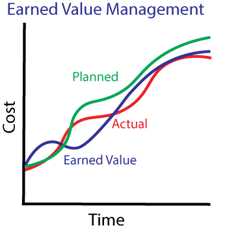 For project-based firms, measuring current firm performance is the most significant indicator of future firm performance. Furthermore, by using trend data, firms can forecast cost and schedule variances in the early stage of a project. A preferred method by project managers to factor this trend data is the earned value management technique.
  Document management in the AEC Industry is more critical than most. Union Square can help your firm integrate all relevant data, allowing you to spend less time organizing and more time executing projects. Union Square enables your firm to store and access critical firm-wide and project information, including documents, financial information, drawings, images, and emails in one central repository. As a result, your firm has the ability to: