Full Sail Partners Blog (10)

A Professional Services Firm’s Guide to Making Conferences Meaningful
Posted by Full Sail Partners on May 9, 2024, 12:00:00 AM

05-09-24 Conference Strategies - Banner

Conferences are more than just gatherings of like-minded professionals; they are opportunities for growth, networking, and strategic advancement. However, navigating them can be a bit daunting without a clear strategy in place. Let’s talk about some key concepts that will help your professional services firm on the way to mastering the art of impactful conference strategies.

Reframe Your Thinking About Conference Selection

Choosing the right conferences to attend is extremely important for maximizing your professional services firm’s time and resources. It is important to focus on more than just the prestige or popularity of an event; consider factors such as the relevance of topics covered, the caliber of speakers and attendees, and the potential for creating meaningful connections.

Moreover, you should consider the location and timing of the conference. Make sure that it fits well with your schedule and provides convenient access to travel arrangements. By reframing your thinking to prioritize quality over quantity, you can ensure that each conference you attend offers genuine value and opportunities for growth.

Discover How to Be Methodical and Objective in Your Approach

Approaching conference selection with a methodical and objective mindset can help streamline your professional services firm’s decision-making process. Start by clearly defining your goals and objectives for attending conferences. For example, are you expanding your professional network, gaining industry insights, or showcasing your expertise?

Next, conduct thorough research on upcoming conferences, evaluating factors such as agenda, speaker lineup, past attendee reviews, and cost-effectiveness. You should consider creating a checklist or rating system to objectively assess each conference's suitability based on your criteria. This allows for a more organized and informed selection process. By taking a systematic approach, you can identify the conferences that align best with your objectives and priorities.

Learn How to Be Mindful of Any Emotional Biases Influencing Your Decisions

It's essential to be mindful of any emotional biases that may influence your professional services firm’s conference selection process. Whether it's the fear of missing out on a popular event or because you’ve always attended, emotions can cloud judgment. Practice self-awareness and introspection to identify any biases at play like confirmation bias or sunk cost fallacy.

Furthermore, you should seek feedback from trusted colleagues or mentors. This helps to gain different perspectives and mitigate the impact of personal biases on your decision-making process. By approaching conference selection with a clear and rational mindset, you can make more informed choices that align with your firm’s professional goals.

Tips to Optimize Your Conference Strategy

Once your professional services firm has selected the conferences to attend, it's time to optimize your overall strategy to maximize your experience and outcomes. Start by creating a detailed itinerary, including sessions, networking opportunities, and any additional events or meetings. Leverage social media platforms such as LinkedIn to connect with fellow attendees and speakers before the conference. This will help facilitate meaningful interactions and collaborations.

Also, consider attending workshops or interactive sessions that offer hands-on learning experiences and opportunities to develop your skills. These activities will enhance the value you derive from the conference. During the conference, prioritize quality over quantity when networking, focusing on building genuine connections rather than collecting business cards.

Don’t Forget Your Follow Up Strategy

Finally, don't forget the importance of post-conference follow-up. One effective strategy is to have dedicated individuals responsible for follow-up tasks, so that no potential leads slip through the cracks. Whether it's sending personalized emails, brochures, or scheduling follow-up meetings, prompt and tailored communication can leave a lasting impression on your contacts.

You should also consider leveraging tools or systems to streamline the follow-up process. Scanning business cards or badges at conferences allows for the inputting of contact information directly into your database, and it is a very efficient way to track connections. By prioritizing follow-up efforts and utilizing available resources, you can maximize the return on investment from attending conferences.

Make Your Professional Services Firm’s Conferences Meaningful

Mastering impactful conference strategies requires a combination of strategic thinking, mindfulness, and proactive planning. Reframe your professional services firm’s approach to conference selection, adopt a methodical mindset, and be mindful of emotional biases; you can then optimize your overall strategy and make the most of your conference experiences.

Remember to prioritize quality over quantity and focus on building genuine connections. Furthermore, always follow up with your connections post-event. With these strategies in place, you'll be well-equipped to navigate the conference landscape with confidence and purpose.

Need a deeper dive into making your conferences count? We’ve got a LinkedIn Live with a conference guru that brings all these points and more together. Click below to watch today!
 

The Importance of Benchmarking in Measuring Business Growth

Posted by Lindsay Diven on May 2, 2024, 12:00:00 AM

05-02-24 The Importance of Benchmarking_Banner rev 2

For project-based firms like those in engineering, architecture, and consulting, failing to measure and understand business performance against industry standards can lead your business towards stagnation or decline. Benchmarking, the critical practice of comparing business processes and performance metrics to industry bests and best practices from other companies, is not just beneficial—it's essential. Without it, firms remain blind to their operational inefficiencies and market position, risking obsolescence.  

By rigorously examining internal operations against recognized standards, firms can pinpoint critical deficiencies and implement strategic changes, ensuring survival and fostering growth in an ever-evolving marketplace. This article will guide you through the importance of benchmarking, how to get started, identify key performance indicators, and effectively integrate these practices to drive business success. 

Why Benchmarking Matters for Project-Based Firms 

For project-based businesses, every project represents a complex interplay of resources, time, and client requirements. Benchmarking provides a structured approach to analyzing these elements by focusing on Key Performance Indicators (KPIs) that drive business success. It allows leaders to make informed decisions based on data-driven insights, rather than intuition alone. 

The importance of benchmarking in this sector cannot be overstated. It helps firms: 

  • Identify Efficiency Gaps: Benchmarking can highlight discrepancies between a firm’s current practices and the industry's best, allowing for targeted improvements. 
  • Enhance Competitive Advantage: Understanding where you stand in the market can help you leverage your strengths and address weaknesses, setting you apart from competitors. 
  • Drive Strategic Planning: With a clearer picture of how well you perform against benchmarks, you can prioritize initiatives that drive growth and enhance profitability. 
  • Improve Financial Performance: By aligning operations more closely with successful benchmarks, firms can improve profitability through better resource management and cost control. 

Getting Started with Benchmarking 

Implementing a successful benchmarking process involves several steps, from choosing relevant KPIs to analyzing external data. Here’s how to get started: 

Step 1: Define Relevant KPIs 

Selecting the right Key Performance Indicators (KPIs) is crucial as these metrics will guide your benchmarking efforts and influence strategic decisions. For project-based firms, understanding both financial and operational performance is essential. Consider the following essential metrics: 

  • Utilization Rate: This measures how effectively the firm uses its billable staff. A high utilization rate often correlates with higher profitability and is a clear indicator of workforce efficiency. 
  • Net Labor Multiplier: A critical profitability metric that assesses how much revenue is generated per salary dollar paid. It highlights the financial effectiveness of human resource investment. 
  • Operating Profit: Looks at the firm’s earnings before interest and taxes, providing insight into operational efficiency and overall financial health. 
  • Current Ratio: This financial ratio measures a company's ability to pay off its short-term liabilities with its short-term assets. A strong current ratio indicates good liquidity health, crucial for maintaining smooth operations and responding to unforeseen challenges. 
  • Employee Turnover: An important metric for understanding employee retention and satisfaction. High turnover can indicate underlying issues in workplace culture or compensation, affecting project continuity and increasing recruitment and training costs. 

Beyond these metrics, firms should also tailor additional KPIs based on their strategic goals and industry specifics. For instance: 

  • Client Satisfaction Scores: Measure the satisfaction levels of your clients through surveys and feedback mechanisms. High satisfaction scores are often indicative of repeat business and client referrals. 
  • Project Completion Rate: Tracks the percentage of projects completed on time and within budget, crucial for maintaining client trust and operational efficiency. 
  • Billable Efficiency: Compares billable hours to total hours worked to assess how much of the workforce’s time is generating revenue. 

By defining these KPIs, firms can not only gauge their current performance but also set benchmarks that align with both industry standards and internal aspirations. This holistic view enables leaders to make informed, strategic decisions that drive growth and improve efficiency. 

Step 2: Gather Internal Data 

Once KPIs are defined, the next step is to compile data from your operations. This involves tracking these metrics over a significant period to establish an internal baseline. Utilize your existing ERP, such as Deltek Vantagepoint, to extract historical data, ensuring it’s accurate and comprehensive. 

Step 3: Find External Data for Comparison 

Once you've gathered and analyzed your internal data across selected KPIs, the crucial next step is to seek external benchmarks for meaningful comparison. This process, while challenging, is essential for gaining real insights and is entirely achievable with some diligent effort. 

A straightforward approach might involve hiring a consultant to dive deep into the metrics and performance of your competitors. However, a more cost-effective method is to leverage existing third-party studies and industry reports available online. These resources provide a wealth of comparative data and are often underutilized. 

Take, for example, Deltek's annual performance study specifically tailored for the architecture and engineering sectors. This comprehensive analysis reviews critical KPIs and distinguishes high-performing firms from their peers. Interestingly, recent findings suggest that while overhead and utilization rates are consistent across the board, top performers often share distinctive traits. These include enhanced efficiencies throughout their project lifecycle and a robust set of standardized company practices. 

In addition to industry-specific reports like Deltek's, broader marketing and business studies can also offer valuable insights. For instance, the marketing research firm Hinge regularly publishes analyses on high-growth firms across various professional services industries. These reports not only highlight what successful firms do differently but also challenge common misconceptions, such as the idea that high growth in certain smaller firms is merely an anomaly. 

The key takeaway is that valuable data is out there; you just need to know where to look. By comparing your internal metrics against these rich data sources, you can identify where you stand relative to the industry's best and learn from the strategies that set top performers apart. This process doesn't just measure your current performance—it provides a roadmap for where you need to go to achieve similar success. 

Step 4: Analyze the Data 

With both internal and external data at hand, perform a thorough analysis to identify trends, gaps, and opportunities. Look for patterns where your firm excels or underperforms compared to industry benchmarks. This analysis should go beyond mere numbers; it should help understand the underlying causes of discrepancies and what they mean for your business operations. 

Step 5: Incorporate Benchmarking into Management Practices 

Effective benchmarking should be an ongoing process, not a one-time event. Integrate these practices into your regular management routines. Regularly update your benchmarks and internal assessments to keep them relevant. Use benchmarking insights to set realistic performance goals, inform strategic decisions, and drive continuous improvement across your organization. 

Harnessing Benchmarking for Strategic Advantage 

Benchmarking transcends being merely a tool for measuring success; it is a comprehensive strategy that cultivates a culture of continuous improvement and strategic agility. For leaders of project-based firms, embedding benchmarking into daily business operations is crucial for illuminating the pathway to enhanced performance and enduring growth. 

By adopting benchmarking, your firm not only aligns with industry standards but also positions itself to proactively respond to evolving market conditions and capitalize on emerging opportunities. In a business landscape that is constantly changing, the firms that will flourish are those committed to measuring, comparing, and adapting based on solid data. 

To further explore how benchmarking can be seamlessly integrated into your strategic planning, I invite you to learn more about our Navigational Analysis Process. This tailored approach will guide you through identifying, analyzing, and leveraging critical data to not just meet but exceed industry benchmarks, ensuring your firm's competitive edge. Let's navigate your path to success together—click the image below to begin your journey. 


Understanding the Impact of the Organizational and Work Breakdown Structures in Deltek Vantagepoint

Posted by Jenny Labranche on Apr 11, 2024, 12:00:00 AM

05-25-23 Organizational Structures_banner

Welcome to the matrix, you have the power to build a solid structure and allow your data to flow.  However, it is beneficial for one to understand the difference between Work Breakdown Structure (WBS) and Organizational Breakdown Structure (OBS) before you lay that foundation. During both the implementation of Deltek Vantagepoint and throughout a firm’s growth, professional services firms should understand the connection between the Organizational Breakdown Structure and the Work Breakdown Structure.  

A typical first step is to consider whether the firm needs to re-organize these structures. Whether it be the uniqueness of each, or the relationship between the two, the attention paid to these early stages of development is instrumental to the flow and reporting of information in your Deltek Vantagepoint database. In the following, we’ll explore some areas to consider when designing these structures in your database.  

Organizational Breakdown Structure (OBS)

When it comes to designing the Organizational Breakdown Structure (OBS) in Deltek Vantagepoint, it's important to consider the specific needs of your professional services firm. The OBS can range from simple to complex, depending on the size and requirements of your organization. Here are some examples of different OBS approaches.  

  • Location Approach: With this approach, the OBS is organized based on the physical locations of your offices or project sites. Each location represents a hierarchical level in the structure, allowing you to track and manage projects and resources across different geographic areas.  
  • Discipline/Department Approach: In the discipline or department approach, the OBS is structured around different functional areas or departments within your organization. This allows for efficient resource allocation, project assignment, and collaboration within specific areas of expertise.  
  • Market Sector or Business Development Driven: This approach focuses on organizing the OBS according to your firm's market sectors or business development strategies. Each market sector or business development unit can be assigned a hierarchical level, enabling you to analyze performance and profitability based on these segments.  

Deltek Vantagepoint provides flexibility in designing your OBS, offering up to five hierarchical levels to accommodate your specific requirements. It also allows for the allocation of overhead requirements within the structure of the database. If you plan to utilize the multi-company functionality in your database, it's important to reserve level one for different companies within your enterprise.   

Financial accountability is a crucial aspect of any professional services organization. When building your OBS, it's essential to consider the financial implications. For example, if you use a two-level OBS structure, such as office and department, each combination will generate an income statement. This means that someone within your organization should be responsible for reviewing and managing these statements.  

Deltek Vantagepoint also enables the extraction of various cross-sections for combined financial reporting. For instance, if you have a mechanical department in three offices, you can create a mechanical income statement that provides accountability at different levels:  

  • Office Accountability: You can track the financial performance of each individual office separately, gaining insights into the profitability and expenses associated with specific locations.  
  • Office/Department Accountability: This level of accountability allows you to analyze the financial performance of different departments within each office. It helps in evaluating the contribution of each department to overall profitability.  
  • Overall Department Accountability: By consolidating the financial data of the mechanical department across all offices, you can assess the department's overall performance and make informed decisions regarding resource allocation and strategic planning.  

The OBS in Deltek Vantagepoint offers the flexibility to design a structure that aligns with your professional services firm's needs. By carefully considering the OBS approach, financial accountability, and the ability to generate cross-sectional reports, you can effectively manage projects, resources, and profitability within your organization.  

Projects and the Work Breakdown Structure (WBS)

The Work Breakdown Structure (WBS) is a critical component that determines how a project is organized and how revenue and costs flow within a professional services firm. Most firms find it effective to build their WBS based on project budgets, aligning with the fee and scope defined in the client contract using a bottom-up approach. The best practice is to build your WBS to mirror your contract for smooth management of resources, budgets, and billing.    

Deltek Vantagepoint provides the flexibility to define up to three levels in the WBS, commonly referred to as Project, Phase, and Task. However, these labels can be customized to match your firm's preferences. Furthermore, the WBS allows for the assignment of accountability within a project. You can designate a project manager, as well as phase and task managers, based on their scope and budget responsibilities.  

It's important to note that project builds and WBS structures do not have to be identical across all projects. While each professional services firm may have its own unique requirements, it is generally recommended to have at least one WBS level 2 for every project, indicating another variation in the WBS. Additionally, projects can be built with no WBS level 3 or only certain portions of the WBS level 2 extending into the WBS level 3.  

The OBS and WBS structures function both individually and in tandem to support overall financial and operational accountability within your organization. At the lowest level, the WBS drives how revenue and costs are allocated within the OBS. Here are some additional factors to consider when working with the OBS and WBS structures:  

  • "Mirroring" the OBS in WBS for Overhead Projects: For projects involving overhead costs, it can be beneficial to mirror the OBS structure within the WBS. This helps ensure that the appropriate overhead costs are accurately assigned to specific projects, allowing for better cost tracking and financial reporting.  
  • Combinations of Cross-Charge, Intercompany Billing, and High Accountability in WBS: Consider how cross-charges, intercompany billing, and high levels of accountability will be incorporated into your WBS. Deltek Vantagepoint offers capabilities to support these requirements, allowing you to accurately allocate costs between different departments, offices, or business units within your professional services firm.  

By carefully considering these aspects of the OBS and WBS structures, you can establish a robust framework for financial and operational accountability within your professional services organization. Deltek Vantagepoint empowers you to customize and tailor the OBS and WBS to meet your firm's specific needs, ensuring accurate project tracking, cost allocation, and financial reporting.  

Is it Time to Update Your OBS and WBS Structures? 

In the ever-evolving landscape of professional services firms, it's crucial to regularly assess and update your Organizational Breakdown Structure (OBS) and Work Breakdown Structure (WBS) in Deltek Vantagepoint. As your business needs change and evolve, it becomes imperative to optimize your system to ensure it aligns with your current requirements. This is where Full Sail Partners can help. There is no one size fits all, and with the guidance of our consultants, we can help you develop a solution.   
 
By combining project attributes, you can create a powerful framework that enables efficient project management, resource allocation, and financial reporting. However, implementing such changes requires expertise and guidance from both functional and data consultants to ensure a smooth transition. We specialize in Deltek Vantagepoint consulting services, including OBS and WBS optimization.  

Our experienced consultants can work closely with your team to analyze your current structures, identify areas for improvement, and design a new and more productive system tailored to your unique needs. Timing and cutover planning are critical to the success of any system update. Our consultants will guide you through the entire process, ensuring that the implementation is seamless, minimizing disruption to your operations, and maximizing the benefits of the new OBS and WBS structures.  
 
Now is the perfect time to get creative and strive to get the most out of your Deltek Vantagepoint system. Don't let outdated structures hold your firm back. Explore the possibilities of a Navigational Analysis and let us help you unlock the full potential of Deltek Vantagepoint and drive efficiency, profitability, and growth within your organization. Learn more about how a Navigational Analysis can help your firm by clicking the image below.  

When Should a Firm Using Deltek Vantagepoint Consider a Business Intelligence or Outside Reporting Tool?

Posted by Timothy Burns on Mar 28, 2024, 12:00:00 AM

03-28-24 BI and Reporting Tool - Banner

In today's data-driven business environment, project-based firms face unique challenges that require comprehensive and flexible analytical capabilities. While Deltek Vantagepoint provides robust dashboards and visualizations, there are instances where the depth and breadth of analysis needed by firms surpass what's available out of the box. This is where the integration of a Business Intelligence (BI) tool, such as Informer, becomes not just beneficial but necessary.

Navigating Complex Data Landscapes

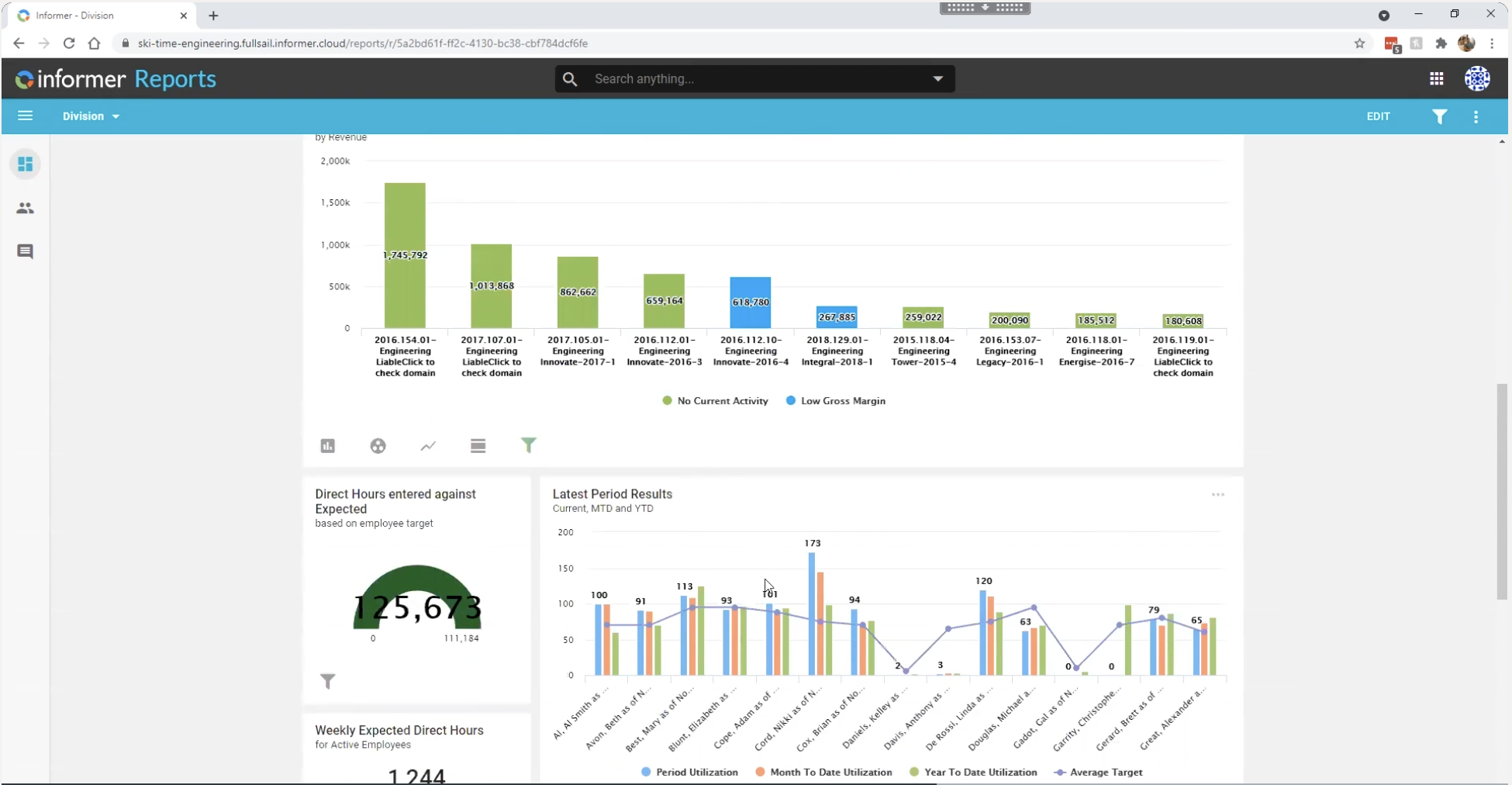
Project-based firms often deal with multifaceted data that sprawls across various Vantagepoint tables or hubs. When the task at hand involves pulling, analyzing, and comparing this data to unearth actionable insights, Informer steps in with its advanced visualization capabilities.

For instance, constructing a dashboard that integrates financial performance data from one table with project timelines from another can reveal insights into project profitability that might not be apparent from isolated datasets.

Informer BI Screenshot

When your firm requires the integration and comparison of data across various Vantagepoint tables or Hubs, a BI tool like Informer BI Solution can provide the enhanced capability needed. This ability to build detailed visualizations using diverse database tables ensures a more comprehensive understanding of your firm's operations and project landscapes.

Merging External and Internal Data Streams

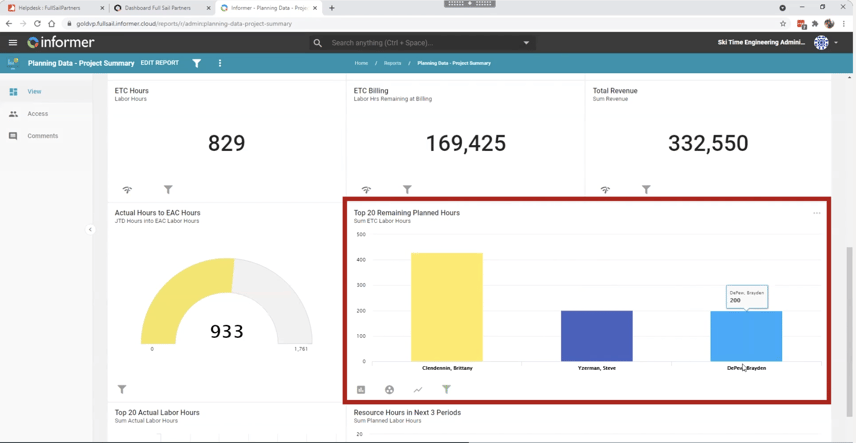
In many scenarios, the data residing within Vantagepoint needs to be enriched with information from external sources to provide a complete picture. This might include integrating information from a payroll provider, client satisfaction surveys, or external financial benchmarks. Informer allows for such integration, offering a unified platform where all data - internal and external - can be visualized and analyzed together. This holistic view is crucial for strategic decision-making, enabling firms to position themselves more competitively in the market.

Informer BI Screenshot 3

Tailoring Reports to Specific Needs

Custom reports stand as a cornerstone for firms seeking in-depth analysis tailored to their specific needs. Unlike standard Vantagepoint reports, custom reporting tools allow for the creation of highly specialized reports that dive into the nuances of your firm's data. This bespoke approach ensures that firms can extract precise insights relevant to their unique projects and operational questions, facilitating strategic decisions rooted in comprehensive data analysis.

Leveraging Merge Templates for Consistency and Efficiency

Firms might consider adopting a BI tool like Informer if they seek to enhance document creation processes. Informer Templates automate and simplify the generation of crucial documents, such as invoices and fee proposals, by allowing non-technical users to apply conditional logic to smart forms. This capability highlights a firm's need for a BI tool when existing systems like Deltek Vantagepoint require extended functionality for efficient, error-free document production. Integrating BI tools ensures consistency and leverages a unified data source for generating key firm documents, indicating a strategic move toward operational efficiency.

Analyzing Scenarios and Forecasting 

Project-based firms thrive on their ability to anticipate and adapt to future scenarios. Informer's BI capabilities extend to advanced scenario analysis and forecasting, allowing firms to model various future states based on current and historical data. Whether it's forecasting cash flow, assessing the impact of potential market changes on project viability, or analyzing risk, these insights are invaluable for proactive management and strategic planning.

Reviewing Data Just-In-Time for Agile Decision-Making 

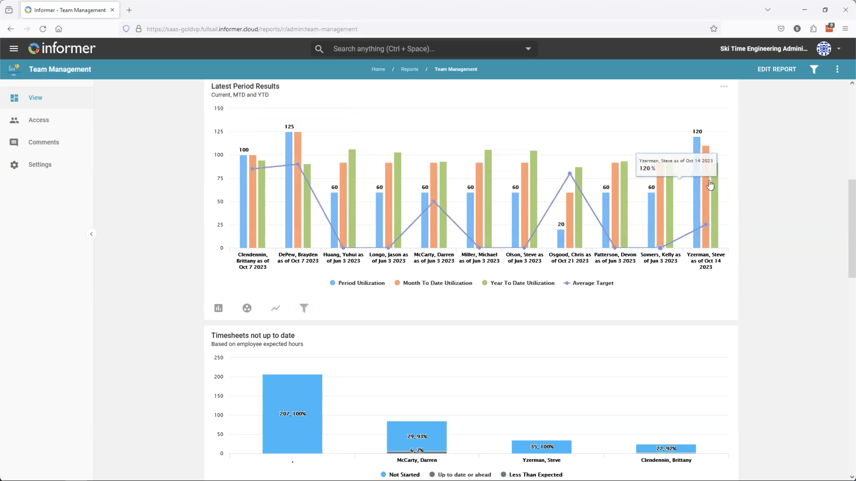
In a fast-paced project environment, the ability to make quick, informed decisions is crucial. Informer offers data visualization on your schedule, enabling firms to monitor key metrics and performance indicators as they happen. This just-in-time capability ensures that decision-makers have the most current information on your schedule, whether it's tracking project budgets, assessing resource allocations, or monitoring project milestones against deadlines.

Informer BI Screenshot 2

Boosting Collaboration with Secure, Accessible Data

Data is most powerful when it's shared and accessible to those who need it. Informer elevates data sharing and collaboration, offering intuitive dashboards and reports accessible anytime, anywhere, ensuring a unified data approach among all team members. This seamless integration is enhanced by the Blackbox Connector for Informer, which aligns with Deltek Vantagepoint’s security protocols. It mirrors your organization's existing hierarchy and roles, simplifying user access management directly within Vantagepoint.

Power Your Projects: Elevate Your Business with Deltek Vantagepoint and Informer

In the world of project management, where data reigns supreme, the partnership between Deltek Vantagepoint and Informer emerges as your key to success. This powerful combination not only merges internal with external data for a comprehensive view but also tailors reporting to your unique needs and delivers insights in real time.

Elevate your project intelligence, streamline operations, and gain a competitive edge. Click on the image below to discover how Deltek Vantagepoint and Informer can transform your business, taking you from mere project management to powering your projects with unparalleled intelligence.

New call-to-action

Topics:  

Why DEI&B Matter in Project Based Firms

Posted by Full Sail Partners on Mar 14, 2024, 12:00:00 AM

03-14-24 DEIB-Human Resources-Banner

Fostering Diversity, Equity, Inclusion, and Belonging (DEI&B) is not just a moral imperative but a strategic necessity for project-based firms. DEI&B creates environments that go beyond just diversity and inclusion, aiming to build equitable spaces where individuals feel welcomed, valued, and empowered. Surprisingly, not every company has a DEI&B initiative in place. Let’s review the core aspects of DEI&B, and what implementation strategies firms can use to promote these values.

Diversity

Diversity, the first pillar of DEI&B, acknowledges the variety of human characteristics and identities within a group or organization. It goes beyond just race and gender, encompassing various aspects that we don’t always think about such as age, ability and disability, socio-economic status, religion, nationality, and many more. In the context of project-based firms, where collaboration and innovation are key, recognizing and embracing diversity is especially important. Recognizing this is the foundation for fostering an environment where each team member's strengths and talents can thrive, ultimately contributing to the overall success of the projects and the organization.

Equity

Equity is about ensuring fairness, impartiality, and justice in the treatment of individuals, particularly in environments with historical disadvantages. Project-based firms need to actively address systemic biases, structural inequalities, and discriminatory practices. Achieving equity in a company involves creating policies and procedures that reward based on personal merit, ensuring everyone has an equal chance to succeed no matter what groups they may belong to.

Inclusion

Inclusion is the creation of environments where all individuals feel welcomed, respected, and valued. In project-based firms, inclusive practices involve actively embracing diversity and fostering a sense of belonging. This means creating spaces where people of diverse backgrounds, identities, and perspectives can thrive, express themselves authentically, and engage in meaningful collaboration without fear of discrimination.

Belonging

Belonging is the newest addition to DEI&B. It goes beyond diversity and inclusion, addressing individuals' emotional and psychological need to feel connected and respected within their professional environments. The feeling of belonging involves creating spaces where people can bring their whole selves to work, form genuine connections, and contribute to a collective identity and purpose.

Importance of DEI&B to Project-Based Firms

Beyond being morally imperative, DEI&B is crucial for project-based firms for several reasons: Fosters Positive Employee Engagement: DEI&B creates a positive and inclusive work culture, leading to higher employee engagement and satisfaction. Drives Innovation: Diverse teams bring a variety of perspectives and ideas, driving innovation and problem-solving in project-based settings. Broadens Talent Pool: Embracing diversity expands the talent pool, bringing in individuals with different skills, experiences, and viewpoints. Maintains Competitive Advantage: Companies with diverse teams often outperform their peers, maintaining a competitive advantage in the market.

Methods to Foster DEI&B in the Workplace

We’ve seen why DEI&B is important, but how do we go about putting these systems in place? Here are several ways that project-based firms can implement various initiatives to foster DEI&B:

  • Diverse Hiring Practices: Actively seek diverse candidates and create inclusive hiring processes. Remember to look deeper into the categories we don’t always recognize, like nationality, socio-economic status, and age.
  • Training and Education: Provide ongoing training on diversity, equity, and inclusion to enhance awareness and understanding.
  • Employee Resource Groups (ERGs): Establish ERGs to provide support, networking, and mentorship for underrepresented groups.
  • Flexible Work Policies: Implement flexible work policies to accommodate diverse needs and promote work-life balance. This can include options for hybrid and fully remote work.
  • Leadership Development: Invest in leadership development programs that prioritize diversity and inclusion.
  • Diversity Metrics & Accountability: Establish measurable goals and hold the organization accountable for progress.
  • Employee Engagement Activities/Events: Organize activities and events that encourage diversity and promote inclusion. These can be as simple as company mixers, sporting events, or other group activities.
  • Promotion of Diversity in Content and Marketing: Ensure that marketing materials and content reflect the diversity within the organization.

Making Diversity Programs Effective

Initiating diversity programs can be challenging, but it is essential for the success of DEI&B. Companies need to do three things in order to make an effective diversity program.

  1. First, you must recognize the full spectrum of diversity. As we’ve talked about already, not all aspects of diversity are easy to see. Understand that diversity encompasses various categories beyond gender and race, including gender identity, age, ability, religion, political beliefs, and socioeconomic status.
  2. Second, embed DEI&B in the company culture. Company culture is many things: the embodiment of a company’s values, its mission, and even its environment. DEI&B should be ingrained in the philosophy of the company.
  3. Finally, appoint DEI&B Leaders. Designate a group responsible for DEI&B programs and initiatives to ensure focused attention and progress. This group does not necessarily have to be management, instead, a dedicated team or individual can ensure focused attention and steady progress in promoting diversity and inclusion within the organization.

Conclusion

Embracing and valuing the concepts of DEI&B in project-based firms not only aligns with social responsibility, but also drives positive organizational outcomes. By actively fostering diversity, equity, inclusion, and belonging, project-based firms can create environments where individuals thrive personally and professionally, ultimately contributing to the success and innovation of the organization. To learn even more about DEI&B and how Full Sail Partners is helping firms with this initiative, check out the replay of our LinkedIn Live by clicking the image below.

Management of Change Series: The Role Human Resources Plays in Effective Change Management

Posted by Tasia Grant, PHR on Mar 8, 2024, 12:00:00 AM

03-07-24 MOC-Human Resources-Banner

The goal of change management is to facilitate successful transitions within a company from the current state to a desired future state. This involves effectively managing the people, processes, systems, and culture impacted by the change to minimize resistance, mitigate risks, and achieve the desired outcomes. In every company, HR’s main role is to function as the “grease” if you will between the goals of the company and how the people in the company contribute to achieving those goals. 

According to an article from AIHR, HR plays a variety of roles in supporting change:

  • Being an active member of the change management team.
  • Being a coach to a manager who is a change leader.
  • Providing training on change management.
  • Helping to build processes the organization can follow for change management.
  • Leading the change as HR professionals.

Managing the People 

How do HR professionals help employees embrace change?

Companies are truly the embodiment of the people who work there. Each employee is both a distinct, individual working personality and a significant piece of the whole company. And because company leaders recognize the importance of their people, the HR function plays a vital role in the overall change management process. Communicating directly with leadership, HR helps people get ready for change by supporting employees throughout the change process, providing transparency, addressing concerns, explaining the reasons behind the change, and soliciting feedback. With employee buy-in, morale will remain strong through the journey of change.

Managing the Processes

How do HR professionals help engender a culture that accepts and supports change? 

Training and Development: HR identifies the skills and knowledge gaps that may arise due to the change and develops training programs to equip employees with the necessary competencies to adapt to new processes, technologies, or ways of working. They also provide coaching and support to managers to help them lead their teams through change effectively. 

Change Readiness Assessment: HR conducts assessments to gauge the company's readiness for change, including evaluating the current culture, identifying potential resistance, and assessing the capacity for change adoption. Based on these assessments, HR develops strategies to address any barriers to change.

Change Planning and Implementation: HR collaborates with other departments to develop change management plans that outline the objectives, timelines, resource requirements, and communication strategies for implementing the change. They coordinate with project teams to ensure that change initiatives are executed smoothly and effectively.

Employee Support and Assistance: HR provides ongoing support to employees during the transition period, offering resources such as counseling services, employee assistance programs, and access to relevant information to help them cope with any challenges or uncertainties arising from the change. 

Performance Management: HR revisits performance management systems and processes to align them with the new objectives and priorities resulting from the change. They may adjust performance metrics, goals, and feedback mechanisms to ensure they support the desired outcomes of the change initiative. 

Culture Alignment: HR works to align the organizational culture with the desired state by promoting values and behaviors that support the change. They may initiate culture change initiatives, promote collaboration and teamwork, and recognize and reward behaviors that demonstrate alignment with the change objectives. 

Feedback and Continuous Improvement: HR gathers feedback from employees and stakeholders throughout the change process to assess the effectiveness of change initiatives and identify areas for improvement. They use this feedback to refine change management strategies and ensure that future changes are implemented more successfully. 

Minimizing Resistance to Change

How can HR professionals prevent common roadblocks to change?

Suggestions from a Principal Change Management Advisor at Prosci are:

Getting in Early to the Process: HR must be present at the early stages of the change process. Often, team leaders, project managers and executives forget about the “people side” of change in their efforts to move forward. It is very important for HR to be there at the beginning of the change process to advocate for the employees.

Having Clear Communications: Lack of clear communications in companies can lead to unnecessary misunderstandings. HR will be the mediator between change management teams and employees, so they need clear communications to update people on the change timeline. In order to have a successful employee experience and keep morale high, communication is a necessity.

Getting Leadership Support: Leadership must back all processes in change management. There needs to be a clear vision for change that HR professionals can understand. Then they can relay change objectives to the rest of the company in a consistent manner.

Managing Expectations: HR professionals should manage leadership and employee expectations during change initiatives. With good communication and the right support, HR teams can manage expectations, preventing push back and increasing buy-in from all team members.

Explaining Cultural Shift: Many people comfortable with the existing culture become resistant to change. HR professionals can work with those individuals to show the value of the cultural change and how it will benefit everyone in the long run. This will take the fear out of those resistant to the changes and make the transition easier.

Leading an Effective Change and Getting Desired Outcomes

HR professionals taking proactive steps to avoid the challenges that come with change management can increase the likelihood of success in change management initiatives. Getting buy-in from leadership at the outset will lead to employee buy-in and increased morale. Furthermore, clear communication, employee engagement, careful planning, and ongoing support are essential for navigating change successfully. As HR plays many roles in supporting change, it is an essential part of any change management plan and should be included from the beginning of the process.


Artificial Intelligence and Machine Learning? Not Science Fiction Anymore

Posted by Aria Bounds on Feb 29, 2024, 12:00:00 AM

02-29-24 AI Not Science Fiction - Banner

As many relate these terms with science fiction and robotics, artificial intelligence (AI) and machine learning can cause some confusion. Based on common knowledge, this is a rational thought. However, AI and machine learning technologies have been and continue to be incorporated into many software applications and personal assistant tools such as Siri and Alexa. Furthermore, it is important to note that AI and machine learning have some slight differences. So, in this blog, let’s take a closer look at AI and machine learning and how Deltek is using these technologies to improve the experience for Deltek Vantagepoint users. 

Getting Smart with Artificial Intelligence 

Simply stated, AI is the principle that machines can make smart decisions and complete tasks using logical intelligence. In theory, this means that machines using AI exhibit cognitive functions like those performed in human minds. AI works by using algorithms, and in many cases, multiple complex algorithms stacked on top of each other. Typically, these algorithms can learn from data, enhancing the ability to make smarter decisions. 

The late Larry Tesler, a computer scientist who worked for many major corporations, tried to define AI. His theorem stated that “AI is whatever hasn’t been done yet,” meaning that intelligence is ever-changing. However, once something becomes common, it transitions to machine learning. Tesler’s theorem is often referred to when discussing the difference between AI and machine learning. 

Being Efficient with Machine Learning 

So, based on Tesler’s theorem, machine learning is a subcategory of AI and focuses more on the idea that machines can learn and adapt through experience. Like AI, machine learning uses algorithms to perform tasks without being programmed to, but it achieves goals by learning and figuring things out over time. In machine learning, the commonly accepted approaches are divided into four categories: 

Reinforcement Learning – a computer program navigates a dynamic environment to achieve a goal, such as a car on a racetrack. The car is given positive reinforcement when it stays on the course and negative reinforcement when it leaves the track. Over time, the program will be able to drive the car through the entire track. 

Supervised Learning – the program is given inputs and desired outputs and then it creates the connections. An example of this is creating models to predict the weather. 

Unsupervised Learning – As the name suggests, the program is given no pre-existing labels and left to figure out patterns in the data on its own. This technique is often used in marketing to identify clusters of potential customers. 

Semi-Supervised Learning – Mixing Supervised and Unsupervised, the program is given a mix of labeled and unlabeled data. This technique is often used to build translation models, as labeling all possible translations is expensive and time-consuming, but making assumptions on unlabeled data is much cheaper. 

Using AI and Machine Learning within Deltek Vantagepoint 


Deltek is advancing "Smarter Projects" by integrating thoughtful AI integration into Vantagepoint, aiming to enhance project management for project-based businesses. By leveraging generative and traditional AI, Deltek will be enhancing automation, improving data accuracy, and saving time. This goal is to support business leaders and project managers in winning and managing projects more effectively, streamlining client relationships, and project delivery. Some examples that are already available include the following.

Client Smart Summaries™ with AI:

  • Automatically generates summaries of client information using generative AI.
  • Enables executives and project managers to be well-prepared with a comprehensive understanding of client history, ongoing projects, and potential opportunities.
  • Aids in nurturing client relationships and winning more projects by staying informed.

Click here to see a Client Smart Summary in action.


Hey Deltek Digital Assistant:

  • Utilizes natural language for task management, like setting reminders, adding new contacts, and locating client records.
  • Designed to simplify tasks for business development leaders and executives, enhancing productivity.

Capture New Leads on Mobile:

  • Vantagepoint CRM mobile app allows for the direct addition of contacts by taking a picture of business cards using Intelligent Character Recognition technology.
  • Streamlines the process of capturing new leads and contacts, saving time and reducing manual entry.

Building a Smarter Pipeline:

  • Offers enhanced visibility into project successes and current pipeline, facilitating more informed decision-making.
  • Features a visual pipeline view, enabling teams to easily identify opportunities and threats.
  • Eliminates the need for multiple reports by providing a unified location for pipeline management.

Deltek's integration of AI and Machine Learning into Vantagepoint is setting a new standard for efficiency and intelligence in project management. With innovations like Client Smart Summaries™, the Hey Deltek Digital Assistant, mobile lead capture, and smarter pipeline management, Deltek is empowering businesses to navigate the complexities of project-based work with unprecedented ease and insight. These tools not only save valuable time but also enhance the accuracy and relevance of data, helping business leaders and project managers forge stronger client relationships and achieve greater success in their projects. As Deltek continues to push the boundaries of technological innovation, Vantagepoint users can look forward to even more advanced features that will further transform the landscape of project management.


It’s Time to Embrace AI and Machine Learning 

Identifying and clarifying the difference between AI and machine learning is important since you’ll likely be hearing these terms used interchangeably from now on and far into the future. We have already seen how Deltek Vantagepoint has comprehensive AI and machine learning solutions available for users. And there are even benefits to using AI outside of Deltek solutions.

I’ve found AI to be a handy tool when developing software. AI has changed how we access information on the internet – providing summaries of multiple different search results all at once, offering suggestions from official support sites, and more. AI makes finding answers to problems easier, and even when it can’t provide an accurate answer, AI still manages to point me in the right direction to find the answer. 

While most day-to-day use won’t be the same as my own, search engines now have AI supporting their search tools. For example, Bing has an AI chat that can provide context for your internet searches. It even finds answers for you that would usually take digging into multiple different websites to find.  

So, this is no longer a thing of science fiction. AI and machine learning have been added to technologies and industries that we interact with daily, providing us with comprehensive solutions to speed up data processing. It’s a science that is here to help, so don’t shy away from using your apps, websites, and smart devices that have AI!

Stay up to date with all of Deltek Vantagepoint's new features by visiting our "Powering Project Success" mini-demo series. Click the image below to watch today.


Handling Write-Offs the Right Way

Posted by Lisa Ahearn on Feb 15, 2024, 12:00:00 AM

02-15-24 Handling Write-Offs - Banner

In a perfect world, professional services firms could invoice their clients for every charge to every project, and the clients would pay every invoice. However, in reality, nearly all professional services firms have write-offs. Write-offs can occur when your firm and your client agree that they don’t have to pay an invoice, when the client is unable to or refuses to pay an invoice, or when your firm is unable to bill all project charges to the client.

While writing-off charges is necessary sometimes, the good news is that each of these types of write-offs can be easily handled in Deltek Vantagepoint. Since write-offs impact the firm’s financial statements, it is crucial to have clear guidelines as to the accounting period in which they should be created/posted. In this blog, let’s talk a little bit about how to handle write-offs the “right” way to make the process as painless as possible.

Firm and Client Agree to a Reduction in an Invoice Amount

Did you accidentally invoice the client too much?  Did you send an invoice for a change order before it was fully approved? Or did the client argue about a portion of the invoice, and you agreed to a reduction in the invoice amount? 

When the client does not require a revised invoice, you may choose to do an invoice adjustment through the transaction center. It is recommended to use the original invoice number and date, and the WBS2/3 level from the original invoice. Doing so will result in the adjustment being applied to the original invoice, making receipt more efficient. One thing to consider when using this method is that if you keep invoices on file, the PDF invoice stored on the project will not show the adjustment. If the PDF invoice was later needed, it could be confusing that the total no longer matches the invoice amount that shows in the system.

If the client requires a revised invoice, or if you prefer to make sure the invoice on file matches the amount the system shows as billed, you may instead choose to void and reissue the invoice through Interactive Billing in Deltek Vantagepoint. Voiding an invoice reinstates the charges that were included with the invoice (which allows you the option to hold or write-off charges) and you would issue an invoice for the new amount. When voiding an invoice, it is best to post the void before running the revised one.

It is important to note that voiding an invoice will affect the financial statements, so be sure to void in a current, open accounting period. Another consideration with issuing a revised invoice is what invoice date to use. If it is agreed that the payment terms can start on the date of the original invoice, you can change the invoice date in the billing session options.

A Client is Unable to or Refuses to Pay an Invoice

Did your client go out of business? Did a portion of your work fail to meet expectations? And, did it result in the client refusing to pay?

Many professional services firms track an Allowance for Bad Debts against Accounts Receivable. When a client cannot or will not pay an invoice, it is likely that you will want to put the write-off against the allowance. The most efficient way to do this is to process a zero-dollar cash receipt. Select the invoice as though you are paying it, then enter an additional line in the cash receipt and select either the bad debt contra-asset or expense account.

Many firms use an indirect account for a bad debt expense. But, if your firm prefers bad debt expense to be a direct expense, you could set up a project as a regular charge type and a direct expense account to be used exclusively for recording bad debt.

If your firm reports on a cash basis, and you do not want to show any revenue or expense, Deltek Vantagepoint can accommodate that as well. In AR Mapping accounts, set up your Allowance for Bad Debts as an invoicing account (leave all other fields blank unless you also want a separate AR column). Then when you need to write off an AR invoice, process a negative invoice transaction using the original invoice number, WBS level(s), invoice section(s), and the Allowance for Bad Debts account.

If you do not have a bad debt allowance, you can void the invoice as explained previously and write off the transactions (explained in the next section). You could also choose to do a credit memo. The credit memo function reverses the invoice but does not reinstate the charges to Interactive Billing.

The Firm is Unable to Bill All Project Charges to the Client

There are several reasons you may not be able to bill all the charges on a project to the client including inefficiencies during work performance, going over budget, training new staff, and resource turnover. GAAP guidelines indicate that potential losses are to be recognized as soon as known. When it is known that charges cannot be billed to the client, use the write-off function in Interactive Billing.

This function will cause the items to be excluded from invoicing, thereby not recording revenue. If your professional services firm uses revenue generation, then to exclude write-offs, make sure the formula is set up accordingly. Using the write-off function for charges will not remove the charges from project reporting, except in cases where you choose to exclude charges to be written off such as on the Unbilled Summary report.

On reports where you can select to show the billing status of charges, items that have been marked for write-off have a status of W, and items that have been written-off have a status of X. If tracking/reporting of write-offs is desired, you could choose to use the project detail report. Then on the options tab, only include charges with the X or W status.

Visibility Around Write-Off Amounts

Using Deltek Vantagepoint, there is visibility around write-offs. As mentioned, to see the specific items written off, you can use a report such as a project detail and include only items with the X or W status. Since typically no revenue is recognized for written-off items, there are other areas that you can see write-offs and their impact as well:

  • As negative profit on the Project Earnings and Office Earnings reports when run at cost
  • As a negative variance on the Project Earnings and Office Earnings reports when run at billing
  • In Project Review at cost and billing in the profit/variance box

Use Deltek Vantagepoint to Manage Write-Offs

As discussed, there are several reasons that professional services firms experience write-offs. When write-offs are necessary, know that Deltek Vantagepoint can be set up and used to process them the “right” way, while also providing visibility so that your firm has a handle on its financial statements. If your professional services firm needs assistance in this area, don’t hesitate to contact us for more details.


Improve Project Planning with Deltek Vantagepoint

Posted by Rana Blair on Feb 8, 2024, 12:00:00 AM

02-08-24 Improve Project Planning with DVP-Banner

For professional services firms, having a reliable project planning tool is critical to ensuring projects are profitable. In a competitive landscape, successful project execution hinges on the effectiveness of project planning, driving the need for firms to invest in tools that not only meet but exceed expectations. Therefore, a project planning tool needs to be intuitive for users and must improve project scheduling and resource planning.

With Deltek Vantagepoint, project planning has been taken to the next level with a focus on the features and functionality that project managers need. This advanced tool is carefully crafted to specifically cater to the distinct needs of project managers, making sure it not only meets, but also anticipates their requirements. Here are some key features of Vantagepoint that will assist project managers with delivering successful and profitable projects.

Start Early with Templates

Getting a project off to a good start needs a bit of an early boost. Luckily, Deltek Vantagepoint helps out by offering practical ways to help plan things out early. Here’s what you need to know to get a head start.

  • Successful Delivery: This starts long before contracts are signed so consider creating the plan when the project is first entered in a Pursuit Stage. Vantagepoint offers a variety of methods that can be used to efficiently create a preliminary plan.
  • Project Templates: Firms can create multiple templates for use in creating new project records or when adding structure to a project. Using Project Templates allows users to quickly add the phases of work that are typical for the projects.
  • Projects Used as Templates: Firms can create Project records that can serve as templates for creating new records. These records can hold typical Work Breakdown Structure (WBS) elements like Project Templates but can do much more. The records can serve as a plan template that will allow the user to instantly create a plan with Schedule Durations, Generic Resources, and Planned Hours.

Aside from the ease of creating a project plan, planning the project in advance allows professional services firms to proactively manage pricing and resourcing.

Keep the Schedule Updated

Keeping the project schedule updated is a pivotal aspect of effective project management, and Deltek Vantagepoint equips users with powerful tools for this purpose. The plan Gantt charts are a great tool for managing the dates in a plan. The Schedule Tab allows planners to visually manage dates, durations, and dependencies for project delivery phases. Users can also adjust the project schedule from any level of the project by simply dragging and dropping the timeline bars and reviewing the Critical Path on demand, ensuring a clear understanding of key project dependencies.

Beyond the convenience of schedule management, the real-world impact of keeping the schedule updated becomes evident in staffing discussions. Maintaining an accurate and current schedule is a crucial reference point for conversations surrounding short- and long-term staffing availability. By staying on top of the schedule, project managers can better address staffing needs, optimize resource allocation, and enhance overall project efficiency.

Anticipate Resource Usage Curve

The keystone of true resource planning is predicting resource demands as they will likely occur. All project delivery phases have a ‘curve’ that should be reflected in the resource plan. Deltek Vantagepoint’s Project Planning allows users to plan the hours differently in specific time frames. With the Distribute Hours feature, users can take a more precise approach to planning resource hours over specific date ranges by using hours or percentages per day.

This level of granularity in resource planning is not just about meeting requirements; it's a strategic move to decrease the chance of resource clashes. Understanding the intensity of resource usage during different phases of a project becomes a proactive measure to minimize conflicts and optimize resource allocation. By anticipating resource usage, project managers can navigate the intricacies of resource planning with precision, ensuring easy and efficient workflows that align with project objectives.

Review Performance Against the Baseline

The Baseline serves as the bedrock, outlining the assumptions upon which the scope, schedule, and budget of the entire plan are built. Saving the Baseline at the right time allows users to review the deviations and project the final outcomes.

Deltek Vantagepoint not only facilitates this review but also enhances it by allowing users to compare Baseline values with Estimate at Completion (EAC) values. This comparative analysis can be conducted seamlessly across various platforms, including the Plan, Dashboards, and the Project Review feature. This multi-faceted approach to reviewing performance against the Baseline ensures a complete understanding of how the project is progressing in relation to its initial assumptions.

Take Control of Your Project with Deltek Vantagepoint 

Deltek Vantagepoint Planning and Resource Management allows professional services firms to collaborate and analyze project performance from the pursuit through closeout. Maintaining the plan throughout the life of the project improves financial performance and enhances communication around schedules and resource needs. Furthermore, by using this advanced tool, project managers can proactively minimize resource clashes by anticipating resource usage and ensuring project objectives are met. Take control of your projects today!

Resume and Project Information Management Using Deltek Vantagepoint

Posted by Lindsay Diven on Feb 1, 2024, 12:00:00 AM

02-01-24 DVP Resume and Project Info - Banner

In the competitive landscape of architecture/engineering (A/E) consulting, two critical assets set firms apart: their people and their projects. As a former marketing director for a large A/E firm, I fully understand the challenges involved in managing these assets effectively. Utilizing Deltek Vantagepoint, we offer streamlined solutions for managing both resumes and project information, ensuring your firm's unique strengths are showcased in every proposal, presentation, and marketing effort.

Strategic Resume Management: Capturing and Updating Professional Profiles

We perceive professional resumes not just as documents, but as dynamic profiles that showcase the strengths of your firm's most valuable assets: its people.

Starting Strong: Capturing New Hire Information

The journey of efficient resume management begins when a new employee joins your firm. This is a golden opportunity to capture their excitement and fresh perspective. Here’s how we recommend utilizing Deltek Vantagepoint and your HR processes to streamline this step:

  1. Coordinate with HR: At the point of hiring, collaborate with HR to integrate marketing and resume information collection into the onboarding process. Utilize HR’s existing data collection methods, adding specific forms or questions relevant to marketing needs.
  2. Gather Comprehensive Information: Collect essential data such as bios, previous projects, licenses, awards, special skills, software proficiency, languages, and contacts. For strategic hires, consider a dedicated marketing onboarding session to align their expertise with your firm’s marketing strategies.
  3. Automate with Deltek Vantagepoint: Leverage Deltek Vantagepoint to automate the information capturing process. This system can be set up to alert the marketing team of new hires, enabling the collection and updating of resume details seamlessly into your database.

Ongoing Updates: Keeping Resumes Fresh and Relevant

Regular updates are crucial to maintain the accuracy and relevance of resumes. Here's a streamlined approach:

  1. Determine Update Frequency: Decide how often resumes need refreshing. This can be annually, bi-annually, or aligned with each person’s work anniversary.
  2. Strategic Distribution: Utilize Deltek Vantagepoint to manage and schedule resume updates using email alert workflows. Provide current resumes to employees, along with clear instructions and deadlines for updates.
  3. Engage Personally: Consider conducting brief interviews or meetings, especially with key personnel, to ensure comprehensive and up-to-date information.
  4. Update the Employee Record: Once the updated information is gathered, use Deltek Vantagepoint to keep your database current. This ensures that any proposal or marketing material has the latest information at hand.

Case Study: Streamlining Annual Resume Updates at a Growing A/E Firm

A prime example of effective resume management was at my previous firm, a growing A/E firm. As the firm expanded to around 300 employees, we recognized the need for a structured yet flexible system for annual resume updates. Our strategy involved breaking down the updates into manageable monthly tasks, leveraging both Deltek and a work anniversary-based schedule. Here's an overview of our process:

Planning Phase: Leveraging Deltek Vantagepoint for Organization

  1. Monthly Employee Selection: Utilizing Deltek, we extracted a monthly list of employees based on their work anniversaries. This systematic approach ensured that every employee's resume was updated annually, without overwhelming our resources.
  2. Preparation of Update Materials: We compiled the existing master resumes from our database, along with a custom-designed resume update memo and instructions.

Gathering Phase: Personalized and Coordinated Efforts

  1. Distributing Update Materials: The update materials were personally delivered to employees in our main office. For our six satellite offices, we collaborated with marketing coordinators or office managers to ensure distribution. In cases where direct handover was not feasible, we used email as an effective alternative.
  2. Setting Deadlines and Reminders: A two-week timeframe was typically given for updates, with reminders set up in Deltek to keep track of deadlines.
  3. Scheduling Interviews When Necessary: For certain key roles or when detailed updates were required, we scheduled one-on-one interviews, adding a personalized touch to the process and ensuring comprehensive updates.

Updating Phase: Keeping Our Database Current

  1. Collection and Review of Updates: We gathered the revised resumes and additional information provided by employees, reviewing them for completeness and accuracy.
  2. Editing and Finalizing Resumes: Necessary edits and rewrites were undertaken to ensure that the resumes accurately reflected each employee's latest achievements and experience.
  3. Database Updating: Using Deltek, we updated our central database with the new information. This not only refreshed individual resumes but also ensured that our entire resume pool was current and ready for use in proposals and marketing efforts.

This case study highlights the efficacy of using a structured, technology-driven approach to manage resume updates in a large firm. By leveraging our Deltek database, we were able to streamline the process, maintain high-quality resumes, and ensure that our marketing and proposal materials always featured the most up-to-date and relevant information about our team members.

Project Information Management: Keeping Project Portfolios Up-to-Date

Just as vital as managing resumes is maintaining up-to-date project information. This includes project descriptions, milestones, and outcomes – all crucial for marketing and business development efforts. Here’s how to effectively manage this process:

  1. Diverse Update Methods: Consider annual updates, project milestones, pursuit-driven updates, award submittals, and initiative-driven updates. Choose the method that best aligns with your firm's needs and project types.
  2. Project Update Process: Establish a routine for gathering project information, such as sending out Project Information Profiles (PIPs) alerts to project teams and scheduling site visits for in-depth understanding.
  3. Automated Reminders and Checkpoints: Use Deltek Vantagepoint to set up workflow alerts for project updates at various milestones, ensuring no project goes unaccounted for.

Forward-Thinking Project Management: Begin with Your Goals in View

An essential aspect of managing project information effectively is to start with a clear understanding of how this information will be utilized. For instance, if a project is a potential candidate for a Design-Build Institute of America (DBIA) award, it's crucial to collect comprehensive design and construction details right from the start. Anticipating the requirements of award submissions or other future uses can guide what data to gather throughout the project's lifecycle. Utilizing past award criteria as a template for data collection ensures you capture all necessary details for future submissions.

Case Study: Site Visit Program

A practical application of this forward-thinking approach can be seen in a construction firm in Florida, which has established an effective site visit program to collect robust project information. Their marketing manager shared insights into their process, which I’ve adapted to optimize using Deltek Vantagepoint.

  1. Pre-Visit Preparation: Prior to site visits, a Project Information Profile (PIP) is sent to the project team via an email alert workflow. The project engineer fills in key details like project costs, square footage, and client information into the project record linked in the email.
  2. Collaborative Meetings: The project's key personnel, including the project manager, safety manager, and quality control manager, convene to discuss the project with the marketing representative. These meetings, often accompanied by informal gatherings over meals, foster open communication and information sharing.
  3. On-Site Insights: The marketing representative tours the site, gaining a visual understanding of the project. This first-hand experience is invaluable when drafting project descriptions and stories later.
  4. Drafting the Project Story: Back in the office, the marketing representative uses the insights gathered to draft a compelling narrative of the project, which is then refined and stored in Deltek Vantagepoint.
  5. Final Review and Approval: The draft is sent back to the project team for final review and approval, ensuring accuracy and completeness.

Additional highlights of their site visit program include:

  • Continuous Engagement: A marketing representative is assigned to each project from start to finish, responsible for collecting initial information, attending key meetings, and ensuring all relevant documents are stored in Deltek Vantagepoint. Because Vantagepoint project records often get created in the pursuit stage, the marketing coordinator field is often populated in the project record.
  • Strategic Site Visits: Site visits are conducted at critical project milestones, such as kickoff, mid-point, and completion, to gather dynamic information, including lessons learned and design insights. Workflow alerts and reminders can be sent to applicable project leads when such milestones are met.
  • Leveraging Award Criteria: Award submission questionnaires are used to guide the questions asked during site visits, ensuring comprehensive data collection aligned with potential award submissions.
  • Integrated Photography Sessions: Marketing representatives coordinate with photographers during project photoshoots, ensuring visual documentation aligns with the project's narrative.

This case study exemplifies the benefits of a strategic, goal-oriented approach to project information management. By integrating these practices with Deltek Vantagepoint, marketing professionals can ensure their project portfolios are detailed, up-to-date, and ready to meet any marketing or proposal need.

Integrating Resume and Project Information Management

Combining the management of resumes and project information provides a holistic approach to showcasing your firm's capabilities. Both elements are integral to crafting compelling proposals and presentations, and their management should be interlinked for maximum efficiency and impact.

  1. Unified Database Management: Use Deltek Vantagepoint as a central repository for both employee and project information, ensuring consistency and ease of access.
  2. Streamlined Processes: Establish integrated workflows in Deltek Vantagepoint for updating both resumes and project information, reducing duplication of efforts and enhancing collaboration between departments.
  3. Regular Reviews and Updates: Schedule periodic reviews of both resumes and project portfolios to ensure they reflect the most current and relevant information, leveraging automated reminders and scheduling tools within Deltek Vantagepoint.

Transform Your CRM Practices with Deltek Vantagepoint Workflows

Mastering the art of resume and project information management is crucial for A/E/C firms striving for excellence. Full Sail Partners' expertise, coupled with the power of Deltek Vantagepoint, provides a robust solution to streamline these processes, ensuring your firm's assets are always up-to-date and compellingly presented. Embrace these strategies to transform your information management into a strategic asset, enhancing both marketing and business development efforts.

As a next step in your journey to CRM excellence, we invite you to watch our webinar: "Automating CRM Success with Deltek Vantagepoint Workflows." You'll learn how to build and implement effective Vantagepoint workflows for CRM information collection and management, gaining insights into streamlining updates for projects in pursuit, enhancing project information management for proposals, and optimizing employee data processes. Just click the image below to watch today.


Latest Posts