Full Sail Partners Blog | Building Business (2)

Posts about Building Business (2):

Running an Effective Meeting: 4 Key Strategies for Productive Collaboration
Posted by Sarah Gonnella on Jan 4, 2024 12:00:00 AM

01-04-24 MARKETING MEETING - Banner


In today's fast-paced professional services firms’ environments, meetings play a crucial role in fostering collaboration, aligning teams, and achieving organizational goals. However, ineffective meetings can be a drain on productivity and morale. To ensure that meetings are valuable and efficient, it is essential to follow certain best practices. In this blog post, we will explore four key aspects of running an effective meeting: setting clear objectives and goals, planning the meeting and agenda, employing a skilled facilitator, and having a diligent note-taker.

1. Objective and Goals of the Meeting:

The success of any meeting hinges on having a clear objective and well-defined goals. Before scheduling a meeting, it is crucial to determine how it aligns with the broader growth efforts and yearly goals of both the team and the organization. By doing so, the meeting becomes a strategic tool for progress. Participants can better understand the purpose of the gathering and how their contributions fit into the larger picture.

For example, the goal of a marketing, business development, or sales-oriented meeting is to ensure you are accomplishing the goals set out in your yearly business plan. Within the Architectural, Engineering, and Construction (AEC) industry, that includes ensuring you know what is going on with your project pursuits. Key objectives in bi-weekly meetings would include knowing recently won/lost pursuits, new pursuits and managing follow-up on upcoming proposals, along with understanding resource forecast projections. An example core objective in a quarterly meeting would be evaluating where you are against your goals.  

2. Meeting and Agenda:

To run a productive meeting, careful planning is essential. The meeting should involve the relevant team members and decision-makers who can contribute to the agenda items. The agenda itself should be thoughtfully structured, with a focus on deadlines and the outlined steps needed to meet them. By sharing the agenda in advance, participants have time to review and prepare, ensuring a more engaged and productive discussion. Balancing chit-chat time and getting down to business is important, as it fosters team cohesion while still maintaining a professional atmosphere. Coming out of the meeting, attendees should know their action items and tasks to accomplish.

3. A Good Facilitator:

A skilled facilitator plays a vital role in guiding the meeting towards its objectives while ensuring active participation and collaboration. The facilitator should encourage open discussion, allowing all voices to be heard. Additionally, the facilitator should review outstanding items from previous meetings to track progress, providing context for the current discussion.

Staying focused and time-conscious is crucial, as it helps keep the meeting on track and ensures that all agenda items are addressed. If new topics arise that are not on the agenda, the facilitator can suggest moving them to a "parking lot" list, to be covered either if there is enough time or in the next meeting. A good facilitator is like a good train conductor who sees the path ahead and knows when to slow down and when to speed up to accomplish the items that are most impactful to keep the department or company running smoothly.

4. Note-Taker:

An often-underestimated role in meetings is that of the note-taker. The note-taker should diligently document meeting minutes, capturing important discussions, decisions, and action items. By doing so, a reliable record of the meeting is created which ensures that information is not lost. Clear documentation of action items, next steps, and responsible parties is crucial for accountability and follow-up.

Furthermore, sharing the meeting minutes afterward is essential to keep all participants informed and ensure that everyone is on the same page. With the advent of AI, note-taking might become a thing of the past. I know our team has been exploring software that will assist with analyzing the content, offering summaries, outlining tasks with due dates, and even providing insights based on the discussion.

Follow Key Strategies to Ensure Productive Meetings

Running an effective meeting requires careful planning, active facilitation, and diligent note-taking. By setting clear objectives and aligning the meeting with broader goals, you create a purpose-driven environment. Thoughtful planning, involving the right people, and sharing the agenda in advance help participants prepare and contribute effectively. A skilled facilitator encourages collaboration, keeps the meeting on track, and addresses outstanding items. Lastly, a diligent note-taker documents important insights and ensures that action items are clearly defined. By following these strategies, you can transform meetings into productive spaces that drive progress and foster teamwork at your professional services firm.

From Good to Great: How Strong HR Practices Propel Professional Services Firms Forward

Posted by Tasia Grant, PHR on Jul 20, 2023 12:00:00 AM

07-20-23 From Good to Great How Strong HR Practices Propel Professional Services Firms Forward_Banner

It is often the case that many professional services firms underestimate the need for robust Human Resources (HR) functions until they find themselves in a critical situation. Some firms may recognize the need for assistance but struggle to determine the specific type of support required. Here are common statements we frequently hear from clients:  

  • “We have purchased our new HRIS system and are ready to implement but we don’t have structured HR processes and procedures in place, so we don’t know where to start.” 
  • “We are a small family-oriented company that has managed so far with payroll, our admins and our executives taking care of the main Human Resources needs.” 
  • “The managers are responsible for addressing the employee concerns and needs for their departments.” 
  • “We have experienced so much turnover, especially in our HR Department. We need to assess our job descriptions and determine what we really need as a company.” 

Do any of these situations resonate with your firm? If so, it is clear that your organization would greatly benefit from the expertise of an HRNA (Human Resources Navigational Analysis). 

The Consequences of Neglecting HR Guidance 

First and foremost, let us consider the profound impact of operating a firm without an HR department or the guidance of an HR professional. This includes, but is not limited to, the following: 

  • The potential for litigation issues such as discrimination or harassment lawsuits. 

  • Low employee morale results from insufficient workforce engagement efforts, ineffective recruiting practices, subpar performance management, and undefined company culture. 

  • Non-compliance with company policies and relevant governmental regulations. 

  • High turnover rates due to non-competitive benefits and compensation plans, inadequate or unstructured training and development programs, and a lack of employee recognition initiatives. 

Statistics That Highlight the Necessity of Dedicated HR Personnel 

According to a recent 2023 article in LegalJobs, several HR statistics support the essential requirement for dedicated staff and leadership in managing HR functions. Consider the following: 

  • 43% of HR professionals find it challenging to recruit employees due to intense competition. 

  • 60% of candidates abandon job applications if they are overly complex. 

  • Nearly 30% of new employees quit within the first three months. 

  • 74% of new employees believe they have not reached their full potential. 

  • 61% of newly hired employees do not undergo company culture training. 

  • Onboarding processes have helped 71% of employees better understand their roles and responsibilities. 

  • Diverse companies are 70% more likely to penetrate new markets. 

  • Highly motivated and committed teams are 21% more effective.

  • 41% of highly motivated teams exhibit lower absence rates. 

  • 67% of employees value a respectful relationship with their employer. 

  • 84% of HR departments believe that employee recognition increases engagement. 

  • 82% agree that recognition enhances morale and happiness. 

Build a Strong Foundation with the HRNA Approach  

Our HR Consultant can assist your professional services firm in addressing and potentially avoiding these challenges through the Human Resources Navigational Analysis (HRNA). This comprehensive evaluation provides your firm with a thorough review of current HR systems, documents, and processes, encompassing the entire employee lifecycle. 

The process commences with a discovery phase, involving gathering information through written and verbal means with key stakeholders. This enables our HR Consultant to assess your firm's goals, mission, leadership perspectives on HR, and the existing organizational practices and policies. Subsequently, a meeting with decision-makers is held to develop an action plan based on critical business issues and leadership priorities identified during the discovery phase. 

Next, our HR Consultant compiles a detailed assessment report that includes findings in the focus areas identified and provides recommendations to address the areas requiring further attention. Upon distributing the HRNA report to the client and reviewing it together, we determine the subsequent steps and how we can assist in implementing the recommended measures. 

The Benefits of Pursuing an HRNA 

Clients who have undertaken the HRNA process have experienced a transformative journey. They have found themselves more receptive to change and transition than they initially anticipated. Moreover, this process illuminates the significant impact of effective HR functions on a professional services firm's brand, reputation, longevity, success, and bottom line. 

If your professional services firm is eager to move forward with a Human Resources Navigational Analysis, click the image below to take the next step towards strengthening your HR functions and driving your firm's growth. 


Leveraging the Client Engagement Lifecycle to Drive Results

Posted by Lindsay Diven on Jan 26, 2023 12:00:00 AM

01-27-23_ClientEngagement_BannerEngaging clients is essential to any business, but it can be difficult to know where to start. However, by understanding the client engagement lifecycle, businesses can develop a process for engaging clients that leads to long-term relationships. 
What is the Client Engagement Lifecycle 

In every sales transaction, buyers (or clients) go on a journey that begins the moment they decide they need services and continues to when the contract is eventually signed. This is called the client engagement lifecycle. And you can imagine this as a funnel with the following phases: 

  • Attract 
  • Nurture 
  • Convert 
  • Grow 

A prospect is initially attracted to your firm and starts at the top of the funnel and goes through each phase until eventually you are providing services for them.  

Client Engagement Lifecycle Stages 

Now let’s go through each client engagement lifecycle stage in a little more detail.  

Attract

The client engagement lifecycle begins when you bring in new prospects. You can think of this as the top of the funnel. During this stage, it’s important to identify your target markets and personas such as project managers, facility managers, and/or directors that will be interested in your services.  

To do this, you’ll want to create marketing content and promotions that resonate with these key personas. The goal is to attract them to your firm using your expertise and/or answering their questions.  

The marketing content can be varied. It could range from written blogs to videos, webinars and podcasts. You just want to make sure the content is relevant to your target markets and personas and helps them solve common obstacles within their industry. 

Sales and technical staff will usually have little-to-no engagement in this stage of the lifecycle.  

Nurture

Once prospects have been attracted to your firm with your attract-type content, it’s important to maintain the prospects’ interests so they stay in the funnel. This is typically done through digital efforts like email marketing and offline efforts through phone calls and networking events.  

Knowing what content has sparked and sustained this interest is important so you can produce new content to continue to drive awareness. Additionally, the original content that brought them into the funnel should leave them with unanswered questions. 

During this stage, familiarity with the content which first attracted the prospects will help you determine questions they might now have. Your new content should be more specific to answer these questions with fact-based information that also communicates your expertise. Email campaigns provide a great avenue to share this fresh content. 

Your sales managers or technical team members may also follow up with the prospects to ask further questions and make introductions to your firm and its services. 

Convert

As your prospects move from the attract and through the nurture phases, it’s now time to get those prospects to make a conscious decision to move further. This is not to say they were not interested in your services before, but rather the content that you have been sharing has made them recognize you are a trusted authority and a subject matter expert. 

This stage is when specific, offline conversations need to begin, and you should convert these prospects into advocates. For professional services firms, this means that your technical staff may be meeting with the prospects over the phone or in meetings to talk about a specific project. The conversations are turning to either a request for proposal and/or proposing specific services.  

The content produced in this phase supports proposals, presentations, and other sales-related documents to close the sale!  

Grow

Congratulations, you now have new clients in your funnel. This is the stage where you will foster the ability to provide additional services to your clients. 

The tricky thing here is creating content that will be important to your clients in the future. For some clients, this is a few months down the road, and for others, a year or more. A great tool to use is a monthly or quarterly newsletter for sharing your newly created content to create new opportunities. 

Using the Client Engagement Lifecycle to Your Advantage 

Understanding the client engagement lifecycle for your specific firm and targeted markets works as an advantage for your marketing and business development efforts. When you identify your client engagement lifecycle for a specific market or persona such as a facilities director for a University Campus.  

You can then begin to create marketing content that specifically appeals to that facilities director. This specific content strategy will work to attract the right type of prospects and generate leads for your firm.  

The client engagement lifecycle is a valuable tool for businesses to use when developing their client engagement strategy. 

Wrapping it All Up 

The client engagement lifecycle is a process that businesses use to manage and improve their relationships with clients. It typically includes stages such as attract, nurture, convert, and grow. By understanding and leveraging each stage of the client engagement lifecycle, businesses can drive results by identifying opportunities for improvement and developing strategies to increase client satisfaction and loyalty. This can lead to increased revenue, repeat business, and improved overall performance. 

To learn more about content marketing strategies for each stage of the client engagement lifecycle, click the image below for our series. 

Driving Growth with Digital Marketing: How to Optimize Digital Marketing Performance

Posted by Lindsay Diven on Oct 5, 2022 12:00:00 AM

2022 DGS DM Optimize Digital Marketing Performance Banner

Throughout the Driving Revenue Growth with Digital Marketing Series, marketers have created and implemented the marketing campaigns and collected results. Now it’s time to analyze and optimize the marketing campaign and strategy to achieve even more efficiency towards the marketing SMART goals 

This article shares just a few of the items to review to optimize digital marketing performance. Areas to optimize include the website, conversions, content promotion and email marketing. And this article just scratches the surface but will offer some ideas to begin.  

Improving the Website 

The firm’s website is the starting place for any digital or online marketing program. It’s the key piece of online real estate that marketers have complete control of and have access to the background statistics. Some of these key statistics to track will be based on the marketing campaign goals. Others will be general performance statistics to gauge the overall site performance such as overall website traffic, time on page, etc.  

Some areas to focus on to optimize performance when it comes to the firm’s website include: 

  • Highest traffic volume pages – Look at the specific site pages that are getting the most traffic. Identify what, if any, SEO elements are on the page including specific keywords. Look at where the traffic is coming from to that page. Also, check to make sure there is a call to action (CTA) on that page to either capture that visitor’s information or move them to another page to continue the visitor's journey.  
  • Most read blog posts – Similarly to the site pages, look at the most read blog posts. Which articles or topics are getting the most views? Marketers can assume that this is the type of content or topic that their audience is interested in. Work to create either more content around this topic or repurpose those specific blog topics into other content formats.  

Increasing Conversions  

A conversion can be any action a person takes that the marketer wants them to do. For example, if there is a form on a webpage, the call to action (CTA) for that page would be to fill out the form. Each time that CTA is completed, it’s a conversion. Conversions don’t always have to be filling out a form; it can be watching a video or requesting a meeting. The idea is that the person took an action, and that action is the conversion.  

Once marketers set up their CTAs and start collecting data, it’s time to see how to increase the number of conversions. Some ways to do this are: 

  • Use CTAs – This may seem obvious, but so many AEC websites do not have any CTAs anywhere on their websites or there’s just one – “Subscribe to ACME Engineering’s Newsletter.” The easiest way to increase conversions is to start using CTAs and inserting them throughout the entire website.  
  • Make CTAs relevant to the page – Even though we just said to use CTAs, don’t just put them on every webpage and think it is done. Marketers will want to use different CTAs that are relevant to the topic of that blog or page. For example, an architecture firm has a checklist called “10 Ways to Derail an Elementary School Renovation” that they want people to download. A good place to put that CTA is on project profile pages of elementary school renovations, not their healthcare project pages.  

Using Specific Landing Pages 

Most website management systems like WordPress or HubSpot are easy to set up and update. But sometimes it’s often difficult jumping through internal hoops to get new web pages or new navigations approved internally. So, that’s where landing pages are a great alternative, especially since they are easy to create with software like HubSpot or Leadpages.  

A landing page is just that – one page where marketers can direct specific traffic too. Some ways to optimize landing pages are: 

  • Minimize the design – Remove any design elements, navigation, or CTAs, that would distract the viewer from taking the one action you want them to take. For example, remove the navigation/menu bar, remove the firm’s social media links, etc.  
  • Write a strong heading – Continuing with minimizing the design is to have a strong headline. This headline should draw the viewer in and make them want to read more. It should either describe a pain point they are looking to solve or some kind of aspiration they are trying to get to.  
  • Describe the benefits – The landing page should be promoting the goal of the marketing campaign. And that marketing campaign should be benefiting the potential client. Under the headline, describe what the item is and the benefits the potential client will receive. Be clear, concise and to the point. Less is more here.  
  • Place the form above the fold – Most of the time, landing pages have some type of form for the viewer to complete to get something (a PDF download, checklist, case study, etc.). Make sure the viewer doesn’t have to scroll down to see and fill out the form. Seconds count, and if it takes even just a second longer to realize there’s a form, you might lose them.  
  • Determine the right questions – There’s a balancing act between asking for enough information and too much information on the landing page forms. Firms often want all the information they could get about a lead, but the lead will balk at having to fill out too many fields on a form. Marketers should determine the right questions to have on their forms to qualify and segment leads, and not one more. This is usually done by testing and then optimizing. 

In online marketing circles, the conversion rates of landing pages are somewhere between 5-15%. But marketers should be tracking their own conversion rates and then use these strategies above to make changes and see if that rate increases.  

Promote Even More 

A previous article discusses how important it is to promote the content and ways to do that. Once marketers begin promoting, they can use that information to make the promotion even better. Some ways to do this include: 

  • Determine the best channel – Once marketers start getting data, they can see which channels are bringing in the most visitors and highest conversions. Once they know that, they can lean into that channel even more. 
  • Consider each social media channel – If the firm promotes content on different social media channels like LinkedIn or YouTube, how can the content be re-formatted into different media types or different language used that corresponds to that specific channel?  
  • Going back to the basics – Marketers should make sure that the graphics and media are appropriately sized and formatted for each social media channel.  
  • Test frequency to find the sweet spot – Each channel is going to dictate just how often the firm posts content. Once marketers start getting results, they have a baseline and then can start testing posting more or less to see how that affects results.  

Don’t Forget About Email Marketing 

Part of every online marketing program should include an email marketing component. AEC firms have hundreds, if not thousands, of contacts in their databases and should be communicating with those contacts (with proper permission) on a regular cadence. This is even more important for a specific marketing campaign, like the one they are trying to optimize.  

Here are just a few email marketing tips to get great performance: 

  • Make sure the marketing emails are coming from a person, not a generic email address like “Info@company.com” 
  • Write clear and clickable subject lines. Take time to develop the subject lines. Don’t wait to just write something to get the email sent. Use this tool to test each subject line. 
  • Limit CTAs to only one per email campaign, especially if it’s part of a specific marketing campaign. Make sure every link in the email goes to that specific landing page or CTA.  
  • Segment and personalize as much as possible. 
  • Optimize for mobile.   

Watch this replay where an email marketing expert shared even more email marketing advice. 

Always be Adjusting and Refining 

Once you begin your digital marketing program, start to analyze results and then optimize, it doesn't end there! Marketing is ever evolving with new interests, new content formats and new preferences in which our targeted audiences like to consume our content. So as marketers we constantly need to be keeping up with trends, especially out of our industry, looking at our metrics, and adjusting our marketing efforts. The good news is that this is fun and creative, and our job demand will remain high.  

The 43rd Deltek A&E Clarity Study Predicts Positive Changes for Business Development

Posted by Amanda Roussel on Sep 7, 2022 12:00:00 AM

2022-ClarityReport_BD_Banner

According to this year’s Deltek Clarity Architecture & Engineering (A&E) Industry Study, it is looking to be a landmark year for the architecture and engineering industry with net revenue growth forecasted to grow to 17.6%. A&E is doing quite well despite the pandemic with the highest net revenue growth in the last ten years at 11.4%. This increase is assisted by A&E’s market position, which is expected to either grow or remain steady in markets across the board. Most notably water/waste/stormwater, transportation, and industries that fall under the “other” category (such as life sciences and senior living) are predicted to see great increases. As a result, firms will not only need to strategically pursue the right projects but will also need to grow and develop a staff to deliver on these projects.


Top Business Development (BD) Challenges 

The ever-changing nature of the business world is continuing to keep firms on their toes with new challenges. Unlike the previous year, a majority of firms (78%) have identified that finding and retaining qualified staff has been a struggle for them. This is coupled with other mass-reported problems such as staffing shortages and difficulty retaining employees. Staffing challenges have a direct impact on business development, not only lacking adequate staff to conduct business development activities but also not being able to provide the most qualified teams to win and deliver on projects. 

Time to nurture client relationships is the top business development challenge for A&E firms according to the report. With favorable market conditions, new opportunities will be plentiful which poses a challenge for firms to keep up with their clients. Time is money and time is also in short supply. With the reporting firms revealing an average work backlog of nearly 9 months, it is clear that companies must find a way to increase productivity. Upskilling business development talent and streamlining the BD process will help to free up time to strategically nurture client relationships. 

Other top BD challenges from the study include increased competition and identifying prospects. Firms must differentiate and hone branding across thought leadership and social marketing channels to distinguish themselves in the marketplace. Additionally, with a positive industry outlook this year, firms will need to be more strategic in pursuits that work best for their company’s strengths. 

Increased Formal Business Development Process 

Of the companies surveyed, 45% have a formal business development process, which is an increase going up from 39% the previous year. Though this means that 55% of firms surveyed still do not have any formal business development process. In these cases, responsibility for business development tasks is most often pushed to the executive team, project managers, and marketing staff. While dedicated business development staff may not be necessary in every case, it is important not to overlook the kind of work they do. Most notably, they tend to client relationship development, proposal development and networking, but they have plenty of other duties as well. Their jobs help to create new business opportunities, and within the last year active client relationships, requests for proposals and networking placed in the top five sources of new opportunities in the surveyed firms. 

A Positive Year for Proposals Requires Evaluation 

As suggested by the Deltek Clarity study, operating in a market with limited resources but high demand, the go/no go process is significant to evaluate the projects firms will pursue. While the number of firms employing the go/no go process has increased in the last year, there is still a large population who do not utilize it in the slightest. Of the companies who reported, 22% don’t use any kind of go/no go process. Listed below are the top three questions that businesses ask when deciding whether or not to accept a proposal: 

  • Is it a good fit for the type of work we do? 
  • Do we have an existing relationship with the client? 
  • Do we have the staff to deliver the project?   

This method of weeding out less profitable projects is more useful than ever, as a significant rise in the number of proposals submitted and the number awarded in firms of all sizes was observed. In-kind, the average win rate of proposals has increased in the last year to 49.2%, the highest it’s been since the beginning of the COVID-19 pandemic. The average capture rate is also up from the previous year, now standing at 48.5%. 

Marketing Techniques Present and Future 

A majority of businesses reported using social media posts for marketing, with only 16% not indicating any use. This was followed by client-specific marketing at 67%, trade shows/exhibits at 56%, email marketing at 54% and thought leadership at 42%. The order of these marketing methods is projected to change, however, with the study offering up that client-specific marketing could overtake social media marketing within the next five years. Thought leadership is predicted to advance to third place among important marketing techniques, with trade shows/exhibits and email marketing falling more and more by the wayside. 

Business Development Initiatives 

Based on this year’s study, some of the priority business development (BD) initiatives for A&E firms are hiring additional staff, earlier identification of opportunities and requirements and expanding geographically. Since BD has not been spared from staffing challenges, and firms are seeing more proposals, projects, and nurturing opportunities, the focus on obtaining the best-qualified staff is of tantamount importance. Another area that has grown in importance is the geographic expansion of firms requiring yet again additional staff. One more initiative to identify opportunities and their requirements remains top of the list as well. Teams shouldn’t be wasting time and their resources on projects that are not winnable. 

Final BD Outlook from Deltek Clarity 

The 43rd Deltek A&E Clarity study found that while the world still is not clear about the pandemic, things are looking up for the industry. The top problems of participating firms are not dire, and by focusing on the employee base and current client relationships, these issues can be fixed. This year’s Deltek Clarity report also noted that freeing up time is necessary to clear the obstacles in the way of each business regarding BD. To remedy this, employing the go/no go process and better utilizing the tools provided by Deltek to streamline the BD process is suggested. 

How does your company stack up to those that participated in the survey? For a more in-depth look at the data behind the 43rd Deltek A&E Clarity study, use the link below to receive the report for free right now! 


Driving Growth with Digital Marketing - Marketing Content Promotion for AEC Firms

Posted by Lindsay Diven on Jun 22, 2022 12:00:00 AM

2022-Driving Growth - PromotingContent-banner

So far in the “Driving Revenue Growth with Digital Marketing Series,” firms have developed their content plan and created content. However, creating great content simply is not enough. AEC marketers need a promotional plan that strategically shares content with the people that benefit the most from it. This article shares some common and uncommon promotional tactics.  

Search Engine Optimization 

Search engine optimization or SEO is a series of techniques firms can deploy for their content and on their website to rank higher for certain keywords on search engines like Google. Click here for a basic introduction to SEO. 

SEO should be the first strategy to be used as part of the promotional plan and should be considered when the content is being created, especially if that content is a blog article. Marketers should optimize the piece of content for the specific topics or keywords it wants to be found for. Another way to look at it is to think about the person that marketers want to read or consume that piece of content. What types of phrases or questions would that person be typing into a search engine as that person searches for answers? Make sure that marketing content has those phrases and key words included naturally throughout the content piece.  

Email Marketing 

This is the most overlooked and underutilized promotional tactic in the AEC industry. As a Premier Partner for Deltek Vision and Vantagepoint CRM, Full Sail Partners works with hundreds of AEC firms across the country specifically advising them on CRM and marketing strategies. So many of these firms have databases full of thousands of contacts but fail to have a consistent email marketing strategy.  

By using email marketing, there is a real opportunity for AEC firms to easily, affordably, and routinely get in front of clients and prospects with the content that is often difficult and time consuming to create. With tools like the Blackbox Connector for Mailchimp or Constant Contact that connect Deltek Vision and Vantagepoint to those email marketing services seamlessly, AEC marketers can get a leg up on their competitors just by using email marketing.  

Social Media 

This is probably the most popular and utilized promotional tactic. AEC firms often promote blog articles, white papers and case studies through their social media channels including LinkedIn, Twitter and Facebook. Each social media channel has its own pros and cons in terms of reach and engagement as well as best practices when it comes to getting in front of the preferred audiences.  

Finding out the social media channels where the ideal clients and personas spend the majority of their time is key for AEC marketers to develop the content, and they should focus their time on that channel first. Once that channel or channels are identified, marketers can research hashtags to utilize and optimize the visual content plus write engaging captions that keep both the tone of the social media channel and the brand voice.  

Live Events 

With a digital marketing campaign, often the content that is created is online. This includes blog articles, videos, case studies or white papers, for example. So, it isn’t a surprise that promoting this type of content is often forgotten when attending or presenting at live events. If the firm has technical experts or subject matter experts (SMEs) who present or speak at industry events, it’s a great opportunity to also promote the online content.  

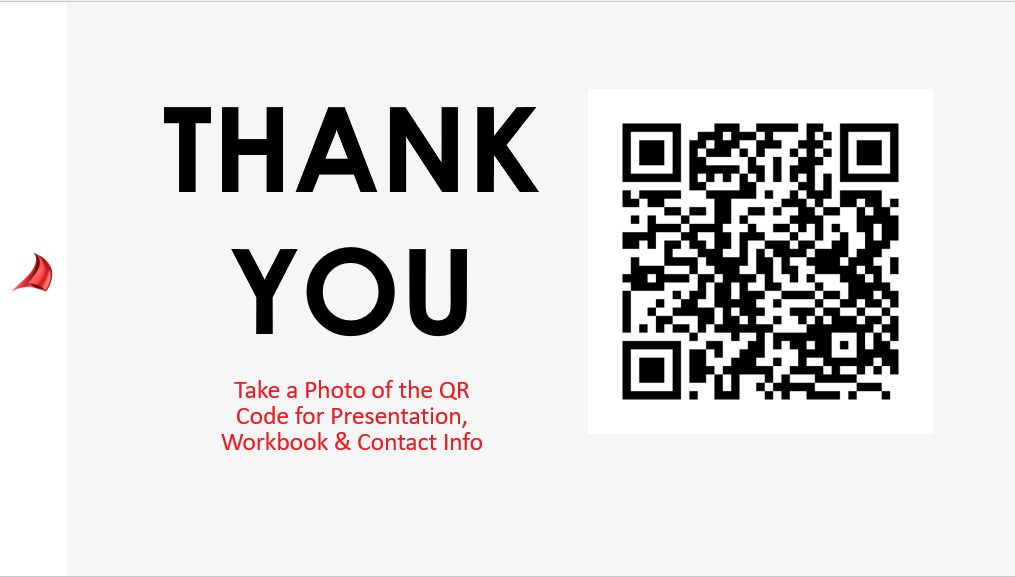
Most recently, presenters have been including a slide at the end of a presentation with a QR code. The audience can snap a photo of that QR code, and it takes them to either a specific piece of content or to a webpage/landing page that has links to several pieces of content. Below is an example of a slide with a QR code from a recent conference. 

Qr code

Description automatically generated

It’s not just for in-person conferences or events either. If the firm’s SMEs are guests on podcasts or webinars, those can be other great opportunities to promote marketing content. AEC marketers should help SMEs prepare for these appearances, including identifying what marketing content to promote.  

Creating Great Marketing Content Simply Isn’t Enough 

Thinking about the content promotion while developing it is a great way to make sure that content performs well and meets the digital marketing goals. The content promotion plan should list the ways in which the content will be promoted including SEO, social media, email marketing, and live events.  

This article is part of the Driving Growth with Digital Marketing and will walk through how to gather and analyze the results for the digital marketing campaigns.  


How AEC Firms Can Stay Ahead of the Talent Game with Reskilling and Upskilling

Posted by Tasia Grant, PHR on Jun 1, 2022 12:00:00 AM

2022-HRTL-Reskilling-01

IIn life, the good news must always be taken with the bad. In the architectural, engineering and construction (AEC) industry, the good news is that a massive federal infrastructure bill was signed into law that will help keep the industry growing in 2022. The question, though, is whether bad news will outweigh that good news for the AEC industry. Much like the impacts of the 2008 recession, according to an article in Civil Engineering Source, throughout 2021, supply chains, high prices for construction materials and labor shortages were affecting the entire AEC sector. So how can Human Resources departments address some of the trends that are being seen?   

AEC Trends and Tackling the Challenges 

Many leaders in professional services firms are tackling labor-related obstacles by evaluating their retention and talent acquisition programs. With the ongoing retirement of Baby Boomers, the increasingly technical (and digital) nature of work, rising wages and the “Great Resignation” of 2022, many employers at professional services firms are faced with skill gaps, problems attracting and hiring top job candidates and employee engagement retention problems.  

 Let’s take a closer look at each of these challenges:  

  • Feeling the Boom: With the departure of Baby Boomers, replacing the most senior and experienced professionals is an overwhelming challenge facing the industry. Most firms agree they can find new graduates, but their employment doesn’t replace those with 40 years of experience.   
  • Transform or Die: The pandemic required firms to rethink their digital adoption, but much of the AEC industry is still managed on paper including blueprints, design drawings, supply-chain orders, progress reports, punch lists, etc.  
  • Under Pressure: In the past, the main challenge was finding the work. Now one of the main challenges is how to keep the workers. Employers are feeling the pressure to raise wages or be forced with losing key talent. 
  • Gap-o-Rama: Graduates unfortunately don’t learn all of the necessary skills required for real-life work in the AEC industry. Additionally, with the constant change in technology, existing employees require learning new technology skills to stay competitive.  
  • Retaining Talent: During the pandemic, many employees re-evaluated what they wanted in life and from their employers. Many firms learned this lesson the hard way.  

Despite these talent woes, there is a solution for Human Resources professionals that is right up under their noses. Reskilling and upskilling are trending talent management tools that are being explored and implemented to address these challenges and ensure that growth stays consistent and progressive. Let’s take a deeper dive into what reskilling and upskilling are and the benefits each can bring to the professional services industry.   

Reskilling Versus Upskilling 

Reskilling is theprocess of employees learning new skills to move onto new roles within their current company while upskilling is a workplace trend that facilitates continuous learning by providing training programs and development opportunities that expand an employee's abilities and minimize skill gaps. The primary difference is that reskilling prepares an employee for movement into a new role within the company whereas upskilling prepares an employee for movement in their current career track within the company. Reskilling and upskilling are not just trendy or popular remedies. The professional services industry has found benefits for both the employers and employees, so it ultimately is a win/win. 

Benefits to Leaders 

  • Improves retention. Employees stay longer when they see evidence that their company is invested in learning and development. 
  • Keeps up with the industry. Maintaining highly skilled and knowledgeable employees keeps the organization competitive in the industry. 
  • Moderates recruiting costs. With the increasing costs of backfilling positions, reskilling might be a good alternative to letting go of current employees and hiring new ones with a different skill set, if the needs of the organization change.  
  • Attracts desired talent. Offering continuous staff training enhances the company’s reputation and brand image as an employer. 
  • Improves employee engagement. Potential and current employees want professional development and training opportunities in their job, and they will look for opportunities that provide these options. Upskilling satisfies these employee demands. 
  • Optimizes employee productivity. Improving employee engagement will ultimately increase productivity. 
  • Bridges the age gap. While generational differences can sometimes be a source of conflict in the workplace, when managed effectively, they can be a powerful source of innovation and adaptability.  

Benefits to Employees 

  • Feel more valued. When employees believe that the company is investing in them to improve their professional profile or give them new opportunities, it reinforces their loyalty. 
  • Have more opportunities for career advancement. Upskilling focuses on improving current employees' skill sets, usually through training, so they can advance in their jobs and find different roles and opportunities within the company. 
  • Increases their professional confidence. One of the primary benefits to employees is that upskilling can help to boost confidence anddevelop stronger, more capable teams in the business. 
  • Builds better relationships between employees and managers. As managers and employees collaborate on their employees’ career paths and provide leadership and mentoring during the training and development process, knowledge sharing, trust, and respect evolve organically.  

Repurpose Talent 

The bottom line is professional services firms are in the best possible position with continuous technological advancement, growing leadership flexibility, and external financial resources to successfully develop and implement upskilling and reskilling programs. Executives, senior leaders, human resources professionals, talent acquisition professionals, training & development specialists, or even HRIS experts, should join the upcoming webinar “Rebounding and Staying Ahead of the Game:  Attract and Retain Top Talent using Reskilling and Upskilling” on June 9th. During this webinar, find out what the so-called “Great Resignation” of 2022 is, hear case studies about other firms (especially in the AEC industry) who have successfully implemented these programs, and learn steps that organizations can take to develop a program that caters to firms’ talent management needs and goals. 


Driving Growth with Digital Marketing - How to Analyze Digital Marketing Campaign Results

Posted by Lindsay Diven on May 25, 2022 12:00:00 AM

2022 Driving Growth - AnalyzeDigitalMarketingCampaignResults_Feature

If the results from the digital marketing campaign efforts are not tracked, how will the marketers know if it’s working or not? It seems simplistic when written like this, but for architecture, engineering, and construction (AEC) firms, collecting and analyzing the results of digital marketing efforts is often the hardest part. And, because the results are often not collected, not analyzed, or not presented to the firm’s leaders, it’s hard for marketing professionals get buy-in for additional digital marketing resources.  

This article is part of the Driving Growth with Digital Marketing and will walk through how to gather and analyze the results for the digital marketing campaigns.  

Select the Metrics During the Planning Phase 

At this point, the digital marketing campaign is created and has been promoted. At this point it’s time to analyze the results and compare them against the original goals to determine the performance of the campaign. 

The hardest part about selling digital marketing strategies to firm leadership is showing the results. And choosing what to measure and how to measure the results is where AEC marketers often get stuck.  

The best time to select the metrics to be used in analyzing the marketing campaign results, is in the planning stages. Thinking through this while in planning, allows the tracking software or infrastructure to be put into place to gather the correct results.  

Using the original campaign goals along with thinking through how those goals can be measured, is the best place to begin.  

For example, if the original goal was to increase brand awareness in the Texas market by increasing web traffic in Texas by 25% in the first 2 quarters of 2022. The marketing department will want to make sure that they can track web traffic, including geography, and have a baseline number for the web traffic from Texas before the campaign begins. 

If the marketing department doesn’t have that ability or information before they begin the campaign, it's going to be very difficult to gather and analyze the results.  

That's why having very SMART goals outlined and agreed upon by leadership is critical to be able to track, analyze, and progress to achieving goals.

Understand that AEC Metrics May be Different 

AEC is different than other industries when it comes to marketing. It isn’t e-commerce. The AEC industry doesn’t provide online stores. AEC firm clients typically don't buy their services through their websites. So, this means that typical marketing key performance indicators (KPIs) like Cost per Acquisition, Customer Attrition, or even marketing-originated customers really aren't relevant.  

That’s why it so important to get the marketing campaigns SMART Goals determined. When those goals are clear, written down, and agreed upon by firm leadership, the metrics to determine that campaign’s performance become more clear. 

Possible AEC Marketing Campaign Metrics   

So, what should AEC marketers measure? How should they measure the results of their digital marketing campaigns? 

Marketers should identify quantifiable metrics that aligns with the goals of the organization and the SMART goals as mentioned above. These metrics should be either new leads (new to the firm’s funnel) or more interaction with current contacts to “nurture” the relationship until that content needs the firm’s services.  

And because each AEC firm’s goals are all going to be different, this article cannot simply provide a list of 10 example metrics. However, listed below are some potential metrics (KPIs) that could be considered. They are listed to help AEC marketers brainstorm metrics that are relevant to their specific digital marketing campaigns and firm goals.  

Possible AEC Marketing Campaign Metrics: 

  • Website traffic 
  • Search traffic/keyword rankings 
  • Backlinks 
  • Click-through rate 
  • Conversion rate 
  • Email sign-up rate 
  • Delivery, open, click rate 
  • Engagement/interaction rate 
  • Follower growth rate 
  • Brand mentions 

Marketers can then take those metrics and compare the marketing performance to a previous time such as: 

  • To the previous month, 
  • A 3-month average, or 
  • Specific goal(s). 

Metrics That Shouldn’t be Measured 

The things or results that the AEC marketer can’t impact should not be measured. If the marketer or firm can’t change it, there’s no point in tracking it or making it a KPI.  

Vanity metrics should also not be tracked, or at least, have too much weight or emphasis placed on them. Marketers are sometimes tempted to track vanity metrics like the Facebook page likes or Twitter followers, but if the marketing department is not currently implementing a social media campaign with the goal of getting more likes or followers, why track it? It’s not an effective KPI. 

Best Practices for Collecting and Analyzing Digital Marketing Campaign Results 

The following are some best practices that marketers should keep in mind as they plan for, implement, and analyze the results of their digital marketing campaigns.  

  • Use the campaign goal as the basis for analyzing the results. Marketers should tie what the goal of the campaign is to what metrics they collect and analyze.  
  • Connect marketing platforms. By starting with the goals, marketers can list what metrics they need to collect. But, this is also the time to evaluate what systems can be connected and automatically share information. A great example of this is the Blackbox Connector for Mailchimp or Constant Contact. These connect the email marketing statistics to the Deltek Vision and Vantagepoint CRM systems. A marketer can easily pull in the statistics for one email campaign or an email campaign series into the Deltek Marketing Campaign.  
  • Limit KPIs to only those that are needed. Marketers might be tempted to collect more data or statistics than necessary to see how the campaign is performing. Especially when first getting started, limit to collecting and analyzing only those metrics or KPIs that are needed to see how the performance is measuring to the goal.  
  • Tailor the KPIs to the audience. If the marketing campaign performance needs to be presented to firm leadership, make sure to tailor what is shown to that audience to just what they need to see how it’s performing to goal. For example, the marketing manager may be tracking email newsletter opt-in rates and email bounce rates. However, if that’s not a goal of the specific marketing campaign, don’t report those metrics in a presentation to the firm principals.  

How to Use the Digital Marketing Campaign Results to Improve Performance  

Collecting and analyzing the performance of the marketing campaigns is only half the battle! The next step is optimizing the campaign’s performance to get even better results. And the next article in this series share a few different areas to optimize when it comes to the firm’s digital marketing efforts. Subscribe to the series below to get the next article.  

Full Sail Partners is Celebrating its Silver Anniversary

Posted by Sarah Gonnella on May 11, 2022 12:00:00 AM

2022 - 10th Anniversary Banner rev-01-01

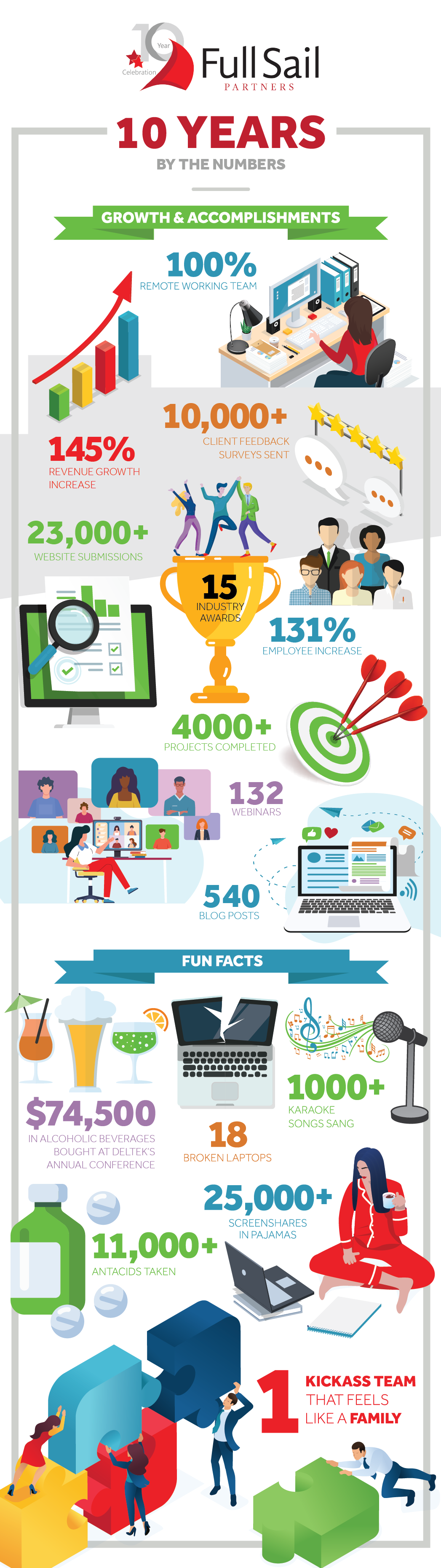
For the last decade, Full Sail Partners has been a recognized project-based technology leader in the Deltek professional services ecosystem. We have much to celebrate and we attribute that success to our company culture -- fun, fast-paced, flexible and collaborative. Our team members comment every day how they feel privileged to call many of their co-workers true friends and even family.  

Since our inception, the number of employees has expanded 131%, and over our 10-year history, revenue has increased 145% while completing over 4000+ projects. The firm launched its Blackbox Connector product in 2015 increasing the team’s integration capabilities by being able to connect clients to outside solutions. Deltek and other industry leaders have recognized our firm with 15 awards over its history because of our relentless commitment to cultivating strong customer loyalty and focusing on the customer experience. We accomplished this and more all while being 100% remote, before it became popular.  

We plan to recognize this huge milestone with our clients at Deltek’s Annual Conference, ProjectCon, in November in Nashville, TN. Additionally, as part of our continuing 10-year anniversary celebration, Full Sail Partners will be selling a cookbook filled with recipes from its employees. Each employee that submits a recipe will be nominating a charity of his/her choice. Any funds raised will be then given to the charity that is voted upon by Full Sail Partners’ clients.  

While viewing our accomplishments, you can truly experience the fun side of our culture. We would love to hear from you, our clients, about any experience that stands out over the years in the comments or on social media. Thank you to everyone that has been a part of our journey. We are excited to continue this celebration and enjoy the moment while looking forward to our next milestone accomplishment. Cheers! 

10YR_ANNIVERSARY-BY THE NUMBERS rev 3


Review our recent press release to learn more about our firm and our accomplishments over the past decade. 

Business Development Calls Made Easy with Deltek Vantagepoint CRM

Posted by Cate Phillips on May 4, 2022 12:00:00 AM

2022 - BD Calls Made Easy with DVP CRM-01

Before the pandemic, I used to volunteer to judge high school debate and often found myself sitting in a public-school library on a Saturday morning staring at those cheesy posters where the words say “Attitude is Everything” …those have not changed by the way. Except 25 years later, those words still ring true. I do not know about you, but if I am rolling into a Zoom business development (BD) call with a bad attitude, it is doomed to fail. Since attitude is important when it comes to developing relationships with clients, how can the new and improved Customer Relationship Management (CRM) power of Deltek Vantagepoint make it easier to keep those business development calls on track? 

Attitude and Deltek Vantagepoint CRM? 

I started writing this on a debate kick, and it therefore must continue… As any good debater will tell you, something should not be fully considered until it has been argued from both the pro and con sides. So, how can business development calls be made easy with Deltek Vantagepoint CRM? Let us compare how it would go from both attitude perspectives. 

Bad Attitude Scenario 

5am – snooze 

5:30am – snooze again, since I went to bed later than normal last night, that is the mental self-justification I will go through this morning. 

6am – wake up, grab phone, check calendar. Okay, good, first meeting is not until 8am, I can sleep more, reset alarm. 

7:15am – grab phone, what? Why? I should have gotten up earlier so I could work out and do my morning stuff. I am grumpy about it.  

7:45am – showered and dressed, sitting down, I must scramble to review a prospect’s info in Vantagepoint. I glance at some fields. I notice that I am about to be talking to the Facilities Director at an airport. My engineering firm has done the type of project they are looking to do but only in Europe. My job is to impress the Facilities Director and get him to introduce us to the architect and then hopefully she will want to bring us in on this massive project.  

8am – meeting starts, I am not as ready as I should be. It goes okay, but it is not a slam dunk. He agrees to let me call him back, but I know in my gut he is not going to be calling the architect immediately to sing our praises. 

8:30am – I guess I should get the notes in the system. I am super discouraged and annoyed at this point, but I try to rally myself to get my activity recorded with enough detail so that I can perhaps salvage this a bit when I do my follow-up. 

Here is the rub folks. The Deltek Vantagepoint CRM is there to help me, and it is a great tool in my toolbox. I did not use it here to my full advantage. 

Good Attitude Scenario 

5am – snooze 

5:30am – I am up! I am not necessarily happy about it, but it happened. I get started on my morning stuff. 

7am – sitting down in my office now, I will not bore you with the details of my morning ritual, but I fed my mind, body and soul before I walked in the door. I am happy I have an entire hour to prepare for my call.  

Here is what I do to prepare using Deltek Vantagepoint CRM: 

Since the project will a subcontractor opportunity to the architect that is always the prime at this airport, she is the contact record I want to peruse. I know I have only got 30 minutes to get this Facilities Director to agree to introduce me to her. From my networking, I know that if he says give this firm a shot, she will consider it. I immediately then go to look at the projects associated with these two contacts. 

Bus_Dev_Calls-01

I also know that she has been a little unhappy with the engineering firm they used from a well-placed cold call by my Business Development Representative (BDR) last year. How do I know this, you ask? I have an excellent memory, and it simply always unfolds perfectly when needed. NOPE. My team and I always track everything inside Deltek Vantagepoint.  

I read my Activity notes from three years ago when I had drinks with someone that reports to the Facilities Director at a conference. She was the one that clued me in to how key the Facilities Director was in terms of getting the architect’s attention. Then I reviewed the notes our BDR had in there from the cold call. Those notes were in an Activity from the call placed and on the Competition tab of my project.  

Bus_Dev_Calls-02

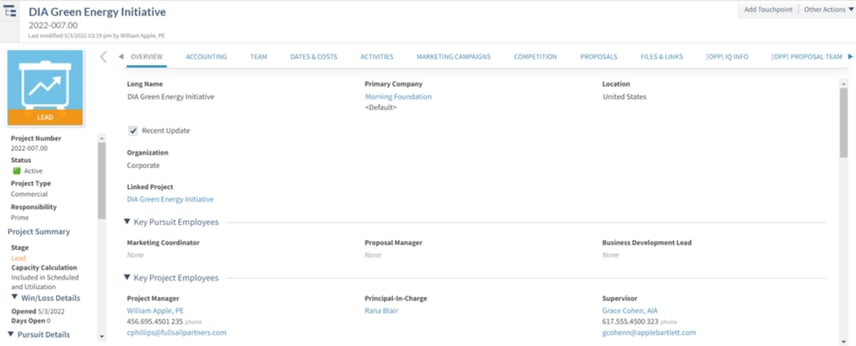
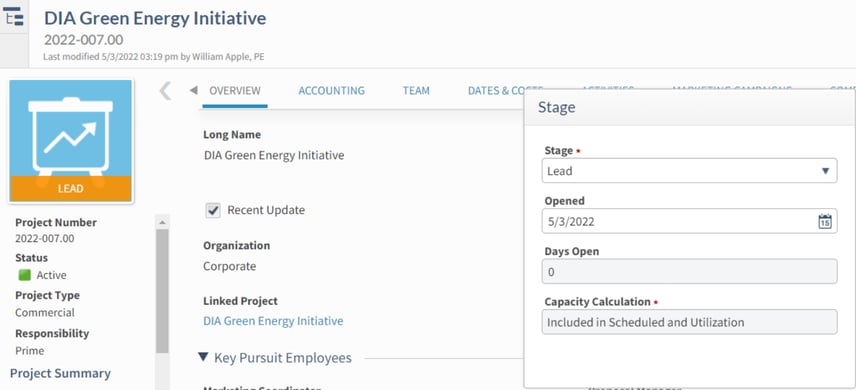
Next, I double checked his and her LinkedIn pages and saw no new connections between us that I did not already know about in advance. My project is at a Lead stage and being the awesome Relationship Manager that I am, I enjoy seeing my projects get into our system, and I lovingly monitor the data associated with them. 

Bus_Dev_Calls-03

I also have a custom field in my Deltek Vantagepoint CRM that gives me something to brag about here. I can query my CRM to find past airport references, and I have 2 or 3 case stories (bragging rights) ready to tell if I get the opportunity in the call. 

8am – The meeting starts, and I am ready to kill it. During the call, the Facilities Director mentions another two of his colleagues that I was not aware of, and their roles could be important should we get this project to the awarded stage. I jot down their info so that our Marketing Associate can fill in the gaps with some research and get them entered in the system.  

8:30am – The call is over. It was the slam dunk I deserved. He was impressed with the stories I was able to tell, and since I was aware of the pain that the current engineering firm is creating with the Architect, this allowed me to effectively differentiate our firm. He said that he would be emailing her right away before he forgot, to ask her to get coffee and discuss what we can bring to the table. We scheduled our next steps. I was able to use the Outlook Connect to immediately get the appointment calendared and tracked in the CRM in one fell swoop. 

Which Attitude Won the Debate?    

Obviously, this debate was destined to go for the Pro - we all knew that, right? The bad attitude not only set me up to perform poorly, but it also affected my ability to leverage my Deltek Vantagepoint CRM correctly. So, here I have proven a good attitude + a great CRM = successful business development efforts. Ready to maintain a positive attitude in your business development efforts by fully embracing Deltek Vantagepoint CRM?  

Stay tuned for future blogs on this topic that cover other parts of the sales cycle and project lifecycle prior to the awarded stage. 


Latest Posts