Full Sail Partners Blog | Lindsay Diven

Posts by Lindsay Diven:

Our Crew's Top Takeaways from Deltek ProjectCon 2025

Posted by Lindsay Diven on Dec 11, 2025, 12:00:00 AM


2025-12-11 Our Crews Top Takeaways ProjectCon2025_banner

Denver did not disappoint. Between the mountain views, the packed keynotes, the nonstop conversations, and the surprise announcements (hello, Elevate 2027 👀)…this year’s ProjectCon was easily one of the most energizing yet.

Our Crew came home buzzing with insights, inspiration, and a whole lot of renewed excitement for where Deltek Vantagepoint is heading. Here’s what stood out most.

🚀 ProjectCon Becomes Elevate — and Moves to 2027

Shared by Sarah Gonnella

The biggest announcement of the week: Deltek ProjectCon is officially rebranding to Deltek Elevate and will next be held March 8–10, 2027 in Nashville, TN.

Cue the confetti. 🎉

For years, users have requested two things:
✔️ A name that sounds more modern and inspiring
✔️ A date that isn’t during the craziest time of year
Deltek listened.

“I love the name Elevate. And I love that the new date gives clients an entire year to focus on moving from Vision to Vantagepoint,” Sarah shared. “This change genuinely reflects Deltek paying attention to what firms need.”

We couldn’t agree more.

🤖 AI Isn’t the Future—It’s Right Now

Insights from Lindsay Diven, Scott Gailhouse & Wesley Witsken

AI took center stage this year, and each of our Crew members walked away with something different.

Human-Centric Marketing in an AI World

Lindsay captured one of the keynote’s biggest takeaways:

“2026 will be the year of AI agents, but marketing will actually become more human-centric. More authenticity. More in-person events. More small-group connection.”

This aligns perfectly with what we see across AEC firms: technology is accelerating, but relationships still drive results.

Overcoming AI Intimidation

Scott arrived hesitant about AI…but left empowered.

“Before the conference, AI was intimidating. But after hearing it in almost every session, I feel a lot more comfortable—and our clients will too.”

From a fear factor to a confidence boost. That’s the magic of ProjectCon.

New AI Innovations Inside Vantagepoint

Wesley, our CRM and proposal automation expert, was fired up about what’s coming:

“I’m excited about the AI advancements in Go/No-Go, potential proposal generation directly in Vantagepoint, and new updates to document automation—especially for creating resumes in the Employee Hub.”

Proposal people everywhere just exhaled. 😅

📊 Data at Your Service: A Big Win for Large Firms

Shared by Sparsha Muppidi

One of the most talked-about tech previews was Data at Your Service, Deltek’s new offering that connects Vantagepoint to a Snowflake data warehouse and then to any third-party tools.

Sparsha summed it up perfectly:

“It’s really exciting—especially for firms with 250+ employees. This gives clients new options to analyze data and make better business decisions.”

More data freedom = more business intelligence = more confident leadership.

Yes, please.

⛷️ Lessons in Resilience from Lindsey Vonn

Shared by Sarah Gonnella

Olympic legend Lindsey Vonn brought the inspiration this year. When asked how she manages risk on the slopes, she said:

Focus on what you can control. Prepare for what you can’t. Learn from every run. And release the rest.

It’s a message every project-based firm needs tattooed somewhere visible.

Projects are unpredictable. Clients shift. Staffing changes. Scope evolves. But preparation + mindset = resilience.

Lindsey could have been talking about project management.

🤝 The Best Part of ProjectCon? Easy: The People.

Shared by Kim Stamps

Amid all the announcements and innovations, Kim reminded us of the heart of this conference:

“My favorite part is seeing the clients I talk to all year. I love meeting them, hugging them if they’re huggers, shaking their hand, and just connecting face to face.”

If you stopped by our booth, chatted with us in the hallways, or joined us at the Mile High Mixer — thank you. Getting to connect in person is what keeps us coming back year after year.

📈 Wrapping Up: What This Means for 2026 & Beyond

This year’s ProjectCon was a turning point.

Here’s what we’re taking into the new year:

✨ AI will accelerate—but human connection will matter more than ever
✨ Data access and visibility are getting better for firms of all sizes
✨ Vantagepoint is becoming smarter, more automated, and more flexible
✨ The industry is shifting, and Deltek is shifting with it
✨ And in 2027, we’ll all be reuniting at Elevate with a full year of transformation behind us

Our Crew will be sharing their favorite sessions, tools, stats, and strategies in upcoming posts from now until the end of the year—so stay tuned.

Denver, you were incredible.

ProjectCon, you outdid yourself.

Elevate, we’re coming for you. 🏔️✨


How to Set a Competitive Budget for Professional Services

Posted by Lindsay Diven on Jun 26, 2025, 12:00:00 AM

2025-06-26 Competitive Budget Banner

The year is 2025. AI is mainstream. Buyer behavior has changed. And firms that are still using their 2019 marketing playbook—or worse, a budget built on “we’ve always done it this way”—are already falling behind.

If you’re a marketing or firm leader staring at a spreadsheet trying to justify budget requests, you’re not alone. And if you’re still cobbling together tactics that might have worked last year, it’s time to trade in the guesswork for something stronger: research-backed strategy.

Let’s break down how to set a competitive, results-driven marketing budget for your professional services firm—without burning through dollars on outdated efforts.

1. Start with Research, Not Assumptions

One of the most telling findings from the 2025 Deltek AEC Clarity Report is this: high-performing firms are more likely to use data and analytics to drive decision-making. Yet, only 34% of firms reported using CRM and marketing data to inform their BD strategies.

Research isn’t optional—it’s your competitive edge.

In fact, studies by Hinge Marketing show that firms conducting frequent research (at least quarterly) grow 10X faster and are twice as profitable than those that skip it.

Don’t guess what worked last year. Pull your CRM reports. Review marketing metrics. Survey clients. And assess which efforts brought in leads, moved opportunities forward, and converted to wins.

2. Narrow Your Targets (No More Spray-and-Pray)

Trying to market to everyone usually results in connecting with no one.

The most effective firms invest their limited resources in a focused set of target clients and pursuits. According to the 2025 Clarity Report, the top business development challenge cited was identifying new prospects, yet only 38% of firms reported having a defined go/no-go process.

Now is the time to:

  • Audit your current client list for commonalities (size, sector, service line, etc.)
  • Use CRM and financial data to find which client types bring in the most profit
  • Prioritize ideal clients that align with your strategic growth goals

Pro tip: Don’t just define your ideal clients—also define who you don’t serve. It’ll keep your spend efficient and your messaging crystal clear.

3. Shift Budget Toward Online (It’s Where the Buyers Are)

Tradeshow booths and sponsorships still have a place, but they shouldn't dominate your spend. Online lead generation is more scalable, cost-effective, and measurable.

Yet many AEC firms are still overinvested in traditional tactics. According to the 2025 Deltek AEC Clarity Report, the top three areas of marketing spend were:

  1. Proposals and pursuits
  2. Conferences and tradeshows
  3. Website and digital marketing

While proposals and events remain vital, there's a growing intent to shift more budget toward digital—but execution often lags due to limited staff capacity and technology gaps.

Rebalance your budget with a tilt toward:

  • Website and SEO improvements
  • Strategic content creation (blogs, webinars, whitepapers)
  • Email marketing and automation
  • Social media marketing and paid campaigns

Firms that increase digital maturity gain more pipeline visibility, stronger marketing ROI, and greater confidence in revenue forecasting.

Start here: Allocate at least 40-50% of your marketing budget to digital—this includes online content, CRM tools, marketing automation, and analytics platforms.

4. Measure What Matters

You can’t improve what you don’t measure. And in 2025, measurement must go beyond vanity metrics like impressions and email opens.

Instead, track metrics that matter to your firm’s growth:

  • Leads generated by campaign or channel
  • New opportunities created in the pipeline
  • Shortlist rates and how often you’re advancing
  • Win rates by pursuit type, team, or market
  • Client acquisition cost (CAC) and lifetime value (LTV)

The 2025 Clarity Report found that firms with stronger marketing and BD integration were more confident in their forecasts and better able to connect marketing investment to actual revenue growth.

If your current systems don’t support this kind of reporting, it may be time to upgrade your CRM or implement marketing analytics dashboards.

5. Don’t Underspend (or Overspend!)

So how much should you actually allocate?

While every firm is different, Hinge Research suggests that high-growth professional services firms typically invest 5–15% of their revenue into marketing. And many Clarity Report respondents said they planned to increase their BD and marketing budgets in the next year, signaling greater recognition of marketing’s role in growth.

Budgeting too little may leave you invisible. Spending too much without strategy wastes resources. Anchor your budget to strategic goals and your firm’s growth targets.

6. Invest in the Right Tools—and the People Who Use Them

A brilliant strategy can still flop if execution is half-baked. Your budget should reflect not just what you’ll do, but how you’ll do it.

That means factoring in:

  • Internal marketing staff capacity
  • External partner support (freelancers, agencies, consultants)
  • Software subscriptions (CRM, automation, SEO tools)
  • Training and professional development for your team

The bottom line: Don’t just plan campaigns—budget to execute them well.

7. Keep the Budget Agile

Gone are the days of set-it-and-forget-it annual budgets. In 2025, the smart move is to:

  • Set quarterly checkpoints
  • Reallocate funds based on campaign performance
  • Leave a “test and learn” portion of the budget for new channels or experiments

This flexibility allows you to scale what’s working—and shut down what’s not—before it drains your resources.

Final Thought: Lead with Strategy, Not Spreadsheets

Your marketing budget isn’t just a list of line items—it’s a declaration of how you plan to grow.

Lead with research. Focus on ROI. Measure obsessively. And give your marketing team the tools and support they need to turn strategy into results.

Because in a sea of competition, smart marketing isn’t just nice to have—it’s the only way to stand out.

Need help aligning your marketing plan with your firm’s growth goals?

Full Sail Partners offers strategic consulting, system support, and CRM integration to help professional services firms turn insight into action. Let’s talk.

Revitalizing Marketing Strategies for Services and Project-Based Firms

Posted by Lindsay Diven on Jul 18, 2024, 12:00:00 AM

07-18-24 Marketing Strategies -  Banner

Consumers. Buyers. Clients. Users. Customers. You want them, you need them, regardless of the business you own. But does the type of business you own affect how you market to them? Absolutely! Marketing for service and project-based firms can be a tricky task, requiring a blend of formulaic approaches and individual creativity. What you’re marketing makes all the difference.

Defining Your Business Type

Understanding the nature of your business is crucial to crafting an effective marketing strategy. Different types of businesses—whether they offer tangible products, intangible services, complex projects, or a mix of both—require tailored marketing approaches to reach and engage their target audiences effectively.

  • Product-Based Firms: These organizations offer tangible products to their customers—items that can be packaged and placed on a shelf. Marketing for these firms is often straightforward and follows textbook examples taught in marketing classes nationwide.
  • Service-Based Firms: These organizations primarily offer people, processes, or expertise. Since you can't package people or put a process on a shelf, marketing must be approached differently.
  • Project-Based Firms: Similar to service-based firms, these organizations manage and deliver projects, often involving complex coordination of resources and expertise. Marketing for project-based firms needs to highlight the firm's ability to deliver successful projects, meet client needs, and provide specialized expertise.
  • Hybrid Firms: These businesses offer a mix of products and services. Marketing efforts must be tailored to each target market segment, emphasizing both tangible and intangible offerings.

Tailoring Your Marketing Strategy

When marketing a product, you let the product speak for itself, showcasing how it solves customer problems. This can be done through demonstrations, videos, or testimonials showing the product in action. Marketing for service and project-based firms is a bit different, yet fundamentally similar. Services and projects solve problems too, but you need to highlight client stories and testimonials. Here’s how:

  • Client Testimonials: Just as with products, services, and projects solve problems. Share success stories from your clients, showcasing how your services or projects have positively impacted their businesses. For example, platforms like Google and Trustpilot use client reviews to market professional services.
  • Client Feedback Tools: Gathering feedback from your clients is essential. Tools like the Client Feedback Tool from Client Savvy allow you to collect regular and periodic feedback from clients about their engagements. This feedback can provide constructive criticism and highlight your strengths, both of which are invaluable for refining your services and enhancing your marketing efforts.

The Power of Client Retention

One significant advantage of service and project-based firms is the potential for high client retention. Happy clients not only contribute to your marketing efforts through word-of-mouth but also ensure a steady revenue stream. Here are some compelling statistics:

  • A 5% increase in customer retention can increase a company's profitability by 75% (Bain & Co.).
  • 80% of your company's future revenue will come from 20% of your existing customers (Gartner Group).
  • Attracting new customers costs five times more than retaining existing ones (Lee Resource Inc.).

Leveraging Client Relationships in Marketing

Happy clients are your secret weapon in marketing your services or projects. Their satisfaction can lead to long-term relationships and a healthier bottom line. Here are some strategies to leverage these relationships:

  • Case Studies: Develop detailed case studies that highlight how your services or projects have met client needs and solved their problems. These case studies can be powerful tools for showcasing your expertise and success.
  • Client Engagement: Regularly engage with your clients through newsletters, updates, and personal check-ins. Keeping the lines of communication open helps maintain strong relationships and encourages repeat business.
  • Client Testimonials and Reviews: Actively seek and share positive testimonials and reviews from your clients. Highlighting client satisfaction through various platforms can build trust and attract new customers.
  • Client Appreciation Events: Host events to show appreciation for your clients. These can be virtual webinars, in-person workshops, or networking events. Such initiatives can strengthen your relationship with clients and provide additional value.
  • Social Media Engagement: Feature your clients on your social media channels. Share their success stories, tag them in posts, and engage with their content. This not only highlights your collaboration but also broadens your reach through their network.
  • Educational Content: Provide clients with valuable content that addresses their pain points and interests. This could be in the form of blogs, whitepapers, webinars, or how-to guides. Educating your clients not only helps them but also positions your firm as an industry leader.
  • Surveys and Feedback: Regularly ask for feedback through surveys to understand client needs and areas for improvement. This proactive approach shows clients that you value their opinions and are committed to enhancing their experience.
  • Partnership Programs: Develop partnership programs with your clients, where you can collaborate on joint marketing initiatives or co-host events. This creates a win-win situation and strengthens the professional bond.

By implementing these strategies, service and project-based businesses can effectively leverage client relationships to enhance their marketing efforts and drive long-term success.

Harnessing Client Feedback for Strategic Insights

Marketing for service and project-based firms requires a nuanced approach that leverages client feedback, highlights successful engagements, and emphasizes the value of long-term relationships. Tools like the Client Feedback Tool can help you gather valuable insights, tailor your marketing efforts, and ultimately boost client retention and satisfaction. By focusing on your clients' stories and continually improving your services based on their feedback, you can create a powerful marketing strategy that drives growth and success.

The Importance of Benchmarking in Measuring Business Growth

Posted by Lindsay Diven on May 2, 2024, 12:00:00 AM

05-02-24 The Importance of Benchmarking_Banner rev 2

For project-based firms like those in engineering, architecture, and consulting, failing to measure and understand business performance against industry standards can lead your business towards stagnation or decline. Benchmarking, the critical practice of comparing business processes and performance metrics to industry bests and best practices from other companies, is not just beneficial—it's essential. Without it, firms remain blind to their operational inefficiencies and market position, risking obsolescence.  

By rigorously examining internal operations against recognized standards, firms can pinpoint critical deficiencies and implement strategic changes, ensuring survival and fostering growth in an ever-evolving marketplace. This article will guide you through the importance of benchmarking, how to get started, identify key performance indicators, and effectively integrate these practices to drive business success. 

Why Benchmarking Matters for Project-Based Firms 

For project-based businesses, every project represents a complex interplay of resources, time, and client requirements. Benchmarking provides a structured approach to analyzing these elements by focusing on Key Performance Indicators (KPIs) that drive business success. It allows leaders to make informed decisions based on data-driven insights, rather than intuition alone. 

The importance of benchmarking in this sector cannot be overstated. It helps firms: 

  • Identify Efficiency Gaps: Benchmarking can highlight discrepancies between a firm’s current practices and the industry's best, allowing for targeted improvements. 
  • Enhance Competitive Advantage: Understanding where you stand in the market can help you leverage your strengths and address weaknesses, setting you apart from competitors. 
  • Drive Strategic Planning: With a clearer picture of how well you perform against benchmarks, you can prioritize initiatives that drive growth and enhance profitability. 
  • Improve Financial Performance: By aligning operations more closely with successful benchmarks, firms can improve profitability through better resource management and cost control. 

Getting Started with Benchmarking 

Implementing a successful benchmarking process involves several steps, from choosing relevant KPIs to analyzing external data. Here’s how to get started: 

Step 1: Define Relevant KPIs 

Selecting the right Key Performance Indicators (KPIs) is crucial as these metrics will guide your benchmarking efforts and influence strategic decisions. For project-based firms, understanding both financial and operational performance is essential. Consider the following essential metrics: 

  • Utilization Rate: This measures how effectively the firm uses its billable staff. A high utilization rate often correlates with higher profitability and is a clear indicator of workforce efficiency. 
  • Net Labor Multiplier: A critical profitability metric that assesses how much revenue is generated per salary dollar paid. It highlights the financial effectiveness of human resource investment. 
  • Operating Profit: Looks at the firm’s earnings before interest and taxes, providing insight into operational efficiency and overall financial health. 
  • Current Ratio: This financial ratio measures a company's ability to pay off its short-term liabilities with its short-term assets. A strong current ratio indicates good liquidity health, crucial for maintaining smooth operations and responding to unforeseen challenges. 
  • Employee Turnover: An important metric for understanding employee retention and satisfaction. High turnover can indicate underlying issues in workplace culture or compensation, affecting project continuity and increasing recruitment and training costs. 

Beyond these metrics, firms should also tailor additional KPIs based on their strategic goals and industry specifics. For instance: 

  • Client Satisfaction Scores: Measure the satisfaction levels of your clients through surveys and feedback mechanisms. High satisfaction scores are often indicative of repeat business and client referrals. 
  • Project Completion Rate: Tracks the percentage of projects completed on time and within budget, crucial for maintaining client trust and operational efficiency. 
  • Billable Efficiency: Compares billable hours to total hours worked to assess how much of the workforce’s time is generating revenue. 

By defining these KPIs, firms can not only gauge their current performance but also set benchmarks that align with both industry standards and internal aspirations. This holistic view enables leaders to make informed, strategic decisions that drive growth and improve efficiency. 

Step 2: Gather Internal Data 

Once KPIs are defined, the next step is to compile data from your operations. This involves tracking these metrics over a significant period to establish an internal baseline. Utilize your existing ERP, such as Deltek Vantagepoint, to extract historical data, ensuring it’s accurate and comprehensive. 

Step 3: Find External Data for Comparison 

Once you've gathered and analyzed your internal data across selected KPIs, the crucial next step is to seek external benchmarks for meaningful comparison. This process, while challenging, is essential for gaining real insights and is entirely achievable with some diligent effort. 

A straightforward approach might involve hiring a consultant to dive deep into the metrics and performance of your competitors. However, a more cost-effective method is to leverage existing third-party studies and industry reports available online. These resources provide a wealth of comparative data and are often underutilized. 

Take, for example, Deltek's annual performance study specifically tailored for the architecture and engineering sectors. This comprehensive analysis reviews critical KPIs and distinguishes high-performing firms from their peers. Interestingly, recent findings suggest that while overhead and utilization rates are consistent across the board, top performers often share distinctive traits. These include enhanced efficiencies throughout their project lifecycle and a robust set of standardized company practices. 

In addition to industry-specific reports like Deltek's, broader marketing and business studies can also offer valuable insights. For instance, the marketing research firm Hinge regularly publishes analyses on high-growth firms across various professional services industries. These reports not only highlight what successful firms do differently but also challenge common misconceptions, such as the idea that high growth in certain smaller firms is merely an anomaly. 

The key takeaway is that valuable data is out there; you just need to know where to look. By comparing your internal metrics against these rich data sources, you can identify where you stand relative to the industry's best and learn from the strategies that set top performers apart. This process doesn't just measure your current performance—it provides a roadmap for where you need to go to achieve similar success. 

Step 4: Analyze the Data 

With both internal and external data at hand, perform a thorough analysis to identify trends, gaps, and opportunities. Look for patterns where your firm excels or underperforms compared to industry benchmarks. This analysis should go beyond mere numbers; it should help understand the underlying causes of discrepancies and what they mean for your business operations. 

Step 5: Incorporate Benchmarking into Management Practices 

Effective benchmarking should be an ongoing process, not a one-time event. Integrate these practices into your regular management routines. Regularly update your benchmarks and internal assessments to keep them relevant. Use benchmarking insights to set realistic performance goals, inform strategic decisions, and drive continuous improvement across your organization. 

Harnessing Benchmarking for Strategic Advantage 

Benchmarking transcends being merely a tool for measuring success; it is a comprehensive strategy that cultivates a culture of continuous improvement and strategic agility. For leaders of project-based firms, embedding benchmarking into daily business operations is crucial for illuminating the pathway to enhanced performance and enduring growth. 

By adopting benchmarking, your firm not only aligns with industry standards but also positions itself to proactively respond to evolving market conditions and capitalize on emerging opportunities. In a business landscape that is constantly changing, the firms that will flourish are those committed to measuring, comparing, and adapting based on solid data. 

To further explore how benchmarking can be seamlessly integrated into your strategic planning, I invite you to learn more about our Navigational Analysis Process. This tailored approach will guide you through identifying, analyzing, and leveraging critical data to not just meet but exceed industry benchmarks, ensuring your firm's competitive edge. Let's navigate your path to success together—click the image below to begin your journey. 


Resume and Project Information Management Using Deltek Vantagepoint

Posted by Lindsay Diven on Feb 1, 2024, 12:00:00 AM

02-01-24 DVP Resume and Project Info - Banner

In the competitive landscape of architecture/engineering (A/E) consulting, two critical assets set firms apart: their people and their projects. As a former marketing director for a large A/E firm, I fully understand the challenges involved in managing these assets effectively. Utilizing Deltek Vantagepoint, we offer streamlined solutions for managing both resumes and project information, ensuring your firm's unique strengths are showcased in every proposal, presentation, and marketing effort.

Strategic Resume Management: Capturing and Updating Professional Profiles

We perceive professional resumes not just as documents, but as dynamic profiles that showcase the strengths of your firm's most valuable assets: its people.

Starting Strong: Capturing New Hire Information

The journey of efficient resume management begins when a new employee joins your firm. This is a golden opportunity to capture their excitement and fresh perspective. Here’s how we recommend utilizing Deltek Vantagepoint and your HR processes to streamline this step:

  1. Coordinate with HR: At the point of hiring, collaborate with HR to integrate marketing and resume information collection into the onboarding process. Utilize HR’s existing data collection methods, adding specific forms or questions relevant to marketing needs.
  2. Gather Comprehensive Information: Collect essential data such as bios, previous projects, licenses, awards, special skills, software proficiency, languages, and contacts. For strategic hires, consider a dedicated marketing onboarding session to align their expertise with your firm’s marketing strategies.
  3. Automate with Deltek Vantagepoint: Leverage Deltek Vantagepoint to automate the information capturing process. This system can be set up to alert the marketing team of new hires, enabling the collection and updating of resume details seamlessly into your database.

Ongoing Updates: Keeping Resumes Fresh and Relevant

Regular updates are crucial to maintain the accuracy and relevance of resumes. Here's a streamlined approach:

  1. Determine Update Frequency: Decide how often resumes need refreshing. This can be annually, bi-annually, or aligned with each person’s work anniversary.
  2. Strategic Distribution: Utilize Deltek Vantagepoint to manage and schedule resume updates using email alert workflows. Provide current resumes to employees, along with clear instructions and deadlines for updates.
  3. Engage Personally: Consider conducting brief interviews or meetings, especially with key personnel, to ensure comprehensive and up-to-date information.
  4. Update the Employee Record: Once the updated information is gathered, use Deltek Vantagepoint to keep your database current. This ensures that any proposal or marketing material has the latest information at hand.

Case Study: Streamlining Annual Resume Updates at a Growing A/E Firm

A prime example of effective resume management was at my previous firm, a growing A/E firm. As the firm expanded to around 300 employees, we recognized the need for a structured yet flexible system for annual resume updates. Our strategy involved breaking down the updates into manageable monthly tasks, leveraging both Deltek and a work anniversary-based schedule. Here's an overview of our process:

Planning Phase: Leveraging Deltek Vantagepoint for Organization

  1. Monthly Employee Selection: Utilizing Deltek, we extracted a monthly list of employees based on their work anniversaries. This systematic approach ensured that every employee's resume was updated annually, without overwhelming our resources.
  2. Preparation of Update Materials: We compiled the existing master resumes from our database, along with a custom-designed resume update memo and instructions.

Gathering Phase: Personalized and Coordinated Efforts

  1. Distributing Update Materials: The update materials were personally delivered to employees in our main office. For our six satellite offices, we collaborated with marketing coordinators or office managers to ensure distribution. In cases where direct handover was not feasible, we used email as an effective alternative.
  2. Setting Deadlines and Reminders: A two-week timeframe was typically given for updates, with reminders set up in Deltek to keep track of deadlines.
  3. Scheduling Interviews When Necessary: For certain key roles or when detailed updates were required, we scheduled one-on-one interviews, adding a personalized touch to the process and ensuring comprehensive updates.

Updating Phase: Keeping Our Database Current

  1. Collection and Review of Updates: We gathered the revised resumes and additional information provided by employees, reviewing them for completeness and accuracy.
  2. Editing and Finalizing Resumes: Necessary edits and rewrites were undertaken to ensure that the resumes accurately reflected each employee's latest achievements and experience.
  3. Database Updating: Using Deltek, we updated our central database with the new information. This not only refreshed individual resumes but also ensured that our entire resume pool was current and ready for use in proposals and marketing efforts.

This case study highlights the efficacy of using a structured, technology-driven approach to manage resume updates in a large firm. By leveraging our Deltek database, we were able to streamline the process, maintain high-quality resumes, and ensure that our marketing and proposal materials always featured the most up-to-date and relevant information about our team members.

Project Information Management: Keeping Project Portfolios Up-to-Date

Just as vital as managing resumes is maintaining up-to-date project information. This includes project descriptions, milestones, and outcomes – all crucial for marketing and business development efforts. Here’s how to effectively manage this process:

  1. Diverse Update Methods: Consider annual updates, project milestones, pursuit-driven updates, award submittals, and initiative-driven updates. Choose the method that best aligns with your firm's needs and project types.
  2. Project Update Process: Establish a routine for gathering project information, such as sending out Project Information Profiles (PIPs) alerts to project teams and scheduling site visits for in-depth understanding.
  3. Automated Reminders and Checkpoints: Use Deltek Vantagepoint to set up workflow alerts for project updates at various milestones, ensuring no project goes unaccounted for.

Forward-Thinking Project Management: Begin with Your Goals in View

An essential aspect of managing project information effectively is to start with a clear understanding of how this information will be utilized. For instance, if a project is a potential candidate for a Design-Build Institute of America (DBIA) award, it's crucial to collect comprehensive design and construction details right from the start. Anticipating the requirements of award submissions or other future uses can guide what data to gather throughout the project's lifecycle. Utilizing past award criteria as a template for data collection ensures you capture all necessary details for future submissions.

Case Study: Site Visit Program

A practical application of this forward-thinking approach can be seen in a construction firm in Florida, which has established an effective site visit program to collect robust project information. Their marketing manager shared insights into their process, which I’ve adapted to optimize using Deltek Vantagepoint.

  1. Pre-Visit Preparation: Prior to site visits, a Project Information Profile (PIP) is sent to the project team via an email alert workflow. The project engineer fills in key details like project costs, square footage, and client information into the project record linked in the email.
  2. Collaborative Meetings: The project's key personnel, including the project manager, safety manager, and quality control manager, convene to discuss the project with the marketing representative. These meetings, often accompanied by informal gatherings over meals, foster open communication and information sharing.
  3. On-Site Insights: The marketing representative tours the site, gaining a visual understanding of the project. This first-hand experience is invaluable when drafting project descriptions and stories later.
  4. Drafting the Project Story: Back in the office, the marketing representative uses the insights gathered to draft a compelling narrative of the project, which is then refined and stored in Deltek Vantagepoint.
  5. Final Review and Approval: The draft is sent back to the project team for final review and approval, ensuring accuracy and completeness.

Additional highlights of their site visit program include:

  • Continuous Engagement: A marketing representative is assigned to each project from start to finish, responsible for collecting initial information, attending key meetings, and ensuring all relevant documents are stored in Deltek Vantagepoint. Because Vantagepoint project records often get created in the pursuit stage, the marketing coordinator field is often populated in the project record.
  • Strategic Site Visits: Site visits are conducted at critical project milestones, such as kickoff, mid-point, and completion, to gather dynamic information, including lessons learned and design insights. Workflow alerts and reminders can be sent to applicable project leads when such milestones are met.
  • Leveraging Award Criteria: Award submission questionnaires are used to guide the questions asked during site visits, ensuring comprehensive data collection aligned with potential award submissions.
  • Integrated Photography Sessions: Marketing representatives coordinate with photographers during project photoshoots, ensuring visual documentation aligns with the project's narrative.

This case study exemplifies the benefits of a strategic, goal-oriented approach to project information management. By integrating these practices with Deltek Vantagepoint, marketing professionals can ensure their project portfolios are detailed, up-to-date, and ready to meet any marketing or proposal need.

Integrating Resume and Project Information Management

Combining the management of resumes and project information provides a holistic approach to showcasing your firm's capabilities. Both elements are integral to crafting compelling proposals and presentations, and their management should be interlinked for maximum efficiency and impact.

  1. Unified Database Management: Use Deltek Vantagepoint as a central repository for both employee and project information, ensuring consistency and ease of access.
  2. Streamlined Processes: Establish integrated workflows in Deltek Vantagepoint for updating both resumes and project information, reducing duplication of efforts and enhancing collaboration between departments.
  3. Regular Reviews and Updates: Schedule periodic reviews of both resumes and project portfolios to ensure they reflect the most current and relevant information, leveraging automated reminders and scheduling tools within Deltek Vantagepoint.

Transform Your CRM Practices with Deltek Vantagepoint Workflows

Mastering the art of resume and project information management is crucial for A/E/C firms striving for excellence. Full Sail Partners' expertise, coupled with the power of Deltek Vantagepoint, provides a robust solution to streamline these processes, ensuring your firm's assets are always up-to-date and compellingly presented. Embrace these strategies to transform your information management into a strategic asset, enhancing both marketing and business development efforts.

As a next step in your journey to CRM excellence, we invite you to watch our webinar: "Automating CRM Success with Deltek Vantagepoint Workflows." You'll learn how to build and implement effective Vantagepoint workflows for CRM information collection and management, gaining insights into streamlining updates for projects in pursuit, enhancing project information management for proposals, and optimizing employee data processes. Just click the image below to watch today.


Deltek Vantagepoint CRM Workflow Examples to Streamline Data Management

Posted by Lindsay Diven on Dec 14, 2023, 12:00:00 AM

12-15 CRM Workflow Examples to Streamline Data Management- Banner rev

For marketing professionals and business developers in project-based firms, managing client relationships effectively is critical. Deltek Vantagepoint workflows provide powerful tools to automate and enhance your CRM processes, ensuring your team stays ahead in your competitive markets.

Below are five different CRM workflow examples that you can create in Vantagepoint to help speed up and automate your data management processes. Read to the end to get a bonus tip and some additional information about workflow actions and maintenance.

1. Automate Role Assignments for Efficiency

Consider the setup of a new potential project within your CRM system. The usual process may involve manually assigning a client manager or principal based on client relationships and organizational hierarchies—a task prone to human error and time-consuming cross-referencing. However, with Deltek Vantagepoint workflows, these assignments can be automated.

CRM Workflow Example: When you enter a new potential project into the system, the workflow can automatically assign the client manager and principal based on predefined rules related to the client and their organization. This not only reduces the potential for errors but also streamlines the process, freeing up your team to focus on strategy and client engagement.

2. Proactive Alerts for Immediate Action

Alerts are a critical component of staying proactive and responsive. In Deltek Vantagepoint, workflows can be set to trigger alerts—both emails and notifications—based on specific conditions within the CRM.

CRM Workflow Example: When a project’s stage is changed to “Won” or “Awarded,” an automated email can be sent to the project team, finance, and operations, prompting them to continue the project setup process. This seamless communication ensures that everyone is on the same page and ready to move forward without delay.

3. Uphold Data Quality with ‘Data Police’ Workflows

Data integrity is a non-negotiable aspect of CRM systems. Workflows in Deltek Vantagepoint can act as your 'data police', ensuring that data quality is maintained without the need to make every field mandatory.

CRM Workflow Example: If a new contact is added without crucial information such as their title or email, a workflow can display an error message, prompting the user to complete these fields before saving. This enforces data integrity rules while maintaining user-friendliness. Similarly, if a field critical for project execution is missing—such as a contact’s role or key project detail —a warning can prompt the responsible party to complete this information before proceeding.

4. Automated Reminders for Timely Follow-ups

Workflows can also be employed to keep your team on track with their responsibilities, from updating records to renewing licenses.

CRM Workflow Example: If a proposal’s due date passes without a change in its stage, a workflow can automatically send a reminder to the responsible team member. Similarly, reminders for license renewals or contract expirations can be set, ensuring compliance and uninterrupted service.

5. Dynamic Field Requirements Across Pursuit Stages

Tailoring the amount of information required at different stages of a project pursuit can greatly enhance CRM efficiency, a strategy highlighted by Stacey Ho from Otak. In Deltek Vantagepoint, workflows can be set up to adjust field requirements as a project moves from an early pursuit stage to a contracted project.

CRM Workflow Example: At the “proposal submitted” stage, the workflow might prompt users for comprehensive data including estimated fee, project manager name, etc., while at the “lead” stage, it focuses on basic project information like client name and project name. This ensures relevant and timely data collection without overwhelming the user.

Implementing Stacey Ho’s approach in your Deltek Vantagepoint workflows means your data collection is as dynamic as your pursuits, ensuring you have the right information at the right time to make informed decisions.

Bonus Tip! Proactively Audit Your CRM Data with Scheduled Reports

Regular data audits are crucial for maintaining the accuracy and relevancy of your CRM system. While not technically a workflow, you can leverage the power of monthly scheduled reports to keep your data in check. Instead of overwhelming annual audits such as when you’re preparing your firm’s holiday cards, monthly reports break down the data review process into manageable segments. This allows for more frequent and focused evaluations of your CRM data, ensuring its ongoing accuracy and usefulness.

And a bonus to routine data auditing is that you can see who is creating the records and use these monthly reports as an opportunity to do continuous CRM training!

Example: Set up a monthly report in Deltek Vantagepoint to track new and modified firm and/or contact records. This report can highlight changes in contact details, the addition of new firms, or updates to existing records. You can also create these reports to show you who created the record. By regularly reviewing this report, your team can quickly identify and rectify discrepancies, update obsolete information, and confirm the integrity of new data entries.

These reports enable your team to proactively address data discrepancies and maintain a high standard of data quality. Regular monitoring ensures that your CRM database is not just up to date, but also a reliable foundation for your marketing and business development activities. Diverse Workflow Types to Enhance Your CRM Approach with Deltek Vantagepoint In the realm of CRM management using Deltek Vantagepoint, it's vital to recognize the different types of workflows available to optimize your processes.

User-Initiated vs. Scheduled Workflows

User-Initiated Workflows: These are activated by direct interaction—when a team member makes a change to a record and meets certain criteria, the workflow jumps into action. This hands-on approach ensures that workflows are triggered by deliberate updates, making sure that every client interaction is captured and acted upon.

CRM Workflow Example: A director of marketing updates the status of a marketing campaign. Upon saving, a user-initiated workflow can trigger a sequence of follow-up tasks for the team to execute, ensuring that no opportunity for client engagement slips through the cracks.

Scheduled Workflows: This workflow type functions autonomously, running at predetermined times regardless of user activity. It’s the silent engine in the background, keeping the CRM machine well-oiled and functional without the need for constant user intervention.

CRM Workflow Example: Imagine a scheduled workflow that evaluates project stages every Friday at 5 PM. If a project in an “In Pursuit” stage step has been idle for a certain period (more than 60 days, for example), the workflow can prompt a notification to the assigned business developer to take action.

Workflow Actions: The Muscle Behind Automation

Workflow actions are the actual mechanisms by which automation is applied within your CRM. While these may vary across different systems, Deltek Vantagepoint offers a robust selection of actions:

  • Errors or Warnings: These are crucial for maintaining data accuracy. If a field is incomplete or incorrect, the system can flag this with an error or warning—either as a simple notification or by preventing the user from proceeding until the issue is rectified.
  • Email Alerts: Tailored emails can be dispatched to specific individuals or groups based on their role or involvement with a record, such as notifying a Project Manager when a project is awarded.
  • Alert Notifications: Similar to email alerts, you can send a notification to a selected person or group when the conditions that you specify for the workflow are met, ensuring visibility and prompt attention.
  • Field Updates: Changes in one part of the record can trigger updates in another, keeping the data congruent and up-to-date without manual entry.
  • Activity Creation: A core function in Deltek systems, this action can, for instance, automatically schedule a debriefing meeting when a project is marked as lost.

Advanced users may also employ more complex actions such as executing stored procedures or SQL scripts, providing a level of customization and control suited to unique business requirements.

Incorporating these varied workflows into your CRM strategy with Deltek Vantagepoint not only increases efficiency but also provides a structured, error-minimized approach to client relationship management. Understanding and utilizing the full spectrum of workflow actions available in Deltek Vantagepoint is key to harnessing the full potential of your CRM system, turning routine data management into strategic asset management.

Regular CRM Workflow Maintenance

Maintaining the efficiency and accuracy of your workflows is as crucial as setting them up. Julie Huval from Beck Technology shares a proactive approach to ensure that your Deltek Vantagepoint workflows continue to function optimally.

Biannual Workflow Checkups: To keep workflows running smoothly, it’s important to conduct regular maintenance. Beck Technology implements a biannual cleaning routine, which involves revisiting and updating their workflows to ensure they align with current business processes and data requirements.

Example: Julie maintains a running list on their Kanban card of items to be reviewed and cleaned every six months. This list serves as a living document, constantly updated with new items identified by the team. When the scheduled cleaning quarter arrives, a new Kanban card is created from this master list to guide the cleaning process, ensuring nothing is overlooked.

Adopting a similar maintenance strategy for your Deltek Vantagepoint workflows, as practiced by Julie Huval and her team at Beck Technology, can significantly enhance the longevity and effectiveness of your CRM system. Regular maintenance not only keeps your workflows aligned with your current business needs but also paves the way for continuous improvement and efficiency in your data management practices.

Leverage Deltek Vantagepoint CRM Workflows for Competitive Advantage

By embedding Deltek Vantagepoint workflows into your CRM strategy, you can enhance the productivity of your marketing and business development teams. The automation of mundane tasks, timely alerts, strict data governance, and the setup of automated reminders can transform the pace and precision of your client management operations, ultimately contributing to a streamlined, efficient, and more profitable business practice.

As we've explored the various ways Deltek Vantagepoint can revolutionize your CRM strategy, remember that these insights are just the beginning. To truly harness the full potential of these dynamic workflows, firsthand experience and guidance are invaluable. We invite you to watch our webinar, where we'll dive deeper into the practicalities of setting up and optimizing various CRM workflows in Deltek Vantagepoint. Click the image below to access the webinar.

From Learning to Networking: Navigate Deltek ProjectCon 2023 with Full Sail Partners

Posted by Lindsay Diven on Sep 14, 2023, 12:00:00 AM

08-31-23 ProjectCon Banner 02

Why Deltek ProjectCon 2023 is a Must-Attend Event 

Are you prepared to propel your project-based business to the forefront of industry excellence? Look no further than the horizon of Deltek ProjectCon 2023 – an indispensable event for professionals deeply entrenched in project-focused industries. Overflowing with motivation, education, and unparalleled networking prospects, this year's conference emerges as an irreplaceable milestone on your journey.  

As proud sponsors, exhibitors, and presenters, Full Sail Partners eagerly extends an exclusive invitation to navigate this transformative journey, set to unfold at the enchanting Gaylord Palms Resort in Orlando, Florida, from October 16 to 18. Deltek ProjectCon isn't just a conference; it's an experience designed to empower you and your project-based firm.  

First off, here's a closer look at 3 big reasons why you ought to immediately circle this event on your calendar and claim your spot. 

#1: Learning Beyond Limits 

The Deltek annual conference boasts an impressive lineup of 300+ engaging sessions across 15 racks that promise to deepen your product knowledge and provide valuable insights into industry trends. Earn Continuing Professional Education (CPE) credits as you discover innovative solutions and services that will fuel your project success. Whether you're a seasoned professional or just starting your journey, the learning opportunities are boundless. 

Take a moment to review the session catalog here. 

#2: Forge Unbreakable Connections with Your Fellow Deltek Users 

Connectivity is key in the world of project-based business, and Deltek ProjectCon offers unparalleled networking opportunities. Engage with Deltek experts, peers from your related industry, fellow attendees, and, of course, the Full Sail Partners’ Crew! From one-on-one meetings to interactive braindates, you'll forge authentic connections that can propel your career and business forward. 

#3: A Fusion of Fun and Learning 

Deltek ProjectCon understands that it’s not all about business; it’s about having fun and building memories that matter too. Immerse yourself in special networking events, participate in philanthropic activities, and let loose at the epic customer appreciation party. It's a chance to relax, unwind, and recharge while still gaining valuable insights. 

If those reasons alone don’t give you enough motivation to come to Deltek ProjectCon this year, just remember that the Full Sail Partners’ team of experts will be available to conference attendees. We will not only be active participants in the event but will be presenting a valuable learning session that is one of a kind. And just like every year that Deltek has put on the annual conference, we will be bringing the knowledge that comes with more than 275 years of experience with Deltek products. 

Full Sail Partners: Your Guide to Project Management Superpowers 

As we step into our role as sponsors, exhibitors, and presenters at Deltek ProjectCon 2023, Full Sail Partners offers an exciting opportunity to witness our expertise firsthand. Brace yourself for a front-row seat to our presentation, "Unlocking Vantagepoint Integration Superpowers with Blackbox Connector," scheduled for Tuesday, October 17, at 2:00 p.m. ET.  

In this informative session, we’ll unveil how our turnkey Deltek Vantagepoint integration can revolutionize your connections with third-party applications. Say goodbye to coding headaches and hello to our seamless Blackbox Connectors for ADP Workforce Now, SAP Concur, Entrinsik Informer, Intuit Mailchimp, and more. Our low-code implementation strategy saves time, cuts costs, and eliminates upgrade worries, unleashing the true power of Blackbox Connector to transform your business with efficiency and productivity. 

Here’s what you can expect to learn during our session: 

  • Unveiling the key benefits of turnkey Deltek Vantagepoint integrations and their far-reaching effects across diverse business functions. 
  • Unpacking the tactical deployment of low-code strategies, ensuring seamless Deltek Vantagepoint system integration with third-party applications. 
  • Identifying avenues for process enhancement through harnessing the prowess of Blackbox Connector. 
  • Hearing compelling tales of successful Blackbox Connector implementations, directly from user experiences. 

Join our presenters, Pete Nuffer and Sarah Gonnella, in this very enlightening and inspiring session. To ensure you don't miss out, make sure to include our session on your must-attend list. You can conveniently add it to your program by clicking here 

Unraveling the Full Sail Partners’ Experience 

The engagement doesn't stop after the presentation. Our experts are excited to connect with you at kiosk 5A in the lively XPO hall. Keep an eye out for our easily recognizable red shirts – the Full Sail Partners’ Crew is ready to address your questions, provide live demos, and assist you in realizing the full capabilities of your solutions. This is a valuable chance to tap into our collective expertise and equip yourself with the resources necessary to invigorate your project management pursuits. 

And we love meeting new clients “in real life” as well as catching up with familiar faces. So, stop by and say hi! 

Unlock Your Project Management Future at Deltek ProjectCon 2023 

If you're primed to amplify your project-based firm and open the door to unprecedented achievements, then Deltek ProjectCon 2023 beckons. Save the dates – for October 16 to 18 – and immerse yourself in the world of learning, connection, and fun to be had this year at the Gaylord Palms in Orlando, Florida. The horizon of Deltek Project Nation awaits you, and together, we shall cultivate a future where your project management prowess knows no bounds. 

Ready to secure your spot? Click the image below to register for Deltek ProjectCon 2023 today! Be sure to mention you heard about the conference from Full Sail Partners during your registration. We're eagerly counting down the days until we meet you there. We can't wait to see you! 


Leveraging the Client Engagement Lifecycle to Drive Results

Posted by Lindsay Diven on Jan 26, 2023, 12:00:00 AM

01-27-23_ClientEngagement_BannerEngaging clients is essential to any business, but it can be difficult to know where to start. However, by understanding the client engagement lifecycle, businesses can develop a process for engaging clients that leads to long-term relationships. 

What is the Client Engagement Lifecycle 

In every sales transaction, buyers (or clients) go on a journey that begins the moment they decide they need services and continues to when the contract is eventually signed. This is called the client engagement lifecycle. And you can imagine this as a funnel with the following phases: 

  • Attract 
  • Nurture 
  • Convert 
  • Grow 

A prospect is initially attracted to your firm and starts at the top of the funnel and goes through each phase until eventually you are providing services for them.  

Client Engagement Lifecycle Stages 

Now let’s go through each client engagement lifecycle stage in a little more detail.  

Attract

The client engagement lifecycle begins when you bring in new prospects. You can think of this as the top of the funnel. During this stage, it’s important to identify your target markets and personas such as project managers, facility managers, and/or directors that will be interested in your services.  

To do this, you’ll want to create marketing content and promotions that resonate with these key personas. The goal is to attract them to your firm using your expertise and/or answering their questions.  

The marketing content can be varied. It could range from written blogs to videos, webinars and podcasts. You just want to make sure the content is relevant to your target markets and personas and helps them solve common obstacles within their industry. 

Sales and technical staff will usually have little-to-no engagement in this stage of the lifecycle.  

Nurture

Once prospects have been attracted to your firm with your attract-type content, it’s important to maintain the prospects’ interests so they stay in the funnel. This is typically done through digital efforts like email marketing and offline efforts through phone calls and networking events.  

Knowing what content has sparked and sustained this interest is important so you can produce new content to continue to drive awareness. Additionally, the original content that brought them into the funnel should leave them with unanswered questions. 

During this stage, familiarity with the content which first attracted the prospects will help you determine questions they might now have. Your new content should be more specific to answer these questions with fact-based information that also communicates your expertise. Email campaigns provide a great avenue to share this fresh content. 

Your sales managers or technical team members may also follow up with the prospects to ask further questions and make introductions to your firm and its services. 

Convert

As your prospects move from the attract and through the nurture phases, it’s now time to get those prospects to make a conscious decision to move further. This is not to say they were not interested in your services before, but rather the content that you have been sharing has made them recognize you are a trusted authority and a subject matter expert. 

This stage is when specific, offline conversations need to begin, and you should convert these prospects into advocates. For professional services firms, this means that your technical staff may be meeting with the prospects over the phone or in meetings to talk about a specific project. The conversations are turning to either a request for proposal and/or proposing specific services.  

The content produced in this phase supports proposals, presentations, and other sales-related documents to close the sale!  

Grow

Congratulations, you now have new clients in your funnel. This is the stage where you will foster the ability to provide additional services to your clients. 

The tricky thing here is creating content that will be important to your clients in the future. For some clients, this is a few months down the road, and for others, a year or more. A great tool to use is a monthly or quarterly newsletter for sharing your newly created content to create new opportunities. 

Using the Client Engagement Lifecycle to Your Advantage 

Understanding the client engagement lifecycle for your specific firm and targeted markets works as an advantage for your marketing and business development efforts. When you identify your client engagement lifecycle for a specific market or persona such as a facilities director for a University Campus.  

You can then begin to create marketing content that specifically appeals to that facilities director. This specific content strategy will work to attract the right type of prospects and generate leads for your firm.  

The client engagement lifecycle is a valuable tool for businesses to use when developing their client engagement strategy. 

Wrapping it All Up 

The client engagement lifecycle is a process that businesses use to manage and improve their relationships with clients. It typically includes stages such as attract, nurture, convert, and grow. By understanding and leveraging each stage of the client engagement lifecycle, businesses can drive results by identifying opportunities for improvement and developing strategies to increase client satisfaction and loyalty. This can lead to increased revenue, repeat business, and improved overall performance. 

To learn more about content marketing strategies for each stage of the client engagement lifecycle, click the image below for our series. 

10 Tips and Tricks for Deltek Vantagepoint Users

Posted by Lindsay Diven on Dec 14, 2022, 12:00:00 AM

2022-DVP Tips and Tricks_Banner

Deltek Vantagepoint is a powerful tool with many capabilities to ensure the success of project-based firms. Despite the availability, many users often don’t use the system to its full capacity or simply overlook some of the features of Vantagepoint that will make their jobs easier. In this article, I’ll just scratch the surface of Vantagepoint’s capabilities by sharing 10 tips and tricks. Hopefully one or two of these will help you get more out of your system.  

#1 – Use the Application Finder to Get to Your Information Faster 

As part of its re-imagination process, Deltek took the redesign of the user interface seriously. This means getting the information you need faster and more streamlined. One way they did this was by adding an Application Finder or search bar to the left-hand navigation. You can use this application finder to type in a few characters of what hub you want to open. For example, if you want to open a project record, you can begin typing “Pro...” and it will display all the areas with the word project in it.  

And, with Vantagepoint 5.5, you’ll find little stars next to each sub-menu and you can click to fill in the star and make it available in the favorite menu. To toggle between the favorites menu and the normal menu, use icons directly below the find application and above the menus. Find application is active no matter which icon is selected. See below for an example. 

1 - Navigation

#2 – Personalize Vantagepoint in My Preferences 

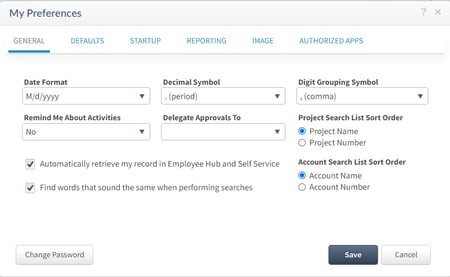
While the Deltek admin can configure the settings for the company, security roles, and even specific users, you can personalize some of the Vantagepoint experience just for you! By clicking on the gear in the top right corner, then selecting “My Preferences,” there are some ways that you can personalize your experience. Some of those include:  

  • Set your preferred project search sort order. You can choose to sort the project lists by Project Name or Project Number.  
  • Choose whether you select saved searches or records when running a report. 
  • Choose whether you want to default to an accounting period or be prompted to select an accounting period upon initial log-on to Vantagepoint.  
  • If your firm has turned on the Contact Qualification settings, you can choose the default Qualified status as either New Lead or Qualified Lead.  
  • You can set your default Country for all addresses in the system.  
  • You can choose what you want to load initially when you log into Vantagepoint. Options include the Application last used, the default Welcome Page, or you can select a specific application.    

2 - my preferences

#3 – Access Vantagepoint from Your Phone 

This is often one of the most overlooked features of Vantagepoint – the mobile apps! Deltek has created two mobile apps specifically for Vantagepoint. One is for time and expense and one is specifically for CRM. Both are available for both iPhone and Android users. Stop what you’re doing right now, open your phone, go to your app store, and then search and download at least the Deltek T&E for Vantagepoint 

The Deltek T&E for Vantagepoint allows you to complete and submit your timesheet on the go! And, with Vantagepoint 5.5, Deltek improved the navigation menu and usability to make completing your timesheet even easier. The T&E app also allows you to submit expenses from your phone too. It utilizes ICR so that you can snap a photo of a receipt and the app intelligently reads text and handwriting to populate the form using machine learning.  

Please note that you’ll need the CRM license to access the Deltek CRM for the Vantagepoint app. With this app, you’ll be able to view, add and edit records including firms, contacts, projects, and activities. And, with Vantagepoint 5.5 or later, you can snap a photo of a business card, and using the same ICR technology, it will either add or update the contact information.  

#4 – Don’t Miss an Important Alert or Assignment 

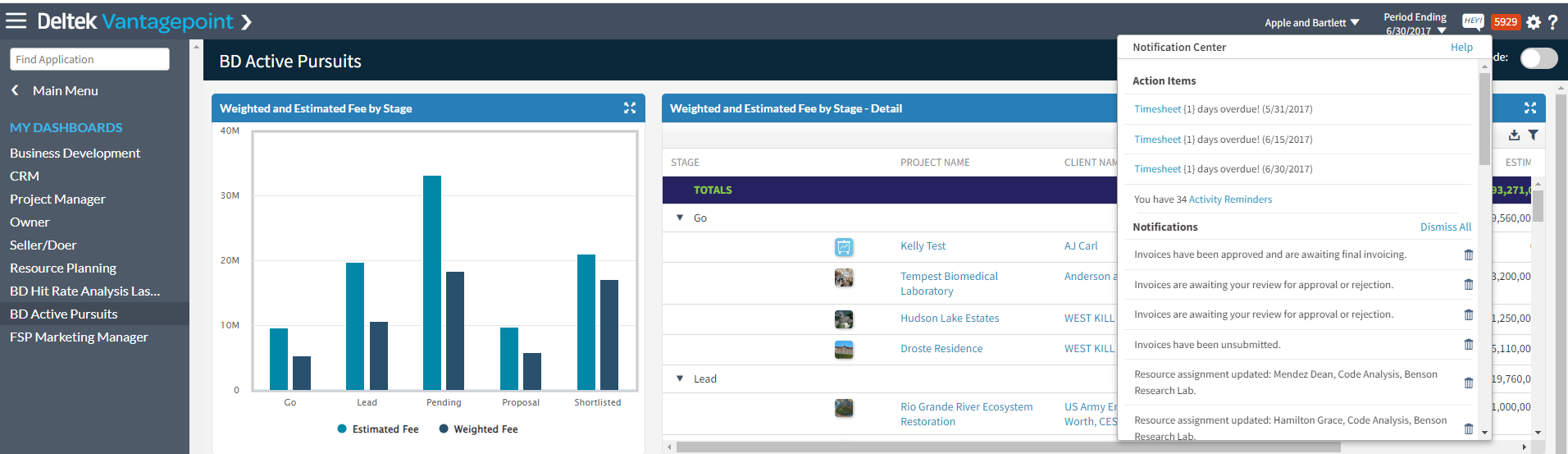
The notification center allows you to instantly see how many outstanding action items and notifications you have. You’ll know you have an important notification when a red number appears in the top right corner of Vantagepoint. This notification center is organized by Action Items and Notifications. The Action Items area includes activities, approval assignments, and past-due timesheets. The Notifications area includes workflow notifications, alerts, and failed and completed process server jobs. 

3 - notification center

#5 – Use List View to See and Update Many Records at Once 

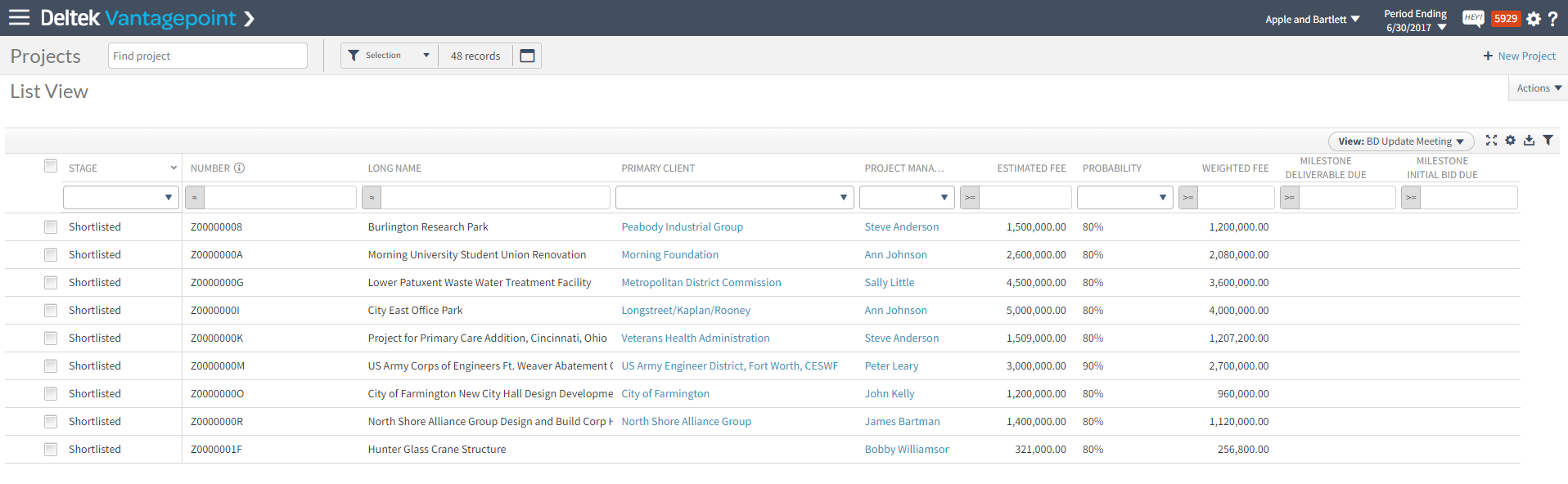
Every Hub area in Vantagepoint has the ability to show one record at a time or multiple records at once using List View. No matter what Hub you’re in, to toggle between record and list view, click the button with the three lines just to the right of the record numbers (see screenshot below). 

4 - list view

When you go into List View, you’ll see all of the records you have opened based on your search criteria. And, once you’re in List View, you can do a few different things. Below are just a few of the list view functions.  

  • Quickly sort and filter the records by clicking the little funnel icon on the right-hand side.  
  • Choose which columns (or fields) you want to see in list view by clicking the gear just above the list of records
  • Update the information in each cell by clicking in it.  
  • Download the records as they currently appear on the screen by clicking the down arrow just above the list of records. 
  • Save the view so you can apply it again or save different views based on the task for that session.   

5 - list view

#6 – Stop Wasting Time Searching for Your Information 

If you find yourself constantly looking for the same records or the same type of records over and over again, I encourage you to create a saved search. You can create saved searches for yourself or for others (based on your security settings) to quickly find the records you need. Some popular saved searches include: 

  • Projects where I am the Project Manager (or Principal or Marketing Manager), 
  • Contacts located in a certain city or state,  
  • Clients where I am the client manager, and 
  • Active pursuits which can be a list of projects in certain stages. 

Watch this mini-demo to learn more about searching and saving frequently used searches. 

#7 – Set Up Projects Faster Using Project Templates  

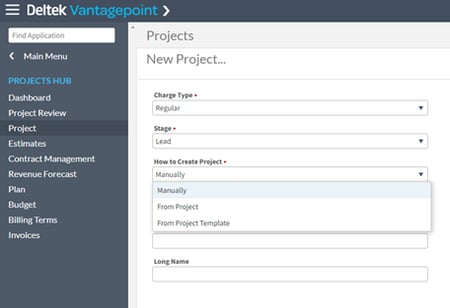
With Deltek Vantagepoint, there are most likely going to be more people creating new project records. This includes marketing, business development, project managers, and accounting. This differs from other ERP systems, including Deltek’s previous Vision system, where mostly finance or accounting open new projects. Because of Vantagepoint’s streamlined project lifecycle, you only need to open one project record that will be used from pursuit to project delivery.  

Make the project creation process faster and more consistent by utilizing project templates. When you create a project from either another project or a project template with a structure already determined, Vantagepoint will build that new project with that same structure and/or allow you to choose to edit the structure during the project creation process.    

6 - project creation

Through this process, you can choose the levels of the project that you want to use as well as add additional levels and edit values as needed before saving.  

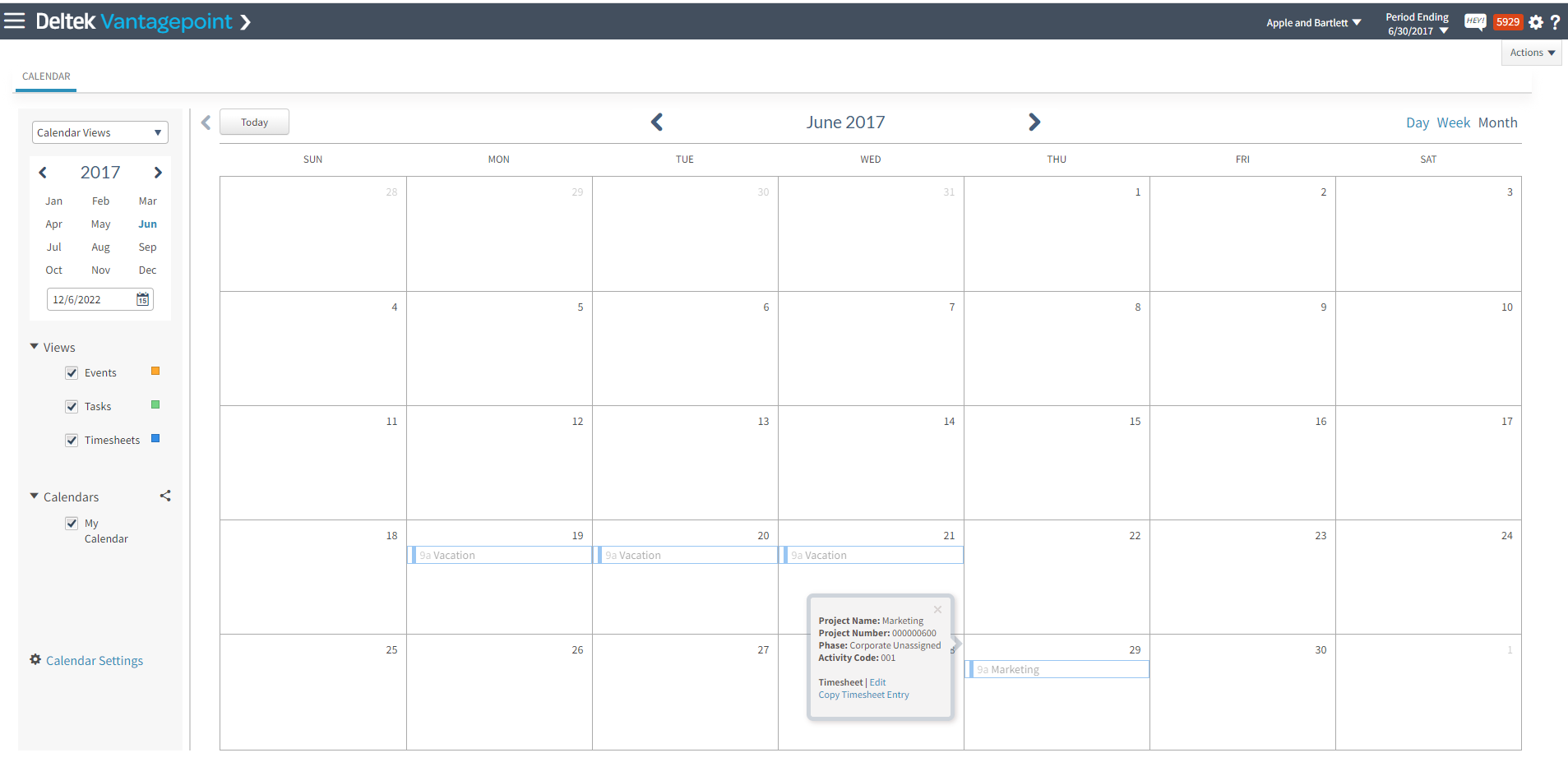
#8 – Use the Calendar to Complete Your Timesheet 

If you’re like me and find visual displays easier to read than line-item displays, then the Calendar is for you! The calendar feature is found under My Stuff and allows you to create, edit, and schedule events and activities as well as their associated tasks and timesheet entries. You can use the Calendar Timesheet Pane to add timesheet entries. In this view, you can see recent projects and upcoming assignments and drag these items to the calendar.  

7 - calendar timesheet

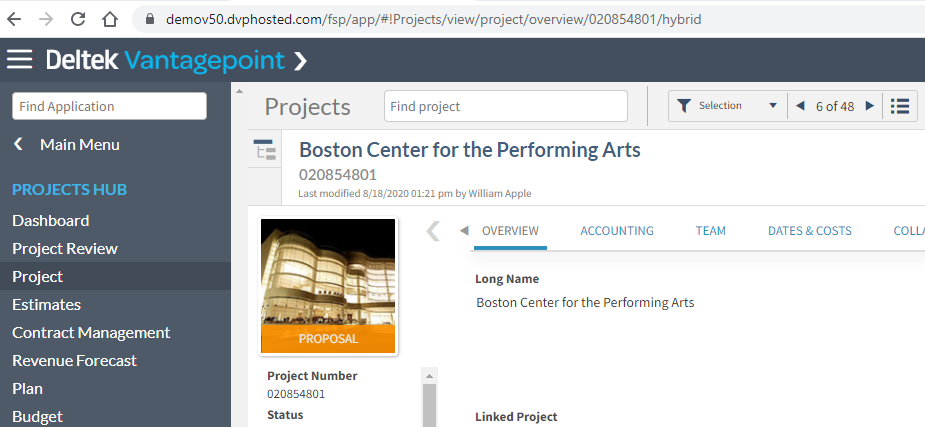
#9 – Share Vantagepoint Records Easily 

Because Deltek Vantagepoint is a web browser-based application, each record or screen has its own URL that is specific to your Vantagepoint instance. You can save your Vantagepoint URLs to specific applications, Hubs, or records similar to how you save other favorite websites, or you can share them with your coworkers.  

See the screenshot below, specifically the URL at the top of the image. I can copy and paste that URL link to send in a Teams Chat or email to one of my coworkers. When they click on the link, they will be prompted to log into Vantagepoint but then be taken directly to that project record.  

8 - project url

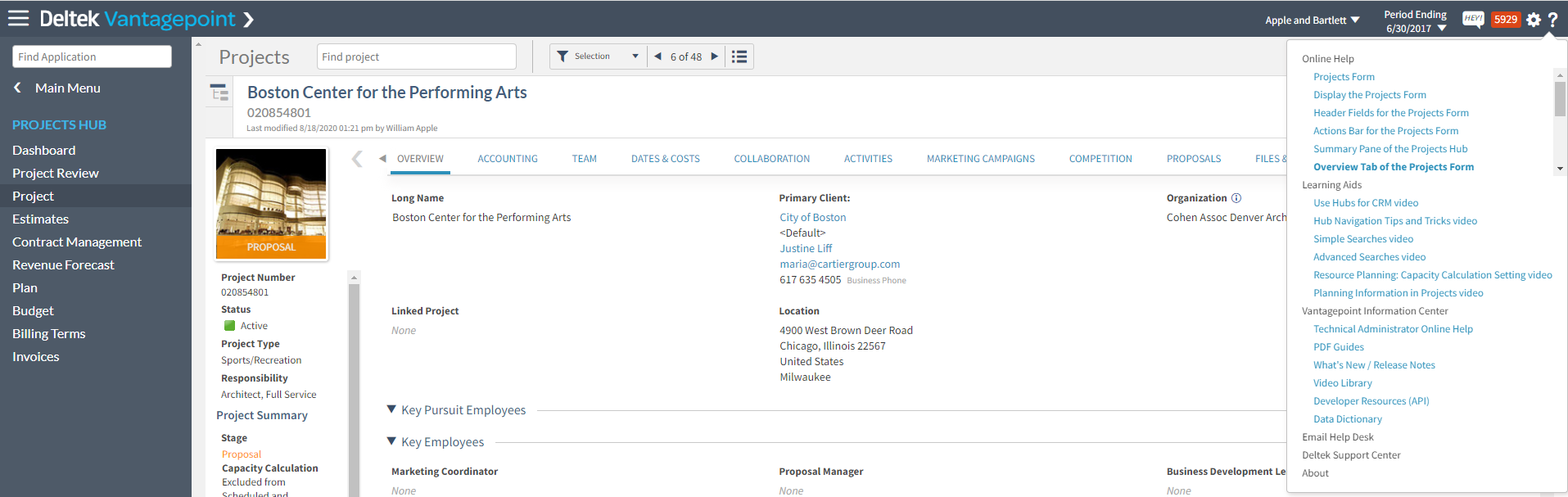
#10 – Get the Right Help, When You Need It 

Another part of Deltek’s reimagining was the help or support portal for Vantagepoint. No matter where you are in the system, you can click on the question mark in the top right corner and the Help options will change dynamically based on what Hub or application area you’re currently in. The example below shows project-related information including links to Online Help, Learning Aids, Information Center, and more.  

9 - online help 

If you find yourself not knowing what a specific record or application does, what to do next, or if you want to learn more, make sure the next step is to click the question mark in the top right corner.   

Do More with Deltek Vantagepoint 

These are just 10 tips and tricks to help you get more value from Deltek Vantagepoint. To see these and others in action, please click the image below to view our mini-demo series – Powering Project Success with Deltek Vantagepoint. Each mini-demo is less than 15 minutes and will show you how Vantagepoint empowers the different roles in your firm.  

Driving Growth with Digital Marketing: How to Optimize Digital Marketing Performance

Posted by Lindsay Diven on Oct 5, 2022, 12:00:00 AM

2022 DGS DM Optimize Digital Marketing Performance Banner

Throughout the Driving Revenue Growth with Digital Marketing Series, marketers have created and implemented the marketing campaigns and collected results. Now it’s time to analyze and optimize the marketing campaign and strategy to achieve even more efficiency towards the marketing SMART goals 

This article shares just a few of the items to review to optimize digital marketing performance. Areas to optimize include the website, conversions, content promotion and email marketing. And this article just scratches the surface but will offer some ideas to begin.  

Improving the Website 

The firm’s website is the starting place for any digital or online marketing program. It’s the key piece of online real estate that marketers have complete control of and have access to the background statistics. Some of these key statistics to track will be based on the marketing campaign goals. Others will be general performance statistics to gauge the overall site performance such as overall website traffic, time on page, etc.  

Some areas to focus on to optimize performance when it comes to the firm’s website include: 

  • Highest traffic volume pages – Look at the specific site pages that are getting the most traffic. Identify what, if any, SEO elements are on the page including specific keywords. Look at where the traffic is coming from to that page. Also, check to make sure there is a call to action (CTA) on that page to either capture that visitor’s information or move them to another page to continue the visitor's journey.  
  • Most read blog posts – Similarly to the site pages, look at the most read blog posts. Which articles or topics are getting the most views? Marketers can assume that this is the type of content or topic that their audience is interested in. Work to create either more content around this topic or repurpose those specific blog topics into other content formats.  

Increasing Conversions  

A conversion can be any action a person takes that the marketer wants them to do. For example, if there is a form on a webpage, the call to action (CTA) for that page would be to fill out the form. Each time that CTA is completed, it’s a conversion. Conversions don’t always have to be filling out a form; it can be watching a video or requesting a meeting. The idea is that the person took an action, and that action is the conversion.  

Once marketers set up their CTAs and start collecting data, it’s time to see how to increase the number of conversions. Some ways to do this are: 

  • Use CTAs – This may seem obvious, but so many AEC websites do not have any CTAs anywhere on their websites or there’s just one – “Subscribe to ACME Engineering’s Newsletter.” The easiest way to increase conversions is to start using CTAs and inserting them throughout the entire website.  
  • Make CTAs relevant to the page – Even though we just said to use CTAs, don’t just put them on every webpage and think it is done. Marketers will want to use different CTAs that are relevant to the topic of that blog or page. For example, an architecture firm has a checklist called “10 Ways to Derail an Elementary School Renovation” that they want people to download. A good place to put that CTA is on project profile pages of elementary school renovations, not their healthcare project pages.  

Using Specific Landing Pages 

Most website management systems like WordPress or HubSpot are easy to set up and update. But sometimes it’s often difficult jumping through internal hoops to get new web pages or new navigations approved internally. So, that’s where landing pages are a great alternative, especially since they are easy to create with software like HubSpot or Leadpages.  

A landing page is just that – one page where marketers can direct specific traffic too. Some ways to optimize landing pages are: 

  • Minimize the design – Remove any design elements, navigation, or CTAs, that would distract the viewer from taking the one action you want them to take. For example, remove the navigation/menu bar, remove the firm’s social media links, etc.  
  • Write a strong heading – Continuing with minimizing the design is to have a strong headline. This headline should draw the viewer in and make them want to read more. It should either describe a pain point they are looking to solve or some kind of aspiration they are trying to get to.  
  • Describe the benefits – The landing page should be promoting the goal of the marketing campaign. And that marketing campaign should be benefiting the potential client. Under the headline, describe what the item is and the benefits the potential client will receive. Be clear, concise and to the point. Less is more here.  
  • Place the form above the fold – Most of the time, landing pages have some type of form for the viewer to complete to get something (a PDF download, checklist, case study, etc.). Make sure the viewer doesn’t have to scroll down to see and fill out the form. Seconds count, and if it takes even just a second longer to realize there’s a form, you might lose them.  
  • Determine the right questions – There’s a balancing act between asking for enough information and too much information on the landing page forms. Firms often want all the information they could get about a lead, but the lead will balk at having to fill out too many fields on a form. Marketers should determine the right questions to have on their forms to qualify and segment leads, and not one more. This is usually done by testing and then optimizing. 

In online marketing circles, the conversion rates of landing pages are somewhere between 5-15%. But marketers should be tracking their own conversion rates and then use these strategies above to make changes and see if that rate increases.  

Promote Even More 

A previous article discusses how important it is to promote the content and ways to do that. Once marketers begin promoting, they can use that information to make the promotion even better. Some ways to do this include: 

  • Determine the best channel – Once marketers start getting data, they can see which channels are bringing in the most visitors and highest conversions. Once they know that, they can lean into that channel even more. 
  • Consider each social media channel – If the firm promotes content on different social media channels like LinkedIn or YouTube, how can the content be re-formatted into different media types or different language used that corresponds to that specific channel?  
  • Going back to the basics – Marketers should make sure that the graphics and media are appropriately sized and formatted for each social media channel.  
  • Test frequency to find the sweet spot – Each channel is going to dictate just how often the firm posts content. Once marketers start getting results, they have a baseline and then can start testing posting more or less to see how that affects results.  

Don’t Forget About Email Marketing 

Part of every online marketing program should include an email marketing component. AEC firms have hundreds, if not thousands, of contacts in their databases and should be communicating with those contacts (with proper permission) on a regular cadence. This is even more important for a specific marketing campaign, like the one they are trying to optimize.  

Here are just a few email marketing tips to get great performance: 

  • Make sure the marketing emails are coming from a person, not a generic email address like “Info@company.com” 
  • Write clear and clickable subject lines. Take time to develop the subject lines. Don’t wait to just write something to get the email sent. Use this tool to test each subject line. 
  • Limit CTAs to only one per email campaign, especially if it’s part of a specific marketing campaign. Make sure every link in the email goes to that specific landing page or CTA.  
  • Segment and personalize as much as possible. 
  • Optimize for mobile.   

Watch this replay where an email marketing expert shared even more email marketing advice. 

Always be Adjusting and Refining 

Once you begin your digital marketing program, start to analyze results and then optimize, it doesn't end there! Marketing is ever evolving with new interests, new content formats and new preferences in which our targeted audiences like to consume our content. So as marketers we constantly need to be keeping up with trends, especially out of our industry, looking at our metrics, and adjusting our marketing efforts. The good news is that this is fun and creative, and our job demand will remain high.  

Latest Posts