
Overall Trends from the 44th Annual Deltek Clarity A&E Report
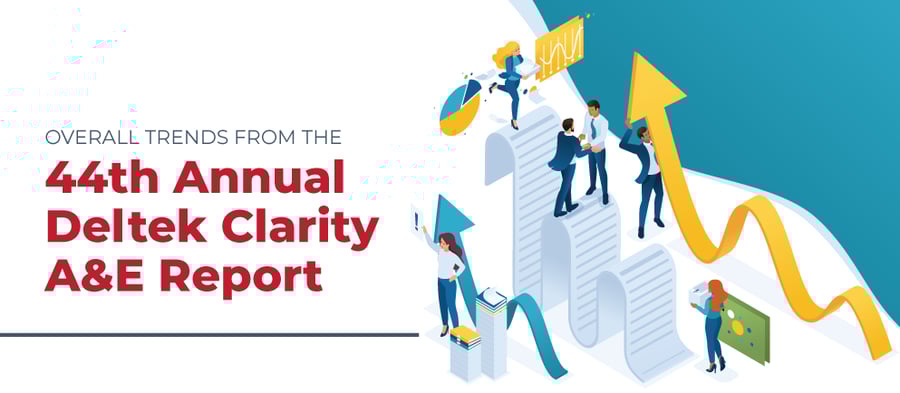
Deltek has recently unveiled the 44th Annual Clarity A&E report, providing an exclusive glimpse into the 2023 outlook of the Architecture and Engineering (A&E) Industry. Overall, while growth may cool down from 2022's excitement, the construction and engineering sectors remain optimistic. Challenges like rising costs, staffing shortages, and inflationary pressures are driving firms to focus on staff retention, development, and diversity initiatives.
Furthermore, with limited resources, strategic project selection is key. Though investment in supporting technologies has dipped, firms are revving up plans for tech implementation. Despite costs, A&E firms still shine with solid net revenue growth and improved operating profit. Here, in this blog, we will do a quick review of the overall trends seen from the 44th Annual Deltek Clarity Study.
Technology Trends
Firms are prioritizing strategic technology plans, cybersecurity, and business process improvement to achieve digital maturity and address challenges such as rising costs and talent management. While there is a desire to make strategic technological improvements, the report indicates a disconnect between goals and implementation, with firms relying on manual data entry instead of leveraging technology solutions effectively.
Data and cybersecurity remain the top IT operations challenges for firms, with cyberattacks posing a significant threat. Rising technology costs and the need to prioritize applicable trends also hinder technology adoption. However, firms are aiming to transform their use of technology, leveraging it as a competitive advantage and fundamentally changing how their businesses are run and the services offered to clients. Overcoming these challenges and maintaining a harmonious relationship between technology, project execution, and company strategy will be crucial for firms to emerge as the most competitive in the industry.
Business Development Trends
Firms face increased competition and fewer awarded proposals, necessitating strategic planning and resource utilization for conservative revenue growth. To address this, firms should focus on qualifying clients aligned with their strengths, diversify into favorable markets, and nurture existing client relationships with skilled BD talent and technology.
The A&E industry remains strong, but rising costs and staffing challenges require diligent pursuit of strategic opportunities for sustainable growth. Firms can enhance their focus by implementing formal go/no go processes, leveraging CRM solutions, and adopting hybrid BD models combining a dedicated staff with seller/doer approaches. Emphasizing opportunity evaluation and internal collaboration can benefit smaller firms. Adapting to market changes, investing in technology and talent, and prioritizing client relationships is crucial for firms to thrive in the evolving business landscape.
Project Management Trends
The 44th Annual Deltek Clarity report reveals that project managers (PMs) face challenges in gaining visibility into project management KPIs and lacking the necessary tools to manage them effectively. While there is a positive trend with more projects staying on track for schedule and budget, staffing shortages continue to hinder project performance. To tackle these issues, firms should invest in internal project manager training, better project management tools, and training for the next generation of project managers.
Staffing challenges remain the top obstacle for A&E firms, impacting project delivery and potentially causing burnout among existing staff. To address this, firms are focusing on internal training and upskilling current employees. However, comprehensive training and professional development are crucial to equip PMs with the required skills. Additionally, improving project information management, quality control, and collaboration can enhance project performance and mitigate risks. Emphasizing both financial and non-financial KPIs, along with leveraging project technology and financial tracking tools, can lead to improved project outcomes and profitability.
Human Capital Management Trends
A&E firms are focusing on developing and cross-training existing staff to meet project demands amid challenges in staffing and rising hiring costs. They prioritize succession planning, performance management, and talent nurturing to improve retention. To address talent acquisition challenges, firms are re-evaluating position requirements, considering trainable candidates with complementary skills, and offering competitive compensation. Engaging diverse candidates, providing upskilling opportunities, and championing operational tools are crucial for attracting and retaining talent.
In the competitive talent landscape, firms must strategically attract and retain employees by adapting to evolving workforce preferences, such as remote work options and positive company culture. They shift engagement strategies, offer visible career development plans, and track key performance indicators related to employee management and retention. By implementing these approaches, firms aim to improve their talent acquisition processes and support project profitability.
Financial Management Trends
Firms achieved significant financial success in 2022, surpassing their bullish goals and delivering improvements in operating profit. They effectively leveraged direct labor costs and subconsultants to drive revenue growth, outpacing growth in headcount and wages. Strategic investments were made during favorable economic conditions, resulting in strong revenue growth and improved financial metrics.
However, firms are facing several financial challenges that need to be addressed to sustain their performance. Finding and retaining qualified staff remains the top concern, although firms have been successful in leveraging their workforce and achieving high net revenues per employee. Increasing profitability and managing growth are also key areas of focus. Firms are refining their strategies, utilizing technology and process improvements to reduce project delivery costs and balance out rising labor costs.
To maintain their financial performance, firms need to prioritize the overall health and satisfaction of their workforce. Retaining and developing impactful talent through cross-training and internal promotions are crucial. Additionally, driving timely project completion, effective billing, and collection processes are vital for capturing revenue and maintaining cash flow. Investments in business process improvements and financial management training for PMs are key areas of focus to sustain growth and manage financial returns.
Continue to Gain Valuable Insight into the A&E Industry
The 44th Annual Deltek Clarity report continues to provide valuable insight into the Architecture and Engineering industry. In this most recent study, firms are advised to prioritize technology adoption, strategic business development, effective project management, and talent management to be successful. Embracing technology trends, addressing staffing challenges, and focusing on financial management are key areas of focus for sustainable growth and profitability.
By leveraging the recommendations from the Deltek Clarity report, firms can navigate market changes, enhance their operations, and stay competitive. For more information, the entire Clarity report can be downloaded for a comprehensive view. However, don’t forget to keep an eye out for our future blogs where we will be quickly reviewing each trend of the report in more detail.