

Business Intelligence and Key Performance Indicators: So Happy Together

Establishing meaningful key performance indicators (KPIs) is vital if your firm is committed to data-driven decision making. First, you will need to determine what most clearly correlates with your company’s goals. A simple way to think about KPIs is that you can only improve what can be measured, and using today’s business intelligence (BI) offerings, measuring KPIs can be especially precise and easy to do. Let’s look at some trends in BI and the connection to KPIs.
Easier data discovery
It used to be that data discovery was only done by IT experts who created reports about crucial information regarding KPIs. This process could take many days, and by the time a report was generated, the information was irrelevant. With the continuing simplification of BI, more people can now have access to real-time analytics. Using simplified BI, anyone can drill down into the data and find answers to important questions which are related to KPIs.
Visual Analytics
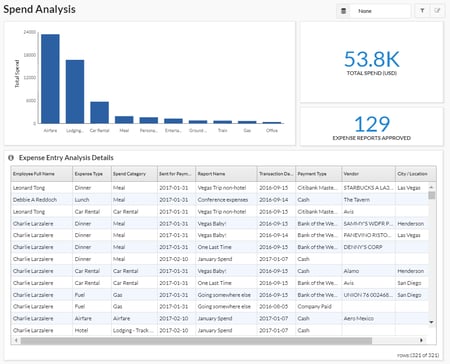
For non-analytical people, visualizations are helpful to digest key information. They activate the brain’s recognition capabilities and enable people to detect patterns in charts and graphs. Rather than having to discover data buried in tables over multiple pages, visual analytics allow for decisions to be made quickly and are a much more efficient way to evaluate KPIs.
Self-service Business Intelligence
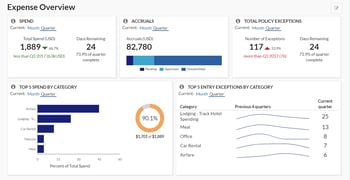
More and more business users are accessing BI solutions to make faster and better-informed decision. Each company has unique goals and so does each department. To measure specific KPIs, customized BI dashboards can be created with the features relevant to each user. These dashboards are viewed in a single screen providing immediate, accurate and up to date visual status reports.
Mobile Business Intelligence
Today’s fast paced business environment requires that people have access to critical BI anywhere, anytime. With increased accessibility and improved smartphones, BI can also be analyzed on mobile devices. Companies that use mobile BI can stay ahead of the competition because there is always access to important data for decision making and gauging KPIs.
Cloud Business Intelligence
While most BI software has been hosted on-premise, the increase in on-demand data access has led to cloud BI. There are many benefits of a cloud BI solution. It is easy to install because it is an internet-based software, adding new users is a simple and the cost is low. Cloud BI is an option for companies of all sizes within an industry that provides an instant way to assess KPIs.
Being Proactive with Business Intelligence
All firms strive to be successful and creating KPIs allows them to measure success and avoid potential negative outcomes. Using a BI solution, firms can be proactive by visually seeing KPIs and making quick decisions based upon critical information. The two go hand in hand and together they help firms make sense of it all.
 Deltek Insight 2018 is fast approaching! Have you thought about attending? This year it will be in Dallas, Texas from November 5
 Full Sail Partners is pleased to welcome Theresa DePew to our consulting team. As a Finance Consultant, she will be supporting Full Sail Partners’ clients across the United States regarding Deltek Vision and Deltek for Professional Services. Additionally, Theresa will be responsible for the implementation of Concur Expense & Invoice for those clients who choose this add on service.
 Full Sail Partners, a Concur and Deltek Platinum Partner, is excited to announce that Joel Slater has joined the firm as Product Sales Manager. In this newly created role, he will oversee all Full Sail Partners’ product sales. The firm’s product offerings include Deltek Vision, Deltek for Professional Services and Blackbox Connector solutions which integrate multiple best of breed software applications like Entrinsik Informer 5 business intelligence and Concur Expense and Invoice.
 Full Sail Partners, a Deltek Platinum Partner, is excited to announce that it has been recognized by
  Full Sail Partners, a Concur and Deltek Platinum Partner, is pleased to announce the addition of Jon Rogers to the Blackbox Connector Team. Jon has joined the
  Financial reports are essential to every organization for providing information about the health of a business to internal stakeholders as well as interested outside parties. For many firms, this is a manual process which requires significant time and resources to collect expense and invoice details, code them to the ledger, and then organize high-level summary information. Your accounting staff shouldn’t be spending their time organizing data, but instead analyzing the data to help your firm make better business decisions.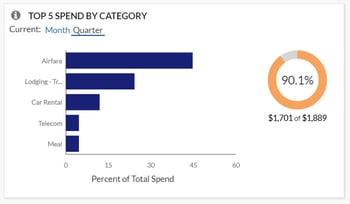
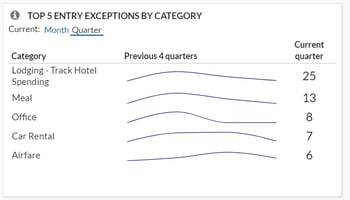
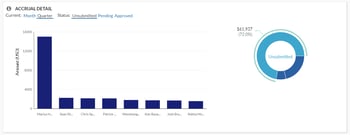
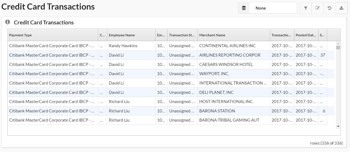
 Many people don’t realize that talent management is a key business strategy and is vital to a firm’s success. It begins with recruiting potential hires and follows employees throughout their entire life cycles with a firm. Since talent management has such a great financial impact on a firm, talent metrics should be used to show return on investment and to make informed business decisions. So, which metrics are the most significant?
 In almost every business we walk into, AP is the cause of significant, but often overlooked, strain and costs. From sorting through emailed or paper invoices and tracking checks to manually entering accounting information often requiring corrections, these tasks are huge time consumers. Do you know how many people are managing this in your business, and how many hours they spend each week/month? Think about what else they could be doing with this time and how much money could be saved.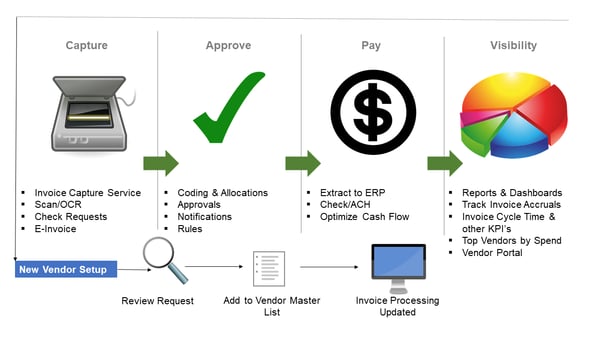
 Full Sail Partners, a Concur and Deltek Platinum Partner, is pleased to announce the addition of