Full Sail Partners Blog | Sarah Gonnella (4)

Posts by Sarah Gonnella:

Ten Traits of a Great Seller

Posted by Sarah Gonnella on September 21, 2016


Traits_of_a_Good_Seller_2.pngSales is a tough industry where success is measured by attaining goals and quotas. So why are some sales people more successful than others? The reality is, selling and buying are not completely an intellectual process and actually requires building an emotional relationship. In order for you to be a great seller, several of these personality traits should characterize you.

  1. Visionary – Seeing the future and the big picture is a key to being successful in sales. More importantly, they do not allow where they are today to determine where they are going in the future.
  2. Ambitious – Top sellers have personal drive and don’t wait for someone else to tell them to do something. They know there is no time to wait for the next opportunity to come along, but that they need to be actively seeking more opportunities.
  3. Enthusiastic – It’s hard to sell anything if you’re not excited about the product. In fact, there might be some situations where your product is inferior to the competition. But if you’re more passionate about your product it’s more likely the buyer is going to be convinced to purchase from you.
  4. Persistence – The length of a sales cycle is different for every product and other outside factors such as under-motivated decision makers. Top sellers are tenacious. They know how to stay top-of-mind with decision makers so that when they finally decide to move forward, they’re there to close the deal.
  5. Conscientious – This is a personality trait used to describe a person that is efficient and well organized. Conscientious sales people are also motivated and able to keep moving forward after facing rejection.
  6. Active Listener – It’s hard to know the challenges a client faces without them explaining them. An active listener helps drive the conversation so everyone involved is able to come to a mutual understanding about the challenge at hand. Therefore, great salespeople take the time to understand the challenge from the client’s perspective. They stay focused on the conversation and make notes  
  7. Ask the Right Questions – There’s always multiple ways to ask a question, but choosing the right wording is critical to getting the right answer. “How’s business going?” will get a simple answer. Whereas, “What’s your biggest challenge this year?” can create a conversation.
  8. Problem Solvers – Sales people are often called solution engineers and for good purpose. Sellers need to know how their product solves the problem or problems the client is facing. Additionally, they need to be able to demonstrate how the solution can solve a problem.
  9. Assertive – When going through the sales process, sales people can become passive or overly aggressive. This is a huge mistake and can quickly dissuade a prospect. Assertive sales people use conversation to understand what’s going on so they know how to properly approach the situation to keep the sale process moving forward.
  10. Create Value – There’s common saying about gifted sales peoples, “he/she could sell ice to an Eskimo.” In most terms, this means they are smooth talkers. However, what if the ice they are selling is perfectly shaped to build an igloo? Now the ice has more value to an Eskimo.

Which Traits of a Seller Do You Have?

It’s time to take your sales to the next level! Start selling more by first identifying the personality traits you already possess. Next, identify ways to improve on the traits you lack or need to hone. 

Business Development 

Debunking Myths about Deltek Vision

Posted by Sarah Gonnella on June 30, 2016

Deltek Vision Myths Are you thinking about needing a new accounting system or ERP? If your firm is still on Deltek Advantage, Sema4, or FMS or even on Quickbooks, Protrax or another system, you might be evaluating options to figure out which solution is right for you. We receive questions from prospects asking about the differences between Deltek Vision and some other product. Additionally, during our conversations over the years, we have heard many myths about Deltek Vision and we thought it was time to set the record straight, as we see it.

To start, what we have found is some software providers say they have a feature, but the quality and capabilities are completely different. Some people might say we are biased. You know what, we probably are, but for good reason:

  1. We use the product we sell. We know Deltek Vision inside and out. Can our competitors say that? Ask them.
  2. We aren’t just sales people. We care about the success of our clients and that’s not just rhetoric. We’d rather turn a sale away then have an unhappy client.
  3. We have done extensive migrations of all kinds of software. What we have found is many of our competitor’s software are done on the cheap or just completely leave out industry standard capabilities.

Below are the top 4 Deltek Vision myths:

Myth #1 - Deltek Vision is only for large firms.

Fact #1 – The numbers don’t support this claim. As a Deltek Premier Partner, the majority of the firms we serve are under 50 employees. Of those firms on Deltek Vision, 57% are under 50 employees; 33% are 25 employees or under; and 17% are 15 employees and under. Most importantly, the size of your firm should have no bearing on the solution you choose. What is more important is choosing a solution that fits your staff’s needs, the information you need to make business decisions and your firm’s growth plans. Deltek Vision fits firms of any size. Additionally, in 2012, Deltek came out with a cloud option (SaaS) for Deltek Vision that made Vision simpler to deploy at a lower entry price for any size firm. Check out this 10-person firm’s story.

Myth #2 – Deltek Vision is so expensive. 

Fact #2 - A recent 20-person firm looking at another AE ERP product was surprised to find that Deltek Vision’s cloud software option was less expensive. In fact, Deltek Vision has had a very comparable software pricing for small firms ever since the SaaS option became available. Additionally, the basic package of Deltek Vision’s SaaS offering includes 5 users of CRM for marketing and business developers and 5 users of Resource Planning for operations. The choice for us seems simple. For about the same price you get a much more robust system with Deltek Vision. Where the differences in pricing may come is with the services that are provided. Here are some key items to keep in mind when receiving an implementation quote to ensure you are getting the same level of service: 

  1. Does the quote include migration? Our experts have been doing migrations for almost 30 years and we are proud to say we probably have some of the best in the business. When it comes to migrating your data, we highly recommend importing your historical data. The level of import can vary, but it’s important to make sure you are comparing apples to apples. Will bringing over the beginning balances be enough? This is only a question you can answer, but our experience has been firms rarely want this option unless that is their only option. Do you really want to lose all of your historical information?  
  2. This is more than a transaction. You are not just buying software, you are buying a solution that needs to address the specific capabilities your firm’s needs. More importantly, you are buying into a relationship. From our perspective, we aim to make sure the software is the right fit. If it isn’t Deltek Vision, then we will raise our hand and tell you. That is why we take a consultative sales approach and conduct a discovery to uncover what is working well and identify if there are bottlenecks or inefficiencies that could help you improve your business. The discovery process should identify the output needed. More specifically, what data (reports, alerts, dashboards, etc.) is needed to make business decisions? These specific capabilities should drive what you are looking for. Make sure you are talking to a consultant during the process, not just a sales person and take time to establish a relationship. We are here to help you today and tomorrow as your firm grows. 

Myth #3 - Vision is complicated. 

Fact #3 – This fact is easily debatable. Driving a stick shift is difficult for some people, but for others it is simple. So the word itself is relative. We argue that Vision is not complicated, but rather it’s scalable. What can’t be debated is that Deltek Vision is great for growing businesses. Businesses are constantly changing and no one has a magic ball to predict when these changes will occur. Here are some key points to keep in mind if you are a growing firm looking for a new solution: 

  1. Firm Evolution - Should your firm have different contract work types; need to expand your business; or face evolutionary life cycle challenges, like ownership transition and retirement scenarios, Deltek Vision can easily accommodate growing firms. It has all the utilities, under the hood to handle these contingencies.
  2. Acquisitions – Should you acquire a new firm, all of the data can be accommodated in Deltek Vision. The same cannot be said about our AE ERP competitors. In fact, in addition to a push button conversion for Advantage users, Full Sail Partners has created push button conversion tool for Ajera. Additionally, we have a very streamlined process and economical migration price for Quickbooks. The same cannot be said of our AE ERP competitors. Because Deltek Vision has the ability to create custom fields, tabs, grids, and User Defined Info Centers (UDIC), all data can be represented. To put it simply, Deltek Vision can represent all data from other databases. However, if a firm was on Deltek Vision and tried to migrate to our competitor’s software, you would in fact lose data.

Myth #4 – Other AE ERP Solutions have the same capabilities as Deltek Vision.

Fact #4 – The differences between Deltek Vision and other AE ERP software are vast and go beyond just multi-currency capabilities. Here is a breakdown of some of those differences: 

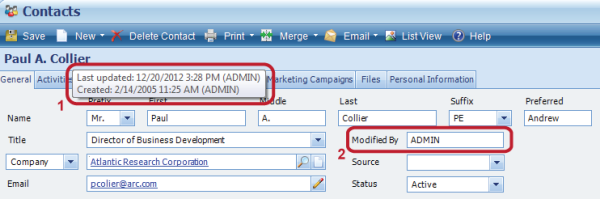
  1. Audit Trail - Deltek Vision has an audit trail. When changes are made in Deltek Vision, all changes are tracked and you know who made the change and when. This is not only important from an accounting perspective, but very important for firms that have government compliance requirements.
  2. Multi-Company - If this capability is needed, Deltek Vision allows the set-up of multiple companies including reporting with a single sign-in. One financial report can be run to see how each company is doing. Other solutions have tried to resolve this issue on the cheap by creating separate database instances requiring multiple logins. Keep in mind, you will not be able to share financial reporting for all companies and there is no automated Inter-company billing process, therefore, each company reporting is separate.
  3. CRM - If this capability is needed, Deltek Vision has an integrated, seamless CRM and proposal automation module that has a single sign-in. Additionally, Deltek Vision integrates into other marketing tools, including Constant Contact, MailChimp and Hubspot. Other AE ERP solutions may integrate with other CRM solutions. Because of that you will have a separate system that requires two separate logins. The process is far from seamless and none of them integrate with other marketing tools.
  4. Security – Deltek Vision provides the ability to lock down any field in the system and make it read only. Unfortunately, security in other AE ERP solutions are not as robust as Deltek Vision.
  5. Built-in Capabilities – Deltek Vision contains tools that provide flexibility and allows users to streamline processes and clean up data on the fly without any programming knowledge. Because of the open architecture, the system is built to grow with your firm. Here are some examples of some of the built-in capabilities that can be utilized:
    • Custom Fields – Deltek Vision provides the ability to create user defined fields, tabs, grids and info centers as your firm sees fit. As your firm grows, you may need to track further information.
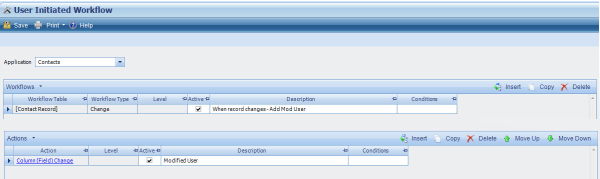
    • Workflows – Deltek Vision provides the ability to streamline processes through workflows. For example, sometimes data needs to be represented in two locations. However, you never want to a have dual entry process. In Vision, you can have data entered into one location and the data flows to the other location. View this webinar, to learn more about the power of workflows.
    • Utilities – Vision has built-in utilities to handle contingencies to easily clean-up and move data without a migration or custom expert.  
      • Need to move billed time to a new phase? There’s a button for that.
      • Need to combine two clients together? There’s a simple to use conversion tool to do that in seconds.
      • Need to move data from one location to another? There’s search and replace utility that is simple to use.
      • Have more than 999 projects and need to add another digit to your project number structure? There’s key formats for that.

Choosing the Right ERP 

Finding the right ERP solution for your business is not an easy process and is full of misguided information. Therefore, asking the right questions is imperative to get clear answers. Formulate your questions based on the needs of your firm. Then find out and compare how each ERP solution manages these requirements. Make sure there is substance. Those shiny features might just be an illusion to distract you from the lack of robust capabilities. Some AE ERP solutions try to act like Vision, but they don’t perform like Deltek Vision.  

New Call-to-Action 

3 Critical Connections for Project-Based Firms

Posted by Sarah Gonnella on June 06, 2016

Three Critical Connections Let’s admit it, running a business has plenty of challenges. Why create more by overlooking the critical connections that support your business? Throughout my tenure as a business owner and entrepreneur, I have found three connections a business must have to reduce the challenges. These are connections with employees, clients, and technology. Let’s take a look at the importance of these three connections.

Connections with Employees

For starters, firms need to create a workforce that are driven to work hard and are enthusiastic about their jobs. To achieve this, employers must find ways to create connections with employees that shows them you see them as people, not just employees.

The easiest way to show an employees you see them as people is to engage them. For example, use meetings as a time to let everyone express their ideas. Ask for their opinions, and ask them to think critically about things. At the end of the meeting, people walk away feeling as if they contributed to the better good of the organization. For more about connecting employees, check out the “9 Ways to Connect with Employees” blog.       

Connections with Clients

For project-based firms, it’s important to connect with clients throughout the entire project lifecycle. Ponder this question. Have you ever completed a project for a client and you believe they are completely satisfied with your services, but find out later that they were not happy? Sometimes even a client you know may feel uncomfortable telling you something is bothering them. So how do you identify there is an issue?  

First, work with the client to setup expectations before a project starts. Secondly, continuously check-in with a client on a regular basis during the project lifecycle to manage expectations of the entire team. One of the best ways to do this is through an automated feedback process. Watch this vlog, “Client Connections – Create Unique Client Experiences” for more ideas about connecting with clients. 

Connections with Technology

Most if not all businesses use technology to support their operations. The question here is, how many different systems does a business use and how do they connect? In reality, they usually don’t seamlessly connect and share information. As a result, critical business data is stored in multiple systems, making it difficult for business leaders to make informed decisions.

For businesses to be successful, systems and applications must be in place to support all departments. Although each application is designed to support a specific function of the business, the data for these systems should start with a core ERP system and have the ability to connect to other critical systems. This allows for clear visibility throughout the entire organization. Interested to learn how you can connect to other external systems? Watch this vlog, “Systems Connections – Is Your Critical Technology Connected?” to learn more.    

Connecting It All Together

A project-based firm is so much more than the service they provide; rather, it is a network of connections that require special attention. It is important to connect and communicate with employees and clients in order to build a sturdy foundation for your business to grow from. Connecting with technology is equally as important, as doing so can maximize efficiency in operations while also providing an edge against competitors. Ensuring that these three critical connections are a priority is simultaneously ensuring your business will be successful.   Deltek 37th AE Clarity Report


9 Ways to Connect with Employees

Posted by Sarah Gonnella on May 17, 2016

Connect with EmployeesWhat is the lifeblood of your business? Some might say clients and others might say employees. I tend to agree with the latter. Every company needs employees that are enthusiastic about their job and care about the company. Additionally, employees need to bring excitement and drive every day they show up to work in order for companies to be competitive. But how can a boss or employer create driven workforce? Simply by connecting with their employees. Let’s take a look at ways to connect with employees so your company can thrive.

Nine Ways to Connect with Employees

  1. Create Dialogue – The act of conversation in itself is a way to stay connected with employees. Far too often though, bosses find themselves leading conversations and doing most of the talking. As a result, employees are not engaged and the conversation is one-way. This doesn’t have to be the case. Whenever you are engaged in conversation with employees, it’s important to ask open ended questions to encourage employees to express their ideas and opinions.
  2. Keep Your Ears Open – You have two ears and one mouth for a reason. This might sound cliché, but it’s still a good thought to keep in mind. In reality, many people don’t understand how to listen. A good listener remains patient, absorbs what other people are saying, and ask engaging questions for clarity. More importantly, some people express ideas better than others, but that doesn’t diminish the value of their ideas.
  3. Give Ownership to Employees – I’m not saying give them actual ownership, although that could be appropriate at times. What I mean is to allow employees to own responsibilities and tasks within the organization. Give them the power to make decisions that truly affect their job and performance.  
  4. Provide a Career Path – Words and actions are two different things. Telling an employee they are doing well and they have a promising career with the company sounds nice, but it lacks an actual roadmap or path to where they are going and how to get there. Instead, find out what the employee’s career goals are and figure out a way to get them there. Put this in writing, and include challenging responsibilities to drive their personal growth. Additionally, include clear milestones that allow the employee to see they are achieving their goals.
  5. Educate Employees – Education doesn’t stop when you leave school and start a career. Even more, the skills we learned in school might not be exactly applicable to where your career path is going. Any company can train their employees, but how many of you educate your employee beyond their job responsibilities? Spend time educating about soft skills and even topics that help employees grow as a person. Investing in employee education provides a path to connect with your workforce. It also shows you care.
  6. Provide Guidance to Employees – One of the best learning opportunities for employees come from their boss. Furthermore, bosses provide more than explicit knowledge; they also provide a great deal of tacit knowledge. Here’s the difference. Explicit knowledge is formalized and documented. Whereas, tacit knowledge is more situational based knowledge. This experienced based knowledge is hard to teach, but as a boss, you’re in the perfect place to teach this based on your past experiences by applying this knowledge to current situations. For more about knowledge sharing, check out this whitepaper.
  7. Be Flexible with Employees – Technology has changed the way we work. The good thing about this is that many professional jobs can be accomplished from nearly anywhere with an internet connection. Additionally, these roles are no longer working from to 8:00 to 5:00, Monday through Friday and some days are longer than others are. Value your employee’s time and recognize the need for positive work to personal life balance. This allows you to connect with employees through trust, and that you know they will manage their responsibilities.
  8. Honesty is the Best Policy – Honesty is a powerful personal characteristic to exemplify. In fact, honesty is a characteristic that most, if not all leadership guides list as a key characteristic of a good leader. The reason for this is employers that are honest build confidence and trust with employees.   
  9. Always Remain Calm – Keep calm and connect with your employees. In other words, overreacting to stressful situations builds a wall between bosses and employees. By remaining calm and not screaming, employees find bosses more approachable and open minded.

Make It about the Employee

What this all boils down to is that employees want to be seen as people and to know that the company is invested into them. So in order to connect with employees, your goal should be to create a culture that empowers employees and shows you value them. After all, you want them to value the company as well.  

Talent Management for Dummies, Deltek

Deltek Vision How-To Series: Search and Replace Utility

Posted by Sarah Gonnella on February 24, 2016

Deltek Vision Search and ReplaceDid you know you can quickly update data in seconds with Deltek Vision’s Search & Replace feature? The search and replace utility makes it possible for you to update fields globally for multiple records. Some examples of using the search and replace utility might be:

  • Making project records dormant on all levels
  • Inactivating contacts that have bounced emails 
  • Moving data from one field to another

The possibilities are endless and great for data clean-up. Be sure to check out our video demonstrating an example of using the Search and Replace Utility in Deltek Vision.

Deltek Vision How-To Series: List View

Posted by Sarah Gonnella on December 09, 2015

03_List_View.jpgDid you know in Deltek Vision you can view multiple records at one time through a list view? The list view was a featured added in version 7 allowing you the ability to group, filter, organize and quickly export a list. The List View is listed at the top of any Info Center’s top navigation allowing you to view multiple records.

Be sure to check out our video demonstrating all of the features of Deltek Vision's List View.


Introducing the Deltek Vision Constant Contact Connector

Posted by Sarah Gonnella on November 19, 2015

constant-contact-share-logo-1.gifIntroducing the Deltek Vision Constant Contact Connector! Full Sail Partners unveiled a new breed of Deltek Vision connectivity at the Deltek Insight Conference.These ready-to-go solutions included an integration to Constant Contact. This cutting edge technology allows firms to integrate to Constant Contact at a fraction of the development time and cost needed to build out a similar solution from scratch. Any Deltek Vision user can utilize this solution no matter if they are in the cloud or on-premise. 

When developing the solution, our own team was challenged by the manual process we had to go through on almost a weekly basis and heard of many other Deltek Vision users faced with the same challenge. During the development of the solution the Full Sail Partners team sought to: 

  • Allow users to utilize the existing Marketing Campaign functionality to associate contacts and leads
  • Eliminate the manual push of contact and lead data to Constant Contact
  • Provide visibility and searching capabilities to unsubscribe, open, clicks, forwards and bounce data in Vision
  • Report on single email lists in one Marketing Campaign for all email mailings or single mailings, i.e. newsletters
  • Weed out duplicates and poorly formatted email addresses prior to mailings 

We invite you to view our video to learn more about our Deltek Vision Constant Contact Connector. Additionally, Full Sail Partners has partnered with Constant Contact to also offer new Constant Contact clients a discount off your subscription. Happy marketing!   


Interested in Connecting Your Deltek Vision System to the Outside World?

Want to learn more about this new breed of API connection tool that can be used on-premise and in the cloud? Full Sail Partners the first and only solution provider to bring you applications that can immediately connect to your Deltek Vision product with little to no effort from your IT department. Start doing more with your Deltek Vision system!

Blackbox Connector


Ignoring Client Retention Can Impact Profits

Posted by Sarah Gonnella on October 07, 2015

client centricAre you responsible for handling client complaints? As an Owner of a firm, I know that figuring out a way to proactively identify issues before they become bigger is a key concern for most executives. The Society for Marketing Professional Services (SMPS) conducted research on this topic and found that the average business never hears from 96% of unhappy clients. Businesses dedicate money to attracting new clients each year, yet a key area that is overlooked is developing a client retention plan. 

How Do You Calculate Client Retention Rates?

It seems like almost every firm I speak with in the AEC industry states their client retention rate is 80%. However, is that a good or bad rate? Let’s breakdown some definitions: 

  • Attrition rate is the percentage of clients you have lost over a given period
  • Retention rate is the percentage of clients you have retained over a given period 

So if your client retention rate is 80% then that means your attrition rate is 20%, no matter how many new clients you obtain. Here is how to calculate client retention rates

Client Retention Rate = ((CE-CN)/CS)) x 100 

Clients End (CE) = Number of clients at END of period

Clients New (CN) = Number of NEW clients acquired during period

Clients Start (CS) = Number of clients at START of period

Client Retention Impacts Profits

When you take into account that SMPS reports it takes six to seven times more effort to obtain a new client than retain an existing client. It would seem that focusing on client retention would be a no brainer. Yet does your firm even have a plan for client retention and do you track it? 

A study by Bain & Company shows that even a five percent increase in client retention can lead to an increase in profits of between 25 and 95 percent. Let’s do the math. Envision the following is true for your firm: 

  • Your firm makes $2M a year
  • Has a profit of 10% or $200,000 at the end of the year
  • Has 50 clients at the beginning of the year
  • Has a 80% client retention rate (kept 40 clients) at the end of the year

So, let’s say that our goal is to increase client retention to 85%. By increasing your client retention by 5% you could increase your profits to $250,000 (13%) or $390,000 (20%). Have you connected the dots? Profits increase because you are spending less time trying to win new clients and more time making sure you are managing the expectations of your existing clients. 

Why Clients Leave and How to Prevent It

So now that we know why it’s important, let’s understand more about why clients leave. SMPS found that 68% of clients leave firms because of an attitude of indifference toward the client by some employee and only 9% leave for competitive reasons, which most firms think is the cause. Yet as previously pointed out most firms don’t even know there is an issue. 

The obvious answer to resolve this challenge is talk to the client and obtain feedback periodically, yet few firms do it and fewer do it consistently well. Understanding what motivates clients and how to make your services relevant to them is fundamental to building strong client relationships. Obtaining feedback is important for executives and marketing to monitor, but the key way to ensure the relationship is strong is to provide a systematic way, like the Client Feedback Tool, for Project Managers to know when to reach out throughout the lifecycle of the project. Not just at the end. 

Benefits of Feedback

Successful companies know the critical importance of reaching out to their clients for feedback and service firms that ARE monitoring client feedback are: 

  • Differentiating themselves
  • Gaining great insight to better serve their clients
  • Discovering what clients find of value
  • Identifying clients that will pay a premium for their services
  • Increasing profits
  • Improving staff retention
  • and much more

Reach out to us today to find out more about monitoring feedback and developing a client retention plan for your firm.
 

New Call-to-action

Latest Posts