Full Sail Partners Blog (18)

Driving Growth with Digital Marketing: What is Digital Marketing

Posted by Lindsay Diven on Aug 18, 2021, 12:00:00 AM

This article is the first in the Driving Growth with Digital Marketing series. This series will walk A/E/C firms through how to develop a digital marketing program that will raise brand awareness, capture new leads, and increase revenue.

But, before the series covers the nuts and bolts of how to do this, let’s define digital marketing, its history and how it can benefit A/E/C firms.

Driving Growth with Digital Marketing logo version 2

Digital Marketing Defined

Digital marketing is defined as any marketing that uses electronic devices to convey promotional messages and measure its impact. Typically, these marketing practices include marketing campaigns that appear on computers, phones, tablets, or other electronic devices. It takes many forms including videos, emails, and social media posts. Additionally, it includes organic content and paid content such as display ads. Digital marketing is often compared to “traditional marketing” like magazine ads, billboards, and direct mail.

The History of Digital Marketing

The term Digital Marketing was first coined in the 1990s when customer relationship management (CRM) software became a significant factor in marketing technology. Then in 1994, the first clickable banner ad went live for the “You Will” campaign by AT&T. Over the first four months of it going live, 44% of all people who saw it clicked on the ad.

In the 2000s, with increased internet usage and the birth of the iPhone, customers began to search products and make decisions about their needs online first, instead of consulting a salesperson. This encouraged marketers to find new ways to integrate digital technology into market development.

Digital marketing took another step forward in 2007 when marketing automation was developed. Marketing automation is the process by which software is used to automate conventional marketing processes. With this new technology, marketers could launch multichannel marketing campaigns based on the customers specific activities.

After that, social media including Facebook, LinkedIn, and Twitter made consumers even more dependent on digital applications in their daily lives. Now customers and potential customers expect a seamless user experience across different channels when searching for a firm’s information.

Digital Marketing Campaign Types

Digital marketing can consist of both online and non-internet channels and strategies. Common online digital marketing channels and strategies consist of:

  • Search engine optimization (SEO)
  • Search engine marketing (SEM)
  • Content marketing
  • Inbound marketing
  • Influencer marketing
  • Social media marketing
  • Email marketing
  • Display advertising
  • Pay per click advertising (PPC)

Off-line or non-internet digital channels and strategies consist of:

  • Television
  • Text message campaigns (SMS and MMS)
  • Virtual displays or electronic billboards such as at conferences or events
  • Custom apps
  • Cold calling

The Driving Growth with Digital Marketing series will go more in-depth on several of these digital marketing strategies. Click on the image below to be alerted when a new article in the series is available.

Goals for Digital Marketing

We live in a digital age, and millions of people spend most of their time on digital platforms including their computers and phones. Marketing is all about connecting with targeted contacts in the right place, at the right time, and if the contacts are plentiful online, then that’s where the best marketing strategies should be implemented.

One goal of digital marketing is to raise brand awareness. Recent trends show businesses and digital marketers are prioritizing brand awareness, focusing more of their digital marketing efforts on cultivating brand recognition and recall than in previous years. This is evidenced by a 2019 Content Marketing Institute study, which found that 81% of digital marketers have worked on enhancing brand recognition over the past year. Another Content Marketing Institute survey revealed 89% of B2B marketers now believe improving brand awareness to be more important than efforts directed at increasing sales.

Another goal for digital marketing is lead nurturing. Many A/E/C firms work with the same clients for many different projects. Because of this high rate of repeat work, the marketing goals aren’t to raise awareness to new leads, but rather, keep the firm top of mind with existing clients. Also, the sales cycle in the A/E/C industry can be long, stretching out several months, if not years. Therefore, a firm might want to stay in front of those leads between projects.

Most likely, the goals for the digital marketing program will consist of a combination of both of these for different markets and clients.

Benefits of Digital Marketing for A/E/C Firms

The agency Hinge Research conducts original research for digital and thought leadership marketing specific to the A/E/C Industry. In their 2020 study of high growth A/E/C firms, they found high growth firms are dedicating almost 27% of their revenue to marketing, and are generating 50% of new leads from digital sources.

Other benefits of developing a digital marketing program for A/E/C firms include:

  • Cost effectiveness – Compared to traditional marketing strategies such as print advertising, conference sponsorship or attendance, digital marketing is relatively low cost. Some of the digital marketing strategies only cost the time to produce the materials and the technical knowledge. Others involved purchasing relatively low-cost software and online advertising like display ads or PPC.
  • High return on investment – Because of its relatively low cost to generate new leads that could result in thousands of new firm revenue, the return on investment is very high for digital marketing. And with the proper marketing technology in place to track and attribute the marketing campaigns appropriately, it’s relatively easy to track.
  • Easier to measure – Compared to traditional marketing strategies like a print ad or conference sponsorship, with a digital campaign you can know almost immediately how it’s performing. For example, an email marketing campaign’s performance can be known within hours or the next day. The opens and clicks are a good indicator of its performance, and marketers can use that knowledge to adjust accordingly.
  • Easy to adjust – Because the performance of the digital marketing effort is known quickly, marketers will have that knowledge and can adjust other campaigns with that knowledge.
  • Easy to share – Digital marketing channels like social media posts and email campaigns can be shared with a click of a button. This helps firms create a multiplier affect and amplifies the content.
  • Precise targeting – Traditional marketing is one to many and everyone. For example, an engineering firm places a print ad in an industry publication. The engineering firm hopes that a few people who like what they see in that ad would take a positive action. Marketing over digital platforms allows for targeted campaigning. The engineering firm can now place a display ad where that ad is presented to potential contacts based on their preferences or initial action.
  • Further reach – Digital marketing gives small firms, which make up most of the A/E/C industry, the opportunity to expand their reach. Using the benefits above of low cost, precise targeting, etc. every firm that deploys a digital marketing program can play on the same field as the mega firms. A small architecture firm in Iowa can be the worldwide leader in theater acoustical engineering through digital marketing campaigns and reach theaters in Moscow or Brisbane, for example.

Propelling Forward

The A/E/C industry has often been slow compared to other industries when adopting new marketing trends. But in 2020 with the global pandemic, A/E/C firms were propelled to rapidly make changes to their marketing programs, including shifting resources to digital marketing. Knowing this, Full Sail Partners has developed the Driving Growth with Digital Marketing series. In this series, marketers and principals will learn how to develop a digital marketing program that is right for their firm. Sign up below to be notified when a new resource in the series becomes available.


Significant Technology Trends Discovered in the 42nd Deltek AE Clarity Study

Posted by Full Sail Partners on Aug 11, 2021, 12:00:00 AM

With the uncertainty of 2020 behind us, many AE firms are optimistic about the future and expect that investment in new technology will likely remain consistent. While a great number of firms are still in the early stages of moving to the cloud and making investments to support a mobile workforce, smaller tech savvy to large-sized firms have already implemented these technologies by 2021 and are seeking out IT solutions that improve project delivery and ultimately their bottom line. According to AE firms that participated in the 42nd Deltek Clarity study, adopting new technologies to support firm growth and client needs is a priority, however, selecting which technologies will produce the desired results and provide a noteworthy return on investment seems to be a challenge.  

Deltek Clarity study logo

Clarity on Technology Trends for Small Firms

Small AE firms, those with less than 50 employees, reported in the Deltek Clarity study that investments in new and emerging technologies will likely see a reduction. Likely, because many of these firms made larger than expected technology investments in supporting the needs of a remote workforce to ensure business continuity during the pandemic. Therefore, many of these small firms are refocusing efforts and spending on revenue generating resources.

Furthermore, small firms typically have smaller budgets for all departments across the board. As a result, they tend to invest in new technologies that are usually more affordable and easier to deploy firm wide. Which brings up another key finding from the Deltek Clarity study – limited internal IT expertise. Small firms and even medium-sized firms both noted that one of the largest challenges with adopting new technologies is having internal experts to help navigate the sea of technology options that serve different and unique purposes. Even more, some firms are likely unaware of which operational processes can be improved with the assistance of technology.

Medium-sized Firms Looking to Go Big

AE firms with 51 - 249 employees, commonly referred to as medium-sized firms, indicated in their responses to the Deltek Clarity study that they are eyeing big data and artificial intelligence (AI) for future technology solutions to support their organizations. However, only 18% of firms reported having an actual plan in place. With a large percentage of firms citing the aforementioned and seemingly consistent theme of lacking internal champions to identify and thoroughly vet new technology. Overall, medium-sized firms as a whole are continuing to straddle between implementing less expensive and simpler technologies with big aspirations to embrace and invest in emerging technologies large firms are already utilizing.

Large Firms Seek Clarity with Big Investments

Large AE firms, defined as having more than 250 employees, will always lead the AE industry when it comes to adopting the latest and greatest technologies since they generally have larger budgets and the ability to spend. As such, larger AE firms that participated in the Deltek Clarity study stated they are continuing to move forward with making large investments in emerging technologies like geolocation, big data and data science with no indication of slowing down. More importantly, large firms revealed in the Clarity study that they have less of a challenge with employing internal technology experts that can provide guidance on future technology investments that are aligned with the needs of the firm.

Similarities Deltek Clarity Identified for All Firms

According to the 42nd Deltek Clarity study, firms of all sizes have some shared challenges regarding technology initiatives. Unsurprisingly, data and cybersecurity lead the way like previous years and will likely continue to be the leading concern for AE firms well into the future. An encouraging finding in the Clarity study is the common strategy all firms are taking to mitigate these risks, with nearly half of respondents stating they are implementing new security policies and protocols. Even more, thirty-four percent of respondents said their firm is planning to outsource their IT administration and infrastructure. Although there are no fail proof safeguards against a cyberattack, being proactive can certainly reduce the risks which is what firms are trying to accomplish.

Do More with Technology and Deltek Clarity

One thing is clear from the Deltek Clarity study, AE firms of all sizes will have to continue to invest in technology just to stay competitive. For small and medium-sized firms that indicated they lack internal experts to help make technology investment decisions as a challenge, maybe they need to consider enlisting the assistance of a company that specialize in the technology needs of AE firms to help with these choices.

Lastly, big data and data science are quickly being adopted in the AE industry. As a result, AE firms will begin to see new technology solutions specifically tailored to meet their needs being brought to market over the next few years. Which adds more complexity for firms when it comes time to decide which technology solutions they should pursue in the future.

Business Intelligence Users Can Visualize More with Entrinsik Informer 5.4

Posted by Timothy Burns on Aug 4, 2021, 12:00:00 AM

Seeing is believing, and with Entrinsik Informer, many different types of professional services firms already have the ability to quickly visualize and analyze data to make informed business decisions. Informer, a highly ranked business intelligence (BI) solution, allows users firmwide to create customized dashboards and easily drill down into the data pertaining to their specific department and role to find the answers to questions or get status reports on areas of concern.

Informer BI logo

So much insight can be gained already using Informer. However, with the latest release of Entrinsik Informer 5.4, employees at professional services firms now have new and improved features to improve data visualization.

Enhancements with Informer Template Creation

Templates are an exciting new feature in Informer 5.4. Templates are custom formatted outputs using HTML coding. This allows total pixel-perfect control over the end product. The template code is in HTML, but being an HTML expert is not required. Many users of the Informer business intelligence tool have little or no HTML experience when they first start. Some even creating a template in less than a day.

Using the data that resides in a firm’s Deltek Vision or Vantagepoint system, firm employees are able to customize the final output into almost any format. The first step is to get the data organized into datasets so that it is easily available for the template. Then it is simply creating the template in the format the user wants.

Within the template, logical formulas can be applied. For example, if the invoice on an accounts receivable (AR) statement is past due, it can be shown in yellow highlight, or if survey is checked in an opportunity, specific survey language can be inserted into the agreement that is being sent to the client.

Additionally, users will be able to create a CSS (Cascading Styles Sheet) for templates to standardize the firm’s output and have logos readily available. Even more, there is also a way to save those commonly used expressions, so it is not necessary to retype every time.

Some of the uses for the templated output are:

  • Client Agreements
  • Compensation Reports
  • Financial Reports
  • Project Status for Clients
  • AR Statements
  • Custom Invoices
  • Governmental Reporting (DOT reports)

Once a templated output is set up, it is repeatable and can be shared firm-wide with the appropriate staff.

New Ways to Look at Data

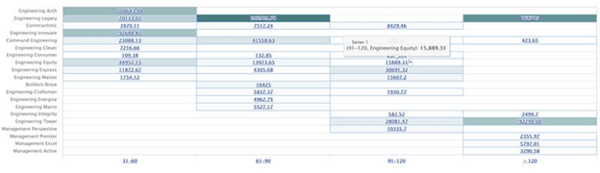
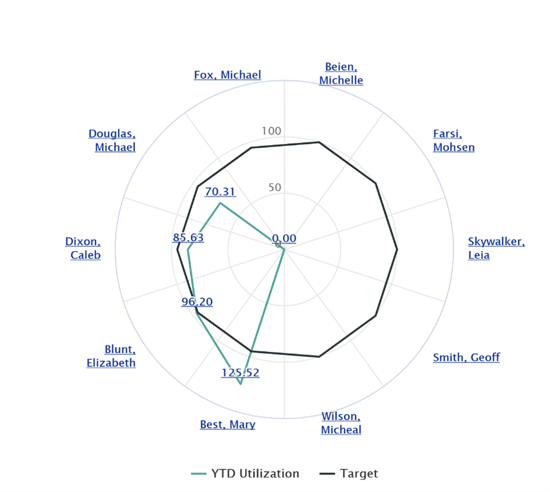
Informer 5.4 also offers different ways to visualize data. Within the Informer 5.4 visuals tab, new visualization charts are available, heat maps and spider charts, which allow fresh perspectives to analyze important data.

A heat map is a graphical representation of data where values are guided by color accent with the deeper the shade, the higher the value. Heat maps are a great way to see concentrations in the data and are really useful if there is a lot of data to manage. In this example, at first glance, the color variations easily indicate the different values and can guide evaluation.

Informer heat map chart example

A spider chart, by comparison, is a helpful way of showing outliers. For example, a spider chart may show employees with the highest or lowest utilization. By viewing the chart, it is apparent that Mary Best is exceeding her utilization target, while Michelle Beien, Moshen Farsi, Leia Skywalker and Geoff Smith are not.

Informer spider chart example

See More than Before with Informer 5.4

The Entrinsik Informer 5.4 release was developed to improve how users can take their BI further and visualize their data so that better and quicker decisions can be made. With this newest release, users of Informer across the firm will have even better options for visualizing their data. And, going into the future, as BI needs continue to evolve so will Entrinsik Informer to meet them.

42nd Deltek A&E Clarity Study Finds Business Development Embraced New Strategies

Posted by Full Sail Partners on Jul 7, 2021, 12:00:00 AM

Overall, the majority of respondents to the Deltek A&E Clarity study shared an optimistic view about opportunities and growth potential in coming years. Conversely, the long-term effects of the global pandemic did shock the industry with handshakes and face-to-face meetings becoming collateral casualties. As a result, the loss of these interpersonal connections was far greater and impactful than many could have imagined, and this sudden mandate and frankly need to socially distance inevitably left its mark on the way people interact and nurture relationships. As a result, this year’s Deltek A&E Clarity results are that much more significant as they shed light onto the future of A&E business development tactics that firms have embraced and will likely continue to utilize well into the future.

Deltek Clarity Report logo

Top Three Business Development Challenges

Finding time to nurture client relationships seems to be a list leader year after year for the A&E industry. However, the number of respondents that listed this as a top challenge grew five percent from prior years. Increased competition is second on the list with 22% of respondents putting this as their top BD challenge. While the third top challenge was identifying new prospects, with 15% of respondents listing this as their top challenge.

Interestingly enough, 14% of respondents indicated that their firm’s business development model has dedicated BD staff, 39% have a seller/doer model, and the remainder a combination of both. Even more, firms reporting having a formal business development process declined from previous years. Identifying the exact correlation on how these different BD models and lack of processes impacts these top BD challenges is difficult to measure, however there is with some certainty a direct relationship.  

Bidding to Winning

This year’s Deltek A&E Clarity study found that more firms are employing a formal go/no go process with an increase to 75.7% with 51% stating they use a formal process for all opportunities. For firms not using a formal go/no go process, 25% are considering implementing one in the future.

For small and medium A&E firms, proposal win rates decreased by nearly two percent from last year while large firms had an increase of almost two and a half percent. On the contrary, firms of all sizes saw an increase to their capture rate with a cumulative increase of three and half percent. These differences between win rate and capture rate can be attributed to the type of work firms are pursuing and the use of a more strategic go/no go process.    

Deltek Clarity on A&E Marketing Techniques

Respondents to the 42nd Deltek A&E Clarity study indicated that they predict traditional marketing techniques like in-person trade shows and exhibits, and public relations initiatives will see a sharp decline in utilization with a transition to more modern techniques. Specifically, firms stated they will increase the use of client-specific marketing, social media, thought leadership and content marketing as the core to their overall marketing strategy. This is not to say that trade shows will be abandoned, but these will likely become more virtual and/or hybrid versions which can reduce their benefit and importance to A&E firms. Overall, it’s encouraging that A&E firms want to adopt more modern marketing techniques, but their willingness to make significant investments into these changes has yet to be seen.  

Deltek Clarity on the Future Outlook and Forecast of A&E Industry

Small firms expressed a bullish outlook when reporting on their revenue growth forecast while medium and large firms expected to experience gains in the coming years. When asked to look further out to nine years, respondents expected to see growth of five to six percent in most years indicating there is still some level of uncertainty in the market, but still being sanguine there will be an upward trend in the years to come. Generally, A&E firms are optimistic about the markets they serve and believe they will be able to increase their position within them.

Significant Deltek Clarity Business Development Findings

In summary, the 42nd Deltek A&E Clarity study found that firms are going to need to continue to rely on passive sources for new opportunities which will require nurturing existing client relationships to win more work from them and to gain referrals as well. Firms will also need to embrace business intelligence tools and strategic business development models and processes to remain competitive. Additionally, the pursuit process itself has changed and became more virtual and digitized. As a whole, A&E firms have recognized the need to revolutionize their business development strategies if they want to remain relevant and viable in the future.

Understanding the full business development findings of the 42nd Deltek A&E Clarity study truly requires comparing the results to one’s own firm. Make sure to download your free copy and use the Clarity Scorecard to benchmark your firm.

Reduce Data Analysis Time: Exception Reporting for Exceptional Professional Services Firms

Posted by Full Sail Partners on Jun 30, 2021, 12:00:00 AM

In the professional services industry, reporting is key. The common complaint amongst professionals is they don’t have time to analyze the data, since they need to just get the job done. Time is always of the essence, but true efficiency incorporates being proactive and taking the time to evaluate the data and determine what to pay attention to or worry about. This is where exception reporting comes into play. 

Many times, though, professionals aren’t really aware of the robust capabilities of exception reporting and how it can save firm leaders and employees valuable time. Oddly, there seems to be some disconnect about the real benefits of exception reporting to their firm’s bottom line.

Reports and Graphs

What is Exception Reporting?

Simply put, exception reporting can indicate a red flag to a business. Within the professional services industry, it is especially important to receive exception reporting related to projects and people. An exception report can be a report, alert and/or dashpart that notifies a user, department, or business about data that is outside of a defined expectation of what is typically acceptable. This notification indicates action should be taken. With an ERP or business intelligence system, exception reporting can be programmed to highlight parameters of values that appear outside of a defined criteria range. 

Why Use Exception Reporting?

With growing professional services firms, the more projects a firm wins, and the more employees hired, means managing more projects and employees. Anyone in the professional services industry knows that there is no such thing as a perfect project. Whether managing projects or employees, it’s important to know what needs closer attention and when to adjust a project or processes. With the ebb and flow of projects and availability of resources, those adjustments can come at any time. When done right, exception reporting can ensure a firm is addressing potential problems or weaknesses before they wreak havoc on the bottom line. 

What Are Examples of Exception Reporting for Professional Services Firms?

Exception reporting can be simple or more in-depth for professional services firms. Below are some examples of the most commonly used exception reports along with some that are less common, but highly effective within the professional services industry.

Identify Unsubmitted Timesheets with Ease

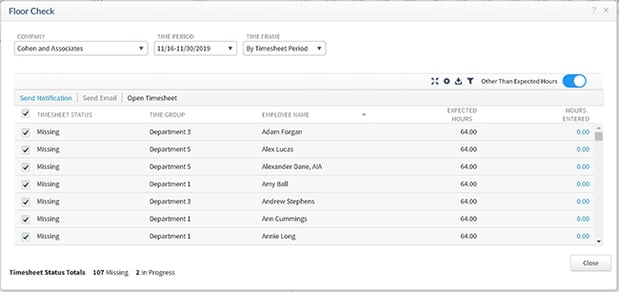
Having timesheets completed on time allows for timely billing and improved cash flow. Additionally, having the ability to list the staff who have worked less than expected hours for a selected time period lets managers know who to focus their efforts on and helps avoid mass emails to the entire company. Below is an example within Deltek Vantagepoint. Managers can identify which of their employees need to receive notifications or reminders and can quickly send one. Accounting and principals will also find it helpful to know which managers are underperforming. Additionally, business intelligence tools, like Entrinsik Informer, can provide insight in a visual way to alert those department managers who have the most employees slacking on their timesheet.

Deltek Vantagepoint Unsubmitted Timesheets - Floor Check

Draw Attention to Accounts Receivable (AR) at Risk

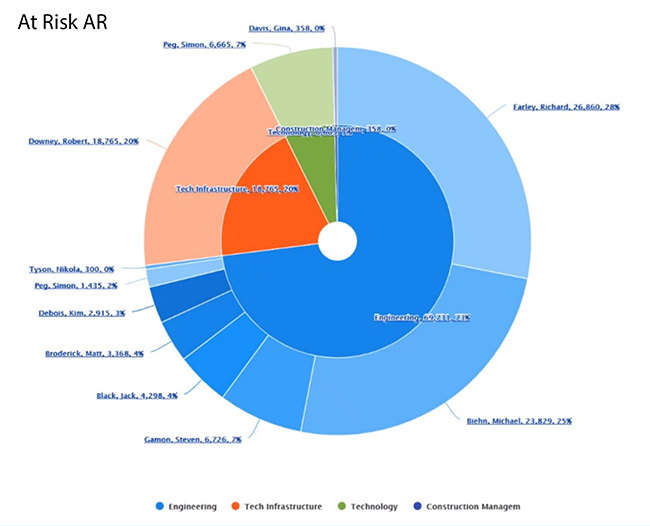
Accounts receivable “at risk” refers to the likelihood that a client or project is beyond the expected timeframe. For some firms, this may be 45 days and others may deem more than 60 days as being unacceptable. The longer the DSO (days sales outstanding) cycle, the more likely a business is offering credit to its clients. The longer the bill goes unpaid, the more likely a firm may not collect 100 percent of what is owed. Providing accounting, project managers and principals a list of “at risk” accounts allows a firm to focus just on those that are beyond the normal threshold. 

A project manager might be managing 50 projects. With an exception report, the PM can quickly see that they have 10 projects that need attention related to AR. For accounting and principals, an exception report may be one showing which project managers, principals or divisions have the most AR “at risk” to narrow down individuals or groups that need further attention.  

Entrinsik Informer At Risk AR

Resource Allocation Balancing

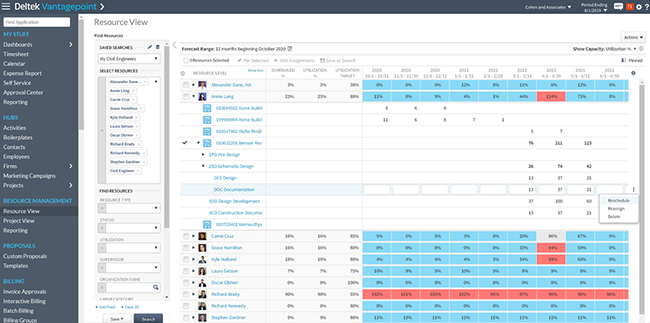
Another example of an exception report is one providing management information to demand the resources they need. With a resource allocation report for a project-based business, it outlines competing priorities required to execute on projects. It provides those overseeing projects the ability to determine who is over and underutilized allowing them to readjust those out of balance to maximize the effectiveness of the firm’s resources.

Deltek Vantagepoint Resource Allocation ReassignmentSpotting Projects in Trouble

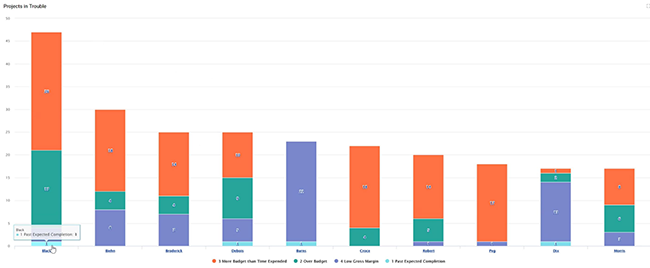
A projects in trouble report is another exception report that identifies variances from the plan or project data. This type of report identifies the reason(s) a project may potentially be in trouble. The Blackbox Connector for Entrinsik Informer has an out-of-the-box BI reporting solution that can report on common reasons a project may be in trouble and includes:

  • Over budget or approaching budget
  • Low gross margin ratio percentage
  • AR is at risk or getting old
  • Percentage of time used is beyond expected days
  • Actual hours exceed budget
  • Low expected revenue
  • Project past expected completion date
  • No current activity

4 Entrinsik Informer PMs with Potential Projects In TroubleProject Feedback to Manage Expectations

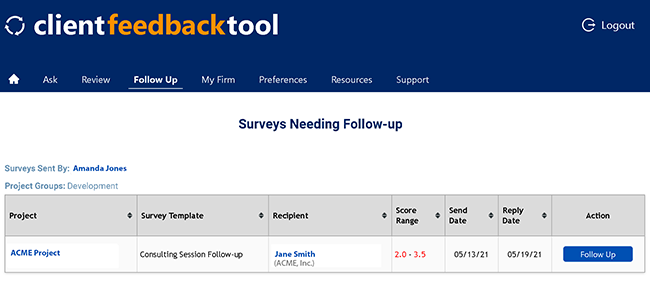
Listening to feedback from clients about a project is essential to ensure project success. Projects require adjustments along the way and the best way to ensure a project is meeting client expectations is to provide a method for clients to provide quick feedback. The most effective method for professional services firms we have seen is the Client Feedback Tool by Client Savvy. This electronic feedback is quick, effective, and provides indicators when someone records a low score. As a result, an exception report alerts the team and leaders that follow-up is required, and potential mentoring of their employees is needed.

Client Feedback Tool Surveys Needing Follow-upReduce Employee Turnover with a Burnout Report

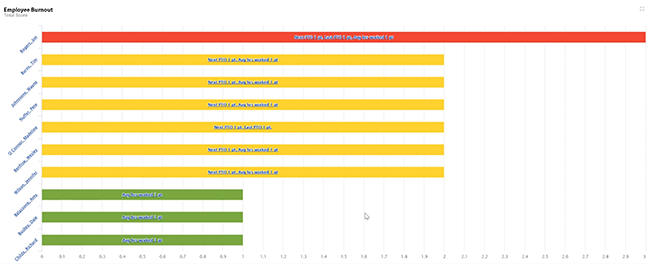
In professional services firms, a commonly used phrase is “our employees are our greatest asset.” This is true for so many reasons as they are often the primary contact with our clients. They also have the project knowledge as well as the technical skills required for project success. Having to replace an employee on a project costs time and money and can potentially result in a poor product or project delays. Ensuring that employees are maintaining a work life balance goes a long way to keeping productive staff. Providing executives and managers an exception report on identifying employees that may potentially be burnt out can help reduce turnover. In a burnout report, criteria might include employees that have:

  • Not taken PTO in the past 6 months
  • No PTO scheduled for the next 6 months
  • Consistently working more than 8 hours a day

Entrinsik Informer Employee Burnout IndicatorBeing Proactive with Exception Reporting Adds to Bottom Line

Training project managers, principals and teams on project details to look for across the board is essential. Exception reporting is a great way to quickly identify variances between what is expected and what is happening to help identify potential issues sooner. Utilizing business intelligence like exception reports offers firms the chance to proactively make adjustments and reduce data analysis time. Exception reporting can be a positive thing to help achieve better processes or avoid costly issues and should be a part of professional services firms’ operational strategies.

Preview: Email Marketing Trends for Professional Services Firms Survey Results

Posted by Lindsay Diven on Jun 23, 2021, 12:00:00 AM

In May 2021, Full Sail Partners conducted its first-ever email marketing trends survey. We wanted to gain insight as to how many firms have fully embraced email marketing as a proactive marketing strategy. And, if the effects of the worldwide pandemic, when many face-to-face meetings and conferences have been canceled, adjusted firms’ email marketing strategy and results.

Email Marketing

General B2B Statistics

Before the results from the Full Sail Partners’ survey are previewed, let’s take a look at some other statistics focused on email marketing and business to business (B2B) marketing strategies.

  • Billions of emails are sent every day. 306 billion to be exact. And, according to The Radicatti Group, that number is expected to reach 361 billion by the end of 2024.
  • Email helps you reach your clients as fast as possible. With the popularity of social media, you might think it has overtaken email as the fastest way to reach new and current clients. But the truth is that 21% of opened emails are opened within the very first hour of delivery.
  • In the annual research conducted by Content Marketing Institute in 2020:
    • 85% of B2B organizations use email marketing software to assist with content marketing
    • 81% of B2B organizations use email newsletters as part of their marketing strategy
    • 87% of B2B organizations use email to distribute their content
    • 90% of B2B organizations used email engagement as the top metric to measure content performance
  • That same research also found that email is the most reliable channel for nurturing leads to sales throughout the funnel.

Email Marketing Trends Survey Results Preview

So how do the responses from our email marketing trends survey compare to some of the national trends? Full Sail Partners invited our clients, prospects, and partners to complete the survey. The invitation was sent via email and shared on our social media channels.

Survey Demographics

The survey responses were from firms that provided mostly either engineering (41%) or construction (28%) services. Half of the responses were from firms that had either 1-50 (36%) or 51-100 (25%) employees. The other half of the responses broke down into the following: 101-500 (29%), 501-1000 (2%), and 1001+ (8%) employees.

Full Sail Partners is a Premier Partner for Deltek Vision and Vantagepoint. So, one of the questions asked if the firms responding were users of either software. Of the responses, 40% are either a Deltek Vision or Vantagepoint user, 58% were not users, and 2% said other. The one “other” response indicated that they are currently using another CRM software system.

Overall Firm Marketing Strategies

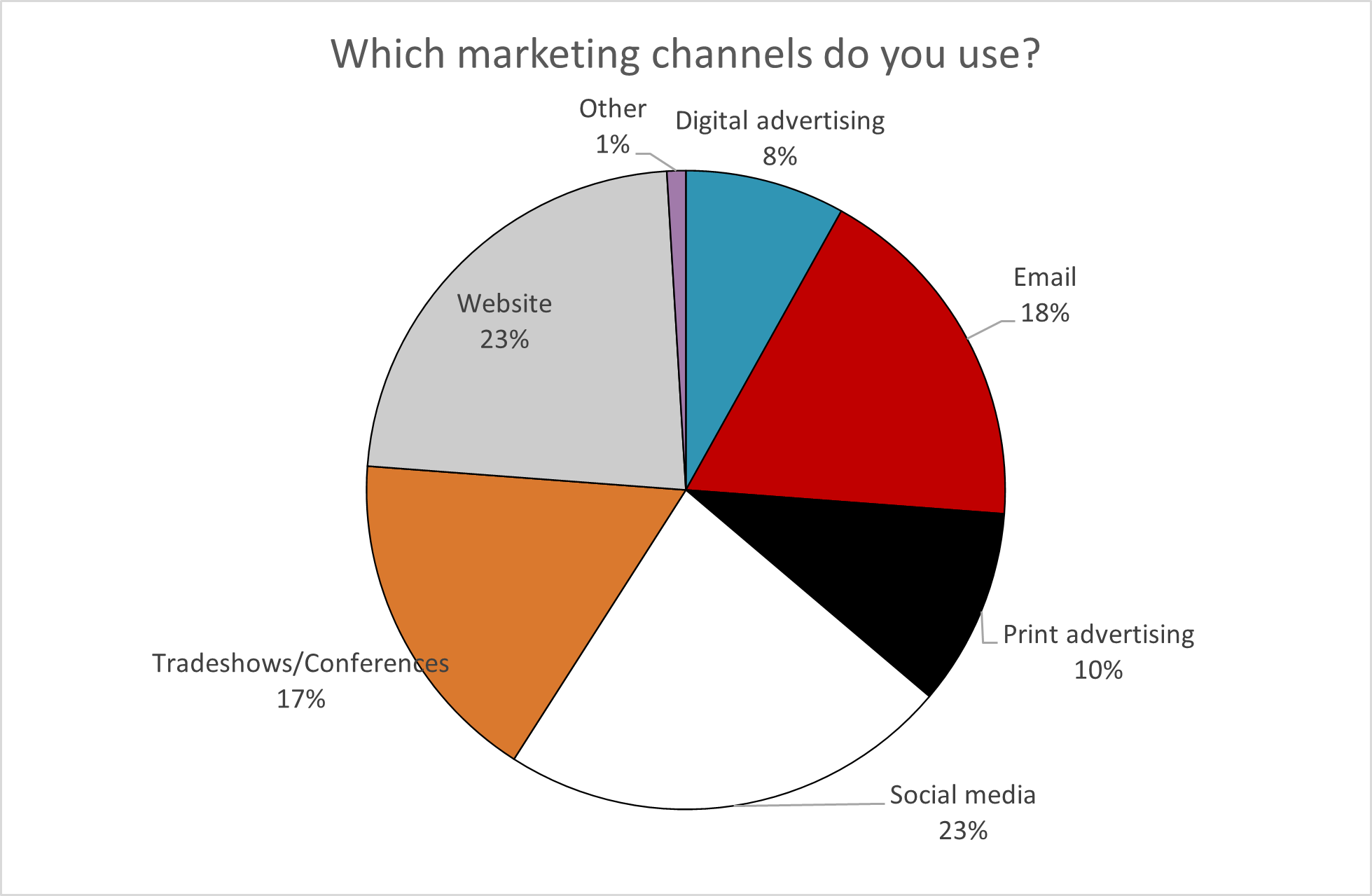
Before we asked about email marketing strategies, we asked respondents what marketing channels their firm currently uses. They could respond with multiple answers. The top three marketing channels included website, social media, and email. This seems to be consistent to the other independent research noted above.

Email Survey Image 1

Today’s Email Marketing Strategy

The survey also wanted to gauge how professional services firms are using email marketing today. We asked questions including goal/purpose for email marketing, frequency, type of email campaigns, and how the firms track success of their email marketing efforts. These were asked in a combination of quantitative and qualitative questions.

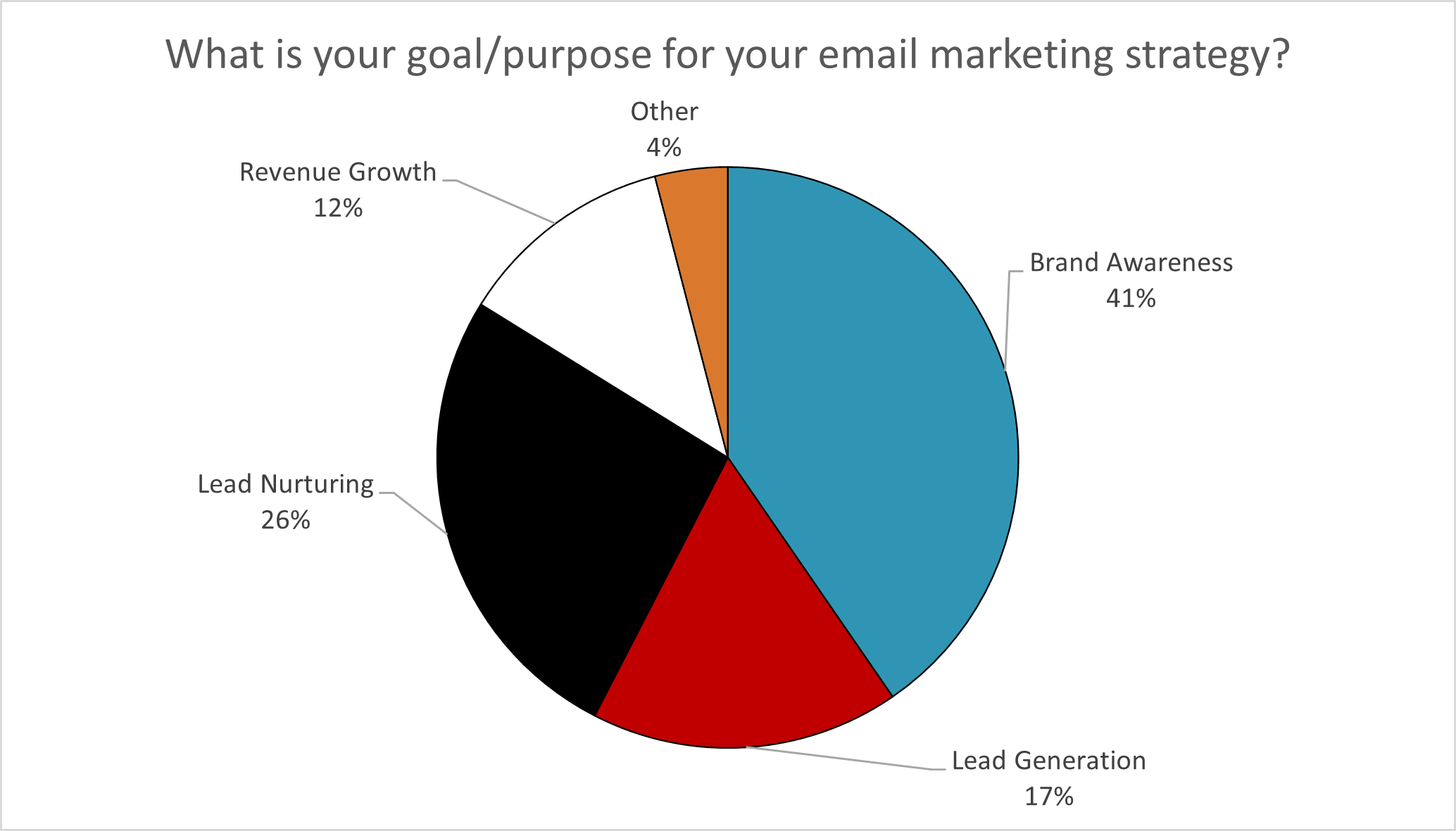
The biggest goal/purpose for email marketing is for brand awareness (41%) with lead nurturing well behind at 26% of the responses.

Email Survey Image 2

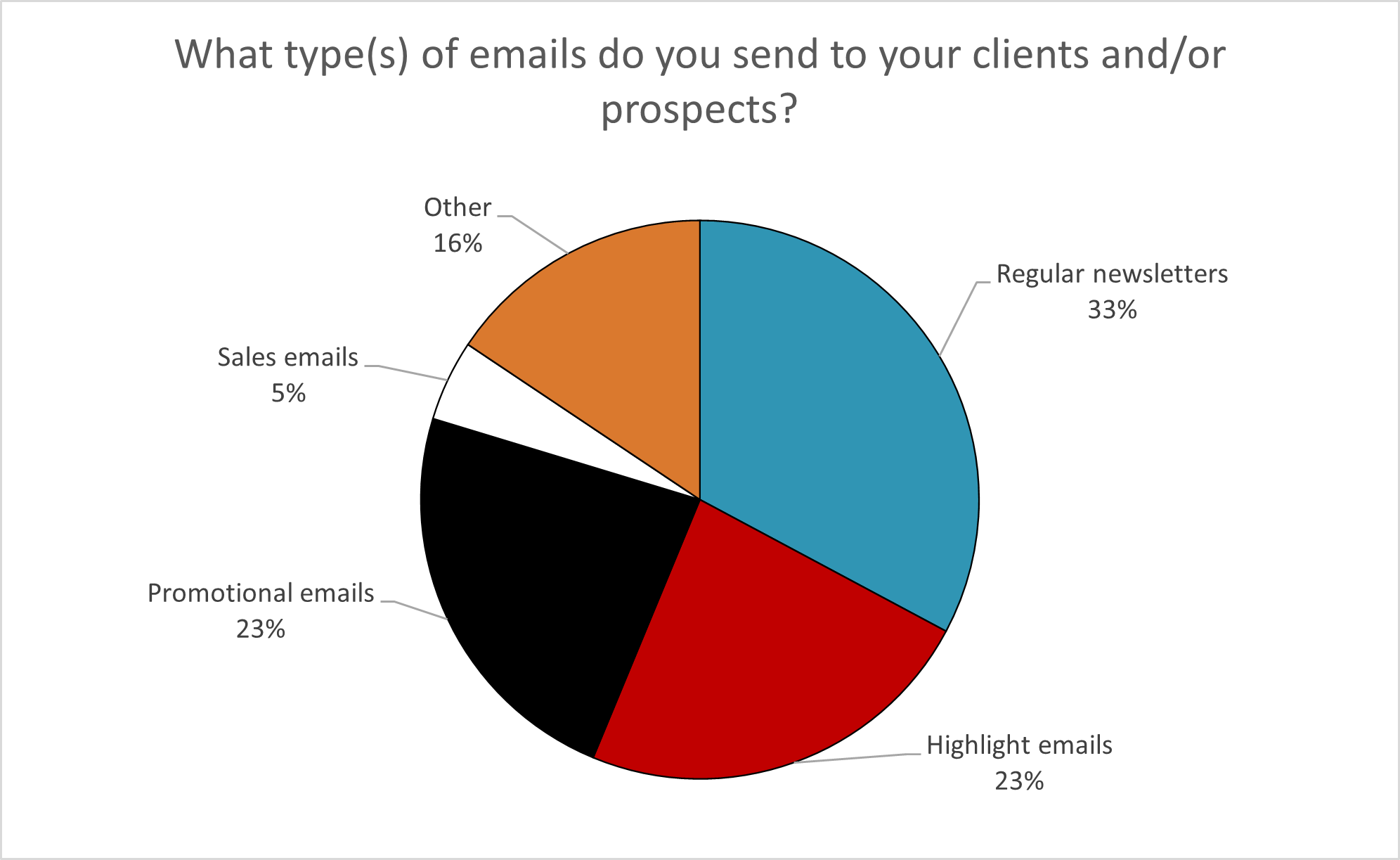
The main types of email marketing campaigns sent by the respondents included regular newsletters (33%), highlight emails (23%), and promotional emails (23%).

When asked for a brief overview of the firm’s email marketing strategy, objective responses ranged from simple holiday greetings to organized targeted campaigns. Some of the consistent qualitative response themes include:

  • Holiday greetings
  • Announcements such as new hire, employee promotions, new office, or office move
  • Sharing content produced by the firm like blog articles
  • Teaming and bid opportunity alerts to contractor and subcontractor lists
  • Event invitations around either webinars or attending conferences/tradeshows

Email Survey Image 3

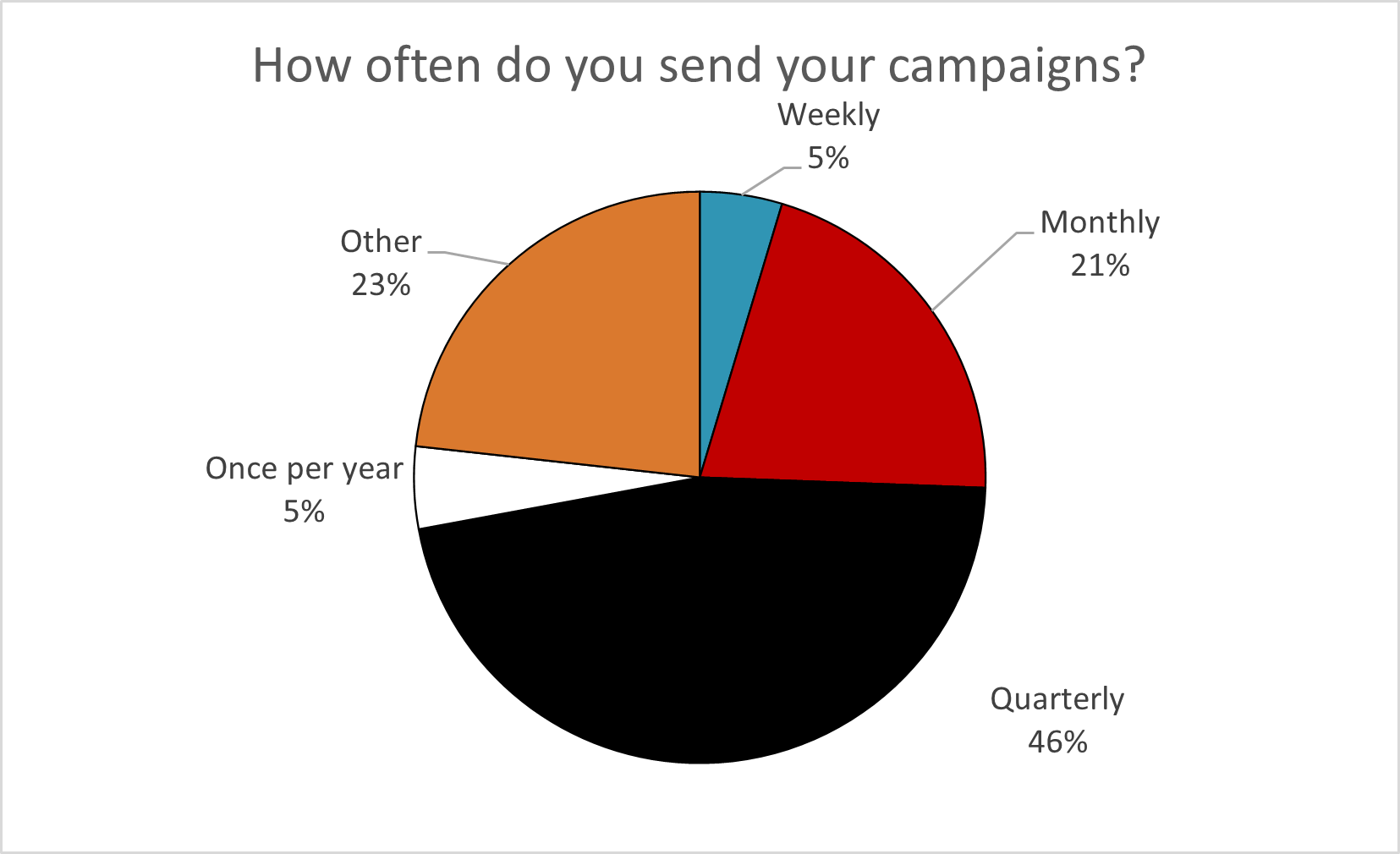
When asked how frequently email campaigns are sent, nearly half of respondents send their email campaigns quarterly (46%) with another 21% sending monthly. Some of the other responses included bi-weekly sends as well as sending depending on specific promotions.

Email Survey Image 4

Email Marketing Changes Due to Pandemic

Another reason for conducting this survey was to gauge how email marketing strategies and engagement have changed, if at all, during the pandemic. Since the beginning of the pandemic, many face-to-face meetings and conferences have been canceled or transformed into virtual events. Staying in front of clients and prospects is critical for maintaining relationships for professional services firms. And, email marketing may be one way the pandemic has affected this.

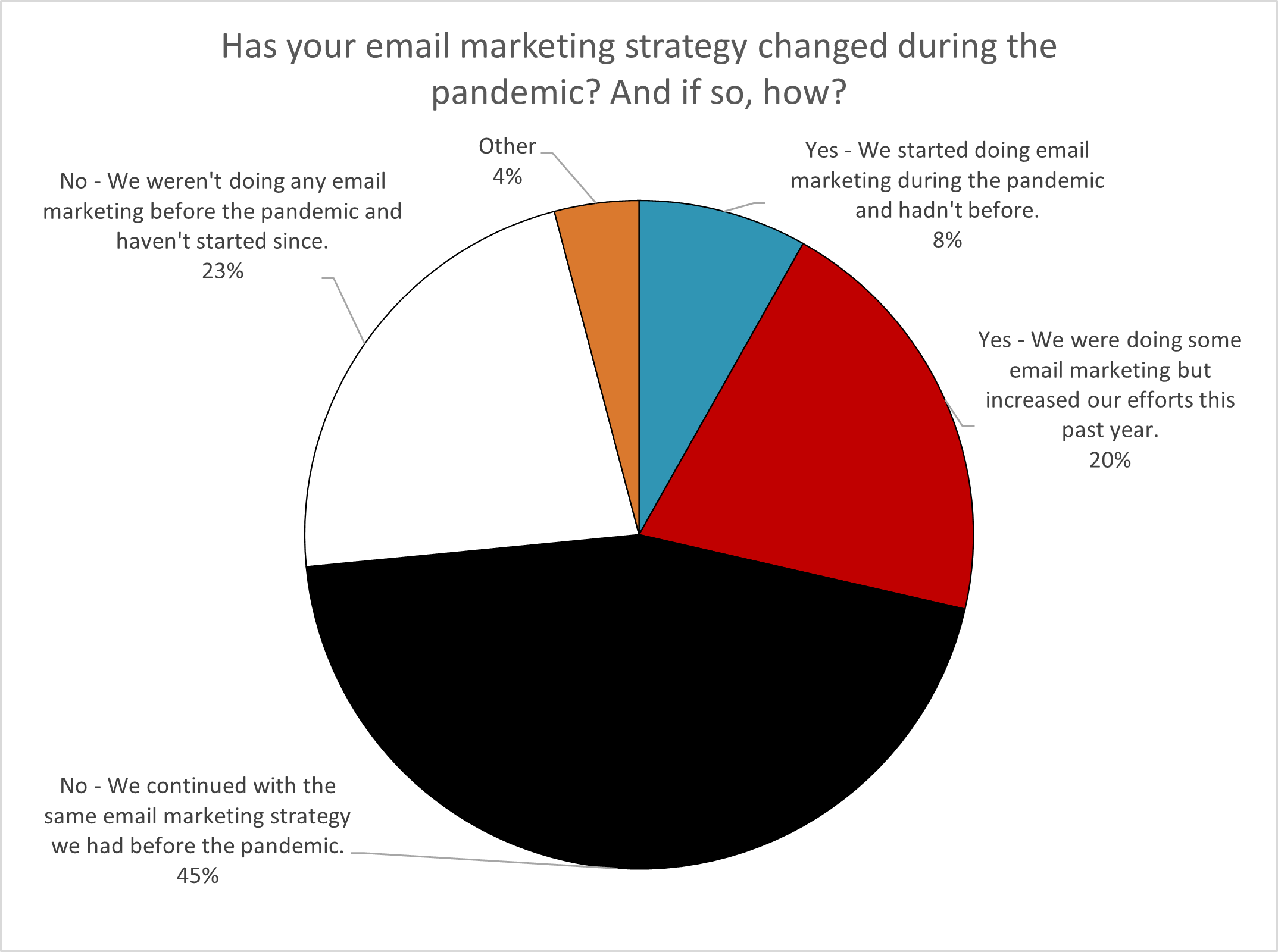
First, we wanted to know if the firms’ email marketing strategy changed during the pandemic. Nearly half of the responses said their email marketing strategy DID NOT change (45%) while 20% indicated that they did increase the amount of email marketing efforts during the pandemic. Interesting is that 23% of the responses were not doing any email marketing before the pandemic and still haven’t started.

Email Survey Image 5

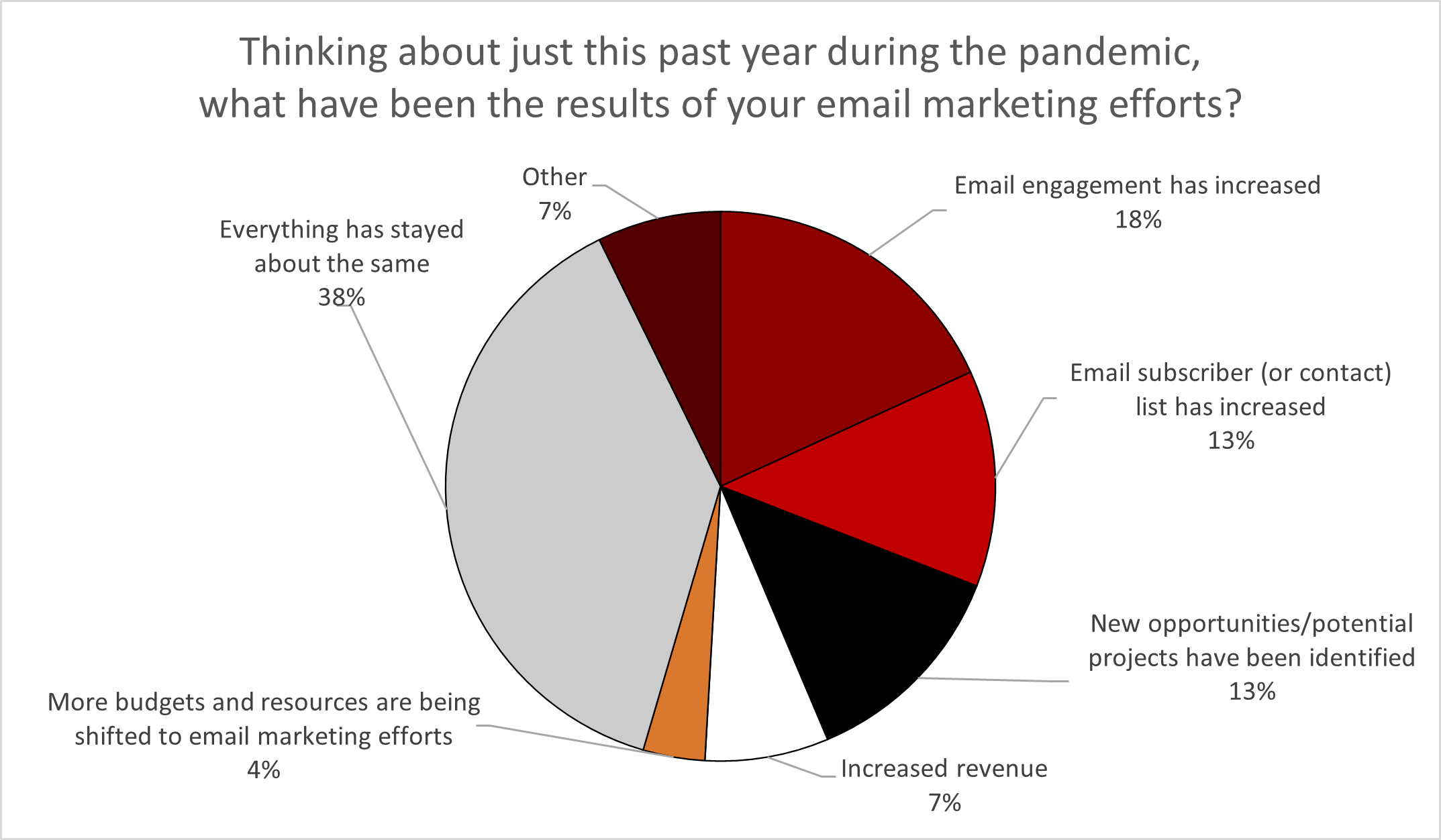
Next, we wanted to gauge the results of the firms’ email marketing efforts during this past year, regardless of any changes to their email marketing strategy. According to the responses of this survey, the majority said that everything has stayed about the same (38%). However, 18% did say that their email engagement has increased.

Email Survey Image 6

What’s Next

This is just a preview of the email marketing trends for professional services firms’ survey results. More results and recommendations will be shared on the June 30, 2021 webinar. During that webinar, Full Sail Partners along with a very special guest will be talking about:

  • Why email marketing is a must-have for professional services firms,
  • What’s working right now for B2B firms,
  • How to get started in email marketing,
  • Resources available from Full Sail Partners and SubjectLine.com

To register for this free webinar, click the image below.

Why Should You Join the CXps Community?

Posted by Full Sail Partners on Jun 16, 2021, 12:00:00 AM

Simply stated, strong client relationships are fundamental for thriving professional services (PS) firms. Therefore, proactively creating a positive client experience (CX) should be at the core of a PS firm’s mission. As simple as this effort may seem, many firms fall short in terms of meeting client expectations which inevitably becomes detrimental to their bottom line. However, there has been an influx in forward looking PS firms that are now dedicating resources to CX.

With this rapid growth and interest in CX for PS firms, the creation of a community dedicated to connecting likeminded individuals and firms has risen. CXps is the only client experience association dedicated to professional services firms. What once began as an annual conference has now evolved into so much more. The CXps community is now a nationwide network that offers monthly virtual meetups, regional in-person events, a rapidly growing library of CX content and so much more.

CXps community logo

As a client-focused firm, Full Sail Partners is a dedicated partner of the CXps community with several members of the staff actively participating in the network and others joining this year. Furthermore, the 2021 CXps annual conference was hosted virtually from May 25th to May 27th. During this year’s annual conference, trends and ideas were presented and breakout sessions allowed attendees to collaborate and share their perspectives. Additionally, Ryan Suydam with Client Savvy discussed the evolution of the CXps community and the future outlook of this rapidly growing network of CX professionals. If you are wondering what you missed, here’s what some of the Full Sail Partners’ crew members had to say about the CXps annual conference and community.  

“As a CXps newbie, I learned a lot!”

As a first timer, I have long understood the necessity for firms to ensure a good client experience, however the 2021 CXps virtual conference was the first time I was introduced to the idea of firms actually focusing on the concept of CX in their overall business strategies. During the small group breakout sessions, I was able to discover several things about CX. First, firms appear to always be seeking to increase profits whether they consider themselves to be mission, vision or purpose driven, therefore CX is significant for that reason alone. Next, that employees, no matter what level, need to have a good employee experience (EX) in order to facilitate a good CX. We also learned that a great story about a positive experience goes a long way in CX and encourages both employees and clients to be loyal to the firm. Attending this virtual CXps conference offered me new insight and perspective on the real complexity of CX.

              Jennifer Renfroe, Marketing Associate

“The CXps conference is one I look forward to every year!”

The Client Savvy team did an excellent job revamping the traditional conference format into a truly virtual experience. In this experience, you worked hands-on with a community of peers to build your CX program together.

One session of the conference took us through making the business case for a CX firm initiative. We were inspired by Ryan Suydam to “win the heads” of our firm leaders to begin a CX program. Then we broke into small groups to discuss the challenges/opportunities of how a managed CX program can create value for our specific firm. We were provided a list of different options that ranged from easier ones like pricing our work to value, not market, and reducing non-value-added project work to more advanced methods like increasing share of wallet with clients and measuring client lifetime value. We were asked to pick one or two ways we can demonstrate the value that a managed CX program could provide.

During another session, we were challenged to “win the hearts” by using stories. Our firms have dozens of stories like the one great story of how a client was won or kept through extraordinary conditions. Andrea Mac from Prequal, LLC showed us how CX stories can optimize the value of client experience initiatives among colleagues and leaders. Again, we broke into peer groups to begin developing our story element library and how to use them.

The best thing about the CXps virtual experience was that it took somewhat nebulous ideas of client experience and put a framework and system around it. And, when you can do that, it helps A&E firms develop and grow a proactive and thoughtful client experience program at their firms.

Lindsay Diven, CPSM, Blackbox Connector Sales and Marketing Manager

“Being a member of the CXps community gives you access to a wealth of knowledge!”

I’ve been participating in the CXps community for over a year after joining the 2020 annual conference. My first conference and the 2021 conference were both outstanding with great presenters. Whether it was your first time being exposed to CX concepts, or if you are a seasoned CX veteran, the conference has an incredible depth of knowledge for all experience levels.

Additionally, as a member of the CXps community, you are able to access the knowledge base that the Client Savvy team continues to grow and fill with reliable informational resources and contributions from members of the community. I personally contributed last year by creating a video, “How Marketers Can Use Client Feedback” for the Knowledge Sharing Modules (KSM) which Client Savvy releases on a monthly basis. Make sure to check out all the KSM sessions on their YouTube page.

This year, I’m looking forward to the regional meetups. During the “Making CX Happen” regional events, CXps community members will meet in-person to explore challenging CX problems PS firms face. I’m also a sucker for Ruth’s Chris Steak House.

Ryan Felkel, Marketing Manager

It’s Never Too Late to Join the CXps Community

Did you miss the 2021 CXps Conference? No worries! You can join the CXps community whenever you’re ready to take the first steps to improving the client experience your firm delivers. There are several levels of membership, and your level of commitment and participation is completely up to you.

Revelations of the 42nd Annual Deltek Clarity Architecture & Engineering Study

Posted by Jennifer Renfroe on Jun 9, 2021, 12:00:00 AM

This year’s Deltek Clarity Architecture & Engineering (A&E) Study came on the heels of an unprecedented event with the global pandemic. However, the 42nd Annual Deltek Clarity A&E Study showed that despite the challenges presented in 2020, many firms were able to persevere by focusing on fundamentals, maintaining contact with clients and managing costs. The move to remote operations, changes in workplace policy, and greater use of technology identified new areas for improving processes. Additionally, the Clarity Study indicated that firms are optimistic about future opportunities and growth potential moving forward.

Deltek A&E Clarity Report lol

The 42nd Annual Deltek Clarity Study collected responses from A&E firms of all sizes in North America based on 2020 fiscal data. Here is an overall look at what was reported this year, but for more detail, the 42nd Clarity Study can be reviewed in its entirety.

Clarity on Technology Trends

Throughout 2020, firms continued technology adoption and deployment as well as migration to the cloud according to the 42nd Annual Deltek Clarity A&E Study. The top technology challenges included cost of technology, prioritizing which technologies would be most beneficial and dedicating a champion to evaluate which technologies would achieve firm goals. Furthermore, the Clarity Study noted that firms expect to increase investments in emerging technologies in project management and execution to reimagine ways of working to increase profitability. Not only will finding ways to leverage technologies in project management be important but also teams will need to be well versed in it to utilize it effectively and efficiently to bring significant returns.

Clarity on Financial Statements

Despite the use of tighter controls and leaner spending in 2020, the financial stability of firms was maintained according to this year’s Annual Deltek Clarity A&E Study. The results of the Study indicated that operating profits and utilization rates increased as net labor multiplier went down, and firms demonstrated no material drop-off in the ability to secure projects or maintain a strong pipeline. The key financial challenges for firms addressed in the report were finding and retaining top talent, in addition to driving and managing growth into the future. Learning during the last year, firms went back to basics and focused more on financials leading to improved operational efficiency and increased profitability.

Clarity on Business Development

The results of the 42nd Annual Deltek Clarity A&E Study noted that business development (BD) resources were being stretched with responsibilities shared among staff, and cross-training employees grew in importance. Another challenge to BD was finding ways to nurture client relationships as in-person meetings and events were cancelled. Furthermore, competition increased for pursuits which caused a slight decline in overall win rates yet electronic proposal submissions freed team members up to focus on other projects. Firms also indicated in this year’s Deltek Clarity Study that they needed to carefully target their marketing efforts to meet client interests and needs. Additionally, using business intelligence (BI) tools and investing in Customer Relationship Management (CRM) systems would help prevent missed opportunities better positioning firms to win.

Clarity on Project Management

As workers went remote during the pandemic, keeping projects on track became a great concern. Coordinating with clients and keeping teams connected virtually was a new concept and firms needed to come up with a project delivery system that focused on meeting client needs. 2020 did not allow for focusing on enhancing project management best practices or finding experienced talent. Based on the survey results of the 42nd Annual Deltek Clarity A&E Study, going forward, firms appear to be getting more serious about project management. Firms cannot afford to have project managers (PMs) without the necessary training, and a clearly defined process for PMs will help improve project success. Moreover, visibility into and better understanding of project financials can help PMs analyze performance and manage projects proactively while integrating with accounting staff.

Clarity on Human Capital Management

According to this year’s Deltek Clarity A&E Study, Human Capital Management (HCM) KPI tracking decreased overall in 2020 most likely because managers were having to support a remote workforce. Talent acquisition continues to be a top HCM challenge and firms need to find the right balance between in-office and remote workforce practices. Any steps that firms can take to help make the work/life balance more attractive will benefit future recruiting efforts particularly after a year of remote working. Additionally, investments in talent acquisition and performance management tools will help to tackle the ongoing challenges of recruiting, onboarding and retaining quality staff.

The 42nd Annual Deltek Clarity A&E Study Reports Positive Conditions

Even after a very challenging year, the industry outlook and market conditions are positive based on this year’s Deltek Clarity Study. In order to maintain financial stability and keep projects on track, the study shows that A&E firms focused on the fundamentals and stayed close to their clients. From the experience of this past year, new opportunities for improvement have presented themselves across the board. Firms have shown an interest in investing in the training and development of their PMs which will greatly impact project profitability. Realigning strategic marketing initiatives to incorporate virtual interactions when face-to-face are not always feasible will help firms continue to connect with their clients. Furthermore, firms began to provide remote and flexible work options for their staff which going forward will only encourage retention and attract new talent.

Accounting Made Easier for Project-based Firms with Deltek Vantagepoint 4.0

Posted by Scott Gailhouse on Jun 2, 2021, 12:00:00 AM

What is better than a purpose-built modern ERP with functionality to streamline and consolidate business processes? More features! With the latest release of Vantagepoint 4.0, Deltek offers even more features to make it easier for firms to deliver better projects, analyze business performance, and create more accurate invoices. Let’s check out some of these new features and see how they will be beneficial to Vantagepoint users.

Digital Markup of Draft Invoices

Clients have been asking for the ability to markup draft invoices for some time. Now with the latest Vantagepoint release, draft invoices can be digitally marked up. This allows the biller to view and edit annotations within interactive billing and markups are saved for future reference. As a result, the digital markup feature allows for improved collaboration between project managers and accounting.

Expanded Interactive Billing Capabilities

This newest version of Vantagepoint continues enhancing the user experience and ease of use. With enhanced interactive billing, you can view marked-up drafts including comments from final invoices in prior periods. Also, when invoices are voided, Vantagepoint will keep a record of the void and the date the invoice was voided.

Store Final Invoices as PDFs in Vantagepoint

With Deltek Vantagepoint 4.0, final invoices can be stored as a PDF when they are accepted in interactive billing or final creation in batch billing. Since a PDF is created at the time of final invoice creation, you actually have a duplicate record of what you sent to the client originally. Now, with this enhancement, all invoices stored in Vantagepoint will exactly match the invoices that you sent to your client.

New Expense Report Screen Designer Capabilities

Deltek Vantagepoint 4.0 features now help with increasing expense report accuracy. Now, the Expense Report has a “lite” screen designer. This allows users to build in business rules within the expense report. Also, you can add additional columns or choose the columns you want to display on the expense report and change their descriptions. You can even make tooltips to help with accurate reporting by users. Additionally, screen designer changes apply to mobile expenses as well.

Expanded Expense Approval Features

The latest version of Vantagepoint focuses on increased usability. For expense report approvals, there is a new toggle to show all approval types or completed approvals. This gives the approver the ability to just see expense reports that need to be approved. Also, there is a new Print Lines Approval Report button for both timesheets and expense reports. This report gives the approver, at a glance, line items that still require approval.

Timesheet Status Update with Floor Checks

Vantagepoint 4.0 also helps with managing employee timesheet completion. If you are responsible for making sure employee time entry is completed on time, you can do a “floor check” to review the status of time entry for your employees for a specific timesheet period or day. This feature allows users to quickly see which employees still have outstanding timesheets and includes the ability to create a reminder email template to send to employees.

Mobile Enhancements Including Biometrics

In previous versions of Deltek Vantagepoint, users could upload receipts from a mobile device using Intelligent Character Recognition (ICR). With 4.0, users can now automatically match a line created from a receipt with a credit card charge. Biometric authentication has also been added to Time & Expense and CRM mobile capabilities. Using this new feature, users can now utilize fingerprint ID or face recognition to make it more convenient and more secure to access their Vantagepoint system. These new enhancements simplify the process making it easier for end users to complete their expense reports. Therefore, allowing for more accurate reports benefits accounting.

Dashboard Enhancements for Clearer Insights

With Vantagepoint 4.0, Deltek continues to provide more improvements to filters, dashparts, and dashboards for ease of use for the end user. The latest release provides further visibility into project details and labor planning. One of those enhancements to dashparts is the ability to drill down to the details to see unposted labor hours at cost and/or billing rates.

Always Looking Forward with Deltek Vantagepoint 4.0 

With each release of Vantagepoint, Deltek seeks to reimagine functionality and leverage innovation to provide usable and practical value for accounting. The latest release steps up with features that work on improving user experience, ease of use, and accuracy. As always, the newest Vantagepoint 4.0 enhancements make managing and delivering projects that much better for all users and there are many more to come.

How to Use Client Feedback to Improve Client Experience

Posted by Full Sail Partners on May 19, 2021, 12:00:00 AM

In a recent study by Dimension Data, 84% of companies that strive to improve their client experience (CX) report increases in their revenue. Another survey completed by Gartner found that 81% of businesses compete primarily on CX. Even more, PWC found that 32% of customers are willing to walk away from a brand they favor because of one negative experience. While there are endless amounts of statistics that directly correlate CX to company revenue and growth, many companies are still falling short in terms of their clients’ standards.

Client taking survey


Typically, the common denominator for businesses that are providing subpar CX is the lack of asking for feedback from clients. Certainly, your firm’s team members are meeting with clients and sharing ideas about their projects and expectations, but these conversations are merely that…just talk. However, creating a formalized client feedback process can revolutionize the CX and take your firm’s brand to the next level.

Understanding What to Measure

For professional services (PS) firms, measuring a client’s satisfaction with the final product ignores the process of delivering a project from start to finish. Therefore, the quality of the process is what determines CX for project-based firms. In other words, PS firms need to be more focused on asking for feedback about the project delivery process. When determining what questions to ask about the process, it’s important to keep in mind that there are two categories that need to be evaluated about the process, subjective- relationship metrics and objective-deliverable metrics.

In terms of subjective or relationship questions, firms need to understand how helpful they were during the process. Additionally, they need to ask for feedback regarding how the client felt about their responsiveness and their abilities to make the right decisions at critical moments during the project.

For objective or deliverable feedback, PS firms need to know how clients feel about their ability to manage budgets and schedules. Overall, objective feedback measures the accuracy of quantifiable standards and expectations that were set prior to the project starting.

Cadence of Asking for Client Feedback

Waiting until a project is completed to ask for feedback is too late. At this point, fixing any negative perspectives is a moot point as it’s hard to correct something in the past. For PS firms, it is critical to ask for feedback early on and often.

It is often encouraged to begin the feedback process at the project kick-off. During this time, the project teams need to make sure milestones and KPIs are aligned, and all parties are clear on the path to success. Once the first milestone has been met, there is now an opportunity to request client feedback and to begin to assess the process your firm is using to deliver a project. As the project continues and various milestones or percent complete points have been met, feedback can once again be requested. Finally, client feedback needs to be requested upon project completion.

Asking Clients the Right Feedback Questions

Providing a great CX requires asking the right questions to gain feedback about the project delivery process. Additionally, each client feedback inquiry should include six to eight questions that are shorter than 12 words. Questions should also be different for each phase of the project, and they also need to be tailored to the role each stakeholder has in the project. Most importantly, the goal is to create a great CX, therefore questions need to be geared toward measuring expectations and not satisfaction. Since satisfaction cannot be controlled, but expectations can be managed.

Moreover, avoid questions about an individual since they are only part of the process. Also, ask questions about things you can control and change. For instance, asking a client if they think a budget is sufficient is pointless since the budget was predetermined prior to the project. Most importantly, reevaluate questions that use the word “and” as this is usually becoming two questions with the use of a conjunction connecting two clauses or thoughts.

Take Action on Client Feedback

Well, now you’ve asked for feedback which means you likely need to respond and address the client feedback. In many cases, positive feedback only requires a small acknowledgement. When the feedback indicates expectations are not being met, it is imperative to reach out to the survey respondent to understand why they feel the process is falling short of expectations.

It is equally important to note that the person requesting client feedback needs to the person reaching out and acknowledging the responses whether they are positive or negative. Additionally, the person requesting feedback needs to not take the information personally since the questions and responses are about the process. Lastly, when discussing feedback with a client, the person requesting feedback needs to practice empathy as to avoid creating a conversation filled with attacks and defenses.

Latest Posts