Full Sail Partners Blog (14)

Deltek Vision and Vantagepoint Year-End 2022

Posted by Scott Gailhouse on Nov 2, 2022, 12:00:00 AM

2022 - Year-End_Banner

Year-end is the final accounting process to close “the books” at the end of each year. With 2023 just around the corner, it is never too early to plan for your year-end close. Planning and organization on your part can make the year-end process less challenging for the entire accounting staff.   

Take the Time to Document and Get Organized 

As always, you should take the time to document your year-end procedures. Not only the tasks performed in Deltek Vantagepoint and Vision, but all accounting tasks you perform should be documented so that you have a comprehensive guide that you can refer to every year. It is also vital that you create an accounting calendar.  

The accounting calendar is not just for year-end, but for month-end and quarter-end tasks as well. This calendar is a schedule of anticipated dates for financial activities. You should also develop a year-end checklist to make sure you don’t miss anything. One other tip to make this process go smoothly is to make sure that you are performing your month end reconciliations on a timely basis. 

Common Year-End Tasks 

Some of the more common year-end tasks for most companies are: 

  • Reconcile All Cash Accounts - Verify all transactions have been posted into Deltek Vantagepoint/Vision to ensure your general ledger balances match your bank statements. Make adjustments as required. 
  • Credit Card Reconciliations – In order to ensure all credit card transactions are captured, make sure all expense reports are entered and posted. 
  • File Reconciliation Report – This report should be run at month-end and at year-end. This report identifies discrepancies between the GL and the subledger reports. 
  • Final Invoicing – Process all client invoices for the fiscal year. 
  • Review Outstanding Accounts Receivables - Follow up with clients who have outstanding accounts receivable beyond 30 days. Send past due statements and/or simply give them a call. Enter the results of your collection efforts in the comments section of Vision Invoice Review. Year-end is an excellent time to collect your outstanding receivables. If you determine there is uncollectable AR, be sure to write those invoices off. 
  • Review Unbilled Detail - Time and expense transactions that cannot be invoiced to clients should be written off at this time. 
  • Fixed Assets – Fixed Assets are larger purchases that are made throughout the year (i.e., equipment, automobiles, furniture, computers, etc.). Check to see if all fixed assets reported on the balance sheet are still owned. If not, record the sale or disposal of these fixed assets. Verify the depreciation on your fixed assets as well. Then make any necessary adjustments. 
  • Employee Expenses and Accounts Payable - Verify that all accounts payable vouchers have been recorded in Deltek Vision/Vantagepoint. Make your 401(k), SEP IRA, and Simple IRA contributions, if you have not done so. Try and pay all your vendors and employee expense reports by year-end. 
  • Notes Payable - Verify notes payable (i.e., loans) amounts on your balance sheet match the statements from your lenders. Then make adjustments if necessary. 
  • 1099 Forms – Order 1099 forms. Make sure all W-9 forms from your vendors and/or contractors that are paid $600 or more throughout the year are on file in the Firms Hub in Vantagepoint or the Vendor Info Center. Don’t forget 1099s should be mailed by January 31st. 
  • W-2s – Order W-2 forms if you run payroll in Vantagepoint/Vision. W-2s should be mailed by January 31st. 
  • Budget for Next Year - Create your GL budget for the new year. 

Be Prepared to Close Out the Year 

In Deltek Vantagepoint and Vision, opening the 1st period of your fiscal year also opens the new fiscal year. Depending on your security rights, you can still process in the prior fiscal year if needed. 

There are several initialization utilities that need to be performed. For example, Open New Period (fiscal year), Open New Benefit Year, 1099 Initialization and Open a New W-2 Quarter/year if you are using the payroll module. Deltek Vantagepoint and Vision will generate a posting log for the initialization utilities. If your Vantagepoint or Vision database is configured for Multicompany, the initialization utilities need to be run in each company. The only exception is the Open New Period utility, which opens for all companies at once. 

Deltek will issue a Year-End update at the end of December containing tax updates for payroll users. Also, be on the lookout for Deltek’s Vision and Vantagepoint Year-End guide for more detailed information on year-end closing. 


Using Deltek Vantagepoint Systems to Maintain Better Contact Data

Posted by Full Sail Partners on Oct 19, 2022, 12:00:00 AM

2022 - Contact List - Banner

It’s hard to believe that it is already so late in the year. It feels like not so long ago we were trying to beat the heat with cool drinks on sandy shores. But now the weather is beginning to cool down and the leaves are changing color, and that can only mean one thing: time to hunker down and manage the firm’s holiday contact list! Hopefully, this process has already been started but if not, this article shares a couple of tips on how using Deltek Vantagepoint features and functions can help maintain the firm’s holiday contact list and keep it clean for the future.  

Data Clean Up 

Before getting into the nitty gritty of data cleanup, let’s do a quick review. Every contact needs to have at least five parts: contact name, job title, firm name, email address and firm address. These five fields are standard in Vantagepoint, and with this information, marketers can build basic lists to use for both email marketing and direct campaigns.  

Then there are pieces of contact information that can be considered “nice to have.” These include attributes like market, rating, source, contact owner, mailings and segment type. These are not essential to the contact, but they can help narrow down who they are and what exactly the contact means to the company. 

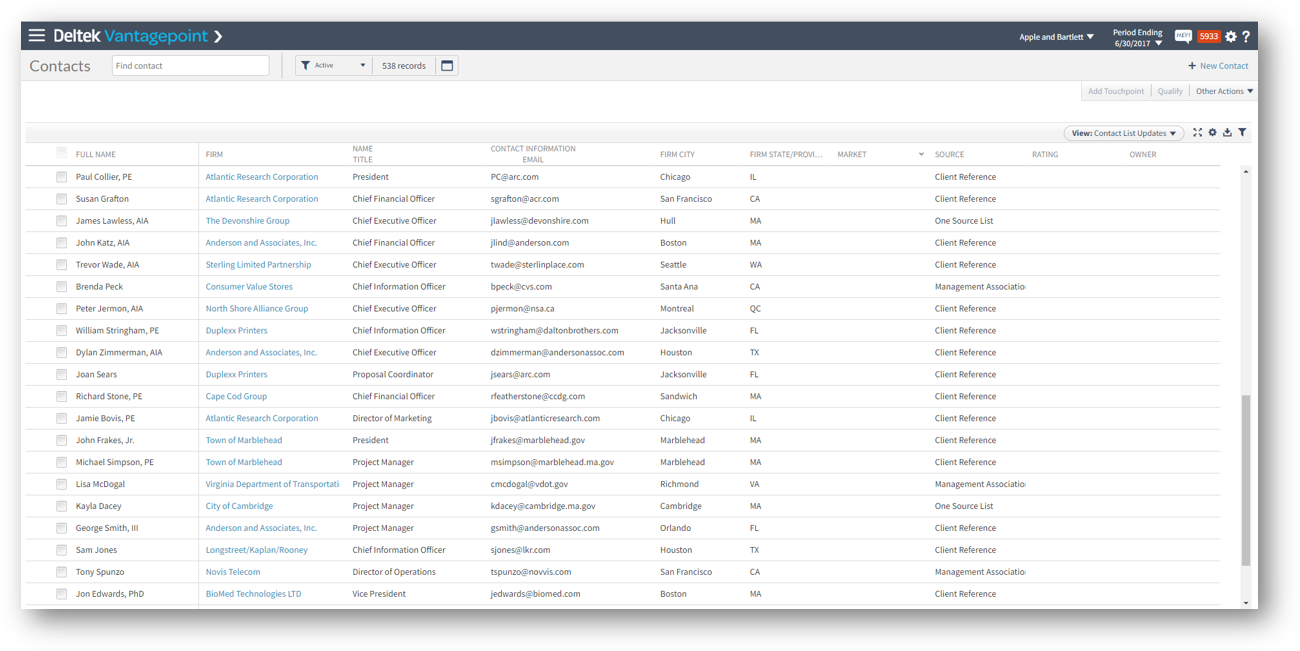
Once marketers have identified their must-have and “nice-to-have” contact fields, head over to Vantagepoint and view the contact in list view. Using this Vantagepoint feature, allows marketers to quickly see what contact data is missing or outdated. See the screenshot below. 

Contacts - list viewThis feature isn’t just in the Contacts hub either, so be sure to look for it in other hubs that may need some cleaning up as well.  

Send More Emails  

To avoid ending up with a bunch of old contacts, the best advice is to send more emails! Of course, don’t just spam the contacts, because that would just drive them away. Instead, think about sending newsletters weekly and/or monthly. By sending regularly email marketing campaigns to contacts, marketers will get contact information back such as bounced email addresses. This piece of information could indicate that the contact has moved firms or retired. Doing this throughout the year will help make the effort of creating holiday contact lists less daunting.  

Create Marketing Campaigns for Segmented Lists 

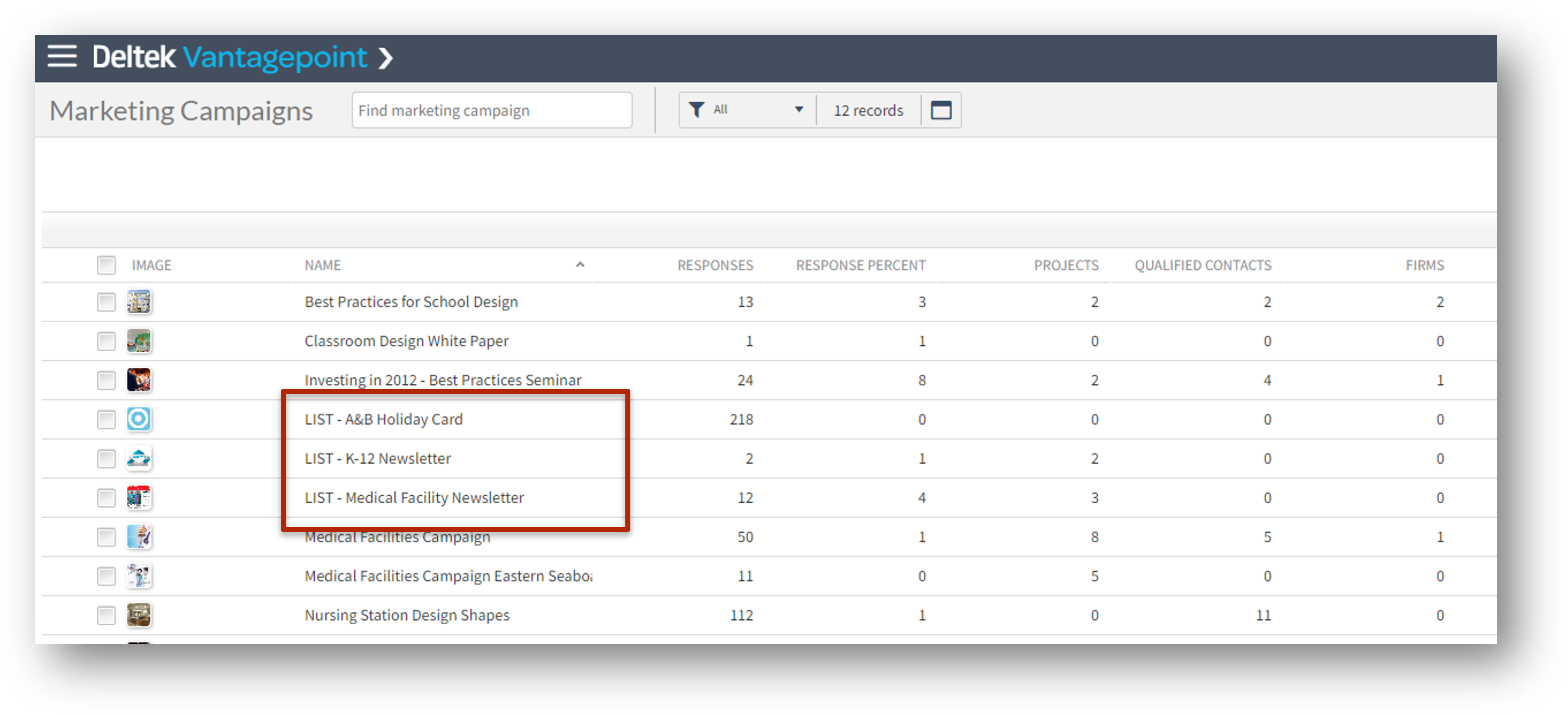
In the same vein as the last tip, use Vantagepoint Marketing Campaigns for list segments. To do this, create a new Marketing Campaign record with the name “List-Holiday Card,” for example. Then associate different contacts based on their segments (whether it be geographic, demographic, etc.) to add them to a list aka the Marketing Campaign record. With these new marketing campaigns more emails can be sent, and as contacts are created and updated, they can be added to different lists. 

Contacts - Marketing Campaigns - Lists

Monitor New Contact Creation with Scheduled Reports 

Another good practice is to have Deltek Vantagepoint monitor what new contacts were created in the database. Deltek Vantagepoint allows the user to send scheduled reports of what contacts were created in a set period of time (i.e. weekly, monthly, etc.). When these are set up, a report will be sent to the user consisting of all the new contacts and will include who initially created the contact and if there is any missing information that needs to be added. In the case that any of the aforementioned key fields of the contact are missing, the user can follow up with the contact creator and ask them to fill out the required information. This feature can also be used for projects and employees, but in our case monitoring contacts is best. 

Use Workflow Warnings and Errors for Must-Have Contact Information 

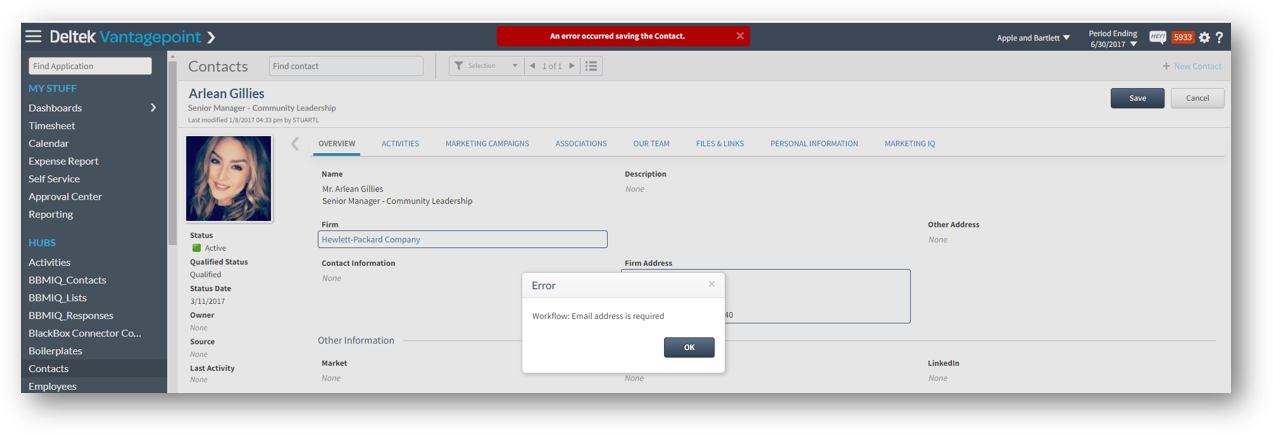
Finally, make sure you are using workflows to your advantage. These workflows can be set up to indicate errors and warnings when a contact has missing information. Warnings will simply alert the user that the contact needs more information, but they will allow the contact to be saved nonetheless. Errors on the other hand will completely stop the user from saving the contact. Both of these options are effective ways to keep a contact list clean but be sure to choose which one to use carefully.  

 Contacts - workflow errors

See these Contact Management Tips in Action  

These are just some ways to utilize the Deltek Vantagepoint system features and functions to manage contacts, even outside of the holiday season. To see these features in action, click the image below to watch a replay of the webinar, A Modern Approach to Managing Holiday Contact Lists. 


Driving Growth with Digital Marketing: How to Optimize Digital Marketing Performance

Posted by Lindsay Diven on Oct 5, 2022, 12:00:00 AM

2022 DGS DM Optimize Digital Marketing Performance Banner

Throughout the Driving Revenue Growth with Digital Marketing Series, marketers have created and implemented the marketing campaigns and collected results. Now it’s time to analyze and optimize the marketing campaign and strategy to achieve even more efficiency towards the marketing SMART goals 

This article shares just a few of the items to review to optimize digital marketing performance. Areas to optimize include the website, conversions, content promotion and email marketing. And this article just scratches the surface but will offer some ideas to begin.  

Improving the Website 

The firm’s website is the starting place for any digital or online marketing program. It’s the key piece of online real estate that marketers have complete control of and have access to the background statistics. Some of these key statistics to track will be based on the marketing campaign goals. Others will be general performance statistics to gauge the overall site performance such as overall website traffic, time on page, etc.  

Some areas to focus on to optimize performance when it comes to the firm’s website include: 

  • Highest traffic volume pages – Look at the specific site pages that are getting the most traffic. Identify what, if any, SEO elements are on the page including specific keywords. Look at where the traffic is coming from to that page. Also, check to make sure there is a call to action (CTA) on that page to either capture that visitor’s information or move them to another page to continue the visitor's journey.  
  • Most read blog posts – Similarly to the site pages, look at the most read blog posts. Which articles or topics are getting the most views? Marketers can assume that this is the type of content or topic that their audience is interested in. Work to create either more content around this topic or repurpose those specific blog topics into other content formats.  

Increasing Conversions  

A conversion can be any action a person takes that the marketer wants them to do. For example, if there is a form on a webpage, the call to action (CTA) for that page would be to fill out the form. Each time that CTA is completed, it’s a conversion. Conversions don’t always have to be filling out a form; it can be watching a video or requesting a meeting. The idea is that the person took an action, and that action is the conversion.  

Once marketers set up their CTAs and start collecting data, it’s time to see how to increase the number of conversions. Some ways to do this are: 

  • Use CTAs – This may seem obvious, but so many AEC websites do not have any CTAs anywhere on their websites or there’s just one – “Subscribe to ACME Engineering’s Newsletter.” The easiest way to increase conversions is to start using CTAs and inserting them throughout the entire website.  
  • Make CTAs relevant to the page – Even though we just said to use CTAs, don’t just put them on every webpage and think it is done. Marketers will want to use different CTAs that are relevant to the topic of that blog or page. For example, an architecture firm has a checklist called “10 Ways to Derail an Elementary School Renovation” that they want people to download. A good place to put that CTA is on project profile pages of elementary school renovations, not their healthcare project pages.  

Using Specific Landing Pages 

Most website management systems like WordPress or HubSpot are easy to set up and update. But sometimes it’s often difficult jumping through internal hoops to get new web pages or new navigations approved internally. So, that’s where landing pages are a great alternative, especially since they are easy to create with software like HubSpot or Leadpages.  

A landing page is just that – one page where marketers can direct specific traffic too. Some ways to optimize landing pages are: 

  • Minimize the design – Remove any design elements, navigation, or CTAs, that would distract the viewer from taking the one action you want them to take. For example, remove the navigation/menu bar, remove the firm’s social media links, etc.  
  • Write a strong heading – Continuing with minimizing the design is to have a strong headline. This headline should draw the viewer in and make them want to read more. It should either describe a pain point they are looking to solve or some kind of aspiration they are trying to get to.  
  • Describe the benefits – The landing page should be promoting the goal of the marketing campaign. And that marketing campaign should be benefiting the potential client. Under the headline, describe what the item is and the benefits the potential client will receive. Be clear, concise and to the point. Less is more here.  
  • Place the form above the fold – Most of the time, landing pages have some type of form for the viewer to complete to get something (a PDF download, checklist, case study, etc.). Make sure the viewer doesn’t have to scroll down to see and fill out the form. Seconds count, and if it takes even just a second longer to realize there’s a form, you might lose them.  
  • Determine the right questions – There’s a balancing act between asking for enough information and too much information on the landing page forms. Firms often want all the information they could get about a lead, but the lead will balk at having to fill out too many fields on a form. Marketers should determine the right questions to have on their forms to qualify and segment leads, and not one more. This is usually done by testing and then optimizing. 

In online marketing circles, the conversion rates of landing pages are somewhere between 5-15%. But marketers should be tracking their own conversion rates and then use these strategies above to make changes and see if that rate increases.  

Promote Even More 

A previous article discusses how important it is to promote the content and ways to do that. Once marketers begin promoting, they can use that information to make the promotion even better. Some ways to do this include: 

  • Determine the best channel – Once marketers start getting data, they can see which channels are bringing in the most visitors and highest conversions. Once they know that, they can lean into that channel even more. 
  • Consider each social media channel – If the firm promotes content on different social media channels like LinkedIn or YouTube, how can the content be re-formatted into different media types or different language used that corresponds to that specific channel?  
  • Going back to the basics – Marketers should make sure that the graphics and media are appropriately sized and formatted for each social media channel.  
  • Test frequency to find the sweet spot – Each channel is going to dictate just how often the firm posts content. Once marketers start getting results, they have a baseline and then can start testing posting more or less to see how that affects results.  

Don’t Forget About Email Marketing 

Part of every online marketing program should include an email marketing component. AEC firms have hundreds, if not thousands, of contacts in their databases and should be communicating with those contacts (with proper permission) on a regular cadence. This is even more important for a specific marketing campaign, like the one they are trying to optimize.  

Here are just a few email marketing tips to get great performance: 

  • Make sure the marketing emails are coming from a person, not a generic email address like “Info@company.com” 
  • Write clear and clickable subject lines. Take time to develop the subject lines. Don’t wait to just write something to get the email sent. Use this tool to test each subject line. 
  • Limit CTAs to only one per email campaign, especially if it’s part of a specific marketing campaign. Make sure every link in the email goes to that specific landing page or CTA.  
  • Segment and personalize as much as possible. 
  • Optimize for mobile.   

Watch this replay where an email marketing expert shared even more email marketing advice. 

Always be Adjusting and Refining 

Once you begin your digital marketing program, start to analyze results and then optimize, it doesn't end there! Marketing is ever evolving with new interests, new content formats and new preferences in which our targeted audiences like to consume our content. So as marketers we constantly need to be keeping up with trends, especially out of our industry, looking at our metrics, and adjusting our marketing efforts. The good news is that this is fun and creative, and our job demand will remain high.  

Outsourcing HR Functions Can Help Professional Services Firms Meet Their Human Capital Management Needs

Posted by Tasia Grant, PHR on Sep 21, 2022, 12:00:00 AM

2022 - Outsourcing HR_ Banner

The professional services industry is still currently facing challenges ranging from financial rebounds and technological transformations to the need for human capital management (HCM) adjustments. Specifically, some of the top HCM trends affecting the professional services industry are:

  • The expectation of mobility - Employees and job seekers are looking for companies that have the structure and technology to accommodate remote work. Also, many companies have redesigned their physical office layouts and performance management plans to account for remote staff.
  • Power shift to employees and applicants - The shortage of viable talent has shifted the supply and demand dynamics where the employees and candidates feel empowered to ask for what they want and have options if those requests are not accommodated. 
  • Struggles to find the right fit for positions due to skills gap issue - Due to the great resignation and the influx of early retirees, there is a gap between those seeking work and those actually qualified for the hiring needs. 
  • Workplace balance is no longer a “buzz” term or trend; it’s a real thing - The pandemic caused most to reflect on their priorities and many changed their mindsets, habits, and lifestyles to cater to the well-being of themselves and their loved ones, even if it involved making employment sacrifices.

What does HR have to do with these trends?

The human resources function is key to effectively addressing these HCM shifts. Organizational leadership is increasingly aware that attention to the needs and wants of their current and potential employees is pivotal to their growth and success. So, they are reevaluating their processes, procedures, incentives, and benefits to account for these trends, and outsourcing HR is a part of that consideration. 

What are the primary essential functions of HR? 

The primary HR functions are Human Resources Information Systems (HRIS), Benefits Administration, Talent Acquisition & Onboarding, Employee Relations, Training & Development, and Compensation (Payroll/Total Rewards). These functions are all critical to addressing these impacting HCM trends. 

What role can these HR functions play in affecting these trends aka challenges? 

The expectation of mobility: 

Having an effective HRIS system to electronically manage and house employee data has become common and necessary to maintain efficient communication, consistency, integrity, and security. This also allows the data to be managed from any location where technology is accessible. 

Power shift to employees and applicants / Struggles to find the right fit for positions due to skills gap issue: 

Development and management of attractive, competitive benefits and compensation plans will impact retention of existing employees and attract top talent. Offering performance management and training & development that supports career development is a sign to current and potential employees that their worth is valued and sends the message to them that being with the company also brings and ROI for them. Employee relations and training & development are being redesigned so that the quality, availability, and frequency of meetings and training are consistent whether in-person or virtual. 

Workplace balance is no longer a “buzz” term or trend; it’s a real thing: 

Efficient benefits administration ensures that providing the best health insurance options, a fair and generous leave policy, a well-structured retirement plan, and additional employee perks are top priorities for a company that invests in the well-being of its greatest asset…its employees. 

“Total rewards” is the combination of benefits, compensation, and rewards that employees receive from their organizations. Where wages and bonuses are still important to employees, intrinsic rewards are equally important. So, recognition, workplace flexibility, and career opportunities provide them with that. 

Having a dedicated, experienced HR professional is a must for all professional services firms 

The HR functions needed to address HCM trends require specific skillsets and knowledge bases, such as: 

  • HRIS – Knowledge of HR software, familiarity with business analysis tools, exposure to technological functions and jargon
  • Benefits Administration – Foundation of most benefit plan designs, knowledge of benefit coverage laws and market trends
  • Talent Acquisition & Onboarding – Negotiation skills, data analytics, experience with recruiting software, social media management, sourcing experience
  • Employee Relations – Excellent communication and people skills, great listening and observation skills, conflict management techniques, knowledge of performance management plans, experience conducting appraisals and grievances
  • Training & Development – Project management skills, coaching skills, knowledge of and experience with training software, presentation skills, organizational skills
  • Compensation – Financial education background, proficient Excel knowledge, payroll experience, total rewards knowledge, ability to conduct salary analysis 

Furthermore, these descriptions just skim the surface of what’s required to perform these HR functions. The extent to which each skill set is needed or required depends on factors like the firm type, size of the firm, and firm goals. Surprisingly, some professional services firms have designated a payroll manager or executive for the task of performing these HR duties in addition to their primary responsibilities. Yet, to be most effective in addressing these HCM trends, these professional services firms need a dedicated, experienced HR professional. 

How can outsourcing HR functions help professional services firms? 

HR outsourcing is the use of an outside service to handle some or all of a firm’s HR tasks. Many firms have designated teams within the HR department to handle the different functions. Often, though, smaller organizations (100 employees or less) don’t have the physical capacity or financial ability to support multiple people performing those duties or even one full-time dedicated HR person to work in a generalist capacity. Moreover, firms that are not necessarily small but are transitioning into larger organizations, and may be assessing their needs, may want to slowly grow their core teams.   

Outsourcing HR functions can provide the necessary resources without requiring the full commitment of new employees. Especially in cases where an executive has been the designated HR professional, outsourcing HR functions will allow that business leader to focus on core business processes. Also, the employees will appreciate having a person who is specialized in employee-related issues and is not a direct decision-maker in their career trajectory. Finally, HR consultants can be an additional resource to professional services firms by providing additional support, guidance, and advice in areas where there may be a skills gap, knowledge gap or even a lack of time and resources. 

Outsourcing HR functions has many pros to help meet HCM needs 

Pros 

  • Access to HR expertise 
  • Saves money because firms don’t have to hire new full-time employees 
  • Opens access to additional benefits 
  • HR connections can lead to lower cost benefits and access to other global resources 
  • Maximizes compliance 
  • Minimizes legal risks 

Cons 

  • Leadership may feel a lack of control 
  • Might feel impersonal to employees 
  • Risks with intellectual property access 
  • Service quality control  

Undoubtedly, every professional services firm requires certain functions that are focused on HR needs/wants and provides a neutral, trusted and knowledgeable resource that supports both the firm’s and the employees’ well-being. To address the shifting Human Capital Management trends in the present and future of the professional services industry, HR professionals are a necessity. For those firms that are not able or do not want to hire a designated HR professional to handle these significant HR functions, outsourced HR is the right choice to meet these changing HCM needs. Click the image below to learn more and see if this is an option for your firm.

The 43rd Deltek A&E Clarity Study Predicts Positive Changes for Business Development

Posted by Amanda Roussel on Sep 7, 2022, 12:00:00 AM

2022-ClarityReport_BD_Banner

According to this year’s Deltek Clarity Architecture & Engineering (A&E) Industry Study, it is looking to be a landmark year for the architecture and engineering industry with net revenue growth forecasted to grow to 17.6%. A&E is doing quite well despite the pandemic with the highest net revenue growth in the last ten years at 11.4%. This increase is assisted by A&E’s market position, which is expected to either grow or remain steady in markets across the board. Most notably water/waste/stormwater, transportation, and industries that fall under the “other” category (such as life sciences and senior living) are predicted to see great increases. As a result, firms will not only need to strategically pursue the right projects but will also need to grow and develop a staff to deliver on these projects.


Top Business Development (BD) Challenges 

The ever-changing nature of the business world is continuing to keep firms on their toes with new challenges. Unlike the previous year, a majority of firms (78%) have identified that finding and retaining qualified staff has been a struggle for them. This is coupled with other mass-reported problems such as staffing shortages and difficulty retaining employees. Staffing challenges have a direct impact on business development, not only lacking adequate staff to conduct business development activities but also not being able to provide the most qualified teams to win and deliver on projects. 

Time to nurture client relationships is the top business development challenge for A&E firms according to the report. With favorable market conditions, new opportunities will be plentiful which poses a challenge for firms to keep up with their clients. Time is money and time is also in short supply. With the reporting firms revealing an average work backlog of nearly 9 months, it is clear that companies must find a way to increase productivity. Upskilling business development talent and streamlining the BD process will help to free up time to strategically nurture client relationships. 

Other top BD challenges from the study include increased competition and identifying prospects. Firms must differentiate and hone branding across thought leadership and social marketing channels to distinguish themselves in the marketplace. Additionally, with a positive industry outlook this year, firms will need to be more strategic in pursuits that work best for their company’s strengths. 

Increased Formal Business Development Process 

Of the companies surveyed, 45% have a formal business development process, which is an increase going up from 39% the previous year. Though this means that 55% of firms surveyed still do not have any formal business development process. In these cases, responsibility for business development tasks is most often pushed to the executive team, project managers, and marketing staff. While dedicated business development staff may not be necessary in every case, it is important not to overlook the kind of work they do. Most notably, they tend to client relationship development, proposal development and networking, but they have plenty of other duties as well. Their jobs help to create new business opportunities, and within the last year active client relationships, requests for proposals and networking placed in the top five sources of new opportunities in the surveyed firms. 

A Positive Year for Proposals Requires Evaluation 

As suggested by the Deltek Clarity study, operating in a market with limited resources but high demand, the go/no go process is significant to evaluate the projects firms will pursue. While the number of firms employing the go/no go process has increased in the last year, there is still a large population who do not utilize it in the slightest. Of the companies who reported, 22% don’t use any kind of go/no go process. Listed below are the top three questions that businesses ask when deciding whether or not to accept a proposal: 

  • Is it a good fit for the type of work we do? 
  • Do we have an existing relationship with the client? 
  • Do we have the staff to deliver the project?   

This method of weeding out less profitable projects is more useful than ever, as a significant rise in the number of proposals submitted and the number awarded in firms of all sizes was observed. In-kind, the average win rate of proposals has increased in the last year to 49.2%, the highest it’s been since the beginning of the COVID-19 pandemic. The average capture rate is also up from the previous year, now standing at 48.5%. 

Marketing Techniques Present and Future 

A majority of businesses reported using social media posts for marketing, with only 16% not indicating any use. This was followed by client-specific marketing at 67%, trade shows/exhibits at 56%, email marketing at 54% and thought leadership at 42%. The order of these marketing methods is projected to change, however, with the study offering up that client-specific marketing could overtake social media marketing within the next five years. Thought leadership is predicted to advance to third place among important marketing techniques, with trade shows/exhibits and email marketing falling more and more by the wayside. 

Business Development Initiatives 

Based on this year’s study, some of the priority business development (BD) initiatives for A&E firms are hiring additional staff, earlier identification of opportunities and requirements and expanding geographically. Since BD has not been spared from staffing challenges, and firms are seeing more proposals, projects, and nurturing opportunities, the focus on obtaining the best-qualified staff is of tantamount importance. Another area that has grown in importance is the geographic expansion of firms requiring yet again additional staff. One more initiative to identify opportunities and their requirements remains top of the list as well. Teams shouldn’t be wasting time and their resources on projects that are not winnable. 

Final BD Outlook from Deltek Clarity 

The 43rd Deltek A&E Clarity study found that while the world still is not clear about the pandemic, things are looking up for the industry. The top problems of participating firms are not dire, and by focusing on the employee base and current client relationships, these issues can be fixed. This year’s Deltek Clarity report also noted that freeing up time is necessary to clear the obstacles in the way of each business regarding BD. To remedy this, employing the go/no go process and better utilizing the tools provided by Deltek to streamline the BD process is suggested. 

How does your company stack up to those that participated in the survey? For a more in-depth look at the data behind the 43rd Deltek A&E Clarity study, use the link below to receive the report for free right now! 


Automated Bank Feeds with Deltek Vantagepoint for Professional Services Firms

Posted by Joel Slater on Aug 17, 2022, 12:00:00 AM

2022-VP Automated Bank Feeds 02

Most likely of great interest to Vantagepoint users is that Deltek is continuing to roll out rapid enhancements to Vantagepoint in order to drive purposeful innovation and efficiency. One of the latest improvements being made possible is by a new partnership and integration with Plaid. This integration with Plaid offers professional services firms the ability to automate the update of transactions in Bank Reconciliation in Vantagepoint. Well, what is this all about, and how can professional services firms make this happen?

About Plaid

Plaid powers thousands of financial apps and this convenient integration will allow professional services firms to connect their banks to Deltek Vantagepoint in a secure way. With Plaid, firms can control whom their data is shared with and for how long. Additionally, whenever firms use a Plaid-powered app, their security is of the utmost importance meeting or exceeding industry standards. 

Bye-Bye Manual Entry 

Most Deltek Vision clients were already aware of the ability to manually upload a file from their bank to import bank transactions. The key word here, being MANUAL. Now check out the good news - with Deltek’s latest release of Vantagepoint, that process has now been vastly improved with automated bank feeds. That’s right! No more manual import is required. The integration currently supports over 11,000 banks across North America, with more being added regularly. As of the Vantagepoint 5.0 release, this integration is available to both on-premise and Deltek Cloud clients. There is no separate purchase or licensing required.   

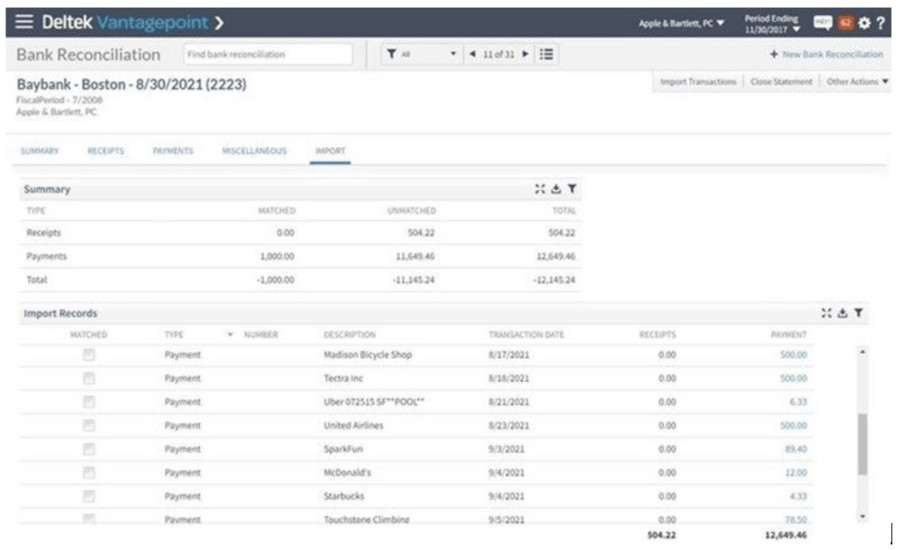
 Instead of the more time-consuming, manually administered import process, a professional services firm’s latest bank transactions are seamlessly imported into the accounting system. After import, they are reflected in the Bank Reconciliation record. It is then taken a step further by automatically matching imported records to posted payments and cash receipts.  

Setup Using the Plaid Assistant 

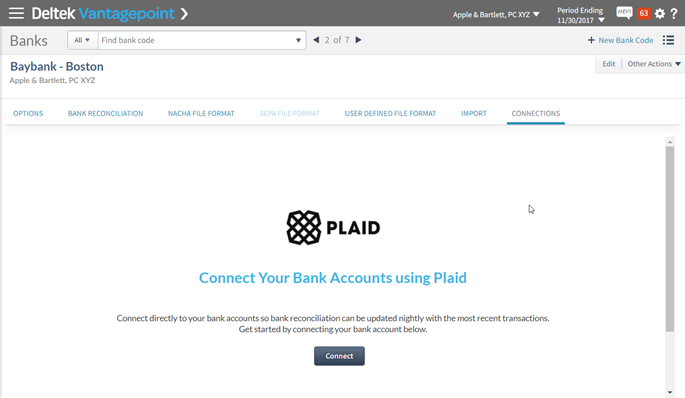
Most Deltek Vantagepoint clients can get started with this convenient solution today. They will first need to connect their supported bank within Vantagepoint settings (Settings > Cash Management > Banks). From there, that process will guide them through selecting their bank, logging in using their existing bank credentials, and then selecting the account that they want to connect to all using the Plaid setup assistant.  

If their banks require multi-factor authentication or OAuth, the process will be similar, while still incorporating those additional security steps to enter needed credentials. For step-by-step instructions, professional services firms can reference this video, or the relevant Deltek Vantagepoint help file 

undefined-Aug-15-2022-10-42-26-88-PM

After the connection is established, transactions which have cleared a professional services firm’s bank will automatically feed into Deltek Vantagepoint Bank Reconciliation on a nightly basis. System administrators can change the date on which Vantagepoint starts the daily transaction import into Bank Reconciliation in addition to the time of day that the import is run. Firms also have the flexibility to manually refresh transactions through the day.  

Bank Automation 01

Need More Help with Bank Feed? 

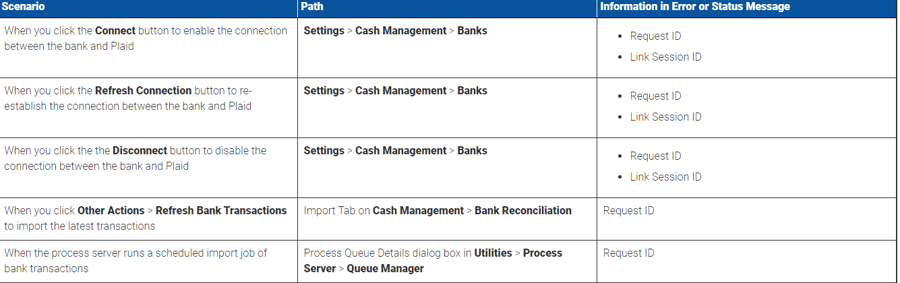
 If there is ever an error related to a firm’s bank connection with Plaid, there are some messages now displayed in Vantagepoint to help with troubleshooting. Firms should note the IDs and let Deltek customer care know. Here are some common scenarios that have been dealt with already. 

Streamlined Bank Reconciliation  

Professional services firms using Deltek Vantagepoint now really have it made in the shade. With the Plaid integration and ensuing automatic bank feeds, bank reconciliation has become even more streamlined. Without the need for manual downloads, firms now have much more time to manage other financial matters, ensuring improved efficiency. Firms should get started with this latest enhancement today! 


Click the image below to learn about how Deltek Vantagepoint powers project-based firms. 


Top A&E Firm Human Capital Management Challenges from the 43rd Annual Deltek Clarity Study

Posted by Tasia Grant, PHR on Aug 10, 2022, 12:00:00 AM

2022 - 43rd Clarity_Human Capital Management_ Banner

It’s no surprise that finding and retaining top talent is a challenge facing every architecture and engineering (A&E) firm in North America but what specific human capital management (HCM) challenges are there? How do firms compare to the industry and what do the numbers really tell them? This overview is the first piece in a two-part series that will dig into the HCM specific challenges revealed from the 43rd Annual Deltek Clarity Study.  

Every Department Impacted by Staffing Shortages

Almost every area of the Deltek Clarity Study cited human capital management (HCM) towards the top, if not the number one challenge to growth. Many industries, including A&E, have been affected by the great resignation. Specifically, firms are saying it’s hard for them to win more business because they’re not necessarily certain that they can go ahead and staff projects. Hiring additional staff has become of paramount concern for A&E firms right now.  

The top financial challenges indicated from the Clarity study are finding and retaining qualified staff. This isn’t about a certain number of staff, but really finding qualified people that can handle the type of work and the different projects the firms have. This need is leading to more career development and training initiatives by A&E firms.  

Similar top challenges are cited in the project management area, including staff shortages and inexperienced project managers. So, how do firms develop project managers? How do they get the project managers up and running so they manage projects effectively? Part of the solution is hiring more experienced project managers, but other top initiatives include developing internal project manager best practices and investing in internal project manager training. 

Top Challenges for Human Resources 

The study asked what the top three challenges were for managing human resources. The number one response was retaining employees followed very closely by employee engagement/experience. Firms are realizing that they need to really become proactive in their retention and engagement efforts.  

No longer are firms just competing with companies in their own geographic region. With the rise of remote work, A&E firms are competing with other firms located across the country and talent is being recruited away from other areas. Other top challenges included career development, planning and performance management.  

Top Talent Acquisition Challenge 

The Deltek Clarity Study asked about the top acquisition challenges A&E firms are facing. The top response was the availability of good candidates in the marketplace. Based on this, it might be a good time for firms to step back to look at how they can change their practices or modernize their efforts to support recruiting.  

Specifically, this requires identifying what a good candidate means to the firm. The firm should ask what makes somebody who handles a role in the firm successful at it? Does the firm basically just review previous job descriptions or job profiles and reuse those? Has the firm really looked at what makes people successful in their specific role and in the firm as a whole from a culture perspective? 

After doing this initial analysis, the firm should evaluate what it is doing to diversify. Diversifying the talent pools makes sure that the firm is putting itself in the best position to find candidates that meet the profile developed. Also, the firm should consider what roles can be handled remotely. 

Firms should think about this from both angles – first doing a good job of understanding what makes people successful at the firm and then diversifying the talent pools to widen the marketplace. 

A&E Industry HR Statistics  

To give some idea of how a firm fits within the North American A&E industry, here are some high-level statistics related to human resources from the 43rd Deltek A&E Study: 

  • Employee turnover has increased a little from the previous year and is at 13.6%. 
  • Staff growth overall is up to 3.2% which means that despite a higher turnover rate, firms are still growing.  
  • However, offers accepted decreased and is sitting at 77.4%.  
  • Only about 50% of firms in the survey had more open positions last year, while this year’s survey saw 65% of firms with more open positions.  
  • The time to fill positions is becoming longer and longer, with 50% of firms saying it’s taking 60+ days to fill open positions.  

Gen Y Has Taken Over 

The Deltek Clarity Study looked at both generational composition firm wide and by management level. Firm wide, the Millennials (Gen Y) have taken over the greatest portion of staff making up 39%. It’s important to note that Gen Z is coming right up behind which really starts to play into how firms develop their culture and organization.  

The top-level leadership roles in organizations are currently held by Gen X, nearly 70%, but the study reveals that in the first to lower-level management, the younger generations are beginning to take over a lot of those positions. This is great because firms are starting to see new thoughts, new processes, modernization, and a lot of variety and diversity. A&E firms will continue to see this trend in terms of those generational shifts to the younger generation from a management perspective which will affect recruiting, retention, and talent development.  

Top Tools Used to Develop Talent 

Firms cited coaching and mentoring, external education programs, and leadership development programs as their top three tools used to develop talent. The very top method is coaching and mentoring. Firms should ensure that coaches and mentors are available to make the best impression on employees. Firms should not just rely on who has been at the firm the longest for choosing their mentors and should make sure that these mentors are equipped with the right skills to bring other staff along.  

Engaging Employees Too Late 

The Clarity study showed that 86% of firms conduct exit interviews, but these interviews are often too late. Many times, these type of exit interviews are not as effective for getting honest responses from the employees because they are simply trying to get through the exit process and leave the firm. Unfortunately, many firms are spending a lot of time on this strategy rather than on other strategies such as stay interviews or pulse surveys.  

Only 30% of firms conduct pulse surveys. Pulse surveys are quick hit surveys where the firm can get answers. They can be sent to the recent hires on their onboarding experience, for example. The idea is to gauge the pulse in real time throughout the course of the year.  

Dig Deeper into the 43rd Annual Deltek Clarity Report 

To get more details on A&E firm HCM trends or other interesting findings, download the full Deltek A&E Clarity report. Click the image below to grab a free copy of the report along with a scorecard to chart the firm’s results. Don’t forget to stay tuned for the second installment in this series that will share some ways firms can use this information to improve processes and help meet some of these HCM challenges. 


What’s New in Deltek Vantagepoint 5.0

Posted by Terri Agnew, CPA on Jul 13, 2022, 12:00:00 AM

2022-DVP What is New

From project managers to accountants to business developers, almost every role at project-based firms will benefit from the new features in Deltek Vantagepoint 5.0. The new features go beyond usability enhancements like drill-down capabilities for dashboards to entirely new ways to manage timesheets. Let’s take a look at some of these new features of Deltek Vantagepoint 5.0.

Search Navigation Improvements

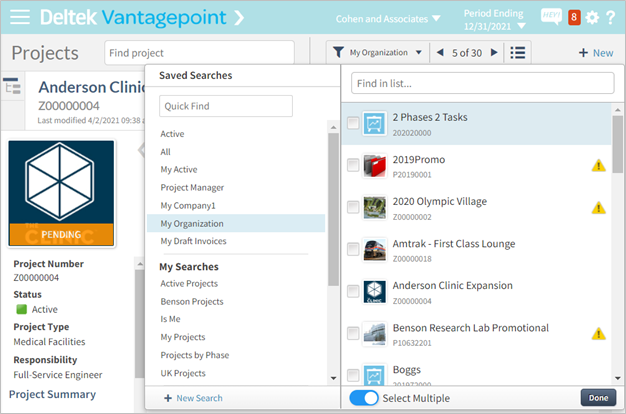
The search navigation bar for top-level searches has been redesigned. Users can now find any record without needing to select a search criterion such as “active.” This is different than in Vantagepoint 4.5 when a user wanted to find a record. Deltek has revamped the new search navigation to be closer to how the Quick Search function was in Vision.

A new filtering option was added as shown below to the right of the search field. Users can filter by the saved searches. A user can select a saved search, and a preview of the project records meeting those criteria is displayed. From this view, a user can either select multiple projects, or all projects can be selected by clicking “Done.”

To learn more about the redesign of the search improvements, watch this mini-demo.

Saved Searches

Saved Grid Views

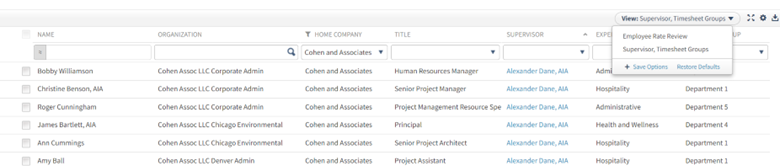
Another general enhancement is the ability to save grid views. If records are displayed in a list view, as shown below, the order and type of columns displayed can be saved. Then users can toggle between different views based on their preferences.

saved Grid Views

The types of views that can be saved are:

  • Columns selected in the grid
  • Order of the columns selected
  • Column width
  • Pinned columns

Saved grid views are currently available in:

  • Hub records in list view
  • Edit Project Structure grid
  • Transaction Center lists
  • Transaction Entry grids such as AP vouchers
  • Interactive billing grids

Saving grid views has been added to the “Save Rights” section with Reports, Search & Options in User Security. These security settings allow for users to save grid views for themselves, their role, or globally.

See how grid views are saved in an upcoming mini demo in September. Check this page to sign up when it’s available.

My Preferences Option

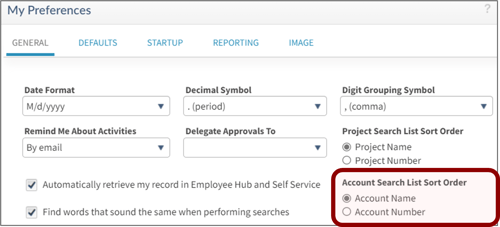
The next general enhancement is in the My Preferences area. There is a new feature that was added at the bottom right of the My Preference box (shown below).

Users can now decide how they want the General Ledger accounts to be sorted – by account name or account number. This is going to be helpful for those people who enter GL accounts, such as the accounts payable professionals. It’s helpful when that user is in the transaction area because they now can search lists sorted by account name or account number.

My Preferences

Sorting of Timesheet Line Items

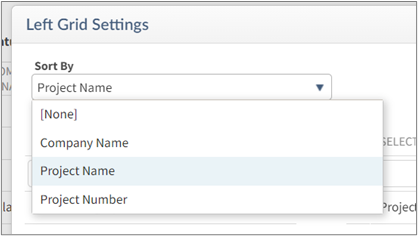
This enhancement has been highly requested and it’s finally in Deltek Vantagepoint 5.0. It was a feature in Vision, but not only did Deltek bring it back, but it greatly improved the functionality. Now employees will be able to sort their timesheet line entries by project name, client name, and project number or have no sort at all. No sorting will leave the timesheet lines in the order in which they are entered on the timesheet.

When there are multiple lines for the same project, they will be sorted by Phase, Tasks, and then Labor Code (as applicable).

In addition, when the employee adds a new timesheet line item, the timesheet will automatically sort based on the sort option chosen.

Timesheet sort options

Timesheet and Floor Check – User Options

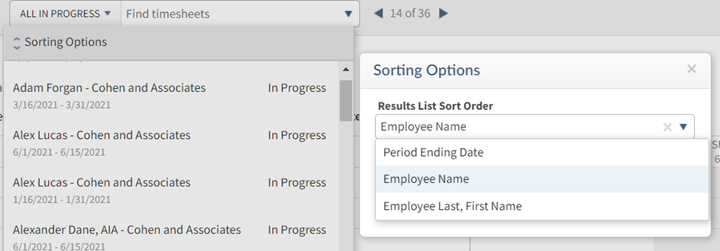
Another efficiency enhancement with timesheets is the ability to sort or see employees by first, last name, employee name or period ending. This is especially helpful for those approvers who have many employees to approve. This is available in both the timesheets and floor check.

Timesheet sort options - user

Expanded Use of Accounting Email Templates

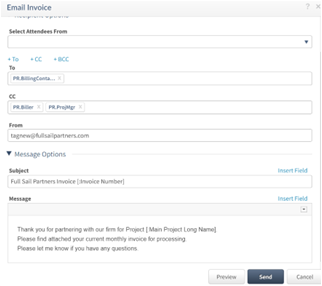
Vantagepoint 5.0 has expanded the use of the email templates, specifically for interactive billing, draft invoice approvals, and in the invoice history area. Users can create invoice templates and save them to use again.

Sharing saved templates is controlled by Role Security under the “Save Rights” section. Users can preformat any of the email items including the To, CC, subject line, and body message. Fields can also be inserted into the subject line and body of the email to make it more personalized.

Accounting email templates

Billing Clients Can Change Over the Project Lifecycle

Vantagepoint 5.0 now allows for the billing client to change over the project lifecycle and maintain its invoicing history. Now, when a billing client is changed on the accounting tab in the Projects Hub, it’s updated on the Team and Invoices tabs.

In addition, the history of the billing client at the time of any previous invoice remains the same. This means if a previous invoice needs to be reprinted, the initial original billing client will stay intact. Any detail reports, dashboard statements, etc. are also going to now retain the history of whatever the billing client was.

Other Accounting Updates

The other accounting updates in Deltek Vantagepoint 5.0 include:

  • The automatic bank feed is available for on-premise clients. This allows the firm to import transactions from a bank directly to reconciliation. Cloud clients had this ability beginning in Vantagepoint 4.5.
  • Automatic creation of cash receipts from bank reconciliation imported receipts that are not already entered. However, posting is not yet supported directly from bank reconciliation.
  • The integration between Vantagepoint and Corpay (previously Nvoicepay). This simplifies and automates payments to the vendors. The integration processes payments in Vantagepoint and sends the file to Corpay to issue the payment. It does require initial onboarding with Corpay, a 3rd party application.

AR Detail Base Dashpart Update

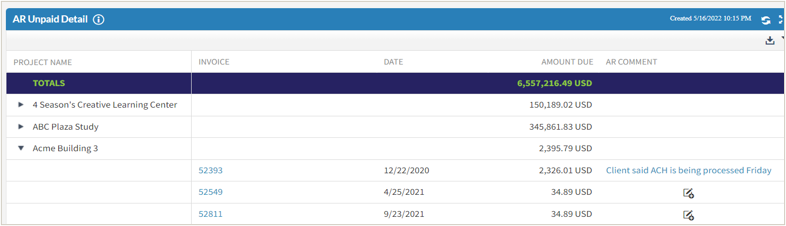
This is another great enhancement to Deltek Vantagepoint 5.0. While previous versions of Vantagepoint had the AR Detail Base dashpart, this latest version has added the AR Comments column. Not only does this column show the latest comments, but it gives the ability to add new comments directly from the dashboard.

AR detail base dashpart

Other Dashboard Enhancements

Other enhancements to Vantagepoint dashboards are listed below.

  • New feature to schedule daily dashpart updates. This reduces the need to have “always rebuild” checked on the dashpart.
  • The calculated fields on dashparts now support date ranges!

Start Using These New Features in Deltek Vantagepoint 5.0

The new features in Deltek Vantagepoint 5.0 touched nearly all of the areas of the system. From usability enhancements for dashboards to entirely new ways to manage timesheets, many improvements have been made. Start using these new features today! Additionally, be on the lookout for the next blog regarding more 5.0 enhancements pertaining to resource planning and CRM.

Click the button below to see how Deltek Vantagepoint can support your project-based firm.


Harness the power of VantagePoint

Topics:  

Architecture & Engineering Firms’ Top Trends from the 43rd Annual Deltek Clarity Study

Posted by Lindsay Diven on Jun 29, 2022, 12:00:00 AM

2022-ClarityReport_Banner-01

The Deltek Clarity report is the longest running, most comprehensive study in the architecture and engineering (A&E) industry for North America. The report digs into benchmarks, market outlook, and industry trends to help A&E firms identify where they are and how they compare to other firms in the industry. The 43rd Annual Report provides both surprising and not so surprising findings, as well as positive firm indicators for financial strength and project management excellence.  

Deltek Clarity has participation from more than 540 companies and delivers more than 100 benchmarks and industry insights across the business. The study focuses specifically on architecture and engineering firms and other firms who support the design firms. The 43rd Annual Deltek Clarity Study collected responses from A&E firms of all sizes in North America based on 2021 fiscal data. Here is an overall look at what was reported this year, but for more detail, the 43rd Clarity Study can be reviewed in its entirety. 

Consistent Challenges Across Departments 

This was one of the report findings that was not surprising. The two biggest challenges across company departments were related to staffing and time. Business development is challenged to find the time to nurture client relationships while technology departments have a lack of time to invest in learning. Moreover, project management, human resources, and finance departments all cited staff shortages, finding, and retaining qualified staff as their top challenge.  

In fact, 78% of the financial leaders identified that finding and retaining qualified staff is the number one financial challenge. This has been very different than what previous Clarity reports have shown in the past few years. In addition to staffing challenges, other consistent themes included business process automation and managing strong backlog and pipeline. All of these have an underlying theme of technology and how best to leverage technology to address some of the challenges companies are facing. 

Purposeful Investment in Technology 

This begins by measuring the digital transformation and maturity levels now and in the next five years, and how this aligns with the goals of the business. Then aligning business goals and IT goals to have that culture of efficiency and culture of innovation. According to the report, most firms identify themselves in that early or exploratory phase of maturity but nearly 70% of firms expect to be mature or advanced within the next five years. This is less optimistic than the previous year’s study. Some factors attributing to this may be that the pace of technology is moving so fast that the ultimate end goal seems to be constantly changing and/or not attainable.  

The top three challenges related to technology were lack of time to invest in learning, cost of technology, and prioritizing which trends are most applicable. Companies are struggling to understand not only what the new technologies are, but how to apply them in projects and business improvements. Top emerging technology cited by the firms were geolocation, augmented reality, and Internet of Things.  

These are often externally focused and can be leveraged in managing and executing projects. Not far behind in the cited top technology was big data and data science. Both can help firms to provide greater visibility and insight into what’s happening inside the firm.  

What this all leads to is purposeful investment into technology. Firms are looking to invest in the right technology to meet firm goals, not necessarily the newest technology. Deltek calls this purposeful investment. It’s critical, with the challenges of lack of time and resources, to look at the firm’s current systems with the technology in place and make sure it’s using them to their maximum capacity.  

Strong Market Forecast 

As noted earlier, the report indicates a really strong market forecast for the North American A&E industry. However, there are limited resources to both pursue and perform work. With these issues in mind, firms are going to have to be more strategic about how best to capitalize.  

Fortunately, the report does show a net revenue growth forecast of 17.6%. This is the highest that growth has been in the last ten years, and this is very optimistic over last year at an increase of 13.4 percentage points. Small firms were drivers for a lot of this positive push. In last year’s report, small firms had a negative forecast but now are rebounding back to a 14.6% net revenue growth forecast.  

The overall percentage of firm revenue from the top three clients has decreased slightly from the previous year to 35%. This could show good or harmful trends. Firms may be strategically and purposefully diversifying their client base or competition may be winning work away from the top clients. This is a great time to lead these types of discussions internally to see how the firm compares. 

Thus, while the forecast remains optimistic, it doesn’t come without challenges. About half of the firms said they are struggling to find the time to nurture client relationships. Combined with increased competition, firm leaders are trying to keep existing client relationships healthy and strong while looking for new prospects and revenue sources.  

Project Delivery Keeps Improving 

Projects are the core of what architecture and engineering firms do. The 43rd Annual Deltek Clarity Study indicates that, overall, A&E firms are becoming more confident in their project performance. 67.8% of projects are on or under budget, more companies (59%) are doing internal performance evaluations based on projects not waiting for an annual review, and 15% of firms are sharing their best practices through either a center of excellence or a project management office. Firms are focusing on project management as a discipline.  

While more projects are staying on track or ahead when it comes to budget (67.8% of projects), they aren’t performing as well from a scheduling perspective. Just over half (58.5%) of projects are on or ahead of schedule according to the report. This number decreased by 6 percentage points from the previous year. These are areas that both firm leaders and project managers should evaluate to strategize, understand, and determine what is happening. Does the firm need additional training for project managers or is the schedule being driven by the clients but at the cost of the firm’s profitability? 

One challenge could be access to timely data around projects. When asked about visibility around schedule variance, half the firms report low or very low visibility for project managers and principals. It’s challenging for project managers to proactively manage and keep the project schedule on track if there is a lack of visibility. This is a good opportunity to ask the firm’s project managers how visible their project schedule variance is and how better to improve that visibility.  

Similar to other firm departments, top project management challenges include staff shortages, competing priorities, inexperienced project managers, and accurate project cost and timeline forecasting. When it comes to project management, how is the firm handling project schedules, are the schedule changes internally or client driven, how quickly can the firm train new project managers, how can technology improve the project delivery gaps, and do the project managers need more visibility and access to project data? Discussing these internally will help to continue to improve the firm’s project performance. 

A&E Talent Staying, but Not Enough 

While the talent shortage is not new news, the Deltek Clarity Study digs in a little deeper to see what’s exactly happening in the North American A&E Industry. One surprise finding was the employee turnover rate. This was expected to be high, but it’s 13.6% which is low compared to the 18-19% that is shown in the Deltek Clarity Global report. Additionally, the findings show that talent isn’t necessarily leaving the industry but rather moving to other A&E firms. This might be good for the industry, but maybe not for the firms struggling to refill the positions. 

Medium-sized firms experience the highest turnover at 14.7%. Large firms are just below at 14.4% with small firms even lower at 11.9%. This lower turnover might be because smaller firms could have better employee engagement or be able to give different opportunities to grow.  

Nonetheless, with the high turnover, firms are experiencing the biggest challenge with filling open positions. The majority of firms are seeing more open positions than they had last year (65% of firms) while a third (30%) have about the same number of open positions. For nearly half of the firms, it’s taking 60 to 90 days to fill a position.  

With this talent challenge, it might be a good time for the firm to look at external factors such as candidates available in the market. Firms could also look internally to make sure their processes are as efficient as possible. This would include leveraging technology to streamline the recruiting process.  

The top talent acquisition challenges noted in the study were the availability of good candidates in the marketplace, ability to offer competitive compensation to candidates, and matching qualified candidates to open positions. This is even trickling over to the finance department. Finance leaders are feeling the increase in labor costs, higher salary demands for candidates, and additional costs to keep employees engaged. These higher labor costs could affect the future profitability of projects.  

In last year’s Deltek Clarity Study, succession planning and performance management were the top human resources’ challenges. This year, the challenges and priorities have changed. Now the top challenges for managing human resources are retaining employees, employee engagement/experience, and workforce capacity and planning.  

Relatively Stable Financial Statements 

The financial management section of the Deltek Clarity report is the longest running section of the report, with many findings showing a 10-year trend line. Firm financial leaders should review this section and analyze the trends and changes. For this year’s report, the financials are relatively stable but there are a few noticeable declines to note.  

Operating profit on net revenue declined after a decade of growth to 12.8% from 19.0% from the previous year. Deltek Clarity sets a threshold of 15% operating profit on net revenue for its high performing firms. In this year’s study, high performing firms had 23.9% operating profit on net revenue and large firms were near that threshold at 14.6%.  

Net labor multiplier is another key financial metric of the Deltek Clarity Study. This year’s multiplier increased just slightly to 2.99. The high performer firms had an average of 3.41 net labor multiplier. Something also to note is the top quartile net labor multiplier of 3.36. 

Overall, the utilization rate has decreased but is hovering close to 60% at 58.5%. This is not a surprising finding because of the increased labor costs, number of open positions, and maybe the increase in business development or other non-billable activities. Small firms saw the biggest decrease from 63.9% last year to 60.9% this year.  

Firms are seeing a strong backlog of nearly nine months. Large firms saw the biggest increase last year from 8.3 months to 9.94 months, and the top quartile is nearly 12 months of backlog. So, this is positive news for firms, if they are making sure that they can actually deliver on the work with the right resources.  

44% of the reported top financial challenges listed finding and retaining qualified staff as the top challenge. This was a big jump from the prior year’s report. Other challenges for financial leaders were managing firm growth and increasing profitability. These top challenges are interdependent. Finding qualified staff and having to compensate for that top talent will affect the firm’s ability to increase profitability and grow the firm.  

Diving Deeper 

This has just been a glimpse of some of the findings in the 43rd Annual Deltek Clarity Study. Firms should download the report (click the image below) and dig into it to understand what’s happening in their business, how they are leveraging technology, and where there are opportunities for additional training and awareness. This will allow these firms to better educate their teams, make sure they understand what their process is, and how they contribute to the overall success of the firm. 

 

Driving Growth with Digital Marketing - Marketing Content Promotion for AEC Firms

Posted by Lindsay Diven on Jun 22, 2022, 12:00:00 AM

2022-Driving Growth - PromotingContent-banner

So far in the “Driving Revenue Growth with Digital Marketing Series,” firms have developed their content plan and created content. However, creating great content simply is not enough. AEC marketers need a promotional plan that strategically shares content with the people that benefit the most from it. This article shares some common and uncommon promotional tactics.  

Search Engine Optimization 

Search engine optimization or SEO is a series of techniques firms can deploy for their content and on their website to rank higher for certain keywords on search engines like Google. Click here for a basic introduction to SEO. 

SEO should be the first strategy to be used as part of the promotional plan and should be considered when the content is being created, especially if that content is a blog article. Marketers should optimize the piece of content for the specific topics or keywords it wants to be found for. Another way to look at it is to think about the person that marketers want to read or consume that piece of content. What types of phrases or questions would that person be typing into a search engine as that person searches for answers? Make sure that marketing content has those phrases and key words included naturally throughout the content piece.  

Email Marketing 

This is the most overlooked and underutilized promotional tactic in the AEC industry. As a Premier Partner for Deltek Vision and Vantagepoint CRM, Full Sail Partners works with hundreds of AEC firms across the country specifically advising them on CRM and marketing strategies. So many of these firms have databases full of thousands of contacts but fail to have a consistent email marketing strategy.  

By using email marketing, there is a real opportunity for AEC firms to easily, affordably, and routinely get in front of clients and prospects with the content that is often difficult and time consuming to create. With tools like the Blackbox Connector for Mailchimp or Constant Contact that connect Deltek Vision and Vantagepoint to those email marketing services seamlessly, AEC marketers can get a leg up on their competitors just by using email marketing.  

Social Media 

This is probably the most popular and utilized promotional tactic. AEC firms often promote blog articles, white papers and case studies through their social media channels including LinkedIn, Twitter and Facebook. Each social media channel has its own pros and cons in terms of reach and engagement as well as best practices when it comes to getting in front of the preferred audiences.  

Finding out the social media channels where the ideal clients and personas spend the majority of their time is key for AEC marketers to develop the content, and they should focus their time on that channel first. Once that channel or channels are identified, marketers can research hashtags to utilize and optimize the visual content plus write engaging captions that keep both the tone of the social media channel and the brand voice.  

Live Events 

With a digital marketing campaign, often the content that is created is online. This includes blog articles, videos, case studies or white papers, for example. So, it isn’t a surprise that promoting this type of content is often forgotten when attending or presenting at live events. If the firm has technical experts or subject matter experts (SMEs) who present or speak at industry events, it’s a great opportunity to also promote the online content.  

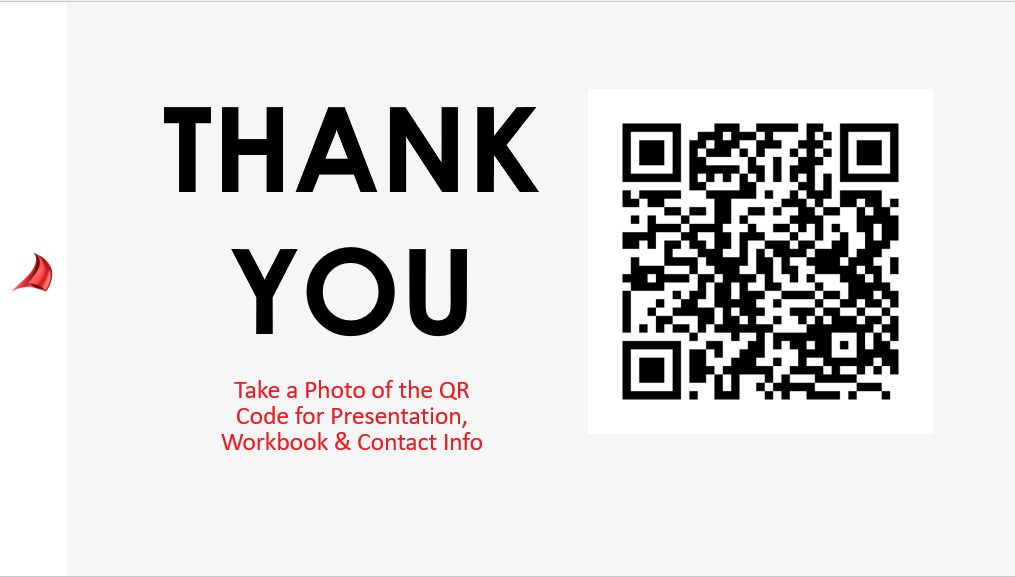
Most recently, presenters have been including a slide at the end of a presentation with a QR code. The audience can snap a photo of that QR code, and it takes them to either a specific piece of content or to a webpage/landing page that has links to several pieces of content. Below is an example of a slide with a QR code from a recent conference. 

Qr code

Description automatically generated

It’s not just for in-person conferences or events either. If the firm’s SMEs are guests on podcasts or webinars, those can be other great opportunities to promote marketing content. AEC marketers should help SMEs prepare for these appearances, including identifying what marketing content to promote.  

Creating Great Marketing Content Simply Isn’t Enough 

Thinking about the content promotion while developing it is a great way to make sure that content performs well and meets the digital marketing goals. The content promotion plan should list the ways in which the content will be promoted including SEO, social media, email marketing, and live events.  

This article is part of the Driving Growth with Digital Marketing and will walk through how to gather and analyze the results for the digital marketing campaigns.  


Latest Posts